


 SHARE:
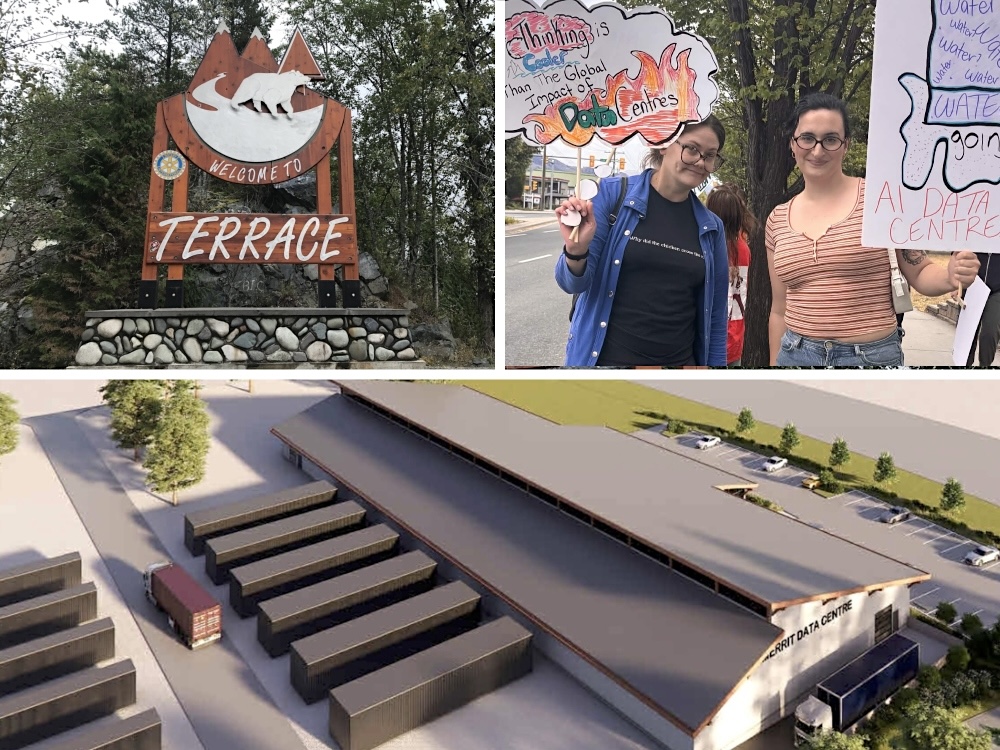
Terrace checks almost every box for anyone looking to build an AI data centre.
The northern B.C. community has long cold winters, room to expand and, especially, access to abundant, renewable power. Those assets have led a Canadian entrepreneur to float the idea for an AI data centre campus in Terrace that would cover an area equivalent to nearly half the size of Stanley Park.
If built, the campus could provide new jobs and a new industry for the resource-focused community. But the data centre would also use up to 10 times the electricity of all the city’s households — and unknowns remain as to where that power would come from and how the industry would change life in Terrace.
Now the city is trying to get ahead of the AI boom before the first application arrives. And it’s hardly alone in B.C.
A data hub in Terrace?
As artificial intelligence tools become ubiquitous in modern life, the federal government is pushing for more data sovereignty and innovation. That requires data centres — large buildings full of computer servers that house data, process complex queries and train AI tools.
To meet the rapidly growing demand for these computing warehouses, developers and entrepreneurs are looking to smaller cities with less expensive land and lots of available power sources. Terrace is one of several cities across B.C. that is a target; other projects are already underway in Kamloops and Merritt.
As the data companies move in, local governments have begun to realize that the current zoning bylaw processes don’t give them many tools to regulate or learn details about their potential new industries.
For now, a new data centre in Terrace is just an idea with a name: Skeena Data Centers. No firm proposals have been submitted, but a website pitches the project as a large-scale facility that could reinforce Canada’s data sovereignty and create jobs.
In late May, the company’s founder, Christopher Chong, signed a memorandum of understanding with Hanwha Energy USA Holdings, the energy division of one of South Korea’s largest industrial conglomerates. The MOU outlined a plan to develop energy and power infrastructure to support data centres. Chong said he sees an opportunity for more efficiency and a higher value return on Canadian energy supply, using its natural gas here instead of cooling it and shipping it across the ocean.
“If we can create a direct fibre link to Japan and Korea, why don't we actually process their data?” Chong told The Tyee. “Not only will we use the same natural resources, but we'll create more jobs, we'll create more revenue, and we will be helping these trade partners.”
Chong’s proposed facility would use up to 300 megawatts of power at any one time and sell its computing capacity to other companies. The project would be located on 173 hectares in an industrial park near the Terrace airport that is a joint venture between the City of Terrace and Kitselas First Nation.
Chong said the project could create hundreds of long-term jobs for workers who would maintain the building and manage its closed-loop cooling system. He suggested the campus could be powered by renewable energy sources, though he also suggested there was the possibility of connecting to the forthcoming Prince Rupert Gas Transmission line.
The project has attracted concern from residents worried about noise, visual imposition, the potential strain on electricity and water, and taxation levels. The concerns aren’t unique to the Terrace concept. Industry leaders, on the other hand, have said the province needs and should welcome B.C.-based digital infrastructure.
The Terrace project also has skeptics about whether the concept will actually become a reality. To Coun. James Cordeiro, it isn’t real until the permits are on the table — and the city’s council hasn’t yet seen any paperwork.
“Right now, this is in the same level of David Black’s oil refinery,” Cordeiro wrote in an email, referring to the newspaper magnate’s never-realized dreams of building a refinery in Kitimat.
For now, Cordeiro said, the data centre concept is “a nice website, not a project.”
Still, it has prompted Terrace’s council to reconsider how data centres should be assessed, before it approves permits.
The data rush
Data centres are nothing new for B.C. The province has the third most data centres in Canada, behind Ontario and Quebec. Historically, they don’t look like much and fit squarely into most cities’ definitions of industrial land use. As such, they can be built in industrial zones without public consultation or votes by council.

But the growth of AI has changed the scale of data centres, their potential impacts on local communities, and the public’s feelings about them. In a recent study, researchers suggested that AI data centres are becoming politically contested like pipeline or highway projects.
Training large language models and running artificial intelligence require large amounts of energy and can demand huge quantities of water to cool computing chips. Three U.S. towns are suing data centres for noise. Concerns are also increasing around facilities with “open-loop” cooling systems that consume large amounts of water.
The tech industry has responded by touting increasing efficiencies and turning to closed-loop systems that recycle water, or don’t use water at all. But all the systems still need enormous amounts of power to operate.
B.C. has taken a mixed approach: welcoming the industry as an economic driver while also imposing limitations on its access to the grid.
In a press release last May, then-jobs minister Diana Gibson praised the rapid development of AI hubs and clustered data centres, saying that the industry will “drive innovation, create jobs, and further strengthen our province’s position as an emerging world-class AI hub.” The plan includes a 10-year goal of hitting 400,000 jobs in the industry.
But unlike Alberta, which removed many of the environmental and regulatory constraints in an effort to attract industry, B.C. has taken a metered approach.
In November, the province passed the Energy Statutes Amendment Act, which limits the industry’s access to the province’s already stretched supply of renewable power. The act will force data centres to compete against one another for 400 megawatts of energy over the next two years. With increasing demand for limited supply, the province has said it will prioritize delivering power to new natural resource projects. Computing centre projects will need to provide their own power sources if they don’t win access to the 400 megawatts of power allotted for data facilities.
The approach has prompted criticism from the tech industry. It also hasn’t quelled public concern.
In late June, BC Green Party Leader Emily Lowan called for a moratorium on all new AI data centre development in the province until the repercussions and extent of the economic, health and environmental impacts are better understood. Demonstrators billed the day as a “national day of protest,” with marches and protests taking place in cities across Canada.
One of the protests occurred in Kamloops, a city that already has several data centres — one of which is now used for AI purposes — and is slated to be home to more.
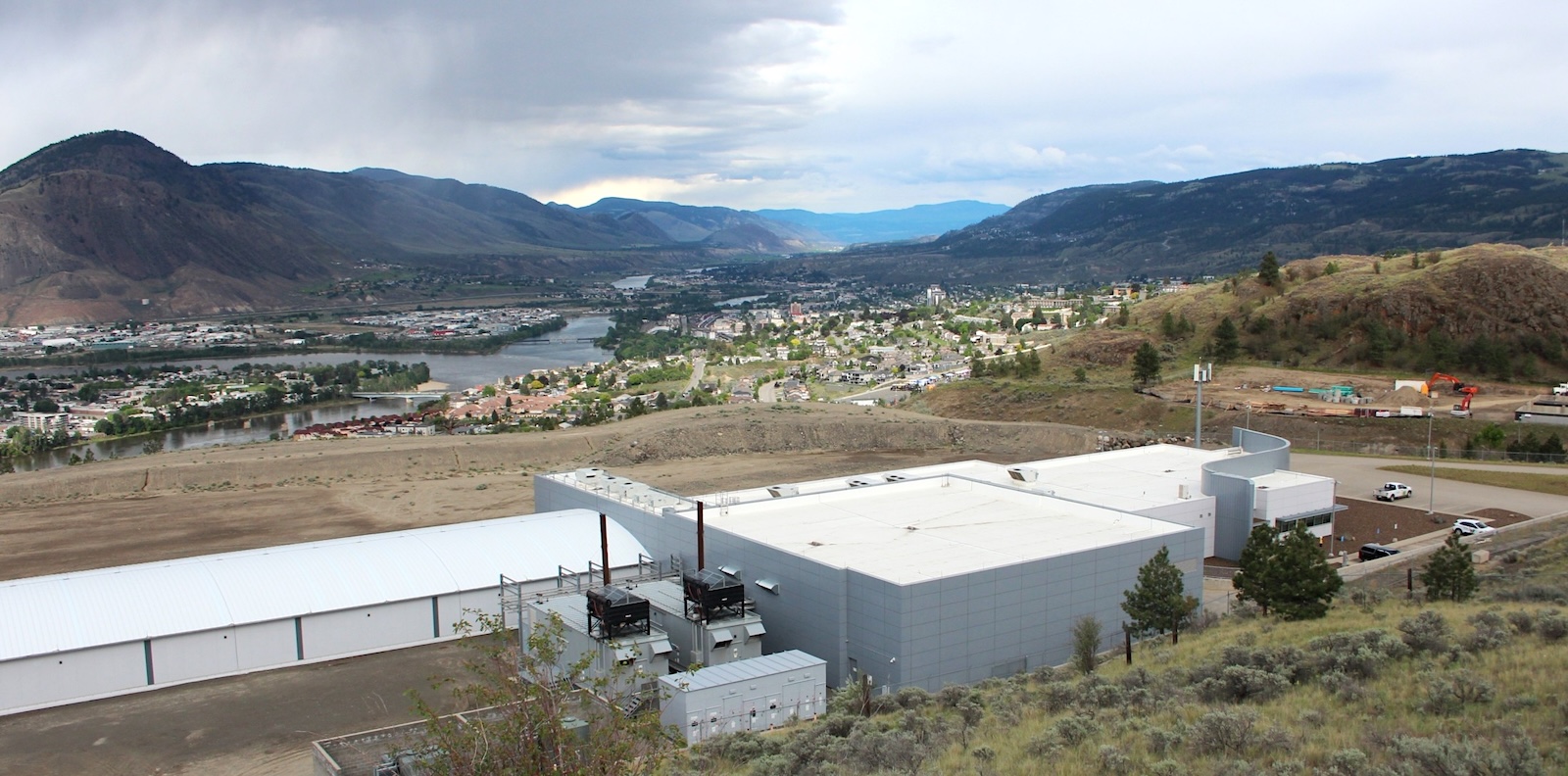
Both Telus and Bell plan to build facilities in Kamloops. Last year, Bell opened the first of three AI data centres it plans to construct in the city. In addition to the seven-megawatt facility, the company plans to construct two more facilities in partnership with Thompson Rivers University over the next two years. Telus has announced its own plans to convert an existing data centre in Kamloops into an "AI factory" by the end of the year.
The surge of proposed projects prompted Kamloops councillors to ask whether the city had the tools to regulate the industry.
In late May, councillors directed staff to examine whether AI data centres should face different rules around taxation, electricity demand and water use. The facilities are currently regulated like any other industrial business through zoning and taxation and have a daily water-use cap of 35 cubic metres, staff told Castanet Kamloops. But the city has not developed broader policies for the nascent industry.
Kamloops council also recently voted to ask the Federation of Canadian Municipalities to push Ottawa for national standards governing AI data centres.
“I had very strong feelings about sitting back and waiting and hoping that somebody else created some kind of a framework for us,” Coun. Katie Neustaeter told The Tyee. “I believe that the train will have left the station by the time that even begins.”
Before AI infrastructure expands, Coun. Dale Bass said, municipalities need better guidance for how to consider the environmental impacts of a new data centre — including water use, heat production and the end of life of materials used.
“I would like to see the federal government recognize that these AI data centres that they’re heralding as the next great thing are going to have their own climate impact,” Bass said. “And we don’t even know what it’s going to be.”
Bass said she supports a moratorium on new AI data centres until cities better understand the ramifications.
A spokesperson for Bell told The Tyee in an email that the company values community perspectives.
“We work with a broad range of stakeholders throughout the planning and development process and are committed to meeting all applicable permitting, approval and regulatory requirements,” the spokesperson wrote. “We will continue to engage constructively with municipalities, governments of every level, Indigenous communities and others as our projects advance.”
Merritt eyes a new data park
An hour south of Kamloops in Merritt, Mayor Michael Goetz said he is looking at the industry as an opportunity. Goetz, who has lived in Merritt since 1977, has watched as the logging and mining industries have evaporated over the years, taking jobs and the tax base with it.
“It’s not that we’ve given up on the resource industry — we have not,” he said. “It’s just that right now we know that we can’t have all our eggs in that basket.”
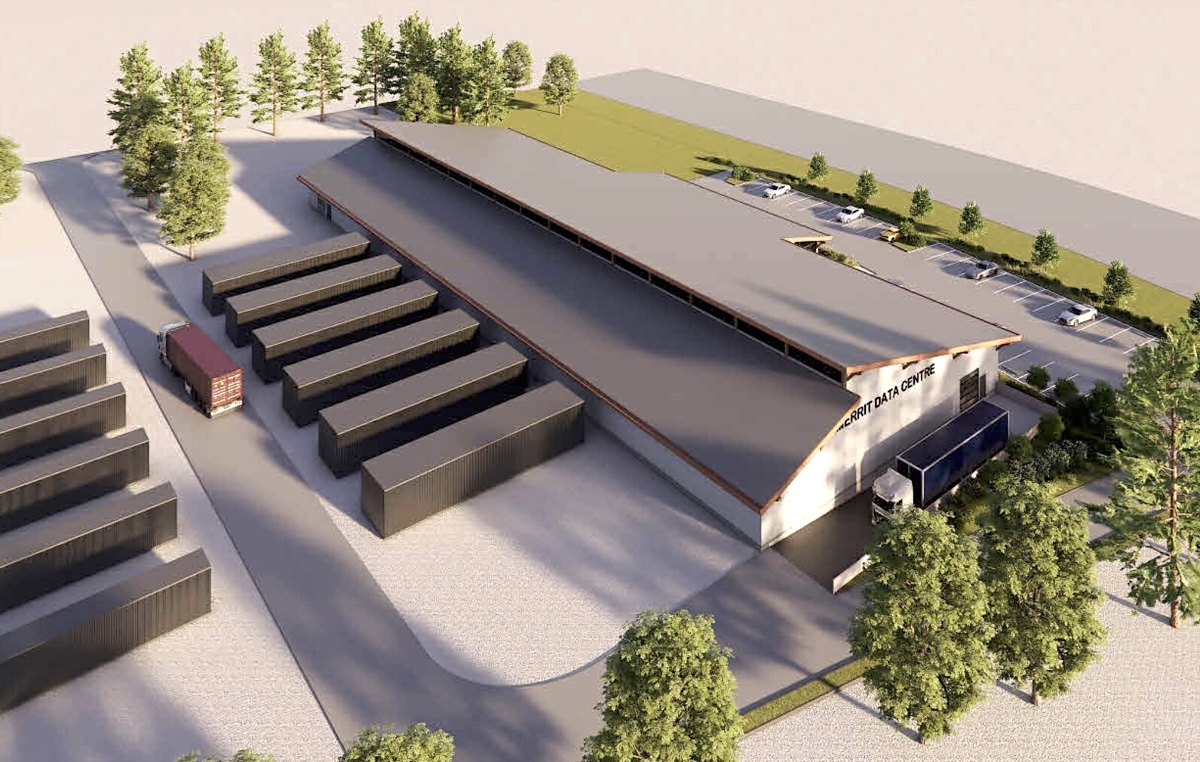
Three years ago, his council started looking to coax new industries to Merritt. The city has had some success. Bell Canada is building a 6.5-megawatt AI data centre near the airport. The facility, which is part of the company’s “supercluster plans,” will be located on a site once slated for a government cannabis operation that already had much of the necessary power and water requirements.
Although a data centre can’t replace the employment of a mine or a logging operation — Bell estimates the facility will employ 150 during construction and 25 workers once open — Goetz is looking at the possibility of the creation of a local “tech park.” A former IBM employee, Goetz said the new data centres are not a new concept.
“I worked in a thing called the LAN, a local area network, which is basically a data centre, but it just had a different name back then,” he said.
He said he is excited about the potential industry shift and its possibilities in Merritt.
“All the land around is now being looked at by tech companies,” he told The Tyee.
The new data centre could provide a “significant” amount of tax revenue for the municipality, Goetz said. As in most B.C. municipalities, industrial property is taxed at a much higher rate than commercial or residential land uses. In Merritt, each dollar of assessed value for the new data centre building will be taxed at double the rate of commercial property and five times the rate of homes.
Goetz said he supports oversight and more investigation as the new centres are built, but those processes shouldn’t stop development.
“Do I want to see six or seven of these in my area? No, absolutely not,” Goetz said. “I think one or two would be sufficient until you can figure out exactly how much this covers and what gets done with it. These are all questions that there’s no information on right now.”
The data centre was initially scheduled to open this spring, but its opening date has been pushed back.
A spokesperson for Bell told The Tyee in an email that the development is happening “in phases” through 2026 and 2027 “in line with customer demand and infrastructure readiness.”
Municipal councillors aren’t the only ones raising questions.
York University researchers Lyndsey Rolheiser and Alexander Carlo have mapped Canada’s existing and proposed data centres to better understand the industry’s rapid expansion.
They say there’s not enough research into the scope of the AI build-out.
“From a researcher’s perspective, it’s troubling that a lot of decisions are being made right now with limited information,” Rolheiser told The Tyee.
She said municipalities should scrutinize claims about economic benefits. Smaller communities such as Terrace are unlikely to see broader technology industries emerge around a single data centre, while larger cities and university hubs — perhaps like Kamloops — may be better positioned to attract related businesses.
As for promises of hundreds or thousands of jobs?
“That evidence is not quite there,” she said.
Terrace plots its new rules
For Skeena Data Centers, Chong said he is taking a long-term approach in Terrace. He told The Tyee that he is still looking for clarification on how the Energy Statutes Amendment Act will affect the company’s access to power. He said he will wait to find out if data centres will be welcome in Terrace, and that he appreciates that the town is doing the research and planning instead of being reactive.
“They’ve been very responsible,” he said. If Terrace decides that they don’t want data centres, Chong said, he would look elsewhere in B.C.
Although Skeena Data Centers is the only public-facing project looking at Terrace right now, David Block, Terrace’s director of development services, noted in a recent council meeting that there are likely more proposals on the way.
Cordeiro, the Terrace councillor, said the most important step is transparency and meaningful public input.
On June 8, Cordeiro tabled a motion asking the municipality to investigate the feasibility of separating data centres from other industrial uses in Terrace’s zoning bylaws. He said he wanted to be proactive, “rather than being caught flat-footed when a real proposal materializes.”
On June 22, council passed the motion unanimously. During the meeting, the councillors discussed the potential to prohibit data centres by default, forcing developers like Chong to apply and be assessed based on individual projects, but they decided to focus on a universal definition first. The municipality is now drafting revisions to the current bylaw, adding a definition for data centres based on their size, water use and location. The bylaw revisions would trigger a public input process in which proponents would be able to make their case, while members of the public could voice their thoughts, which was Cordeiro’s primary goal.
“The ideal outcome is a fair and cordial public hearing where everyone regardless of position can speak freely and feel heard by council,” Cordeiro wrote in an email to The Tyee. ![[Tyee]](/design-article.thetyee.ca/ui/img/yellowblob.png)
Read more: Energy, Labour + Industry, Municipal Politics, Environment








Tyee Commenting Guidelines
Please note that email notifications for replies are not currently working due to a software issue which may be resolved in a future update.
Comments that violate guidelines risk being deleted, and violations may result in a temporary or permanent user ban. Maintain the spirit of good conversation to stay in the discussion and be patient with moderators. Comments are reviewed regularly but not in real time.
Do:
Do not: