


 SHARE:
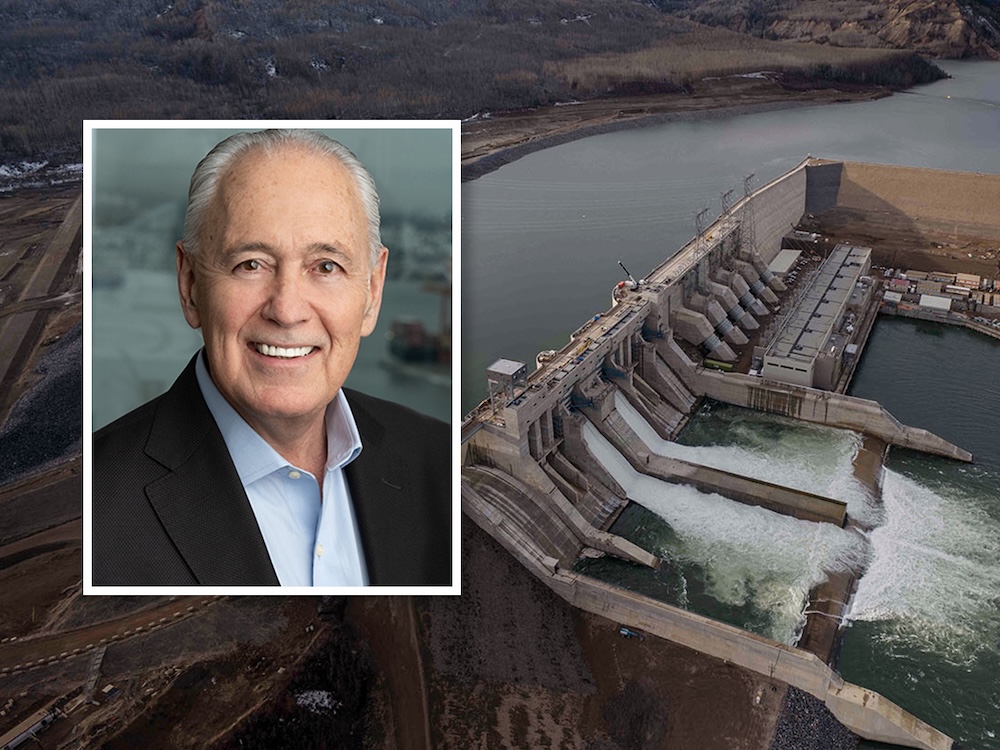
Even as it focuses on greenlighting new wind power projects, British Columbia could eventually return to building massive hydro dams if electricity use spikes in the coming decades, according to BC Hydro chair and former B.C. premier Glen Clark.
Right now, B.C. is banking on wind to supply its residents and businesses with the electricity they will need in decades to come. Clark told The Tyee he hopes energy efficiency improvements will obviate the need for any new massive dams in the province.
But in a wide-ranging interview, Clark added a caveat: if electricity demand does significantly rise in the coming decades, the province could end up revisiting the potential for more dams — including the long-shelved Site E proposal along the Peace River.
By 2035, BC Hydro expects the province will need between 2,200 and 9,700 gigawatt hours of additional electricity each year. For comparison, B.C.’s Site C dam can produce just over 5,000 gigawatt hours. Meeting that demand will be a challenge, but Clark said it can be accomplished by greenlighting new wind projects.
Despite the limitations of wind in B.C. — the province’s gustiest areas are in its relatively flat far north — BC Hydro believes it should be able to source enough wind energy to power homes, electric vehicles and intensive industrial projects. Although solar energy isn’t completely off the table, Clark said its utility is limited both by B.C.’s relative lack of sunshine and by the fact that the province’s energy needs are particularly acute during a handful of particularly cold winter weeks.
Some environmentalists are more pessimistic about the province’s energy future and have called on BC Hydro to increase its output even faster to anticipate growing demand. They point to the prospect of mass electrification as the province turns away from gas vehicles and residential heating to electric vehicles and heat pumps. They also note that climate change will lead to smaller snowpacks, falling reservoir levels and lower hydroelectric output. Industry development — including electrified LNG facilities and computer data centres linked to artificial intelligence advances — could also cause demand to spike.
Clark, however, said BC Hydro can increase output relatively quickly if it needs to do so. Some of B.C.’s demand pressures, he said, have been mitigated by efficient light bulbs, other technological measures and closures in B.C.’s struggling forest sector.
If demand does increase dramatically long-term, Clark said B.C. could find itself revisiting megaprojects, including the long-shelved Site E dam, upriver from Site C.
Tyee senior editor Tyler Olsen recently spoke to Clark about the future of BC Hydro, the role of solar in the province’s energy future, addressing obligations and debts to First Nations, and the Crown corporation’s independence — or lack thereof — from the provincial government.
This interview has been condensed for length and clarity.
The Tyee: BC Hydro says it needs to increase electricity generation by about 5,000 gigawatt hours a year by 2034. That’s as much generating capacity as Site C, and it seems like a short timeline. Why should people feel confident that it can actually accomplish that goal?
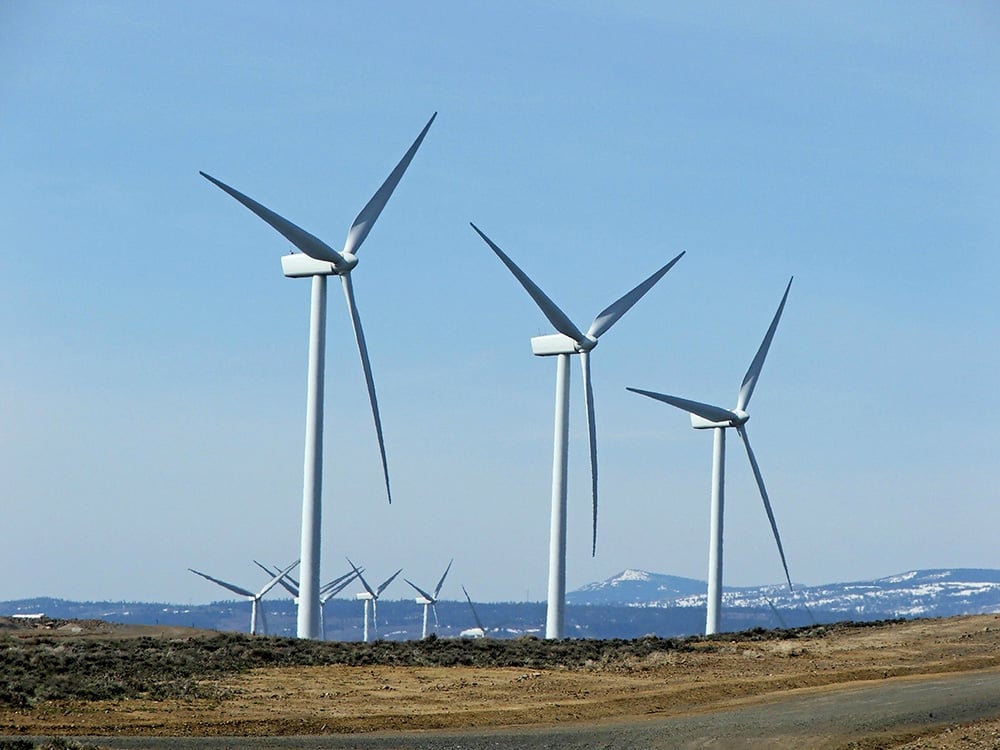
Glen Clark: We’ve already done a request for private power from IPPs [independent power producers] and we’ve approved 10 of them to move forward to the next phase. Of the 10, they are mostly joint ventures with First Nations and they’re mostly wind power projects. Wind is a nice complement to BC Hydro. The challenge with wind is it only blows 30 per cent of the time. British Columbia’s wind power is somewhat limited. It’s not what I would call world-class. It’s good, but it’s not spectacular.
The wind blows roughly 30 per cent of the time, and that makes it an interruptible supply. So you can't run just on wind power. You need to have something backing it up. And because the reservoirs are effectively water batteries, hydro is a nice complement to wind power, because we can let the batteries rise. So we're in very good shape. Of those 10 projects, right now, they're all on track.
The uniqueness of hydro is you can generate a lot of power in a short period of time as you draw the reservoirs down faster. In British Columbia, historically and still today, there's two to four weeks a year where we use a lot more power than the rest of the time combined. It's the winter. So you need a lot of power for a short period of time. It's a challenge for any electricity system, is to have power available whenever people need it.
The next big innovation — and you see this in California and Arizona — is batteries. Batteries can also provide the ability to store that power, and that would improve the flexibility of the hydro system. Large-scale batteries will be deployed in British Columbia, and that's in our plan. But at the moment, they're not perfect because they only hold power ready for four hours. They're improving rapidly, so they’ll get there, but at the moment, for British Columbia, it's helpful, but not perfect.
Is that why solar is less of a solution too, because that demand comes in winter?
There are two problems with solar in British Columbia. They showed me a map here at Hydro showing solar availability, so sunlight. This is the only grey part of North America. So we have the least amount of sun of most places. Now you can produce solar even in Germany. You can produce it here too, but it's expensive, and this is the kind of double-edged sword in British Columbia. The challenge we have is we have amongst the lowest electricity rates in the world. So every new addition, even wind power — which is relatively low-cost with all the subsidies — anything we do that's new adds to your hydroelectricity bill, because the embedded historic costs are so dramatically lower than the marginal new costs every time we add something. This is a challenge.
This is part of the [problem] I have with some environmentalists.
They say, “Well, gee, B.C. or Canada's behind the curve on solar power. Look at China.” Well, the reality in British Columbia is that our electricity rates are so low that solar has a hard time competing. Solar cannot compete in British Columbia if we want to retain the low rates we have.
If we had double the electricity rates in British Columbia, like they do in some parts of the U.S., then solar would be very competitive at the margin for new power. But it's not — not because we don't want solar; we'd love to have more solar power. It's because of two things. One is we don't have enough power and it's generated the wrong time of year. Batteries aren't long enough to bridge the gap between sunlight and daylight at night. But more importantly, the cost of solar is higher than alternatives and higher than our current costs.
But the cost is coming down so much. You look at some of these charts...
It is coming down a lot, I agree. I don't know if you know this, but we're buying a lot of solar power from California and Arizona because what happens is they get so much sunlight that they end up having surplus power because they have a huge expansion of solar with batteries. So we've been buying power almost free from Arizona, and then selling it back to them at night, when it's really expensive. So we make quite a bit of money on that trade. That's going to change. We're not going to be able to make that much money because batteries are getting better, and they have more batteries, and that'll take the place of us being able to provide them power at night. But in the short run, we make a lot of money on it. But you're right, the good news, it's all coming down fast, so hopefully we'll be able to have more solar here.
In previous decades, when BC Hydro was able to meet the demands of a growing population and economy, we were in a different environment, where modern-day policies and relationships with First Nations and other communities weren’t the way they are now. Is it possible to meet those demands now while still having a positive, or at least not a negative, impact on First Nations and communities?
I really believe it is. The secret, of course, is these joint ventures, because the First Nations are buying into them. You need support from First Nations in those territories where there is wind power. Those are sparsely populated with big First Nations populations. Most of our wind power is going to come from those areas and the First Nations are going to own at least half of it.
I don't think we have to worry too much — at least for the next decade or so, we’ve got lots of opportunities for growth.
Does that change depending on what’s creating the demand? In the north, especially, it’s the demand not of residents, but of mines and other resource operations, where First Nations might support the electricity generation, but they don't necessarily support the industrial development.
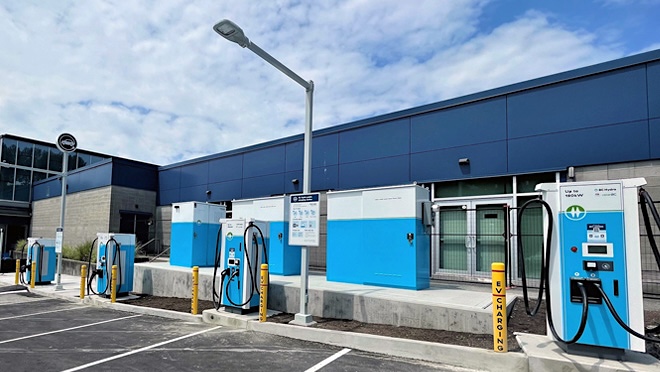
It does change. I think it's important to understand that there are some big macro trends. The invention of LED lighting had a huge impact on the demand curve, flattening it out. The decline in the forest industry has had a huge impact on demand in British Columbia, and, frankly, potential further decline in pulp mills and things. Those are big consumers. The last 20 years have seen a moderation of demand. There's been some increase in demand by population growth and EVs and other things, but it's been mitigated by the decline of the forest industry and scientific innovation.
One of the reasons that BC Hydro is supported is because when you turn your light on, it works. We have an obligation to service the people of British Columbia.
But we can't predict the future. We have to predict the future, but we can't actually predict it. So we have to find plans that are robust, that allow us to look at a lot of options that we can kind of ramp up quickly or slow down, depending on what's happening with the market. The North Coast Transmission Line is a very expensive and big expansion of the system, and the wind power that we just talked about is mostly needed for that line. If the demand does not materialize on that line, then the good news is we have the ability to export power quite readily to the U.S.
We are building before demand and we haven't done that for a long time in BC Hydro. But that's the argument I would make for a Crown corporation. This is nation building. This is about building for the future. We are building this line in anticipation of demand that we believe is going to happen. Some of it, for sure, is going to happen.
[Note: Clark pointed to Hydro’s recent Integrated Resource Plan, or IRP, and scenarios that predict different demand futures. BC Hydro is working toward a scenario higher than the forecast it determines to be most likely. The utility isn’t, however, planning for a scenario based on the maximum potential industrial development in the province’s north.]
Why is BC Hydro not planning for the North Coast load variability scenario — the high, high demand scenario?
Because every time we build, as I said, we're going to increase your electricity rates in Vancouver. So we have to try to support the nation-building notion without overbuilding, if we can help it. We need to be prudent about that. These [industrial projects] have such long lead times — and Hydro does too, which is obviously challenging to stay flexible. But some of the projects, like the wind projects, do have a big advantage, and that is they're quick to turn around. So, by the way, is a natural-gas-fired plant, which we're not planning on, but they're more like a two-year turnaround, as opposed to a dam that might be 15 years.
So it's not crazy hard to ramp up if we have to. And these IRPs are more like iterative plans. They’re not cast in stone. So this is our best forecast based on all the evidence, but every year we have to update that based on what we're seeing. And we can dial some of it back, and we can ramp some of it up, depending on how it goes.
Why do the plans assume that BC won't meet its greenhouse gas targets?
Well, because of the increased expansion of the LNG projects. Does it say that in there? I don’t know if it did.
Yeah.
LNG and the increase in that Montney corridor, north of Prince George. It’s the biggest natural gas field certainly in North America. It’s bigger than the entire production in B.C. today and it’s undeveloped. The assumption is that will get developed both for export to the U.S. and for domestic use and for LNG. And that just means there’s a lot of [electricity] consumption.
There are so many interrelated issues here, like the North Coast Transmission Line, emissions — is there a case for BC Hydro no longer being a Crown corporation and being, at some point, within government where some of these decisions are being made?
I don't think so. The legislation creating BC Hydro is kind of unusual. It says BC Hydro is an instrument of government policy, so it's not like some of the other Crown corporations. We actually have to do what government tells us to do. But as a regulated monopoly, I think you'd want it to be outside. The culture and the expertise of BC Hydro is world-class. I don't think you'd want it as a government department, to be honest.
Does it need more independence then?
Not really. The regulations are designed to stop multinational, private companies from raping and pillaging. BC Hydro is owned by the people of British Columbia, so I'm not sure that a tough regulatory environment is required. You just get rid of the government if you don't like it. The utilities commission is not that old. It was created in the 1980s.
I sometimes wonder: obviously it has its duty and its role in regulating lots of other utilities, but when it comes to regulating BC Hydro, the utilities commission feels like it could be redundant.
I agree with that, but I think it's not bad to have the utility have to defend its positions with some rigour. It does impose that on the corporation, notwithstanding that every once in a while, the government directs us to do stuff. When they make us do the Site C analysis [a recent “lessons learned report” directed by the commission], that's a good thing. We should have done it anyway.
I was going to get to that. I’m interested in the fact that the Site C analysis notes that you can’t really foresee a pandemic. COVID has been blamed for $1.6 billion of the cost overruns. At the same time, as you get older, you realize everything's always going to cost more money and take longer than you think it's going to take. You can't foresee the specifics of what's going to come up, but you can foresee the unforeseeable in BC.
There was the pandemic, and then there were the wildfires, and then the atmospheric river, and now there's the tariffs. Maybe you can't foresee any of those, but you can start to say, ‘Something's going to come up and it's going to throw a wrench in plans.’ Maybe this isn't just a BC Hydro question, but why is that so hard to figure out for institutions?
I think it’s pretty simple. It’s the same in the private sector. If you're going to build something, you can put your best estimate out there and build it or you can sandbag and say, “Well, gee, we better be careful here. So we're going to add 25 per cent to the cost just in case we run into unforeseen circumstances.” You can argue that's prudent, but what's going to happen is then you'll spend more money than you would otherwise. Putting a budget out there that's 25 per cent higher than you think it's going to be for political reasons because you want to come in under budget is really not the right business approach.
I think you want to put it out there as best you can and have a contingency fund and be accountable for it.
I don't think there's much more geotechnical work they could have done in advance of this project. They did a lot, and obviously they discovered stuff that they didn't anticipate or thought was very low probability, and that cost us a lot more money. There's no getting around that, and obviously there's lots of things Hydro could do better, but some of that is the nature of these big megaprojects. Even in a private company, when you're doing a project, there's always a tension between putting in a budget number that is high enough that you're never wrong and one that's actually realistic, and trying to hold you to account. It's water over the dam now, I guess, no pun intended.
Yeah, though it does impact cost-benefit calculations.
Yeah, if you came in and said it was going to be 16 billion, you probably wouldn’t have built it.
It seems like a lot of these formulas or analyses are based on best practices across the world. But in BC, we have specific dynamics related to land and terrain that are different than Germany or New York. So I think about the North Coast Transmission Line and the increase in wildfires and the increase in floods and the increase in atmospheric rivers and all these things that we're seeing much more frequently. You can't foresee any one event, but you can imagine a world in which something comes up and increases the cost quite a bit.
At the risk of being proven completely wrong, the North Coast Transmission Line is a lot easier than a dam. Remember, it's the twinning of an existing line. It's a linear project, not an excavation, not a gigantic earthworks project. Twinning an existing transmission line is something Hydro does literally every day — not high voltage, but twinning a line is quite common. So it should be a relatively straightforward project, although the complications of First Nations are real and serious and are challenging, but the basic construction is these big towers. These guys know what they're doing so it should be pretty straightforward.
Isn't that where we get into trouble, though? Because if you think about the pandemic costs of the dam, those were soft costs. Those were the costs of delays and labour and that sort of thing. And OK, you can actually probably build the actual line for the same amount, but a highway gets cut off, or a river goes through —
But remember, that high-voltage line we have now is at full capacity, and it’s the only line. So if you live in Prince Rupert, you live in any of those towns, you completely rely on one line. In Vancouver and these places, we have two or three lines coming down. We have all kinds of redundancy. There's no redundancy there. So another argument — it's not an economic argument in terms of cost-benefit, but it's certainly an argument for the people living in those areas — is that they need it. We need more access.
I guess you could argue both could go down the same time in a catastrophic flood or something. But that line's been there quite a while. I don't want to understate it, but it's a widening of the right-of-way. It's slightly higher for physics reasons. And there's some nuance around First Nations concerns and some costs. The challenge of the First Nations co-ownership and their concerns about certain routing is a complexity that we have to deal with and no one should pretend otherwise. But I don't think anybody's particularly worried about it. We've been in discussions with the 16 First Nations up there for quite a while.
The Conservatives have an alternative, which is nuclear, apparently, and natural gas. I think nuclear stuff is just literally crazy, but you could do a bunch more natural gas things that would obviate the need for the transmission line.
But one of the reasons you have a Crown corporation is, I believe, long-term, these are good projects. Even Site C, as ridiculously overpriced as it was in the end, has an 85-year amortization. Over a long period of time, the people of British Columbia will benefit from that dam. And high-voltage lines are on the same length of time. We have high-voltage lines that are 70 years old here. If you think long-term, it's a good investment. It's a good investment today, but if some of these things don't materialize today, but materialize down the road, we'll be ready to accommodate, and that's a good thing.
Site C obviously has the community costs and the impact on First Nations. BC Hydro isn’t foreseeing or planning for a project of that scale again any time soon, correct?
What do you mean by soon?
Well, is there any chance BC will, or is, considering a project of that size down the road?
Yes, I would say. Now I don’t say that with certainty that’s going to happen. But I think it’s disingenuous to say we aren’t going to if we really want to decarbonize and we don't want gas plants everywhere. We may not need anything if battery technology improves dramatically. But there are potential capacity projects in British Columbia. Like Site E, which is farther up, closer to the Alberta border. There is a proposal by First Nations called the Homathko, which has got two dams on it, which is kind of across from Campbell River in the interior of B.C. That's a brand new proposal. If you look at Hydro during its dam-building phase, they've got studies on every river in the province. Obviously we're not going to dam every river in the province, but I think Hydro has an obligation to look at the proposals.
There are some geothermal projects that look really promising, and a geothermal project of any scale will be billions and billions of dollars. These are big projects. So I don't think it's likely. I'm not saying we're going to do it, but I'm just saying there is going to be a need, potentially, for more capacity in British Columbia.
The solar projects and the wind projects and all those projects are only intermittent. We need firm power somewhere along the way.
We have an intertie with the United States, which we use now extensively, buying and selling power. We have an intertie with Alberta in the south, which is compromised and doesn't work very well, but that should be cleaned up. And then if you start looking at the grid, sort of east-west, if you look at Alberta, Saskatchewan, Manitoba and B.C., then there's lots of opportunities, for example, to buy firm power from Alberta rather than build it here.
There's lots of opportunity for east-west. Alberta's talking about a nuclear plant, which I think is pie in the sky, but let's say they build one, that could be a backup for our Hydro system, if we want. It's in such a state of flux.
There are no big projects being planned by BC Hydro. But BC Hydro, when you look out 10 years, has to start looking at all of the resources that are available depending on how much development we get, and also depending on our success in electrification. Are we really going to get off gas heating in British Columbia? Are we all going to be driving electric cars at some point? I hope we are at some point. Well, that's a lot more consumption.
When you say the words ‘Site E,’ people’s ears would perk up...
Yeah, E was further up the Peace River and close to Alberta.
From what I’ve read, its plans were shelved in the 1980s. Have they been resurrected in some way?
No. When I was a minister for Hydro, which was 30 years ago, we shelved Site E because we didn't need the power and we didn't think it was economic at the time. The thing about the Peace River is it's already been artificially manipulated, the whole river system, so their logic with Site C was that it’s not a natural river anymore, so you might as well take advantage of the storage opportunities upstream.
I think Site E is the one that would still be, in my view, not actively considered, but one that would still be on BC Hydro’s list looking out 10, 20, 30, 40 years. Now depending on your view, and my view is pretty technologically optimistic, there's so many things we can do on virtual grids and on solar-powered batteries and on demand-side management, and the technology keeps changing. We may not need any more big projects in British Columbia, ever, because of the changing nature of the technology. But not counting that, depending on what happens, there's certainly a possibility you'll need something here on the capacity side. ![[Tyee]](/design-article.thetyee.ca/ui/img/yellowblob.png)
Read more: Energy, BC Politics












Notice about commenting changes
The Tyee’s commenting system will be moving to a new platform on Nov. 12. If you’re already a Tyee commenter you must register with the new system on or after Nov. 12 with your preferred username.More information can be found here.