


 SHARE:
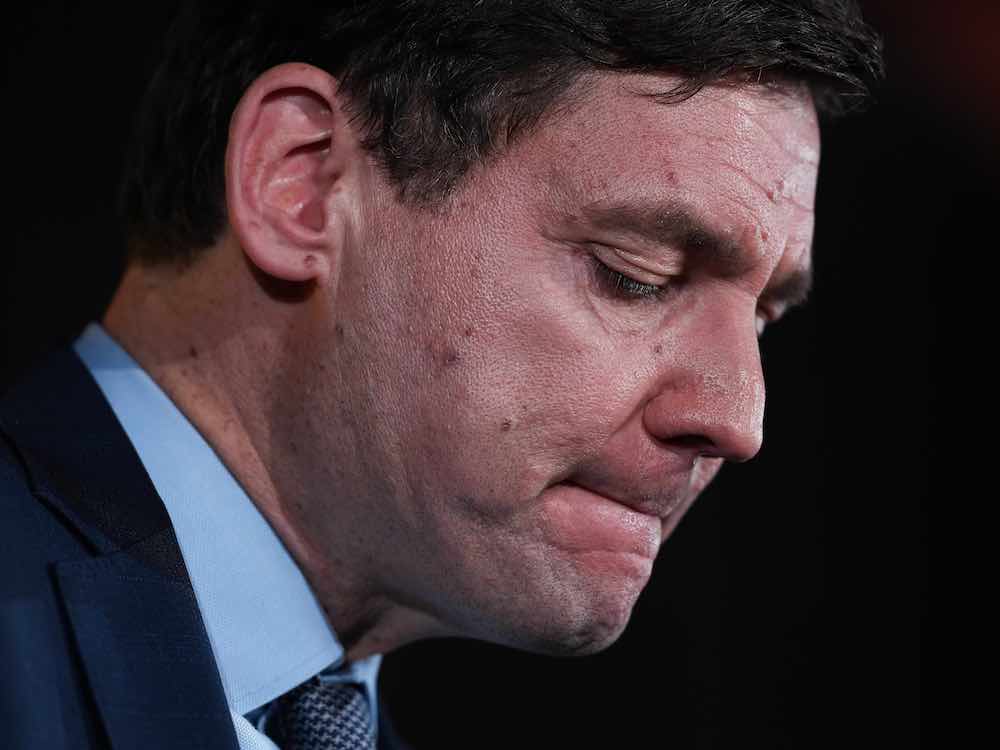
Returned to office with the narrowest possible majority, B.C. Premier David Eby has had several weeks now to reflect on why October’s provincial election was so close.
“There’s a series of factors, I would say,” Eby told The Tyee in a year-end interview. “I think the Conservatives spoke very effectively to communities about issues of public safety, street disorder, mental health and addiction, in ways that we need to take very seriously.”
Inflation and the difficulty many people are having making financial ends meet were also key, Eby said.
People are looking to local representatives for solutions, even if, for things like inflation, the problems are global, he said. “I think there’s broad frustration among British Columbians about the impacts they feel on their bottom line around the amount of money they are left with at the end of the month.”
The BC Conservatives also benefited somewhat from voters’ frustration with Justin Trudeau’s Liberal government in Ottawa and their willingness to consider a Conservative alternative, he said.
“At the end of the day I really think the message of the election was about affordability and lived experiences in communities in the province and the need for us to really redouble our efforts on those,” Eby said.
BC NDP candidates won election in 47 of the province’s 93 constituencies, just enough to hold a majority over the 44 Conservatives and two Greens elected.
On Friday the NDP and the Greens made separate announcements that they had reached an agreement in principle to co-operate, with annual reviews, for four years until the next election. The seven-page agreement includes a commitment from the Greens to support the government on confidence votes in exchange for promises to advance several Green priorities.
“The goal for me is stability for the government and that the legislature works for British Columbians,” Eby said a day ahead of the agreement’s announcement.
One of the messages from voters was to work together with other parties whenever possible, added Eby. “It’s certainly easier with the Greens. We have many values in common, so there’s lots for us to talk about.”
The agreement includes $50 million to pay psychologists through the Medical Services Plan, $15 million for community health centres, a commitment to improving inter-regional transit, an early review of the CleanBC climate plan, $50 million for heat pumps and the appointment of a committee that will look at proportional representation along with other ways to improve the province’s democracy.
It also gives Eby and the NDP assurance that they can appoint a Speaker and still comfortably win votes in the divided legislature.
Eby, who is 48, became premier in 2022 when his party chose him to lead after former premier John Horgan’s resignation.
What the future looks like
How will this term differ from his first two years as premier?
“I think the core of it is when you have a political near-death experience it really focuses the mind.” Eby said he feels “profoundly fortunate to be given another opportunity to take another swing at the really hard issues facing British Columbia.”
The “hard issues” are the same priorities he has promised progress on since first becoming premier: affordability; health care and strong public services; strong and safe communities; and a strong and clean economy.
“Those four priorities are the key animating priorities that will guide us over the next four years,” Eby said. “Recognizing that we’re going to face issues like the Trump tariff proposal and other things that are going to come up, the core of our focus is going to be on those four areas.”
U.S. president-elect Donald Trump, who takes office in January, has threatened both Canada and Mexico with 25 per cent tariffs on their exports to the United States. Canadian premiers and the federal government have been meeting to discuss how to respond, including the possibility of retaliatory tariffs on imports from the United States or to add to the cost of key commodities like oil, uranium and potash.
“Nothing is off the table,” Eby said repeatedly.
Eby described Trump’s proposed tariffs as “ridiculous” but stressed that the threat needs to be taken seriously.
“For retaliatory tariffs, those are going to have consequences for Canadian businesses and Canadians and Americans alike,” Eby said, adding that the response needs to be shared fairly across provinces. “I just want to make sure British Columbia, we’re prepared to do our part, but not that Western Canada is bearing all the cost of what will be a very costly trade war with the United States.”
B.C. exported $1 billion of electricity to western states last year, he said. It’s unlikely those states would be able to find a domestic source to replace that power easily. “They’re already dramatically short the power they need for [artificial intelligence] and everything else, especially down the West Coast,” Eby said. “It’s just bizarre.”
According to analysis from the Royal Bank of Canada, about seven per cent of B.C.’s gross domestic product comes from exports to the United States, which is at the low end among provinces. At the other end are Alberta and New Brunswick, where U.S. exports make up roughly one-third of their economies.
“Obviously it would be quite catastrophic for many British Columbia businesses and British Columbia families if the tariffs were imposed, just like it will be quite awful for many American families as well,” Eby said.
“But we are in a better position than other provinces, because of our positioning on the Pacific Ocean we have exposure to a whole different array of trading partners and ease of access to those trading partners that other provinces don’t have,” he said. The diversification of trading partners has been a focus for British Columbia governments going back decades.
“It’s an obvious opportunity if you’re sitting in the office of the premier and you’re dealing with leaders of different places, that the Pacific nations are growing and significantly interested in our exports,” he said.
The threat of tariffs, and the economic damage they would do, comes as Eby and newly appointed B.C. Finance Minister Brenda Bailey talk about putting a greater focus on the province’s economy.
“We took a lot of attention during the election campaign around economic growth,” Eby said. “Unfortunately it was two weeks after the election was done that Stats Canada announced we had the fastest-growing GDP of any province in Canada. That would have been a helpful stat during the election campaign.”
With growth at around two per cent, even though it leads the country, it’s difficult for the government to keep up with the rising cost of providing services, added Eby.
The aim is to grow the economy in ways that recognize that climate change is real and that environmental sustainability is key, Eby said.
He gave the example of BC Hydro’s recent announcement that it would be buying power from nine wind projects, each with a First Nations partner, that would see more than $5 billion in private sector investment. It’s possible to grow the economy, protect the environment and partner with First Nations at the same time, he said.
“What people will see is we’re growing the economy, but doing it in a way that recognizes the values of British Columbians and the obligations we have to our kids.” ![[Tyee]](/design-article.thetyee.ca/ui/img/yellowblob.png)
Read more: BC Politics









Tyee Commenting Guidelines
Comments that violate guidelines risk being deleted, and violations may result in a temporary or permanent user ban. Maintain the spirit of good conversation to stay in the discussion and be patient with moderators. Comments are reviewed regularly but not in real time.
Do:
Do not: