



 SHARE:
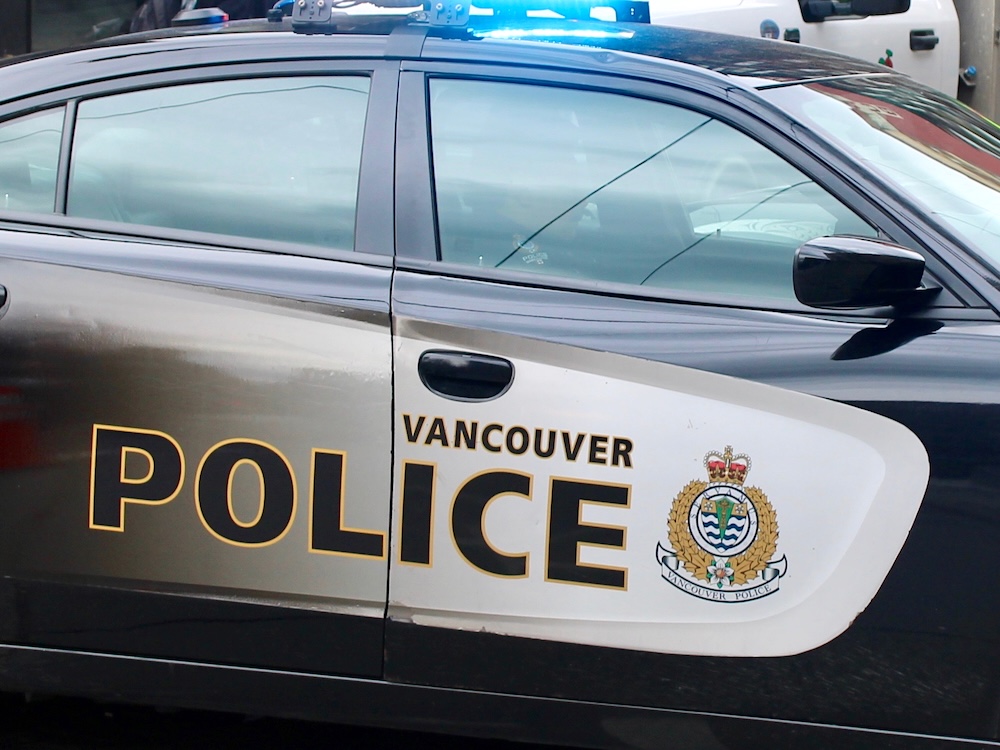
Vancouver students’ opinion of police in their schools has changed significantly since the program was reinstated in public schools in 2023, according to a recently released third-party evaluation.
Earlier this month, a long-promised external review of the program that stationed police officers in 17 of the district’s high schools and seven Vancouver-based independent schools was finally released publicly.
It’s almost exactly what B.C. human rights commissioner Kasari Govender has been asking the province to do since 2022: review the efficacy of programs that place police officers in B.C.’s public schools.
“I’m really pleased to see them following at least the gist of the recommendation I made, which, despite how it was represented, wasn't to cancel all SLO [school liaison officer] programs carte blanche,” said Govender, who had previously called for the programs to be cancelled until a provincial evaluation of their impact and potential harms was completed.
“It was to evaluate them and figure out what could alleviate some of the negative impacts that we have heard, certainly anecdotally, that these programs can cause... see how those can be alleviated, and study whether they actually are doing a job.”
Govender’s concerns had included the penalizing of Black, Indigenous and other students of colour, as well as students with disabilities, in particular, as highlighted in U.S. scholarship on police in schools. There are comparatively few academic studies of police in Canadian schools.
As well, she was concerned that police seemed to take over positions that teachers and other educators are trained to handle, such as counselling students and coaching sports teams.
Govender attributes the positive reviews the Vancouver Police Department’s SLO program received this time around to the changes they made for the new program that started in September 2023. This includes an emphasis on relationship-building with students, teachers and staff, over law enforcement duties.
SLOs also traded wearing police uniforms for VPD-branded athleisure wear. They carry smaller and concealed weapons — a gun and baton — instead of the standard-issue police weapons in visible holsters. And they are driving unmarked vehicles instead of police cars.
“We saw them take some important steps towards addressing some of the potential harms of SLO programs and harms that had emerged from the 2021 review,” Govender said.
“It’s not perfect; I have some concerns. But I am pleased to see them properly evaluated and take stock of what works and what doesn’t.”
The evaluation report was released about two weeks before fired Greater Victoria School District trustees got their jobs back.
The trustees were dismissed by government in January 2025 due to their alleged failure to create a district safety plan in collaboration with local police and the Songhees and Esquimalt First Nations, following the board’s cancellation of the SLO program. The fired board members had requested a judicial review of their dismissal, which was supposed to begin May 25.
However, over the weekend the Ministry of Education and Child Care’s lawyer disclosed previously unreleased text messages between Victoria Police Department Deputy Chief Mike Brown and Jennifer McCrea, associate deputy minister of education and child care.
They included derogatory statements from Deputy Chief Brown about school board and teachers’ union members. Highlighting tensions over Govender’s advocacy on the SLO file, some of the texts called Govender a “moron” and “an arrogant ideologue.” The ministry has withdrawn its case against the fired trustees and reinstated their positions.
Survey results: 2021 vs. 2025
Conducted by Qatalyst Research Group, the “Evaluation of the School Liaison Officer (SLO) Program” final report was tucked into the agenda for the school district’s May 13 policy and governance committee meeting.
Contrasted with the 2021 Argyle PR report that led to the cancellation of the program in Vancouver public schools that spring, Qatalyst found anonymous student and teacher survey responses were significantly less negative about SLOs this time around.
That includes Black and Indigenous students, whose concerns over police in schools were central to the Vancouver School Board’s decision to cancel the program in spring 2021.
At the time, concerns over police violence against Black and Indigenous people in Canada and the United States were top of mind, including the recent police-caused deaths of Black and Indigenous people and, in Vancouver, evidence of overpolicing of their communities.
When asked by Argyle PR in 2021, 60 per cent of Black Vancouver district students had a negative perception of SLOs. But Qatalyst reported that as of 2025, only 12 per cent of Black students who responded to its survey had a negative opinion of police in schools.
Black students made up approximately four per cent of respondents each, for both the 2021 and 2025 surveys. Indigenous students were four per cent of the 2021 survey respondents but only two per cent of the 2025 survey respondents.
Indigenous students are four per cent of the overall Vancouver public school student body and four per cent of Grade 8 to Grade 12 students. Vancouver does not collect race-based enrolment data for Black students.
Qatalyst categorized Indigenous students’ negative impression of the school liaison officer program as dropping from 33 per cent in Argyle’s 2021 report to six per cent in Qatalyst’s 2025 survey.
The Tyee has previously reported about 50 per cent of Indigenous students had negative views of the SLO program in Argyle’s report, based on the 53 per cent who did not agree that police presence made schools safer.
Qatalyst’s report also noted some Indigenous students who completed the survey did not identify themselves as Indigenous. But of the 20 students who did not disclose their ethnicity, only one student held negative views of the program.
Govender said that if she were designing the review from scratch, she would have ensured Indigenous students were four per cent of survey respondents to ensure they had proportionate representation.
“But overall, I’m really happy with the evaluation,” she said.
“Really glad to see that there were real changes that made a difference. My big takeaway here that I would like other school districts and other police boards to take away from this is: don’t be scared of evaluation.”
Teachers more familiar with SLOs than students
Where the Argyle report in 2021 included survey responses from about 680 Vancouver School Board students, the Qatalyst survey reached 707 students, including 71 from independent or private schools.
While Argyle also gathered feedback from parents and community organizations, Qatalyst’s evaluation obtained feedback only from school liaison officers, teachers, school administrators and students.
Qatalyst interviewed 15 of the 17 school liaison officers and 25 school administrators, as well.
Some of the standout findings include that police are interacting more with teachers than they are with students. Nearly two-thirds of teachers said they were very familiar with the program, and 95 per cent of teachers have interacted with an SLO.
The program seems to have morphed from one where SLOs filled roles that educators could have done, such as counselling students, to one where SLOs often act as consultants for teachers, Govender said.
“That’s interesting information to me, because that is different than our research a number of years ago showed on the role of SLOs,” she said.
Only 43 per cent of students reported interacting with an SLO. Another 46 per cent of students said they were not familiar with the program.
Students who were least familiar with the program, who were white or multi-racial, or who identified as female or non-binary, were most likely to report feeling uncomfortable approaching an SLO in school.
Govender noted it was “remarkable” that teachers are more familiar with the SLO program than their students. She added that even within the single school district — and seven independent schools — how SLOs showed up in schools was varied.
“It still seems that some are on more of an on-call basis, and some are more present on a more consistent basis,” she said. “I imagine that is part of the difference.”
Questions about weapons, training
Compared with the program that ended in 2021, when SLOs did not receive specialized training, the current program now includes special training on working with youth and marginalized people.
The Tyee spent nearly two years trying to get training information from the Vancouver Police Department through freedom of information requests. It also took a year and a half to get the VPD to reveal the names and school assignments of current SLOs — information the school district previously made public.
We are still engaged in a freedom of information dispute via the Office of the Information and Privacy Commissioner over the Vancouver School Board’s decision to withhold training videos for SLO courses on anti-racism, working with neurodivergent students, hold and secure drills and crisis intervention and de-escalation.
While Qatalyst reported all interviewed SLOs had undergone some training over the past year, they did not say whether SLOs have completed their training.
“That’s certainly an open question for me,” Govender said.
Govender would also like to know why SLOs need to carry weapons, given the emphasis on their aim of building relationships with students and staff.
“If they’re actually investigating a crime, fair enough. But that’s not what SLOs are there to do,” she said. “I haven’t had the chance to ask that question. I’m not saying SLOs should never have weapons in schools. I just don’t understand what the purpose is.”
Race and disability data needed
According to the report, SLO activities were dominated by participation in school sports, followed by attending meetings, offering advice, responding to incidents, engaging in conflict resolution, doing presentations and school safety drills.
Qatalyst’s evaluation report also revealed schools called police 1,117 times between September 2023 and June 2025. The majority of calls covered in the Qatalyst report were categorized as “assisting the public,” followed by theft under $5,000 and suspicious person, vehicle or occurrence. No calls were related to drugs.
Sixty-eight people were recommended for charges during this time period for offences including uttering threats, assault, weapon possession, break and enter, and theft.
It is not stated if or how many of these individuals were students. But the report did reveal that at 27 per cent, "Caucasians" were the largest ethnic group charged. Nine per cent of those charged were Indigenous and three per cent were Black.
Charges were pursued for only 13 individuals, however. Four have been convicted, four are currently before the courts, and the other five had outcomes including but not limited to diversion to alternative justice processes, conditional discharge and released with conditions.
There was no ethnicity breakdown for those 13 charged individuals. Govender wants to see that data.
“You have to do the full race-based analysis,” she said, as well as how many people have disabilities, particularly neurodiversity and mental health-related disabilities. Govender’s office is currently doing its own race- and disability-based analysis of police use of force in B.C., she added.
“We want to look at charging and investigations of young people, but we also want to look at how force is used,” she said. ![[Tyee]](/design-article.thetyee.ca/ui/img/yellowblob.png)
Read more: Rights + Justice, Education, BC Politics



Tyee Commenting Guidelines
Please note that email notifications for replies are not currently working due to a software issue which may be resolved in a future update.
Comments that violate guidelines risk being deleted, and violations may result in a temporary or permanent user ban. Maintain the spirit of good conversation to stay in the discussion and be patient with moderators. Comments are reviewed regularly but not in real time.
Do:
Do not: