


 SHARE:
The number of British Columbians without a regular family doctor or other primary care provider has grown to nearly 1.3 million people.
That’s a 45 per cent increase since 2017 when the NDP formed government.
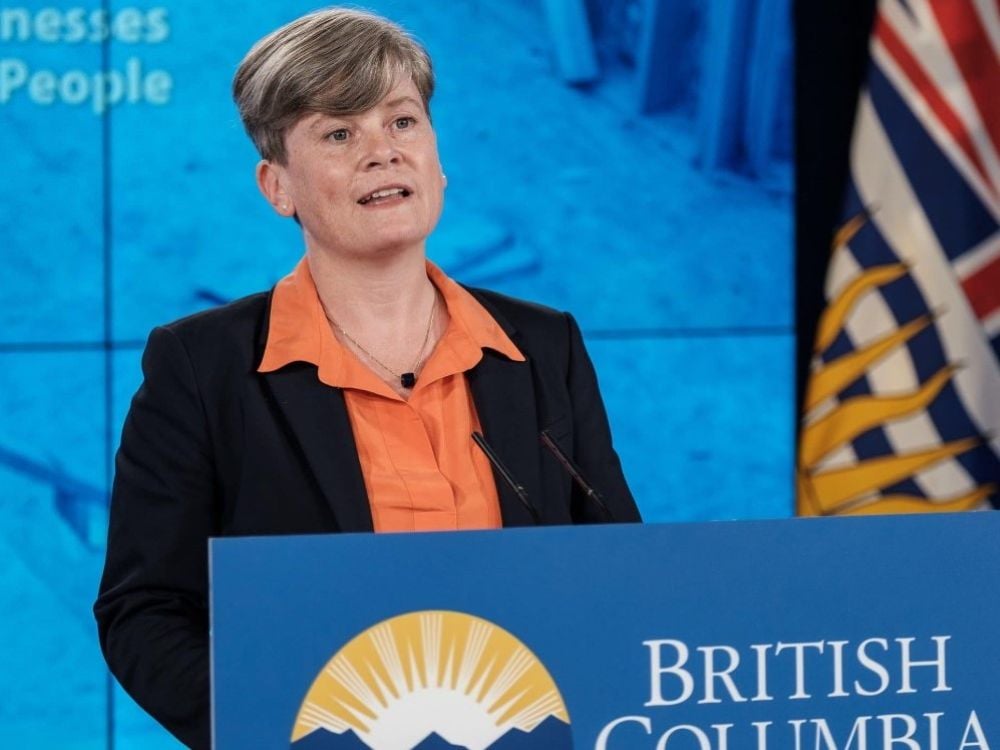
Health Minister Josie Osborne says that despite the increase, the government’s efforts to connect patients to primary care providers are showing progress.
But Conservative Party of BC health critic Brennan Day says the problem continues to get worse.
“There’s a lot of rallying around headlines that don’t really line up to people’s reality,” Day said, referring to recent government announcements that have highlighted the number of medical professionals who have been attracted to the province and the number of people who have been attached to care.
The announcements distract from the growing list of patients who remain unattached to primary care providers, he said. “The reality people are feeling on the ground — especially here in Victoria the numbers are massive — is not really reflected.”
In response to questioning from Day during debate on the Health Ministry’s $36-billion budget, Osborne said the most up-to-date information as of the end of April showed that 1,259,425 people in the province were not attached to a primary care provider.
That works out to about 23 per cent of B.C.’s current population of 5.7 million.
It’s a significant increase from when the BC NDP formed government. At that time the Canadian Community Health Survey found that 897,000 people, or 18.2 per cent of the population, were unattached.
That too was part of a long-term trend. About twice as many people were unattached to primary care in 2017 as had been in 2003.
Family doctors act as gatekeepers to the health-care system, referring patients to other specialists, but they also get to know the people they serve over time, allowing them to deliver higher-quality care than a walk-in clinic or other episodic care.
In recent years the province has added training spaces for doctors and nurse practitioners and created primary care networks where doctors and nurses work as part of teams with other health professionals.
It has also introduced a new pay model that moves away from the fee-for-service system where physicians bill for each patient they see and towards paying them to look after a population of patients.
And yet the number of people who are unattached to a primary care provider continues to grow.
Minister points to population growth
During debate, Osborne said more than 4,000 attachments were being made every week through the Health Connect Registry and as of March 345,000 people were still on the registry waiting to be connected to primary care.
She declined to provide maximum wait times but did share the median number of days a patient waited to be attached in each health authority: 198 days in Northern Health, 171 days in Vancouver Coastal Health, 241 days in Fraser Health, 388 days in Island Health and 477 days in Interior Health.
Provincewide, the median time it is taking to attach a patient to primary care is 295 days.
“Big picture, I think there is real progress that is being made attaching British Columbians to family doctors and nurse practitioners, but there’s clearly still a lot of work to do,” Osborne told The Tyee. “We want to make sure that everybody who wants that longitudinal relationship with a primary care provider has it.”
The problem has been growing for at least 20 years, she said, but there are indications it is changing direction. “We are seeing really good signs of progress in terms of outpacing population growth when it comes to attachment and outpacing population growth when it comes to adding more family physicians and nurse practitioners and other primary care team members to the system,” she said.
The government has had some success, she said, with its primary care strategy that includes investing in training more providers, introducing the new payment model and providing more access through urgent and primary care centres and community health centres.
“For anybody who is still struggling to find a primary care provider, it is a really stressful situation, really frustrating,” Osborne said. “Accessing care like that shouldn’t be a source of stress, and too many people are still waiting longer than they need to.”
Day said he regularly hears from British Columbians who are frustrated and has seen it himself. One of the people working in his Courtenay-Comox constituency office has some fairly serious health concerns and has been waiting on the registry for two years, but only gets to see a family doctor in Calgary when she’s visiting a family member.
There are further wait times to see a specialist, Day said, giving an example from four years ago of his son waiting to see an ear, nose and throat doctor.
A routine test had found his son, who was in kindergarten at the time, was deaf in one ear. He was referred to a specialist, but the wait was 18 months. In that time he had four ear infections that required trips to the emergency room and antibiotics and he burst an eardrum.
All of that, Day said, “for the sake of a 30-second tube insertion.”
Is more pay for doctors a fix?
Asked what he sees as the solutions, Day emphasized better tracking is needed to know what’s happening in the system. “They need to start measuring some basics,” he said. “How do you plan recruitment campaigns for a specialist if you don’t even know where that specialist is required?”
When the provincial budget came out in February, Canadian Centre for Policy Alternatives senior researcher Andrew Longhurst pointed out that increasing the number of practitioners and changing the payment model have failed to lead to improved access to care.
“It speaks to what’s called the target-income hypothesis, so physicians reach a certain income threshold and they either maintain or pull back on services because they’re making that much more, and that’s playing out in B.C.,” he said.
The budget showed that under the new payment model the spending for physician services was expected to make a significant jump, Longhurst said. “It’s not increasing access to health care, but it’s increasing incomes especially for physicians at a time when we need to be seeing improvements in access to primary care, emergency departments, the whole spectrum of services.”
Quebec saw a similar dynamic where increased pay for physicians led to a shrinking percentage of people having access to a regular family doctor, he said. “We’re a number of years into this and the fact there isn’t a rethink of the unintended consequences, I think it says to me they maybe don’t want to face the facts of what this new payment model is doing to primary care access in the province.”
Osborne disagreed that the new payment model has led doctors to reduce the number of patients they see. On average each physician has about 1,250 patients attached, she said.
The new payment model includes compensation for the time doctors spend doing non-clinical work like making notes or keeping records, she said, as well as taking into account the complexity of patients they may have on their caseload.
When it was introduced, the model was expected to increase the gross payments for a doctor working full time in family practice from an average of $250,000 a year to $385,000, before paying for overhead such as office rent or staff salaries.
Many primary care providers are looking for work-life balance and would rather be delivering care to people than running a business, Osborne said, and the government has been taking steps to reduce the administrative burden for them.
The new payment model provides the government more insight on what doctors are doing and it will work with Doctors of BC to continue to make needed tweaks, she said.
For patients, there’s a distinction to be made between attachment and access, Osborne said, adding that the move to team-based care is also significant. “They are still getting the primary care that they need by seeing those team members, whether it’s a physiotherapist or a dietitian or a mental health counsellor or a nurse.” ![[Tyee]](/design-article.thetyee.ca/ui/img/yellowblob.png)
Read more: Health, BC Politics











Tyee Commenting Guidelines
Please note that email notifications for replies are not currently working due to a software issue which may be resolved in a future update.
Comments that violate guidelines risk being deleted, and violations may result in a temporary or permanent user ban. Maintain the spirit of good conversation to stay in the discussion and be patient with moderators. Comments are reviewed regularly but not in real time.
Do:
Do not: