


 SHARE:
Planning the Future of Abu Dhabi: A Canadian-Emirati Collaboration for Sustainable Urbanism
Edited by Larry Beasley and Michael White
UBC Press, On Point Press (2026)
There is a version of city-building that planners often imagine, if not quietly hope for. A place where vision aligns with implementation. Where institutions work in concert rather than at cross purposes. Where decisions are made efficiently, guided by long-term thinking rather than short-term pressures. Where plans are not just written, but realized.
It is, in many ways, a planner’s ideal.
And yet, this ideal tends to appear most clearly in places where another condition is also present — one that sits less comfortably within contemporary North American planning discourse. In many of these contexts, decision-making is centralized, public participation is limited, and the mechanisms of democratic accountability are comparatively weak.
This raises a question that is easy to sidestep but difficult to ignore: what if the conditions that make planning most effective are not always the ones that make it most democratic?
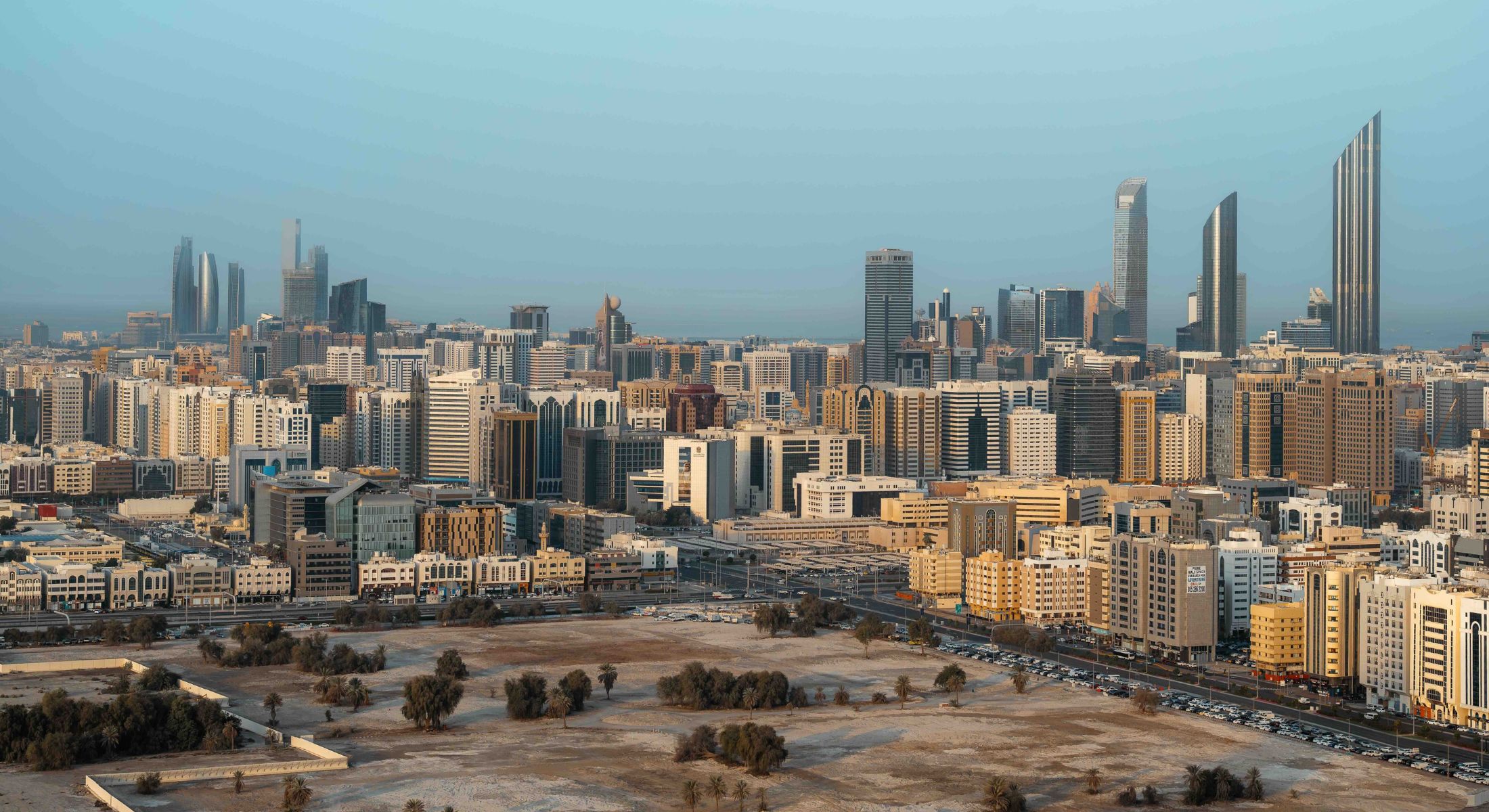
Planning the Future of Abu Dhabi: A Canadian-Emirati Collaboration for Sustainable Urbanism, offers a compelling entry point into this question. Co-edited by former Vancouver co-director of planning Larry Beasley and Michael White — now associate vice-president of campus and community planning at the University of British Columbia — the book reflects on a Canadian-led effort to reshape Abu Dhabi’s planning system in the mid-2000s. Beasley led the overall planning initiative, while White served as its in-country lead during the implementation of the new planning framework.
The book offers a series of essays that document a Canadian-led effort, beginning in the mid-2000s, to bring coherence to a rapidly growing city shaped by fragmented decision-making and ad-hoc development — what Beasley describes as an “accidental” urban condition.
But this is not simply a story about urban design. It is, more fundamentally, a story about building a planning system from scratch.
That alone makes the book notable. Much of planning literature focuses on plans — their form, their intent, their outcomes. Far less attention is given to the institutional machinery that makes planning possible in the first place. In Planning the Future of Abu Dhabi, the reader is taken inside that machinery. The book documents, in considerable detail, the creation of a planning agency, the development of regulatory frameworks, the establishment of design review processes and the co-ordination of infrastructure systems across a rapidly urbanizing region.
In this sense, the book’s most significant contribution is not its vision of Abu Dhabi, but its account of how planning institutions are constructed.
It shows how a city moves from reactive decision-making toward a more deliberate, co-ordinated approach to growth. It also makes a strong case for strategic planning over rigid master plans — frameworks that set direction while remaining adaptable to changing conditions.
Throughout, there is a clear effort to reconcile global planning principles with local cultural and environmental realities, drawing on Arab-Islamic urban traditions and the specific constraints of a desert climate.
Taken together, these elements form a persuasive argument: cities do not falter for lack of ideas alone, but for lack of institutions capable of organizing those ideas into action.
The book also hints at another important force shaping the planning initiative: Abu Dhabi’s ambition to position itself as a competitive global city. Throughout the essays, there are recurring references to tourism, international investment, economic diversification and the desire to establish the Emirate as a globally significant urban centre.
This context matters because the planning project was not unfolding in isolation from global economic pressures, but alongside a broader effort to transform Abu Dhabi into an internationally recognizable destination capable of attracting capital, talent and prestige beyond the oil economy itself.
That ambition inevitably shaped the planning agenda. It influenced the scale of development, the emphasis on image and infrastructure and the desire to align Abu Dhabi with international planning and urban design standards. In this sense, the planning system being constructed was not simply about managing growth — it was also about positioning the city within an increasingly competitive global urban landscape.
And yet, it is precisely here — where the book is most confident — that its most interesting tensions begin to emerge.
The authors are notably transparent about the governance context in which this work unfolds. Abu Dhabi operates within a highly centralized political system, where ultimate authority rests with the ruling leadership and major development decisions have historically been made at the highest levels. This is presented as both a challenge and an opportunity. The absence of bureaucratic fragmentation enabled the rapid creation of institutions, the implementation of policies and the pursuit of long-term planning goals without the interruptions caused by electoral cycles. What the book describes clearly, however, it does not fully interrogate.
The appeal of alignment
The conditions that enable this kind of centralized planning can also make it deeply appealing from afar — especially to planners frustrated by institutional fragmentation, political short-termism and the inability to translate ambitious visions into built reality. From a North American perspective, there is something undeniably seductive about a system capable of acting quickly, coordinating across agencies and pursuing long-term urban goals with unusual clarity and consistency.
But those same conditions also introduce important trade-offs. Centralized authority can streamline decision-making, but it can also limit public participation. Long-term continuity can support a coherent vision, but it can also reduce accountability.
In this light, the success of the planning system described in the book cannot be separated from the political context that made it possible.
The question that lingers is not whether the planning was effective — it often appears to have been — but whether effectiveness alone is sufficient as a measure of success.
This tension becomes more pronounced when we shift from governance structures to the people those structures serve.
Who the city is for
Abu Dhabi’s population is largely composed of non-citizens — foreign workers and expatriates make up the majority of residents, yet the political and social structure of the Emirate is organized primarily around Emirati citizenship. For many Canadian readers, this may require a moment of adjustment because it represents a fundamentally different relationship between the state, the city and the public than the one most of us are accustomed to.
In Canada, however imperfectly, urban planning generally operates on the assumption that the people who live in a city are also part of its political community. Residents vote, organize, advocate, challenge governments and, at least in theory, possess some ability to shape the future of the places they inhabit.
In Abu Dhabi, the relationship is far more stratified. Emirati citizens — while a demographic minority — are the primary recipients of state benefits, including housing, land allocations and long-term social supports, and they remain the principal focus of many planning initiatives.
Meanwhile, the majority population of temporary foreign workers and expatriates occupies a far more precarious position. Many help build, service and maintain the city, yet possess limited political rights, no meaningful path to citizenship and relatively little influence over urban policy. The book acknowledges this demographic reality, but largely treats it as background context rather than as one of the defining planning conditions of the city itself.
Yet from a planning perspective, the interplay between the everyday lives of citizens and government policy is not incidental; it’s central to how planning should be understood and carried out. Planning systems do more than organize space — they implicitly define who the city is for, whose needs are prioritized and who is imagined as belonging within the long-term future of the urban project.
What makes the Abu Dhabi case so fascinating — and at times unsettling — is that it reveals a very different planning reality than in North America: one where sophisticated long-term urban planning can co-exist with limited democratic participation and highly uneven political membership. In some ways, the book unintentionally forces readers to confront an uncomfortable possibility: that effective planning capacity and democratic inclusion do not always evolve together.
When the majority of residents have limited political rights and little formal influence over urban policy, the question of representation becomes inseparable from the question of design.
Who benefits from new infrastructure? Whose needs shape the public realm? Whose future is being planned?
These are not questions that the book ignores, but they are not explored in depth. Instead, they sit just beneath the surface of an otherwise confident narrative, hinting at a set of ethical considerations that extend beyond the scope of the project as presented.
The systems beneath the plan
A similar pattern emerges in the book’s treatment of planning itself.
The narrative emphasizes the role of planners — how a group of professionals identified systemic issues, developed frameworks and helped reshape the trajectory of urban development. There is truth in this account. Planning can, and does, influence how cities grow. But it rarely operates in isolation.
Urban development is also shaped by forces that lie beyond the reach of planning institutions: land markets, capital flows and the broader political economy.
In Abu Dhabi, these forces are closely tied to an oil-based economy that has both enabled large-scale urban development and complicated the notion of sustainability that the planning framework seeks to promote.
The book acknowledges environmental challenges, but it does not fully engage with the deeper contradiction: that efforts toward sustainable urbanism are being funded by the very industry contributing to climate change worldwide.
This is not a flaw unique to this book. It reflects a broader tendency within planning discourse to foreground institutional solutions while backgrounding the economic systems in which those institutions operate.
But it does suggest a limit to what planning, on its own, can achieve.
The book also quietly reveals another important dynamic: the extent to which the planning initiative relied on imported expertise. The planning framework was shaped predominantly by Western-trained planners, designers and consultants — many of them Canadian — who inevitably brought with them professional assumptions formed within North American and European planning traditions.
To the authors’ credit, there is a genuine and repeated effort throughout the book to adapt these ideas to local culture, environmental realities and Arab-Islamic urban traditions. Still, the project reflects a broader contemporary reality in which cities increasingly import not only global capital, but also global expertise and planning ideologies.
This does not invalidate the work. But it does complicate the narrative.
Planning ideas are never entirely neutral; they emerge from particular political, cultural and institutional contexts. One of the more interesting undercurrents running through the book is the question of how much of Abu Dhabi’s planning framework was genuinely rooted in local urban traditions, and how much reflected the assumptions and aspirations of the international planning culture that helped shape it.
To its credit, the book occasionally acknowledges the limits of the initiative itself.
In the later reflections — particularly in Beasley’s concluding observations — there is recognition that not all ambitions were realized, that certain market pressures remained difficult to control and that some development dynamics ultimately exceeded the reach of the planning framework. These moments are important because they complicate any simplistic “hero planner” narrative. They remind the reader that even highly empowered planning systems remain constrained by political realities, economic pressures and institutional limits.
More than a case study
If these tensions feel distant, they are not entirely unfamiliar.
In recent years, planning in British Columbia has increasingly been shaped by questions of centralization, expertise and the pace of decision-making. Provincial interventions have expanded, public processes have in some cases been streamlined, and there is a growing emphasis on the role of technical expertise in addressing complex challenges such as housing and infrastructure delivery. These shifts are occurring within a democratic context, but they raise similar questions about the balance between efficiency and participation, coordination and accountability.
The comparison is not direct, nor should it be. Abu Dhabi and Vancouver operate within fundamentally different political, cultural and economic systems. But the underlying tensions — between expertise and democracy, between speed and deliberation, between institutional power and public voice — are not entirely distinct. Seen in this light, Planning the Future of Abu Dhabi offers more than a case study of a rapidly growing Gulf city. It provides a lens through which to consider a broader set of questions about how cities are governed and how planning power is exercised.
The book succeeds in showing what can be achieved when institutions are aligned, empowered and supported by political leadership. It offers a detailed and valuable account of how a planning system can be built — something that is rarely documented with such clarity.
What it leaves open, perhaps inevitably, is a more difficult question. Not just how planning systems are constructed, but under what conditions they operate — and what those conditions require in return.
If the planner’s ideal is a city where vision and implementation move together, then the challenge is not only to achieve that alignment, but to ask what makes it possible — and for whom. ![[Tyee]](/design-article.thetyee.ca/ui/img/yellowblob.png)
Read more: Books, Environment, Urban Planning











Tyee Commenting Guidelines
Please note that email notifications for replies are not currently working due to a software issue which may be resolved in a future update.
Comments that violate guidelines risk being deleted, and violations may result in a temporary or permanent user ban. Maintain the spirit of good conversation to stay in the discussion and be patient with moderators. Comments are reviewed regularly but not in real time.
Do:
Do not: