


 SHARE:

[Editor’s note: Personable, memorable and imbued with a felt sense of place, B.C. author Kate Braid’s latest essay collection celebrates the unique pleasures of embracing the unconventional, particularly in the later seasons of one’s life. Published by Caitlin Press this spring, ‘The Erotics of Cutting Grass: Reflections on a Well-Loved Life’ takes readers to the gym where Braid lifts weights in a sea of young men, through the tender years of step-parenting and to the streets of Paris, France. In this excerpt set on Pender Island, Braid climbs aboard a grass cutter and kindles a new relationship with her surrounding landscapes.]
Luckily, the sound of birds, and sheep, and once in a while a wild wind, still came through in my one good ear. I was especially grateful for this when John and I, thinking ahead to our retirements, bought acreage on Pender Island where we’d first met.
The island was called Pender by the Europeans who began permanent settlement there in the 1870s, and Sťéyəs (pronounced SDayes) by the Saanich peoples who’ve lived and hunted here for over 7,000 years.
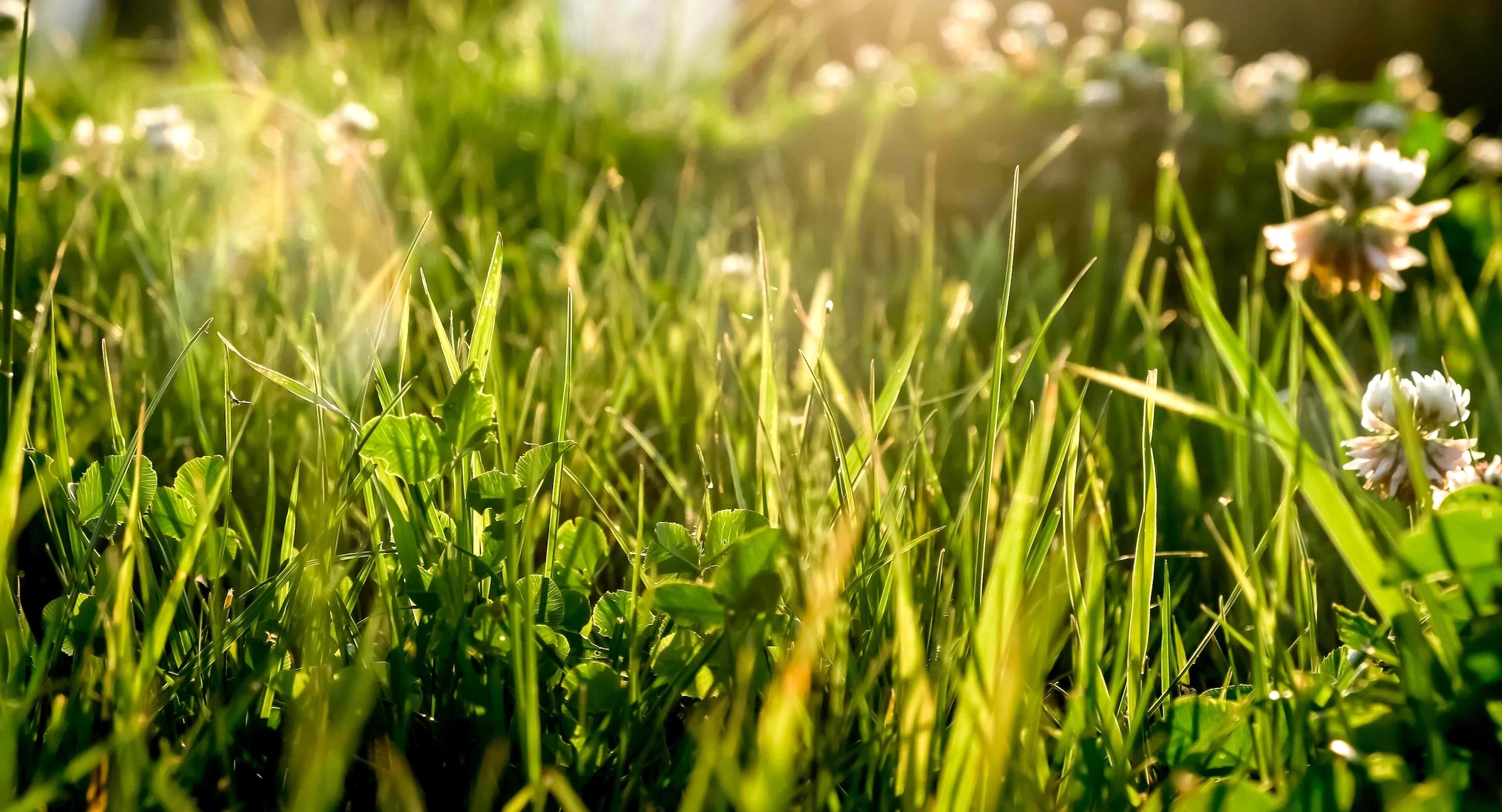
Our new place sat in a valley that ran east-west so there was sun all day and a long, peaceful vista that included glimpses of a distant neighbour’s sheep. And grass. Lots of grass. Acres of it.
The purchase price included a small Husqvarna grass cutter, the kind you ride, and although John was once a heavy-equipment operator, I took on the grass-cutting job. We agreed to leave parts of the property’s grass to grow as hay for our neighbour’s sheep, but it was a fire hazard to have fields of tall grass too close to the house and outbuildings, so much of it had to be cut, and often.
It was all new to me — I was never attracted to even use a lawnmower. But once I’d tried the Husqvarna, it was fun. “Husky,” John called it, which made it sound like a friendly dog, not a mechanical beast.
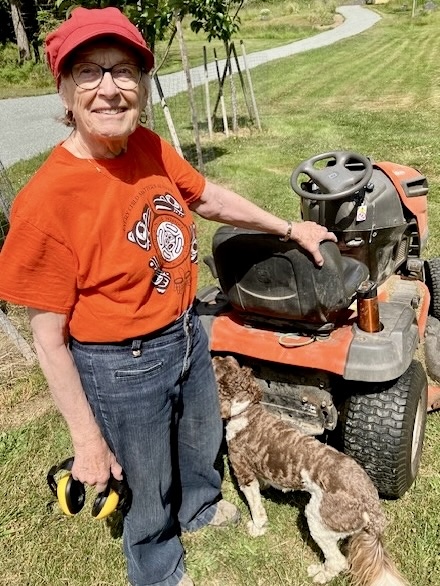
Learning how to start a Husky involves a certain ritual: check gas levels, set depth of cut, put on yellow earmuffs, pull this, push that, keep my feet here not there, turn key in the ignition and — all going well and if I’ve done it right — I hear the satisfyingly deep roar of the engine catching.
Then I bump along, glancing back once in a while to see the land behind me reappear from under a high grassy carpet, now laid out as smooth as a tightly pulled sheet over the bed of earth.
Over time, I began to understand why my brother-in-law, a Prairie farmer, had always spoken so happily (in his own tough-farmer way, of course) about his hours and days on the tractor, and even better, the reaper, on the farm.
Like him, I had begun to notice bumps and hillocks of land that I’d never taken note of with mere eyes.
On the Husky, I felt the earth with my entire body — where the too-steep slopes were, the rocks and mud, and how close I could get before my machine came to an abrupt halt and I had to stop and pull out the little metal thingy at the back so I could disengage the gears and heave, with all my strength, to get the machine on solid ground again. And carry on, triumphant.
I got to positively look forward to cutting grass. There was the ritual of the starting, but also of the clothes. What worked best for me was a red peaked cap I bought especially to keep sun off my face but not get in the way of the earmuffs. Plus my grubbiest blue jeans, an old fleece jacket on the cool days (thank you to my favourite second-hand store), gardening gloves, and a pruner in my pocket for the ever-encroaching blackberry bushes.
It reminded me a bit of construction. One of the things I’d most loved about building was the physicality of it. Being outdoors in every weather, acutely aware of each move my body made in case of accidents or falling, the smell of fresh-cut lumber and now, in the case of the Husky, of gas and fresh-cut grass.
I’d also loved the intensity of construction, the rhythms of it, seeing the product of my labours instantly before me — or now, in the case of grass, behind me.
But there was more. In talking about farming, my brother-in-law had once used the phrase “learning the land.” At the time it had made no sense at all, but after a few years of cutting my own acres of grass — every small rise and dip, every hillock and flat, rounding every corner and knowing which tricky bits were coming up, getting as close as possible to the wire cages that protected our trees from deer without knocking the cages down — over time I came to know this land too, physically. Came to know where I should brace myself, how I should lean, how far away to stay from the edges of ponds and drainage ditches. It was like learning a lover’s body.
I know that sounds a bit extreme and the first time I wrote it, I promptly erased it. But I had to put it back because yes, it’s been that kind of intimacy, that kind of love, a physical kind of love.
I even get jealous. If John makes a move toward the Husky, I will loudly proclaim sudden plans to cut the grass myself, thank you!
Body to body. Thanks to my secret love affair with the Husky, I’ve come to know our small piece of this beautiful earth intimately. I love the feeling of being here with the warmth of sun on my face, the smell of fresh-cut grass and even, when I refill the tank, the whiff of gas, all the while companioned by huge evergreens waving blessings from the hills around. It’s a happy marriage.
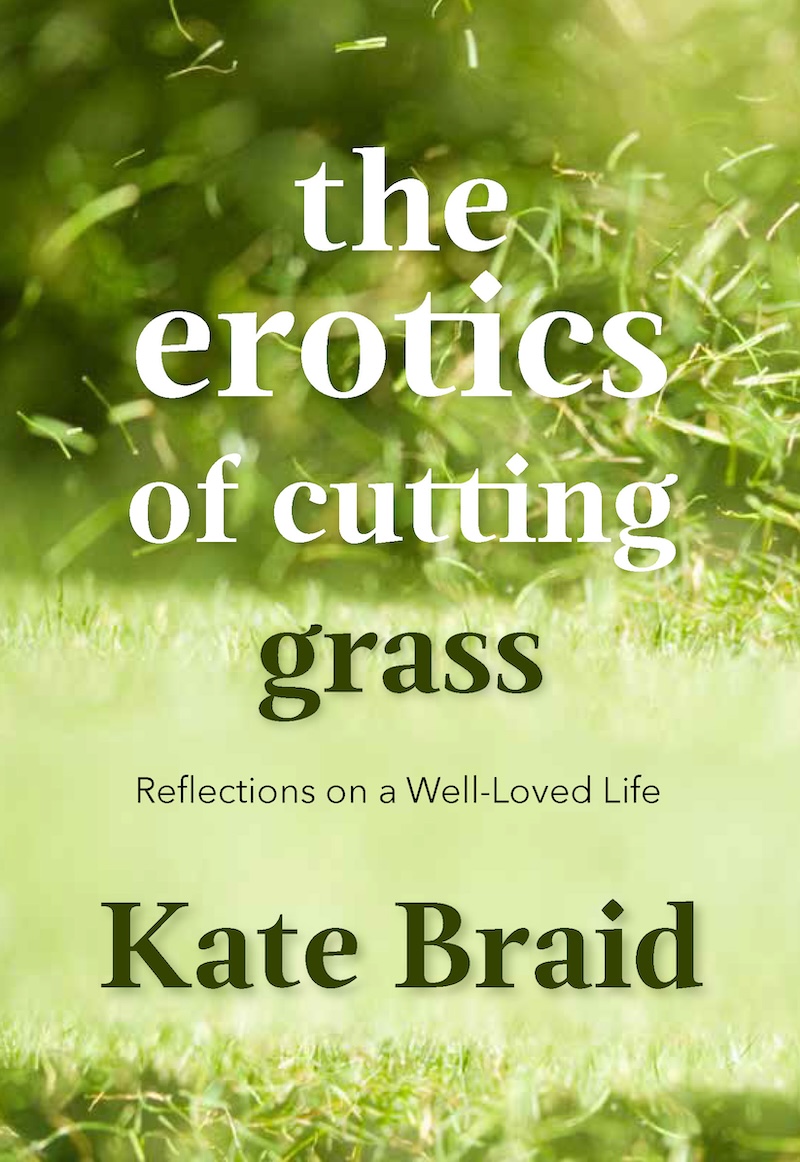
Excerpted from ‘The Erotics of Cutting Grass’ by Kate Braid. Copyright © 2025 Kate Braid. Published by Caitlin Press. Reproduced by arrangement with the publisher. All rights reserved. 
Read more: Books, Environment





Tyee Commenting Guidelines
Please note that email notifications for replies are not currently working due to a software issue which may be resolved in a future update.
Comments that violate guidelines risk being deleted, and violations may result in a temporary or permanent user ban. Maintain the spirit of good conversation to stay in the discussion and be patient with moderators. Comments are reviewed regularly but not in real time.
Do:
Do not: