


 SHARE:

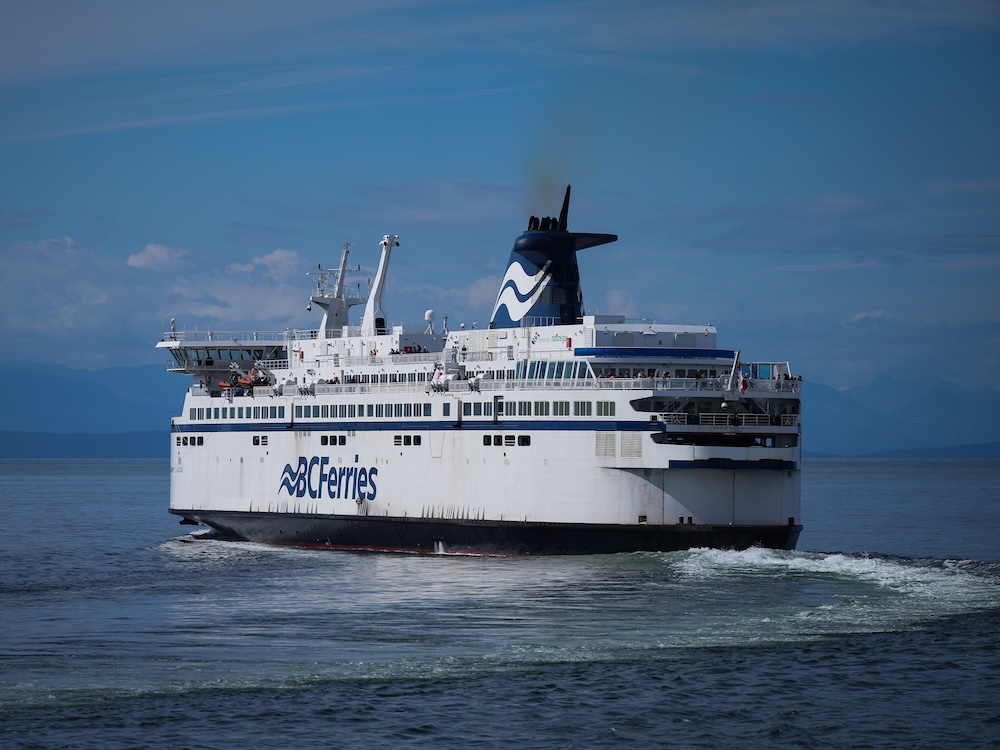
After a year of political discontent over BC Ferries’ decision to hire a Chinese-state owned shipyard to build four new vessels, the three frontrunners in the B.C. election have all committed to supporting ferry-building in this province.
Construction unions have been urging the B.C. government for months to ensure BC Ferries are built in this province.
“This is not a partisan issue for us,” said Brynn Bourke, executive director of the BC Building Trades. “This is about what makes sense for British Columbia, about creating B.C. jobs, and about rebuilding this industry.”
The BC Building Trades, which represents about 45,000 unionized construction workers in 19 local craft unions, was one of 17 organizations that called on the B.C. government to build ferries in this province ahead of the election.
And while not all the top parties have announced ferry construction plans, the Conservative Party of BC, the BC Green Party and the incumbent BC New Democratic Party have all included commitments to insource more ferry construction in their platforms.
Seaspan, the largest shipyard in the Vancouver area, said it welcomed efforts to expand local ship building. Meanwhile, BC Ferries spokesperson Kit Billings said the company would hold off on commenting until after the election.
“We don't want to speculate on potential future government policies,” Billings said in an email. “I appreciate this doesn't directly answer your questions, but once a new government is formed and any new policies are established, we're happy to discuss what they mean for BC Ferries.”
Due in part to high labour costs and a lack of drydock space in Canada, foreign shipyards can often build vessels cheaper than Canadian firms.
That’s why, when BC Ferries first announced plans to build four new vessels, Seaspan turned down the call.
“As BC Ferries has outlined… cost is a primary issue and therefore, no bidder will be incentivized to include significant Canadian/BC domestic content in their bids,” Seaspan said in a press release at the time.
“Canadian shipyards and their supply chains cannot compete with low wage countries that have lower employment standards, lower environmental standards and lower safety standards than Canada and B.C.”
Nearly a year later in June 2025, BC Ferries announced it would hire China Merchants Industry Weihai Shipyards to build the new ferries. The announcement brought backlash from across the political spectrum.
Then-B.C. Conservative leader John Rustad said the decisions contradicts the government’s own promises. Mike Farnworth, who was B.C.’s transportation minister at the time, also said he was unhappy with the decision. Even former federal transport minister Chrystia Freeland publicly said she was dismayed by the deal.
At the end of August, a union-led initiative called “Build Them Here” called on the government to help BC shipyards make competitive ship-building bids.
The coalition of unions partnered with the Centre for Future Work on a report that estimated building the new ferries in B.C. would have generated $1.5 billion in additional GDP in Canada and returned $400 million in revenue to the government.
The report also found building the four ferries in B.C. would create 10,000 “person-years” of work. That’s a term used by economists to measure the amount of work done by one person throughout an entire year. In reality, Bourke said it would translate to thousands of ship-building jobs.
According to Bourke, with the BC Building Trades, the primary hurdles affecting local shipyards include government investment and the amount of drydock space available to start building ships in B.C.
Bourke said the coalition had several policy recommendations that include: requiring BC ferries to build in B.C., launching a task force aimed at expanding the province’s ship-building capacity, and directing BC Ferries to release a vessel replacement schedule that would help companies plan for demand.
“Canadian Shipyards have said they didn't feel they could competitively bid, and so they did not bid,” Bourke said.
“If we continue to repeat the conditions that led to awarding this contract to China, and we do everything the exact same way as during the last call, then we will continue to offshore work.”
In the week before calling a snap election, Premier David Eby told the Union of B.C. Municipalities that he would direct B.C. Ferries to ensure its next vessels are built in the province.
On the campaign trail, Eby also committed to working with the federal government to build a new B.C. shipyard, to build both B.C. ferries and contribute to national defence projects. (Since 2010, the federal government has been investing in the National Shipbuilding Strategy to make up for years of inactivity and lost capacity in domestic shipbuilding.)
In an Oct. 13 press release, the NDP said B.C. had up to $250 million available that it might put toward the project through the Strategic Investment Fund, a fund it uses to invest in the private sector.
Meanwhile, the Conservative Party of B.C.’s platform includes commitments to negotiate more ferry funding from the federal government, and a plan to launch a strategy designed to bring more vessel-production work back to B.C.
“The NDP allowed BC Ferries to send four major shipbuilding contracts and hundreds of jobs to a Chinese state-owned shipyard, strengthening a foreign competitor instead of rebuilding our industrial capacity,” the platform says. “That must never happen again.”
The BC Green Party’s platform also includes a commitment to “build and maintain ships locally,” but does not include further details.
Abigail Saxton, a spokesperson for the Seaspan, said in an email the shipyard looks forward to working with the federal and provincial governments.
“Seaspan welcomes the recent commitment to the expansion of the province’s shipbuilding infrastructure, supporting not only a made-in-Canada solution, but a made-in-B.C. solution,” Saxton said. 
Read more: BC Politics







Tyee Commenting Guidelines
Please note that email notifications for replies are not currently working due to a software issue which may be resolved in a future update.
Comments that violate guidelines risk being deleted, and violations may result in a temporary or permanent user ban. Maintain the spirit of good conversation to stay in the discussion and be patient with moderators. Comments are reviewed regularly but not in real time.
Do:
Do not: