


 SHARE:

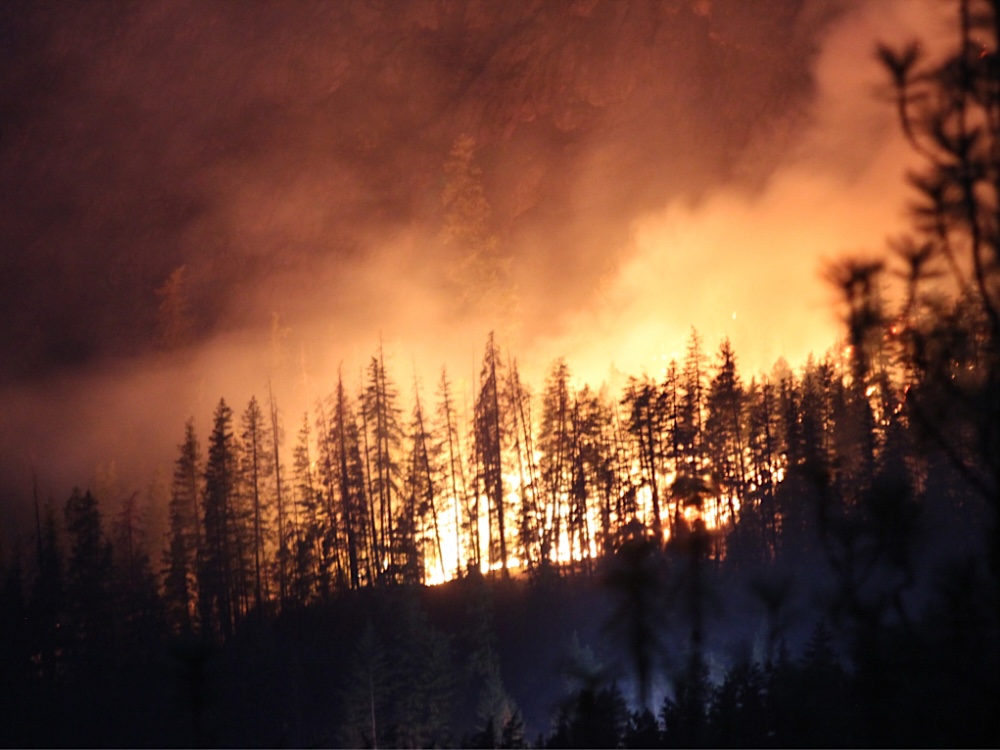
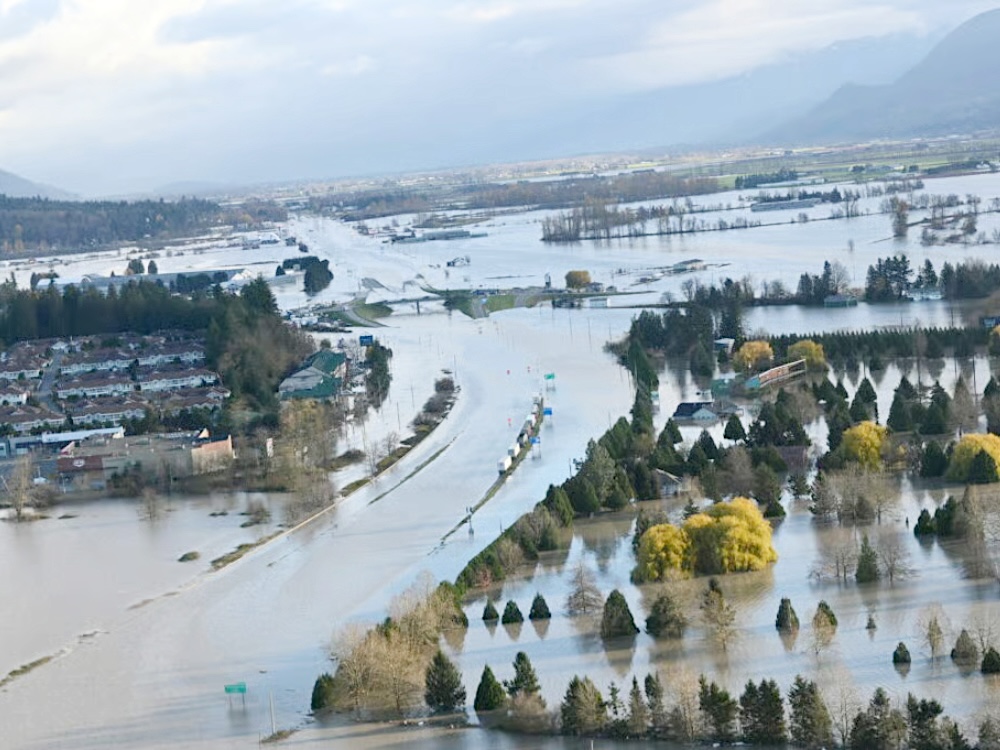
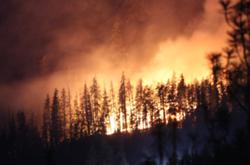
In the last five years, B.C. has experienced multiple wildfire seasons that displaced thousands, a heat dome that killed more than 600 people and flooding and landslides that closed major highways for days and damaged thousands of homes.
It would be hard to tell based on the election promises of B.C.’s political parties.
The NDP and the Conservatives have made few campaign commitments relating to B.C.’s increasingly common natural disasters. Promises regarding the climate change that’s linked to many disasters have also been scarce. In last week’s leadership debate, there was no discussion of how the leaders would improve B.C.’s response to environmental emergencies.
But as the parties focus on immediate affordability concerns, one expert says politicians and the public need to understand that emergency prevention is also an economic issue. And that failing to plan for disasters has profound consequences.
“We need to shift our perspective on what disasters really are,” said Jocelyn Stacey, a University of British Columbia professor and an expert on the role of law in emergency management.
An ounce of prevention
There are four pillars to emergency management: prevention, preparedness, response and recovery. For decades, provinces across Canada have been focused on the latter two.
That needs to change, according to Stacey and Fraser Basin Council water programs director Steve Litke.
“Whether it's flood, wildfire, drought, other natural hazards and disasters, these events are going to continue to occur,” Litke told The Tyee. Prevention, he said, “really should be prioritized.”
B.C.’s parties have promised to put some money and effort towards preventive efforts — primarily when it comes to wildfires — but emergency response has taken the bulk of the focus.
The Conservatives have promised to “bring back common-sense forest management,” without specifying what that common sense is. The prevailing approach through the 20th century had been to immediately suppress fires. Experts say that may be at least part of the reason for today’s megafires, which frequently burn through dense forests where flames had been rigorously suppressed through the last century.
But many residents in fire-hit communities have questioned the tactics that allow some fires to burn when they don’t pose an immediate danger. Fire officials have also begun noting that today’s climate-change-fuelled fires are behaving in unprecedented ways.
If elected, the Conservatives pledge to establish a “wildfire response cabinet” to prepare for fires that will happen next summer. The party has also promised $400 million for new water bombers and a $100-million wildfire innovation fund to support new advances in fighting fires. New water bombers could aid in fighting some, but not all, fires. As The Tyee reported in August, the usefulness of fixed-wing aircraft depends on local weather and geographical characteristics.
The party has also said it will “move money upstream” to pay for fire prevention, including forest management, prescribed burning and more FireSmart funding. The party also promised to allow lumber companies to log high-risk fire areas.
The BC Greens’ platform is focused on protecting homes and suggests more help is needed for locals to play a role.
“We cannot build our emergency system around the assumption that government will always have enough people and equipment to protect every property,” the platform reads, noting that people will continue to stay behind and protect their homes during fires. “We should recognize that reality and bring more of this local capacity into the emergency response system.”
The platform promises funding to better equip locals to protect their property, as well as the creation of a wildfire insurance pilot, a standing provincial disaster recovery team and better wildfire training and equipment. The party would also launch an open competition for new wildfire response technologies to improve fire detection, mapping, communication and response.
The party also says it would establish funding for First Nations and local governments to assess local climate risks and promised a variety of “clean air” programs that would manage wildfire smoke throughout the province during fire season.
The NDP says it plans to continue building on previous investments in FireSmart funding and support for disaster mitigation projects.
The party also promises to match donations to the Canadian Red Cross up to $20 million for people affected by the 2026 wildfires. It would form a new program with a focus on people with uninsured properties. The party also says it will support the rebuilding of public infrastructure, with no details on how that would happen.
No focus on flooding
British Columbia has also experienced its share of devastating flooding in the past few years. Unfortunately, flooding remains an “invisible issue,” as Litke put it — one that isn’t considered until the waters are at the door. The parties’ platforms back that up.
The Conservative platform’s only mention of floods follows its wildfire plan and simply reads “The same goes for flood,” seemingly in reference to the party’s commitment to “budget for wildfire at what it costs and move money upstream towards prevention.”
The NDP’s online plan mentions floods only in relation to $30 million in funding for the Watershed Security Fund.
The BC Greens say only that they would establish “stable, long-term funding” for First Nations and local governments to assess local risks and prepare for floods and other hazards.
None of the parties make specific promises about how they would address risks along the Fraser River, where a series of reports have warned of the potential for flooding that would breach dikes from Richmond to Hope and cause up to $30 billion in damage.
“We've been working on this issue for 30 years plus and it's a very difficult issue to get political traction on,” Litke said. “It's disappointing because we have had a series of really significant flood events in recent years and we don't seem to be getting the wake-up calls.”
Despite the lack of concrete promises, whatever party forms government will not be starting from scratch when it comes to prevention for all kinds of emergencies. In 2023, B.C. enacted the Emergency and Disaster Management Act to help the province plan for and manage emergencies, using the globally recognized Sendai Framework as its foundation.
Stacey said the act is transformative for the future of emergency management and prevention. But many of its key elements, such as requiring risk assessments and coming up with emergency plans, have not yet been enacted, leaving parts of the act in flux.
“We have new legislation. It's not fully in effect. Local governments are doing work in anticipation of further regulations to come,” Stacey said. “But the whole framework is not there yet. And we don't yet know how all of these pieces are going to fit together.”
The parties have also not committed to provide funding needed to execute actions promised in B.C.’s new flood strategy. That strategy was released in 2025, but officials such as Stó:lō Tribal Chief Tyrone McNeil have said it lacks the financial support necessary to turn its ambitions into reality.
Stacey and Litke said the major parties’ focus on responding to emergencies rather than preventing them is both common and challenging for long-term success.
“This is really a problem in how both government but also many of us think about disasters,” Stacey said. The public and politicians tend to think of these events as one-off occurrences. Unfortunately, she said, “our experience in B.C.... tells us otherwise: that these are happening with regularity.”
Touching on the root cause
Fires happen. Flood happens. Heat and drought happen. But climate change is making those events more frequent and more severe.
“What we need to be looking for are commitments to more structural change,” Stacey said about government policy. “One component of that is doing our part in terms of reducing global greenhouse gas emissions, because many of these hazards are amplified by climate change.”
The BC Greens have the most comprehensive commitment to reducing the province’s greenhouse gas emissions. Their platform has an entire section on climate change, and another on renewable energy, and says that the province “needs to begin a managed transition away from our dependence on fossil fuels.”
The party is promising a new provincial climate action plan and would require major policies and infrastructure investments to be measured against climate targets. The party would also end approvals for fracking, new LNG terminals and new pipelines. It would end subsidies that encourage fossil fuel production, develop regional transition plans for resource-dependent communities, provide support for heat pump installation and support the expansion of green energy.
The BC NDP has made a variety of promises focused on reducing B.C.’s greenhouse gas emissions. It has pledged $50 million annually to support households wanting to install heat pumps and $16 million to expand the public EV charging network. The party has also said it would work to “virtually eliminate methane emissions” by 2035.
The party has also promised to create a $50-million fund to support programs that help families and businesses choose “less costly clean energy.” The program would be funded by a portion of provincial oil and gas revenue. But the party has also pledged to increase B.C.’s smelting and refining capacity, which generated greenhouse gases equivalent to roughly 400,000 tonnes of carbon dioxide in 2023.
The Conservative platform says the party “takes seriously the need to reduce global emissions.” It says every climate-related decision will consider three questions: “Does it protect people from fires, floods, heat and drought? Does it cut emissions rather than just move them, and the jobs that go with them, overseas to somewhere dirtier? And what are the measurable results?”
The platform doesn’t specify any promises to attempt to reduce emissions. The party does promise to double natural gas production, increase mine and LNG facility permitting and expand renewable energy options, “as long as it can be shown to be as reliable and affordable and environmentally friendly as the alternatives.”
It’s not just about disasters
Although the parties have made few campaign promises about disaster management and prevention, many seemingly unrelated pledges could have an impact on future environmental emergencies.
“If we start to think about the various conditions and therefore the various laws that are implicated in creating these disaster risks, actually we can create quite a big web of laws and policies that are implicated,” Stacey said.
Policy promises related to forestry can have an effect on wildfires in the future. Watershed management can affect the frequency and severity of floods. Affordability measures and tenancy rules will affect people’s ability to weather things like extreme heat. Development rules can make it easier or harder to build homes in flood plains. And health, transportation and energy infrastructure can all affect the ability of communities and individuals to access help or remain in their homes after a disaster.
Even campaign promises around DRIPA, B.C.’s Declaration on the Rights of Indigenous Peoples Act, will have some effect on emergency management in the future.
“The Indian Act and the reserve system really expose many, many First Nations communities to pretty significant hazards with not the same capacity and resourcing to address those issues,” Litke said.
The Emergency and Disaster Management Act provides a framework for the province and First Nations on how they will manage emergencies before they happen. The act was created with the principles of the United Nations Declaration on the Rights of Indigenous Peoples in mind and in some places allows the province to take a step back and allow First Nations to manage their own emergencies, Stacey said.
The Conservatives have campaigned on a promise to repeal DRIPA, largely focusing on fears that the act could affect private property owners. But DRIPA’s action plan specifically states that B.C. must incorporate traditional practices into wildfire prevention and land management and revise its emergency management system.
The Conservatives have not given any indication of how repealing DRIPA would affect those elements of Indigenous rights.
What about those other parties?
The NDP, Greens and Conservatives aren’t the only provincial parties on the ballot this year. The fractured offshoots of the Conservative party — OneBC and CentreBC — are also running candidates in roughly three dozen ridings.
CentreBC, led by former Conservative Elenore Sturko, mentions heat domes, atmospheric rivers and wildfires in its platform. The platform also contains more specific examples of how the party would attempt to prevent and manage environmental emergencies in B.C. than the NDP and Conservative platforms.
CentreBC has said it will increase FireSmart grants to $40 million a year, hire year-round firefighters for preventive work and increase funding for prescribed fires. It also promised to provide $75 million a year to help pay for dikes, pump stations and cooling centres. (This year, communities could use the fund only for equipment and training for emergency operations centres and support services, though structural flood mitigation projects were accepted in the past.) Other promises include providing 40,000 free cooling units to low-income seniors and creating a permanent farm disaster recovery program.
OneBC was founded by Dallas Brodie after she was kicked out of the Conservative party because of her residential school denialism. Its platform has no mention of the environment or emergency preparedness.
You can find all five platforms here: BC Green Party; BC NDP; CentreBC; Conservative Party of BC; OneBC. 
Read more: BC Election 2026, BC Politics, Environment





Tyee Commenting Guidelines
Please note that email notifications for replies are not currently working due to a software issue which may be resolved in a future update.
Comments that violate guidelines risk being deleted, and violations may result in a temporary or permanent user ban. Maintain the spirit of good conversation to stay in the discussion and be patient with moderators. Comments are reviewed regularly but not in real time.
Do:
Do not: