
 SHARE:

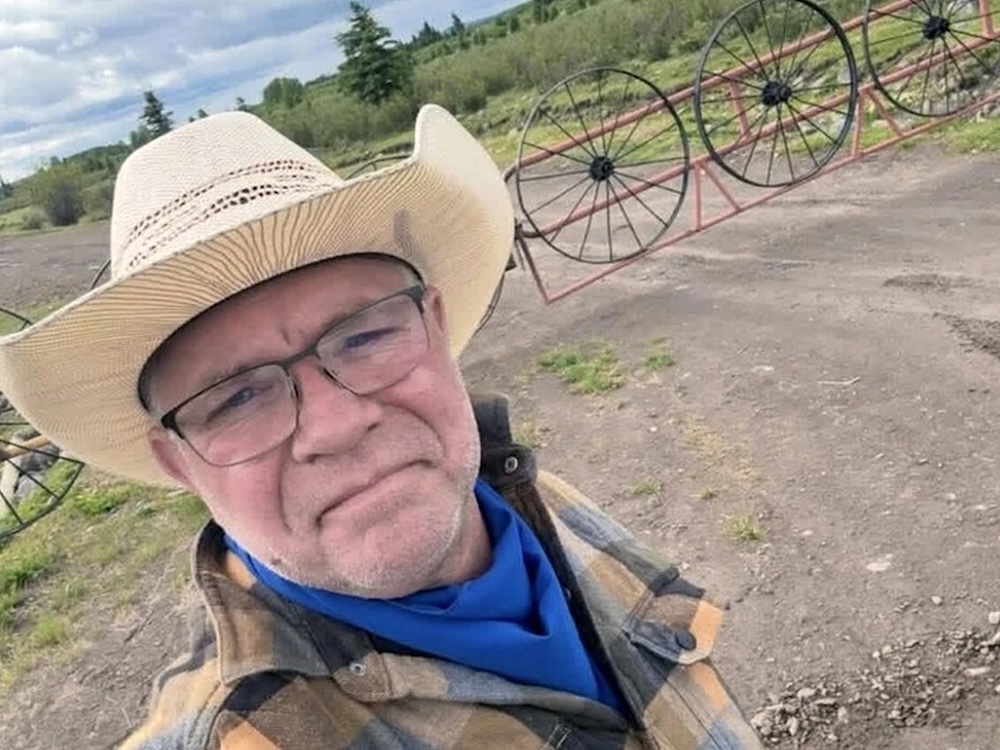
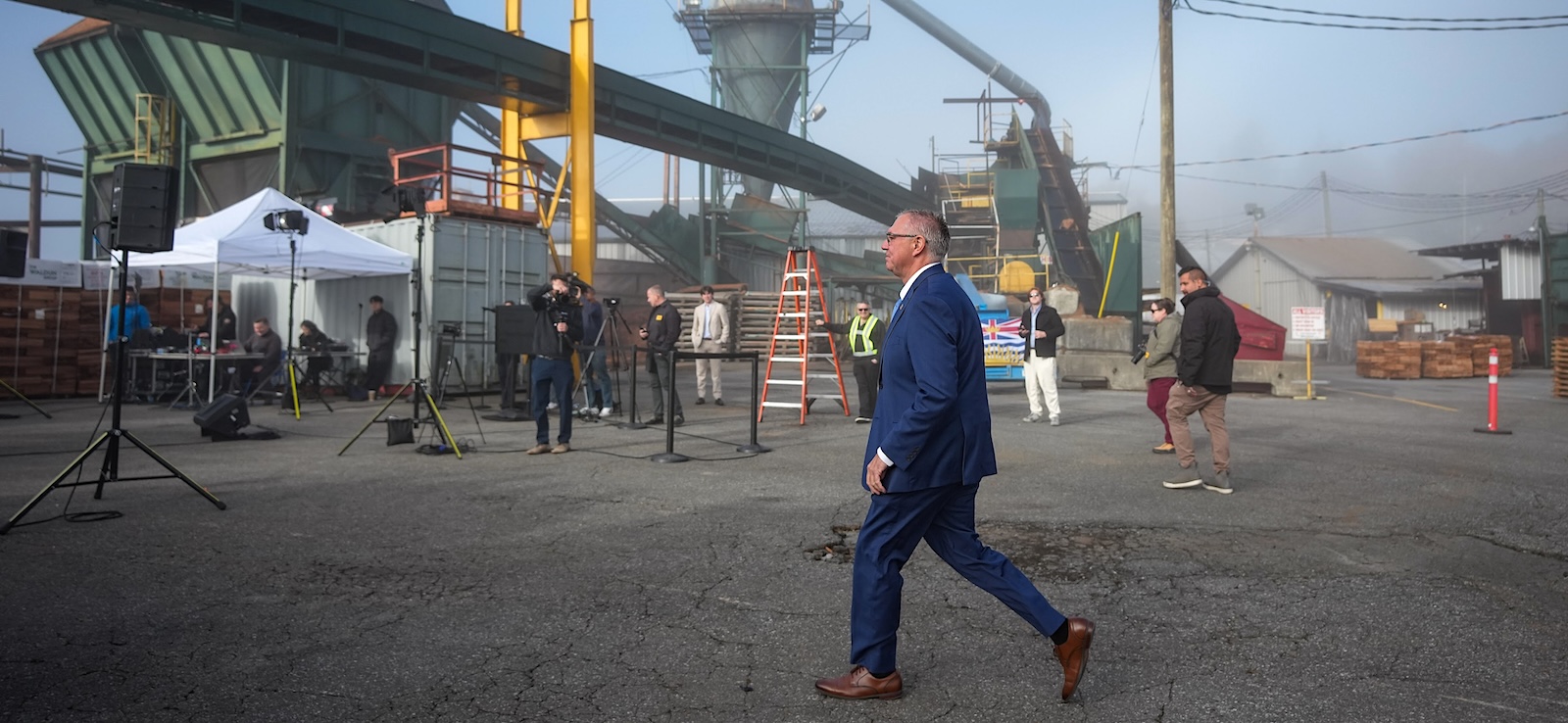
The British Columbia political scene has seen some improbable developments of late. And Lorne Doerkson may be on track to provide one of the most improbable outcomes of all.
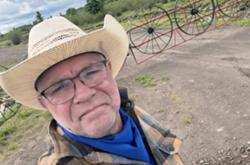
Doerkson — former rodeo rider, newspaper publisher and largely unknown MLA — could become B.C.’s accidental premier.
The MLA for Cariboo-Chilcotin was appointed interim leader of the Conservative Party of BC after the sudden resignation of Kerry-Lynne Findlay, just one day before BC NDP Leader David Eby called a snap election.
The “interim” part of Doerkson’s title has become largely meaningless.
The NDP suggests Conservative party members could oust him after the election, even if he wins. And others point to the party’s constitution, which, as a result of John Rustad’s ouster, requires a leadership convention and specifically bars the interim leader from even being a candidate.
But Doerkson is likely secure. Any leadership review that failed to recognize a winning party leader would surely be too strange even for the erratic B.C. Conservatives.
Doerkson and the Conservatives have so far been ahead in most polls. A Leger poll released last week showed his party with a two-point lead over the NDP among decided voters.
The 58-year-old Doerkson is a relative latecomer to politics.
And his career background might be considered somewhat unusual for his section of the political spectrum. He once worked in that Donald Trump-despised industry, the newspaper business. When Doerkson was 12 his family relocated from Surrey to Salmon Arm, and he eventually found work selling advertising at the Salmon Arm Observer.
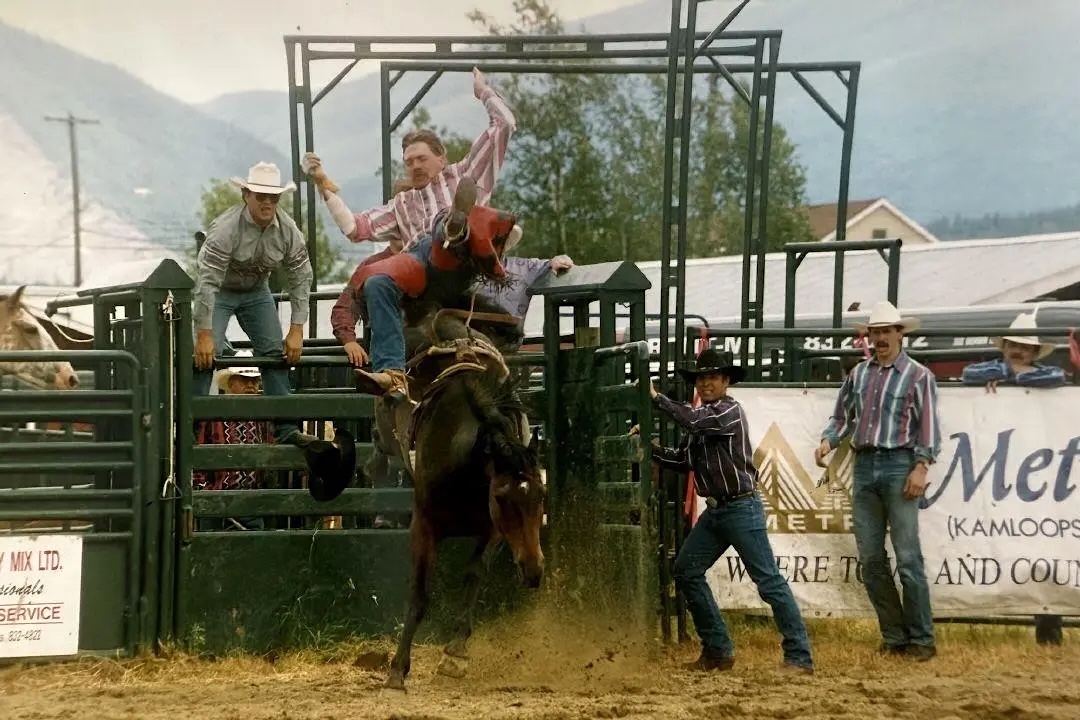
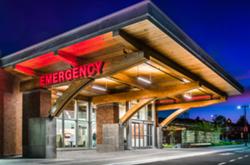
Doerkson's other career was as a bareback rodeo rider. He’s used his experience getting smashed up after being thrown by a horse named Kung Fu as part of his campaign. Doerkson says he was knocked out, burst his eardrum, dislocated his shoulder and broke his collarbone. He ended up going to two hospitals, he says, and both emergency rooms were open.
But it was the newspaper career that stuck, and Doerkson eventually moved on to papers in Prince George, 100 Mile House and Williams Lake, all of them owned by David Black’s Black Press.
Shane Mills, a former adviser to Premier Christy Clark, worked with Doerkson in the newspaper business. “I first met Lorne back in ’92, ’93,” Mills says. “I was the new editor at the Salmon Arm Observer, and Lorne was a brand new rookie salesman. Then we worked together in Prince George, where he was the sales manager and publisher, and we worked together in Victoria after he was elected as an MLA. So I've known him for a long time.”
“I don't know Kerry-Lynne Findlay, so I don’t want to contrast them,” Mills says. “I can speak to the fact that Lorne is a person who wants to bring people together and isn't afraid of different ideas. One of his gifts is Lorne doesn't think he knows everything, so he's not afraid to ask questions. He would ask what might seem like obvious questions to experts but to the public may not seem so obvious.”
Doerkson recalled a situation he faced as publisher of the Prince George Free Press in a story on Michelle Lang, a 34-year-old Canadian reporter killed, along with four soldiers, by a roadside bomb while covering the war in Afghanistan.
Lang’s first reporting job was with the Free Press, and she uncovered a story about an outbreak of Norwalk virus caused when someone threw up on the buffet table at a local restaurant. Lang wanted to name the restaurant, and Doerkson backed her up. The owners sued the paper after being forced to close, but the paper prevailed in court.
“To see someone like Michelle stand up and defend a story,” said Doerkson, “it’s pretty uplifting.”
“As a publisher, when I worked with him,” Mills says, “he would listen, he would make a decision, and then he would back you. It was done. You didn't have to worry about whether Lorne had your back once he had made a decision.”
Doerkson left the newspaper business in Williams Lake, moving on to the car business and eventually becoming a financial adviser.
In 2020, BC Liberal MLA Donna Barnett was retiring and encouraged Doerkson to run for the nomination. “I can almost guarantee you that was never really on his bingo card,” says Mills. “The thing about Lorne is he's just a guy who cares. When he sees something, he just wants to help.”
He won in 2020 as a BC Liberal and won bigger in 2024 with the Conservative Party of BC.
When party leader John Rustad faced a caucus revolt after the 2024 provincial election, MLAs put Doerkson's name forward as a possible interim leader, but he declined the position.
When Findlay's leadership in turn seemed to be imperilled, Doerkson was asked again about taking the interim role. The timing was awkward — Doerkson was reached by phone in the Amsterdam airport, where he was on a layover after attending a Commonwealth Parliamentary Association conference in South Africa. This time he agreed to take the interim job if Findlay resigned.
But Doerkson did not know until his 12-hour flight landed in Vancouver that he was now the Conservative leader. Soon after, he learned with the rest of the province that he would be leading his party in a provincial election.
Stewart Prest of the University of British Columbia political science department says Eby's election plan was clearly written with a different leader in mind.
“It was borderline jarring, seeing the script roll out for the opening days of the NDP,” Prest says. “They were clearly talking about somebody who was no longer there — a premier running against a loose-cannon Conservative leader, Kerry-Lynne Findlay. Trying to characterize this nice, grandfatherly figure who tells folksy stories about the rodeo as a Trumpian threat to democracy felt like a stretch.”
“Findlay was a chaos agent,” Prest says. “Doerkson is anything but. It's harder to establish a story about Doerkson that he is going to be leading the party in a more populist direction.”
“He's no Trump lover,” Mills says. “I think the attempt to portray Lorne as this far-right person is going to fail. You will hear more stories from people he's helped who will say, 'No, he's practical.' He wants to get things done. He's not an ideologue.”
And yet voters will not be electing a premier; they will be choosing the next governing party. And the B.C. Conservatives retain plenty of members who hew sharply to the right and hold extreme views.
Doerkson has endorsed Findlay's plan to repeal DRIPA, the Declaration on the Rights of Indigenous Peoples Act, a stance that will endear him to the right wing of the Conservative Party of BC.
Doerkson has fired two Conservative candidates during the campaign for extreme social media posts. Joachim Agou, candidate in Victoria-Beacon Hill, had supported violence against pro-Palestinian protesters and celebrated far-right European leaders. Jordan McIntosh, running in Vancouver-Strathcona, was accused of minimizing the Holocaust.
But Doerkson has also rejected calls to fire campaign manager Katy Merrifield over anti-Islam posts.
In his quest to make the Conservatives palatable to more British Columbians, Doerkson's first order of business after assuming the interim leadership was bringing lost sheep back into the fold. He quickly met with former Conservative MLA Peter Milobar, who had joined CentreBC along with six other disaffected Conservative members. They agreed to return to the Conservatives. Elenore Sturko, who had left the party earlier, opted to stay with CentreBC and is now its leader.
Add it all up and the election call that elevated Doerkson has been an unexpected gift for the Conservatives. Thanks to Eby, they are being led by someone the party rank and file are unlikely ever to have chosen for themselves. The party, a successor to the BC Liberals and BC United, has struggled to hold together its wide range of anti-NDP voters — federal Liberals and Conservatives and sometimes extreme social conservatives.
“The leadership choices available to the party were all pretty polarizing,” Prest says. “They were all planting a flag on one side or the other of this divide, and Doerkson hasn't really planted any flags whatsoever. The people who really want to put forward a vision for the party wouldn't trust one another to do so. But someone like Doerkson, who's not really pushing for anything, becomes an acceptable alternative. He's a middle-of-the-road option.”
Doerkson lacks Findlay's divisive style. But how different are his politics?
“He has kept a low profile,” Prest says. “He was not central to debates about the leadership of the Conservative party. He was one of the early switchers [from BC United] to the Conservative party. So we have these loose signals about what his commitments might be. But he was also part of the Liberal party, so he has that antecedent as well. I think he's something of a cipher as a result. That does mean the NDP still have a chance to define him in the minds of voters. But that definition should have some resonance with the reality that voters are actually seeing.”
Voters will remember the leadership convention that selected Findlay, and the defections that followed, demonstrating a deep split within the party. Can Doerkson somehow make that divide disappear?
“The division is going to re-express itself,” Prest says. “It's there. It's a question of when it happens. It could happen as soon as the party starts to slip in the polls. At the moment things seem to be going fairly well for the Conservatives, and the prospect of imminent power has a disciplinary effect on people. You will find more people looking to toe the line. But the moment the shine starts to come off, you will see people pushing their agendas again. The party could just hang on and win, in which case we will see those divisions expressing themselves in government, which will inevitably be an adventure.”
Doerkson’s challenge is to hold his troops together long enough to get them over the finish line.
“But I would say David Eby does not look really comfortable either,” says Prest. “So the kind of advantages we would tend to give to the veteran in the race don't seem to apply to Eby.”
Certainly the fast-moving circumstances surrounding Eby's election call have made this one of the most unpredictable votes in provincial history. Mills, however, is willing to offer a prediction:
“I think Premier Eby may regret his decision.” 
Read more: BC Election 2026, BC Politics
Tyee Commenting Guidelines
Please note that email notifications for replies are not currently working due to a software issue which may be resolved in a future update.
Comments that violate guidelines risk being deleted, and violations may result in a temporary or permanent user ban. Maintain the spirit of good conversation to stay in the discussion and be patient with moderators. Comments are reviewed regularly but not in real time.
Do:
Do not: