


 SHARE:

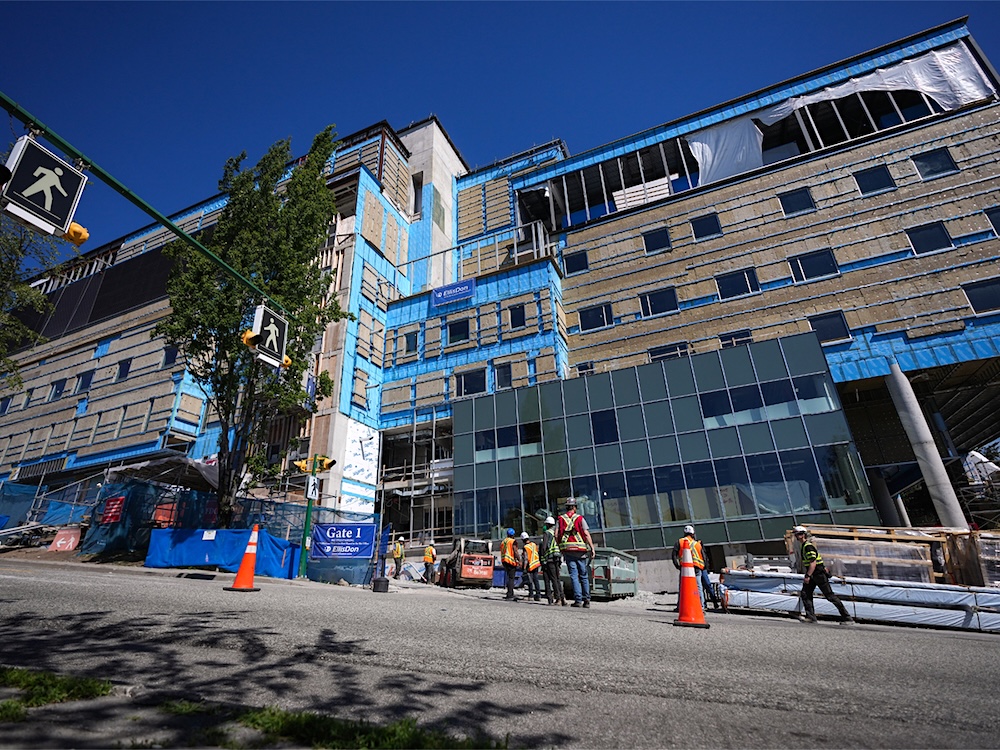
Health care is usually a top election issue. But this year, old discussions are taking on new urgency.
Many British Columbians do not have a family doctor, and some people spend more than five years on wait-lists to get one. Emergency rooms often require patients to wait six hours or more for help. Once patients are admitted to hospital, they can linger for days in an emergency department while waiting for a bed to open up in an acute-care ward. Meanwhile, B.C. hospitals house many elderly residents who are waiting for rooms to open up in a nearby assisted-living or long-term care home.
And with the province’s population rapidly aging, government must not just fix today’s challenges, but also prepare the system for much higher health-care demand in the near future.
Forty per cent of British Columbians cited health care as a major issue in one recent poll conducted by Ipsos.
And the parties are responding with real promises, says Cherie Payne, the executive director of the BC Health Coalition, a union-backed advocacy organization that focuses on preserving and enhancing public health care in the province.
“This is the first time in a long time that I’ve seen each political party speak with urgency, where they recognize that the electorate is very upset about access to health care,” she told The Tyee. “You have pressure points from two ends: individual British Columbians who want to get care, and the workers who are saying, ‘We are close to burnout, and this is not sustainable.’”
All major parties agree that ongoing challenges finding physicians and getting timely care in emergency departments and hospitals reveal a need for significant improvements. And as they seek the public’s votes, they have each made promises to improve access to health care.
But delivering on those promises will require navigating fiscal constraints and addressing the increasing demand posed by a rapidly aging population. Can the parties meet the moment?
What they’re promising
The NDP
The governing NDP has pledged to recruit more doctors and nurses to work in British Columbia and train more health-care workers, while pointing to its record of building and expanding hospitals and creating dozens of urgent and primary care clinics around the province. They’ve promised to continue that work, saying they will add a slew of clinics in Oliver, Victoria, Port Hardy, Langley, Cowichan Valley, Kitimat, Terrace, Richmond, South Vancouver and the North Vancouver area.
Just before leader David Eby called the election, the province also announced it was renewing its plan to further expand Burnaby Hospital. It has specifically promised to purchase eight new MRI machines and 15 CT scanners to try to cut surgical wait times.
Eby also pledged an additional $30 million to expand Kelowna General Hospital.
The NDP has also promised to push forward plans to build seven new long-term care facilities. Earlier this year, the province paused work on the sites, saying it needed to bring down the projected combined cost of $1.4 billion.
Underlying the NDP’s promises is a commitment to not privatize health services.
The party’s costed plan says its health promises will cost about $2.5 billion in capital expenses, and a little more than $300 million in increased annual costs. Those projections assumed the new long-term care facilities could be built for $825 million but noted that more money is available to “fund the full project amounts.”
It says it will pay for the cost with new taxes on wealthy British Columbians.
The NDP did not make a candidate available for an interview on the party’s health-care promises by The Tyee’s deadline.
The Conservatives
The Conservatives have also pledged to hire more doctors and nurses and help rural medical practices with a $50-million “emergency fund” aimed at preventing the closure of doctors’ offices.
The party says it would create an “expert review panel” that would examine other universal health-care systems and recommend ways the province could improve the system.
The party also promises to provide more long-term care and home-care options for seniors, bolster medical transport in rural areas and improve financial supports for those with disabilities or autism.
The Conservatives have vowed to “protect universal care.”
But their platform suggests allowing private operators to deliver more care paid for by the government.
The platform promises “publicly funded treatment through another qualified provider when medically recommended surgical wait benchmarks are exceeded.”
The party also promises “portable public funding” for seniors seeking a long-term care home. That would come in the form of a voucher that could be used at a private facility.
The party’s costed platform says its promises to improve access would cost about $205 million annually, though that figure does not include pledges to specifically help seniors. Those commitments, including expanding long-term care and home care, are expected to cost another $350 million, but that figure includes the cost of restoring seniors’ ability to fully defer property taxes.
The Conservatives did not respond to The Tyee’s interview request about health-care promises. When previously asked for an interview for another story, the party’s communication director said, “Our candidates are laser focused on door knocking and speaking with voters right now.”
The Greens
At the centre of the BC Greens’ health-care platform is a promise to create “community health centres” that can provide a range of support to local residents. The party says it would build such centres in every riding in the province.
Such centres would offer a larger variety of services than urgent and primary care clinics. The Greens’ platform says that urgent and primary care clinic expansion has contributed to staff shortages at other medical care facilities and that visits cost the public system more than other family practitioner systems.
The Greens also pledge to review the health authority model, centralize referrals for surgeries, increase funding for nurses, improve working conditions for nurses and partner with unions to recruit and retain more staff. The party also promises to develop a plan to build more long-term care to meet demand.
Green Party candidate Lisa Lapointe, who previously served as the province’s chief coroner, told The Tyee health-care challenges represent systemic issues.
“We have so many more people going to emerge now who don't have a family doctor to go to, and who can't get into an urgent care clinic, so they sit in the emergency department waiting,” she said.
Lapointe said the community health centres the Greens are proposing would be run by the province, rather than operating independently. That would remove administrative burdens and improve work conditions for doctors and nurses, she said.
Lapointe said the province needs a comprehensive plan for delivering care to seniors, both at home and in long-term care.
“We have seniors in hospital beds who don't really need a hospital bed, but there isn't a long-term care bed for them to move into a publicly funded long-term care bed,” she said, adding that structural improvements could address the cost of health care as well.
“There's a bit of a domino effect. When the appropriate things aren't funded properly, we end up paying more down the road.”
What the parties say about each other
The Conservative Party of BC has pointed to emergency room closures in rural communities, long surgical waits and family doctor shortages as evidence of the NDP’s failings on health care.
“David Eby and the NDP have responded to too many of these challenges the same way: spend more, grow government bureaucracy, waste more tax dollars, announce another program and hope for a different result,” the party’s platform says.
The Conservatives also called Eby's promise to expand Kelowna's hospital a "cynical" ploy.
The NDP has warned the public of future cuts to health care under a Conservative government. It highlighted a statement by Fraser-Nicola MLA Tony Luck in February in which he said that health care and education, as the two largest sources of government expenditures, would have to “take the brunt” of cuts necessary to balance the budget.
The Conservatives’ platform no longer suggests the budget will be balanced, though it does say economic growth and resource projects will bring in revenue to pay for its promises. The NDP says the Conservatives’ costed plan has a $2.3-billion hole, noting that the platform doesn’t mention several promises made during the campaign, including for a $60-million cardiac catheterization unit at Nanaimo Regional General Hospital. The Conservatives say the NDP’s plan has its own “multibillion-dollar” hole, pointing to a recent error calculating natural gas royalties and suggesting that changes to forest land ownership will also hit the provincial bottom line.
The NDP said the Conservative plan to cut $1 billion from a contingency fund often used to address health-care pressures “will force health authorities to cancel surgeries, close primary care clinics, and reduce services at hospitals and long-term care centres before March 31.”
BC NDP Leader David Eby said a Conservative government would bring in more privatized care and clinics like those in Alberta.
The Conservatives, in turn, have accused Eby of “fearmongering,” saying “he is running on fear because he cannot run on his record.”
“This is the same premier who promised every British Columbian a family doctor by the end of 2025,” a party press release said. “More than one million British Columbians still don’t have one. Emergency rooms closed nearly 2,400 times in two years. Specialist waits are the longest on record.”
Both parties have remained focused on each other and have talked little about the plans of the BC Greens or other parties.
The Greens’ Lapointe told The Tyee she wanted to see more data backing up the NDP’s claims on health issues.
“When the premier says, ‘Well, we've connected a million people with a family doctor’ — but we still have 1.3 million without a family doctor, in effect, there's been no net gain,” she said.
BC Green Party Leader Emily Lowan has highlighted the increased use of private nurses to fill worker shortages over the last nine years. The NDP has promised to phase out such nurses.
What experts and advocates say
The BC Health Coalition’s Payne told The Tyee she appreciated the campaign’s heavy focus on improving the province’s health-care system.
The organization has published an open letter to British Columbians urging them to vote to expand long-term care, make home care affordable everywhere and deliver equitable access to emergency rooms and maternity and diagnostic services in remote, rural and Indigenous communities.
“We were really pleased to see each of the major parties address each of those calls to actions in their platforms,” Payne said. “Everyone recognizes that there’s more work to be done in health care, and so that provides us with some confidence that we’ll be able to work with the new government to address what everyone has identified as problems in the health-care system.”
Whether the parties will be able to tackle the systemic challenges remains to be seen.
Andrew Longhurst, a senior researcher and policy economist with the Canadian Centre for Policy Alternatives, said the platforms “lack a systemic, comprehensive understanding of what we need to address timely access to health care in the province.”
“The parties seem to know what the problems are, but it gets fuzzy when you look at their proposed solutions,” he said.
Hiring more family doctors
Longhurst pointed to the NDP’s and Conservatives’ promises to hire more family doctors. The current system, in which most family doctors operate their own small practices and are paid fees for each patient they see, lacks the necessary incentives and framework to actually deliver care in every community, he said.
“The model of expecting doctors to self-organize and be business owners and open up clinics is really not what a younger generation of family doctors are looking for,” he said. “Until we have parties understand that business model of primary care delivery is no longer fit for purpose in 2026, I think we’re going to continue to see access decline.”
The Greens’ proposals for community health centres does start to address some of those issues, Longhurst wrote in a recent piece.
Health-care centres could dovetail with reform to pay structures and the introduction of a “capitation” pay model, which would compensate doctors for providing well-rounded service to a large population, rather than to people on a case-by-case basis.
In a recent interview, health researcher and University of British Columbia adjunct professor Steven Lewis also said that small-scale medical clinics are increasingly outdated and at the core of many challenges.
“If you’re a solo physician or a two-person practice, and you’re serving a large area, you really are hostage,” Lewis said. “You can’t go away very often; you’re going to be on call a lot. It’s pretty wearing. It’s extremely important to look at what is unsatisfying about rural family practice for so many doctors, and I think it’s the difficulty of achieving work-life balance, the lack of support from other professionals.”
Neither community health centres nor capitation pay models are radical proposals, Longhurst noted. Ontario has both, including large non-profit health centres with dozens and sometimes hundreds of staff and physicians paid as employees.
Addressing long-term care and hospital congestion issues
Longhurst said the NDP and the Conservatives still have a lot to prove when it comes to their plans to address B.C.’s long-term care and emergency department congestion issues.
As The Tyee has reported, many of the congestion challenges in B.C. hospitals are linked to the large number of elderly patients who are awaiting placement in long-term care facilities.
Over the next decade, the province is expected to need 16,000 additional long-term care beds.
Restarting construction on the seven planned care homes is just a start, Longhurst said. While the NDP has promised to fund more care homes, he said, the party will have to be able to deliver those spaces in a timely manner, given the demand.
“Over the last number of years, it’s been a trickle,” he said of recent long-term care expansions. “We really need to see robust commitments.”
The Conservatives’ promise to adopt a voucher system to allow individuals to use public funding to find a private care home prompts the question of whether the party is suggesting abolishing the centralized wait-list that currently dictates who gets a bed, Longhurst said. That wait-list allocates available beds to those who need them urgently, he said.
“The big question for me is: Is the Conservative party really proposing to deregulate how publicly funded long-term care is accessed?”
If that’s the case, Longhurst said, it “would significantly erode equitable access to seniors who need long-term care.” Longhurst also pointed to a 2023 report by B.C.’s seniors advocate that showed private facilities spent less on patients than public facilities.
Longhurst said the Conservatives’ platform also points to the privatization of surgeries that are currently done in hospital. The party promises to give patients vouchers to access private surgery clinics if waits exceed a threshold. Longhurst said research suggests that privatized surgeries are more expensive than those done in hospitals and that “for-profit facilities entrench two-tier health care through unlawful patient charges.”
The Green platform, meanwhile, criticizes the NDP for delaying construction of the seven long-term care facilities but commits only to implementing a plan to build more facilities.
Longhurst has found that the capacity of B.C.’s hospital system has actually declined in recent years, with fewer beds per person in 2022-23 than a decade ago.
The parties’ platforms don’t seem to reflect the depth and complexity of the challenges, he said.
“It's been really unfortunate that we haven't had a deeper conversation about how we address some of these real systemic foundational challenges.” 
Read more: Health, BC Election 2026, BC Politics






Tyee Commenting Guidelines
Please note that email notifications for replies are not currently working due to a software issue which may be resolved in a future update.
Comments that violate guidelines risk being deleted, and violations may result in a temporary or permanent user ban. Maintain the spirit of good conversation to stay in the discussion and be patient with moderators. Comments are reviewed regularly but not in real time.
Do:
Do not: