


 SHARE:
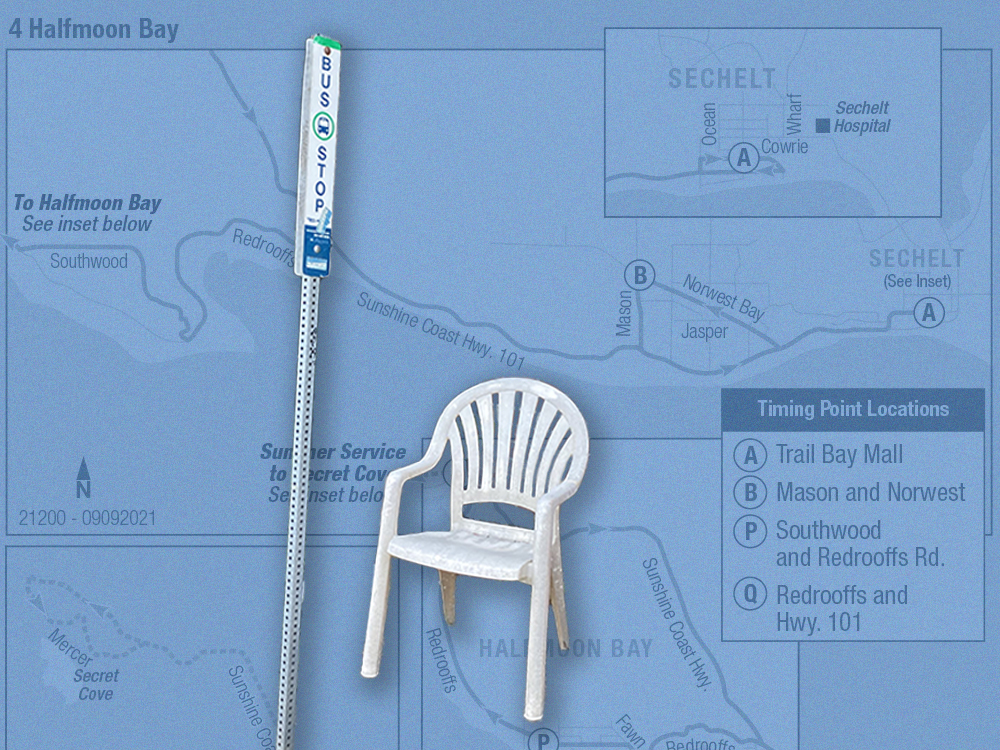
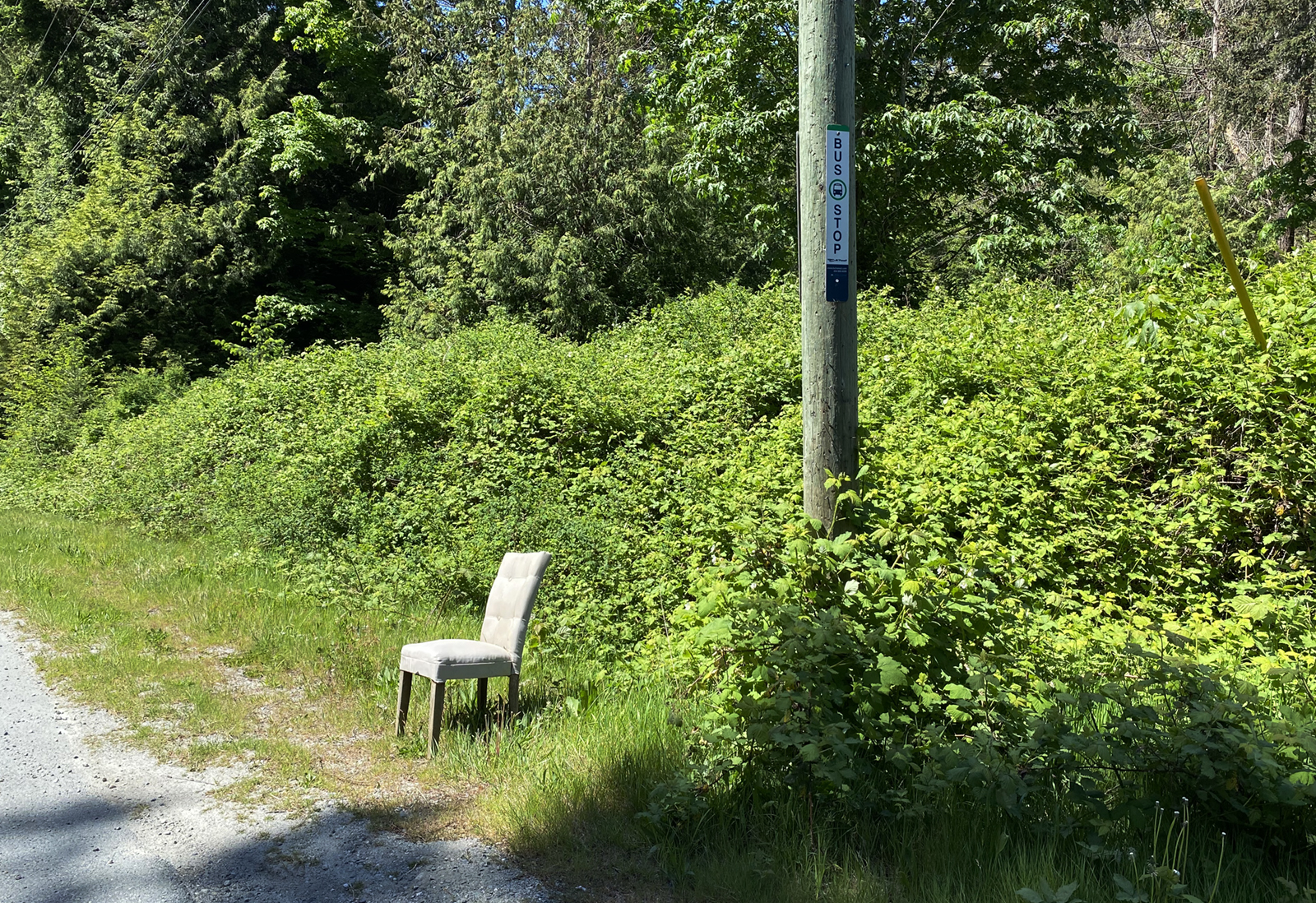
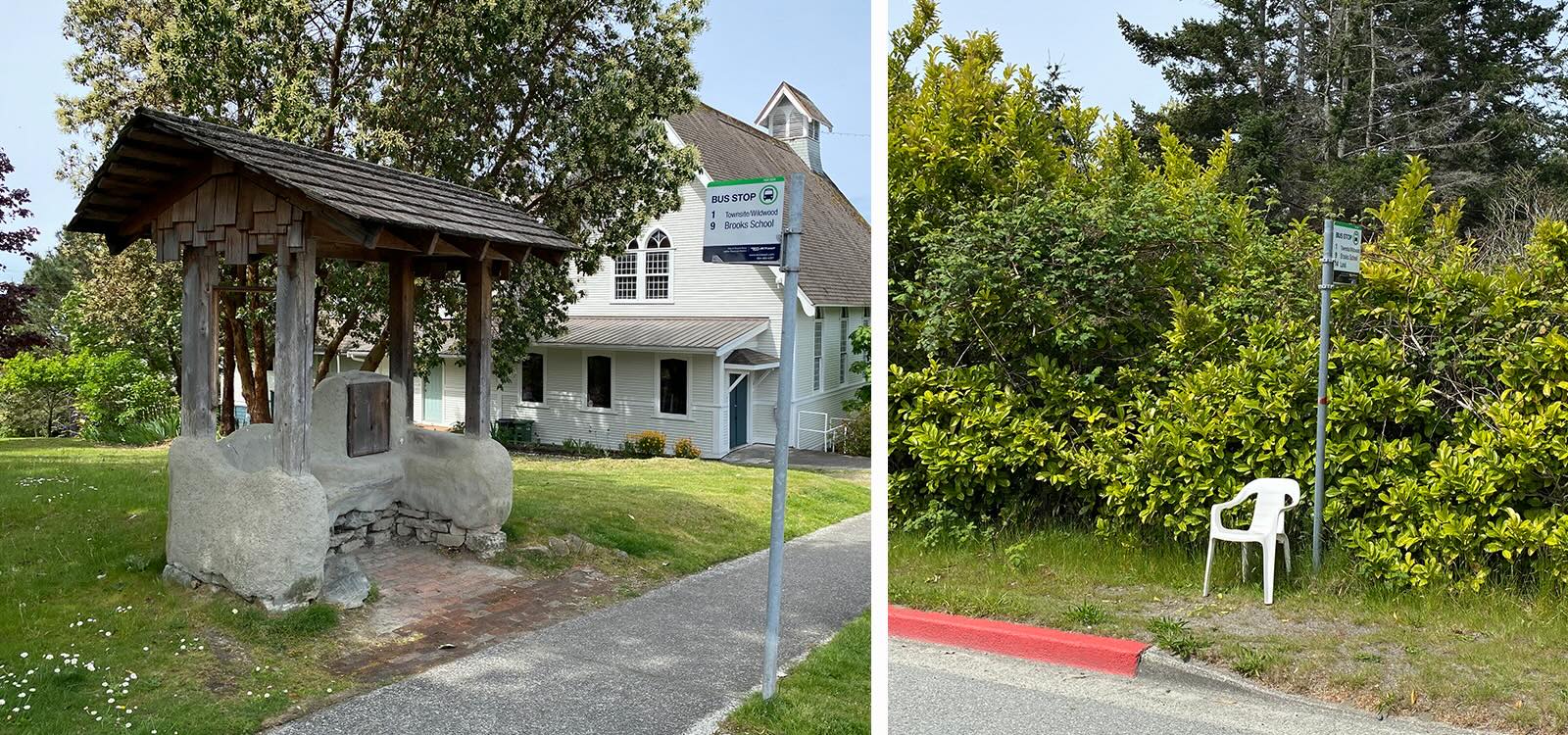
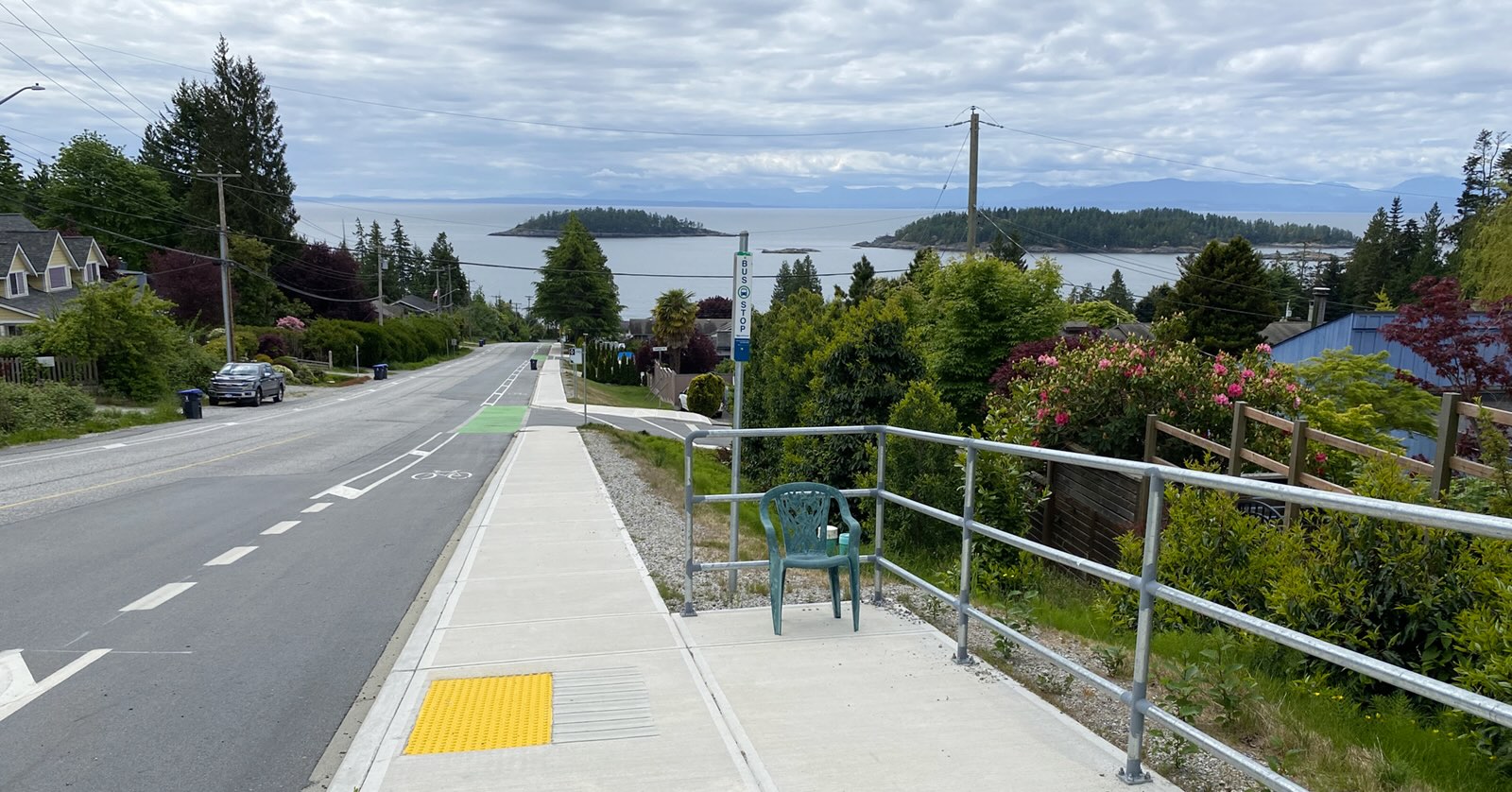
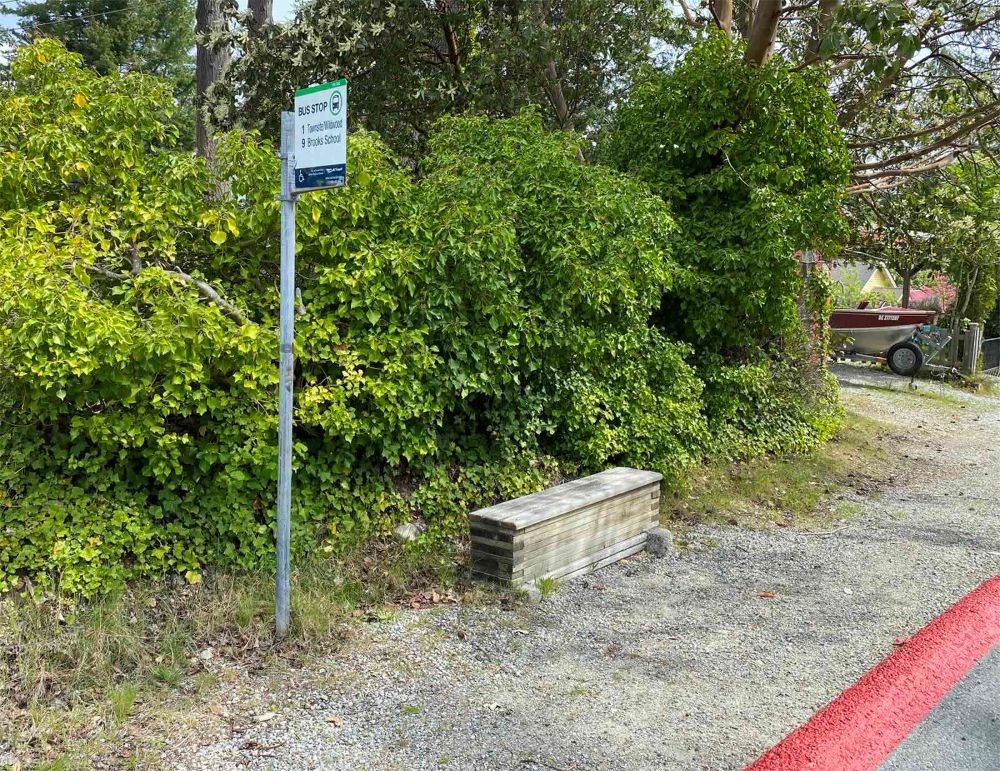
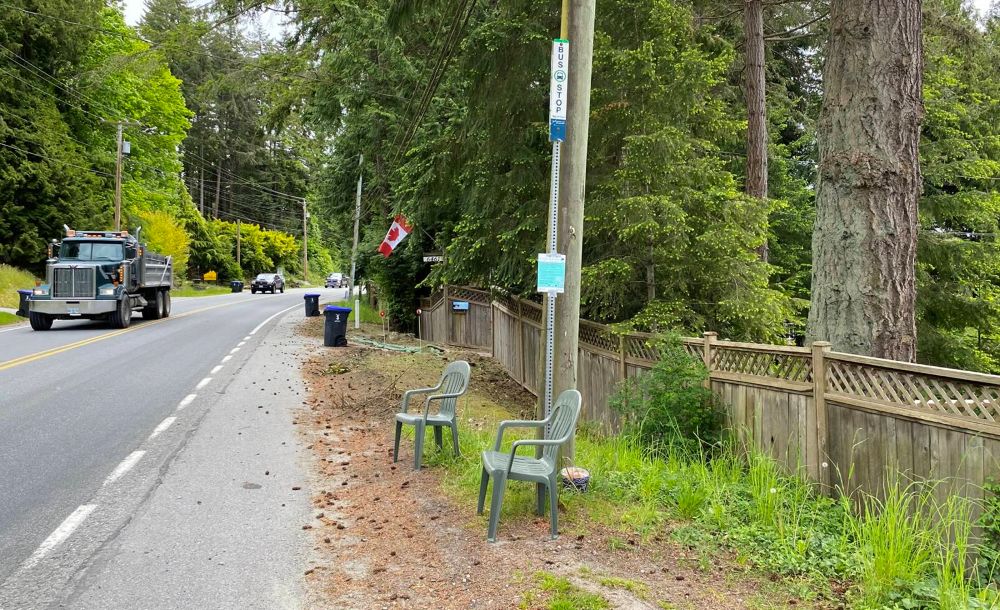
Some are as simple as a weathered lawn chair on the side of the road. Others, more elaborate: a cob shelter, a homemade wooden bench affixed to a pole. Some feature other installations like a community message board or a little free library. Others have an old coffee can for collecting cigarette butts.
Unlike other pieces in The Tyee’s Place Detective series, the citizen-made seating that dots the bus stops of the Sunshine Coast isn’t so much a mystery as it is a public space intervention that communicates a quiet act of care: in rural regions where there’s often a long wait for the bus, riders and their neighbours will take it upon themselves to make that wait more comfortable.
Probing past the surface a bit, the chairs can tell us about their surrounding environments.
They tell us, for example, “that there are infrastructure needs that aren’t being met by government or other bodies,” says Andrew Pask, a city planner who is on the steering committee of Placemaking Canada, which works nationally to advance placemaking and public space in Canadian urban centres and rural areas.
“With respect to this shortfall,” Pask adds, “it’s important to note that with almost every type of infrastructure there is always more need than there is capacity (and money) to fulfil it.”
Aman Chandi, the Surrey- and Vancouver-based director of community engagement at Movement: Metro Vancouver Transit Riders, a non-profit working to ensure that everyone in the region has access to fast, reliable, accessible and abundant public transit, says the bus stop chairs represent a kind of fill-in-the-gap infrastructure.
They show us that “residents genuinely care about the well-being of their neighbours and their community,” Chandi says.
“This highlights both community resilience and a spirit of collective action, qualities that I find truly exciting!”
The chairs speak to a spirit of collaboration to address a widely acknowledged problem, Pask adds. “There are people in communities who won’t just recognize a gap or area of shortfall, they’ll actively work to fill it,” he says.
“And not just for their own benefit — although that may well have been part of the motivation — but for the benefit of the community at large. These sorts of things serve as a testament to community spirit, volunteerism and a willingness to roll up one’s sleeves to contribute to the greater good.”
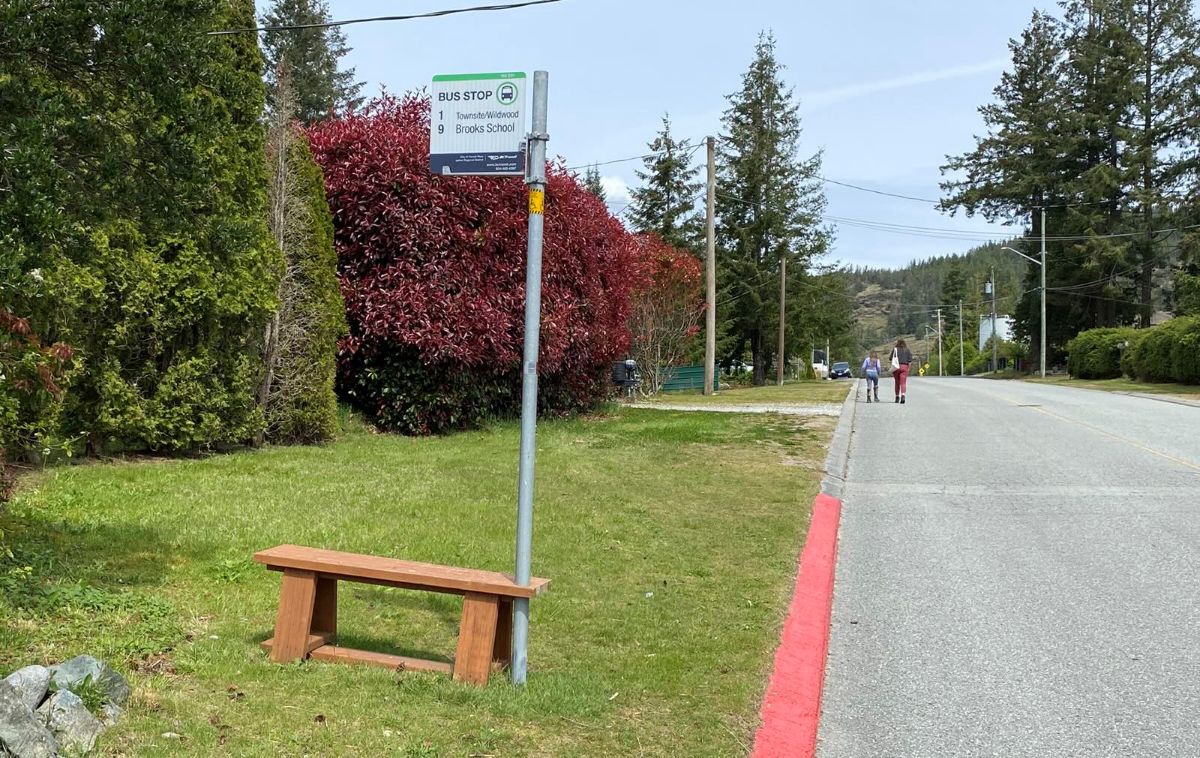
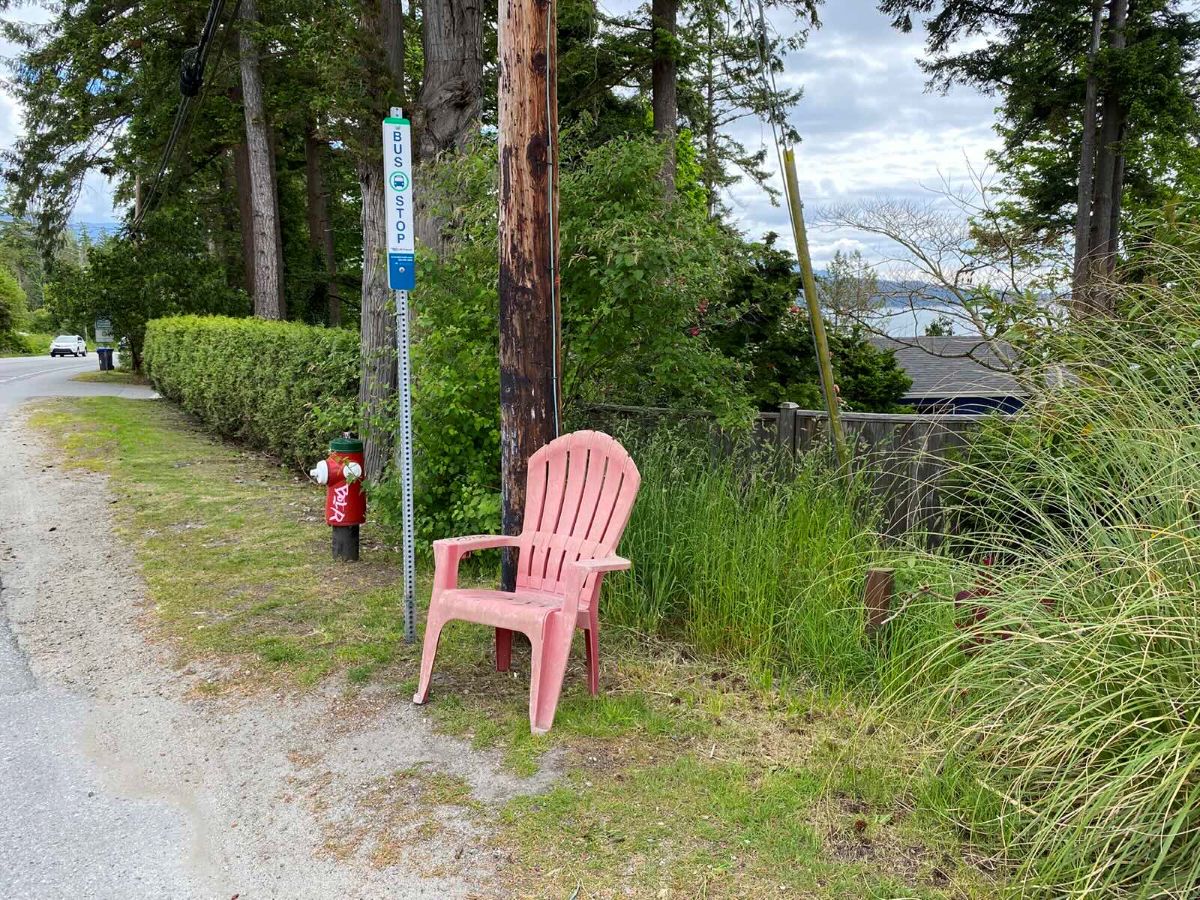
Chandi, who formerly worked for the City of Vancouver, says she saw firsthand how difficult it could sometimes be to install something as simple as a bench.
“Sometimes, you even encounter resistance from nearby businesses who worry that unhoused individuals might use the benches,” she says.
“I’m always inspired when community members take matters into their own hands, experimenting with unique and sometimes unconventional seating solutions in our public spaces.”
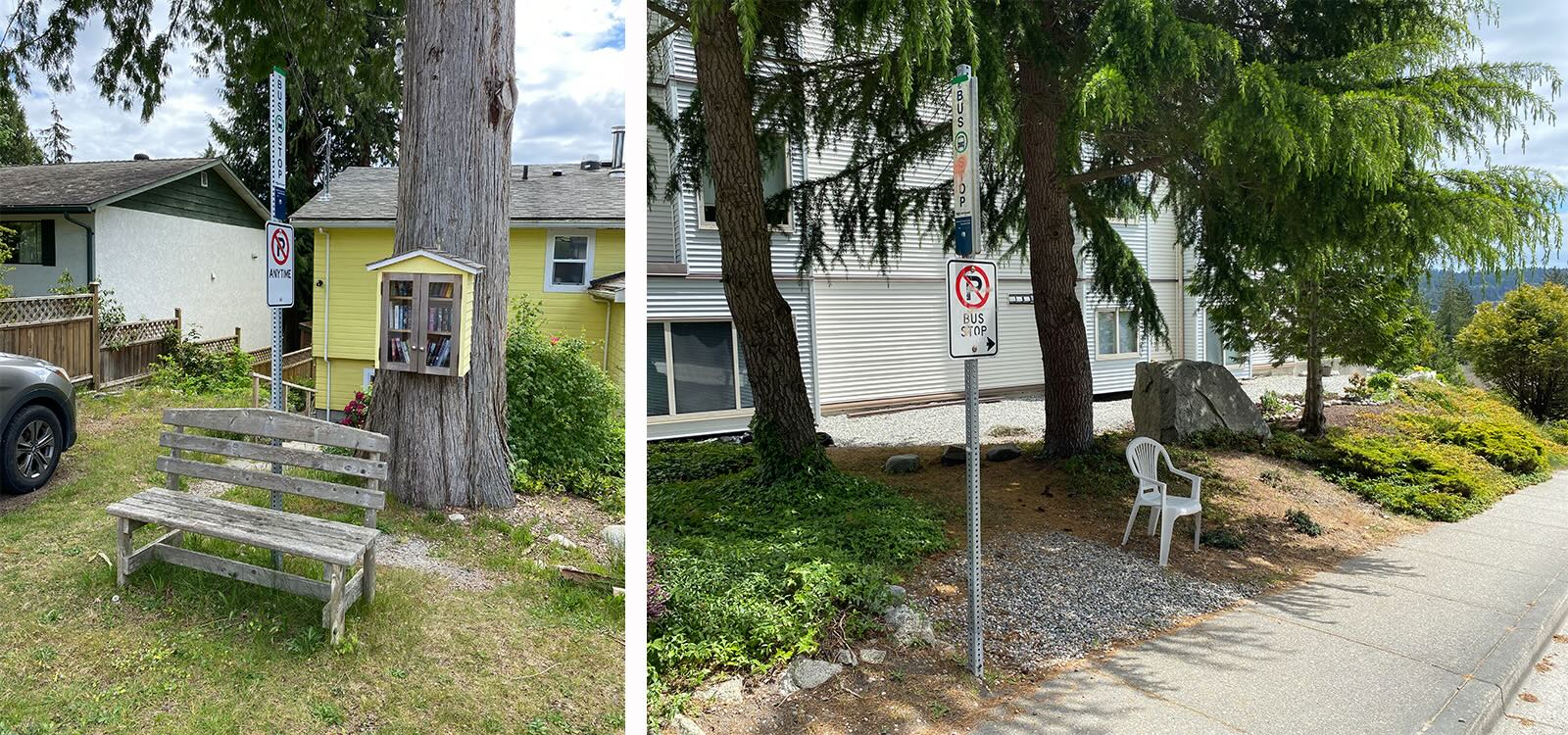
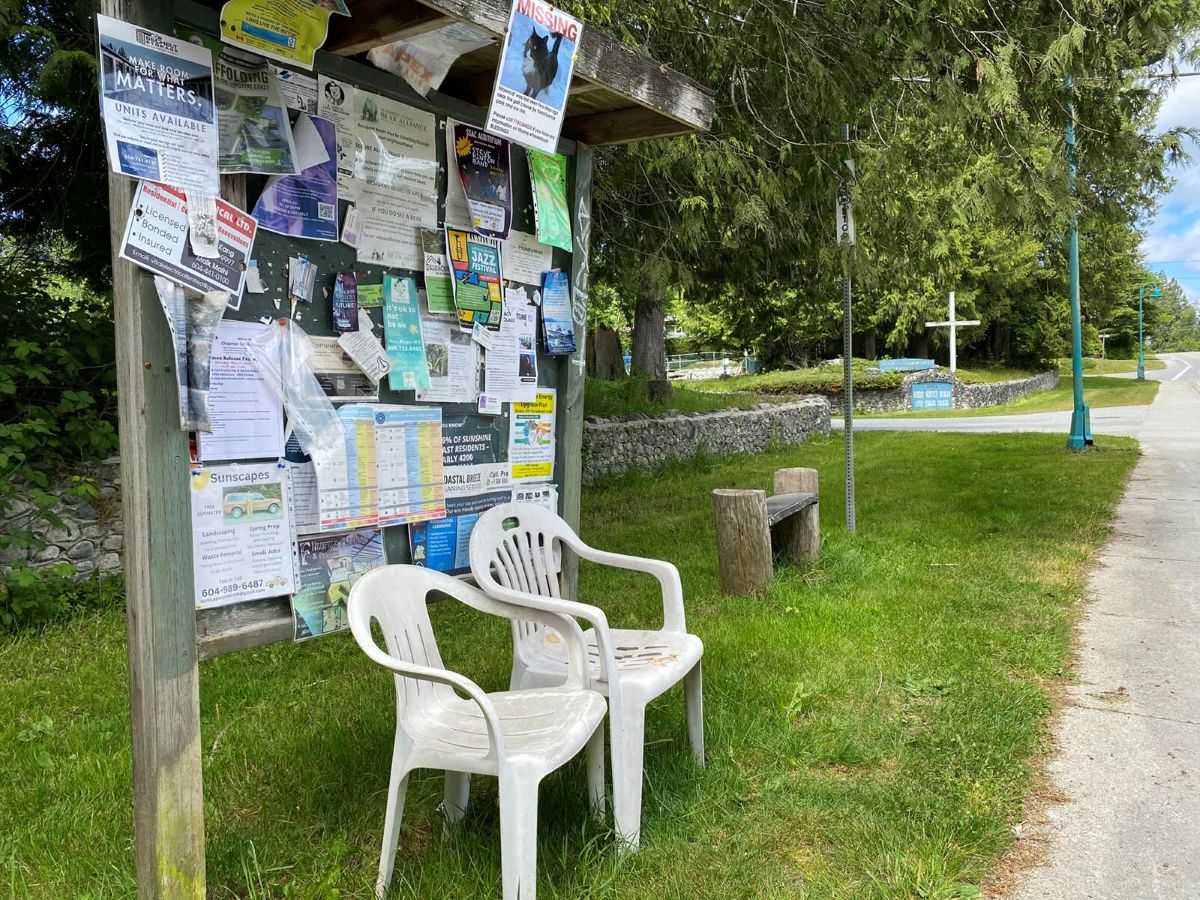
If you build it, they will come
“It’s a very good thing that we have these public transit routes in place,” Pask says. “They provide a critical means of providing transportation and mobility equity within and between communities. They also help us to address climate goals and reduce automotive congestion on our roadways.”
“But if we really want to make transit enticing, then additional supportive infrastructure also needs to be part of the equation. People need safe, comfortable and accessible means of utilizing transit — particularly in areas where bus service is not as regular or reliable as it is in, say, a major urban centre. And the need to ensure regular and reliable transit is a whole other conversation!”
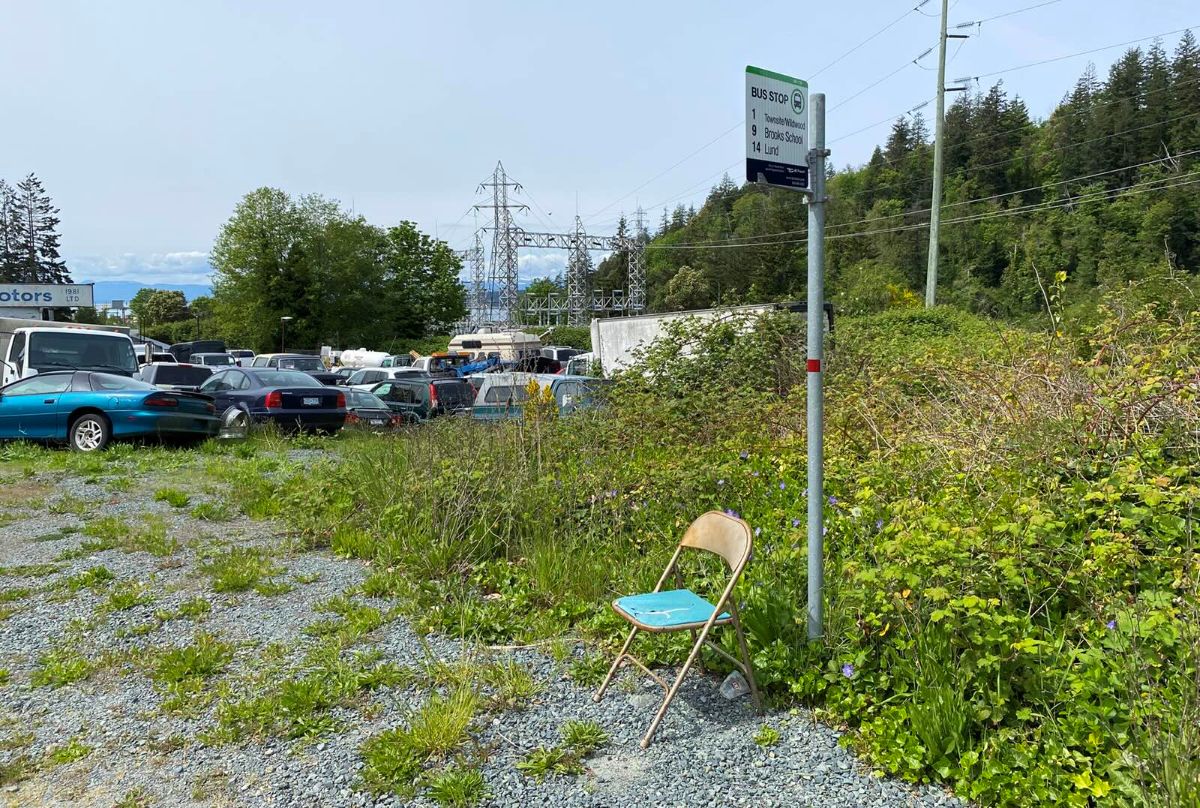
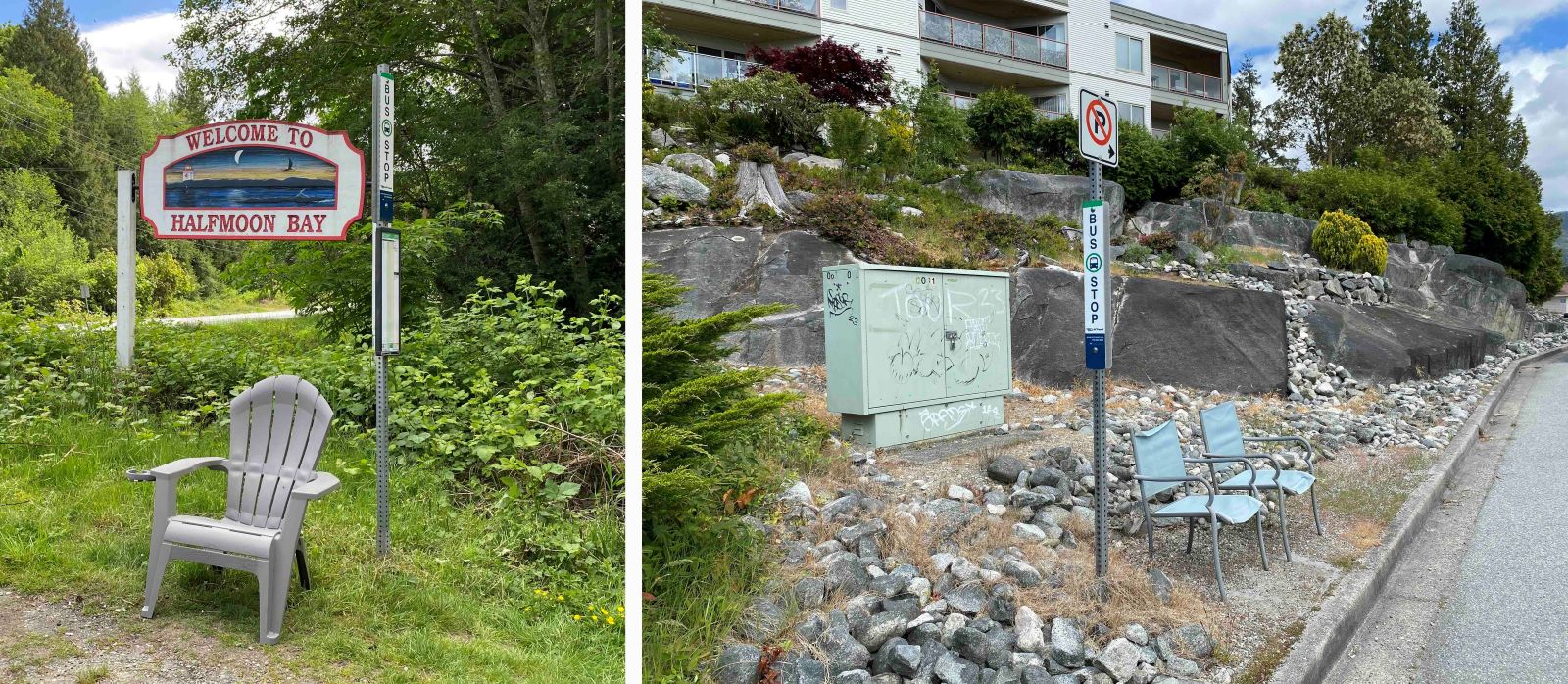
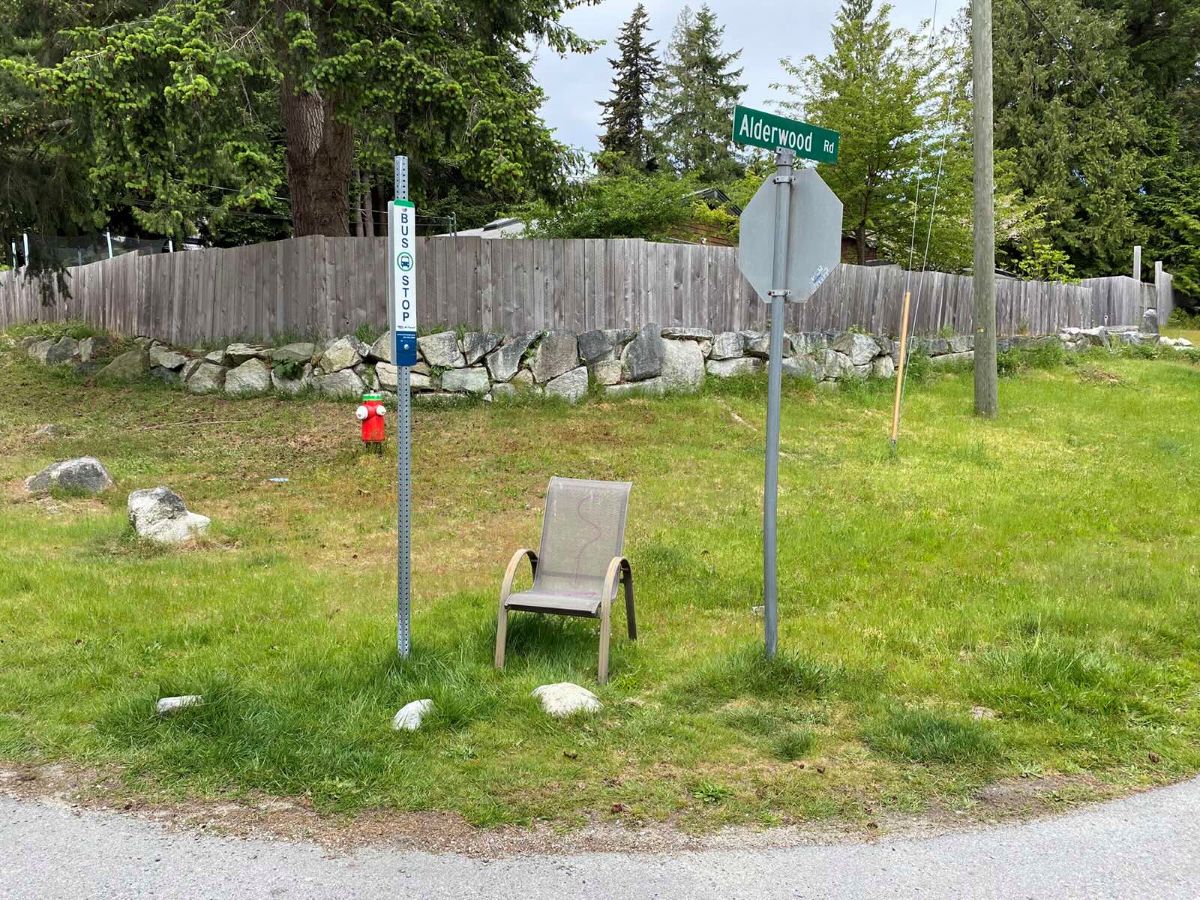
The Sunshine Coast’s bus stop chairs sometimes show up on their own by the side of the highway, their only companion the pole that marks the stop.
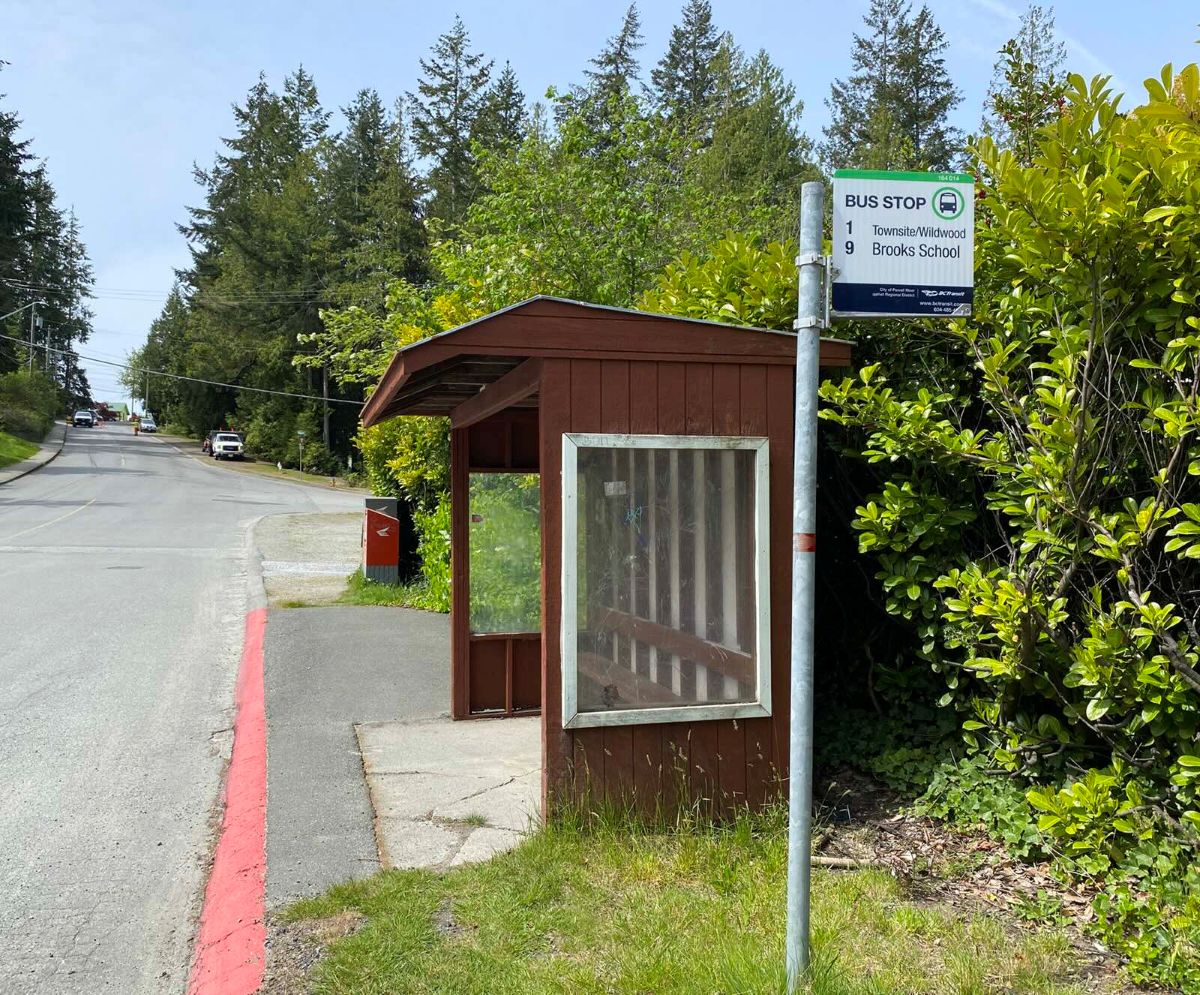
Other times, though, they’re nestled in a scene that includes other formal public infrastructure — stop signs, fire hydrants, hydro utility boxes. Or they’re surrounded by other pieces of informal, citizen-made infrastructure — the aforementioned little free libraries, cigarette butt cans, and community message boards.
Residents sometimes even take local speed limits into their own hands. Think of a “SLOW, CHILDREN” sign, or “BEARS CROSS HERE.”
Back in Metro Vancouver, Aman Chandi has seen the magic that happens when people come together to make public spaces work for more people. She uses the example of her community work in Surrey, where she has seen locals team up to transform unused land into shared gardens. “These initiatives help address food insecurity, improve safety and reduce social isolation in the community,” she says.
Movement: Metro Vancouver Transit Riders, the group with whom Chandi works as a director of engagement, recently built three benches and placed them near the Lapu-Lapu Day memorials along Fraser and 43rd Avenue in Vancouver.
They’re planning to build more this summer and install them at bus stops that need seating.
If you want to see more public space infrastructure in your community, Pask says, you can show up at your local government’s planning and budget meetings, and advocate to allocate more funding to it.
You can also connect with local public space or environmental groups, business associations, neighbourhood groups, health clinics, or organizations like the Rotary Club to advocate and intervene collectively.
Of course, like the folks responsible for the bus stop chairs, you can also take matters into your own hands and DIY some solutions. There are lots of plans online for seating and little free libraries, for example, Pask says.
There is an equity dimension to all this, though, Pask adds.
“The level of scrutiny and acceptance of public space interventions can vary depending on who’s doing the intervention, and the people for whom the intervention it is intended,” he says.
“A group of skateboarders nailing together a few jumps may run into more challenges than someone putting up a little free library.”
And that, in turn, speaks to the broader tensions around public interventions like these.
“On one hand, it’s fantastic that community members feel comfortable taking on this sort of DIY placemaking to improve their neighbourhoods,” Pask says.
On the other hand, that people feel they have to sends signals about how municipalities fund and prioritize different types of infrastructure investments.
“Local and regional governments are often jammed financially — there’s no question about that,” Pask says.
“It can be a challenging balancing act — and sometimes they do a reasonable job in terms of public space… and sometimes they don’t,” he says.
And that brings us full circle to the chairs, and why they pop up across our rural and suburban environments.
“Seating isn’t just a nice to have,” Pask says.
“It’s a necessity, just like water fountains, and public bathrooms. It is particularly important for children, or families with children, or for elderly folks… but the reality is that everyone benefits when there is seating. This is the case not just on bus routes, but in towns and cities in general.” ![[Tyee]](/design-article.thetyee.ca/ui/img/yellowblob.png)
Read more: Health, Photo Essays, Urban Planning




Tyee Commenting Guidelines
Please note that email notifications for replies are not currently working due to a software issue which may be resolved in a future update.
Comments that violate guidelines risk being deleted, and violations may result in a temporary or permanent user ban. Maintain the spirit of good conversation to stay in the discussion and be patient with moderators. Comments are reviewed regularly but not in real time.
Do:
Do not: