



 SHARE:
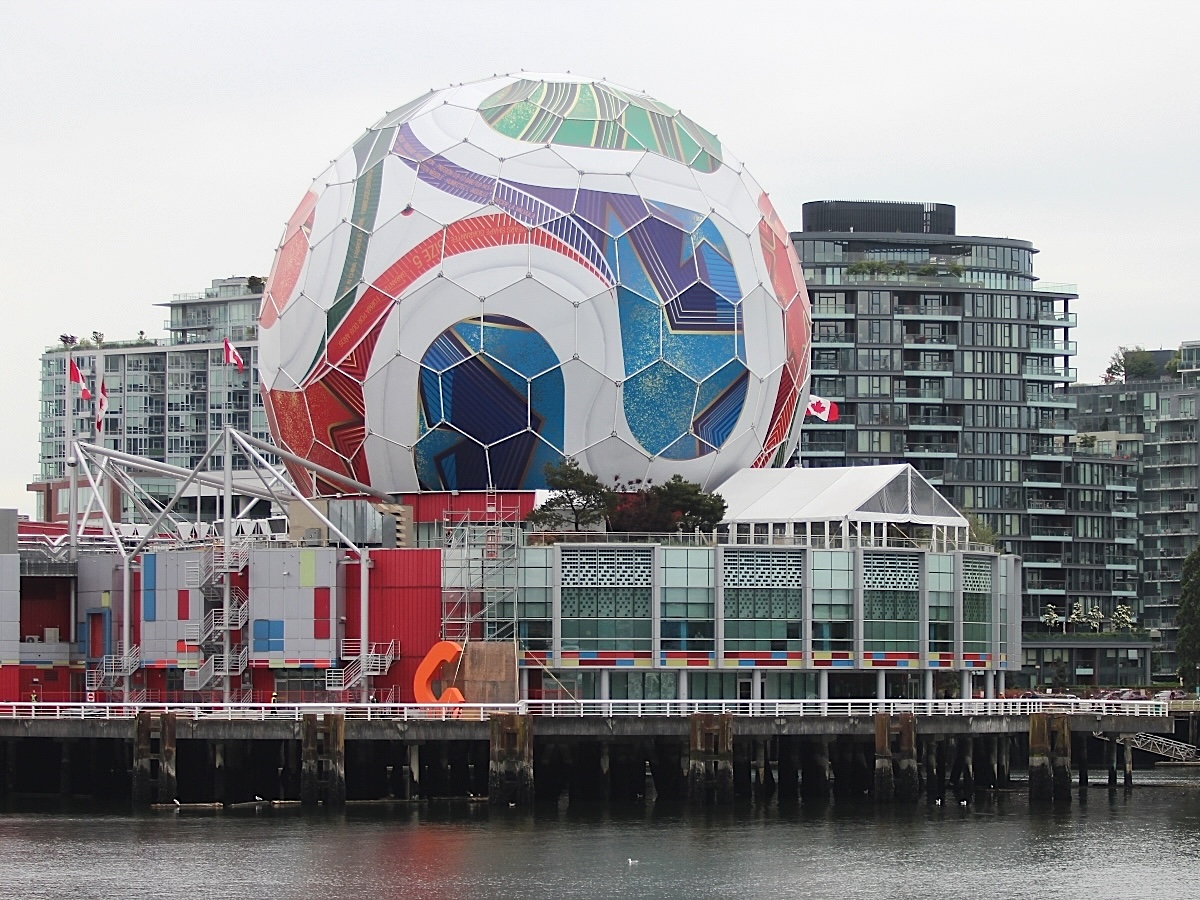
British Columbia is spending about $700 million to bring seven FIFA World Cup games to Vancouver. Is it worth it?
Some cities and politicians declined to host games, citing the inconvenience, potential impacts and hefty price tag. But B.C.’s provincial and municipal governments have been enthusiastic about the impending arrival of the games to Vancouver, citing supposed economic benefits and promising a festival-like atmosphere. Vancouver Mayor Ken Sim suggested the seven games being played in Vancouver would be the equivalent of “30 to 40 Super Bowls.” Premier David Eby, meanwhile, trumpeted the “remarkable” economic benefits of being a host.
With the first game barely a week away on June 13, the spotlight is shining brightly — sometimes uncomfortably so — on the FIFA World Cup.
So The Tyee asked senior editors Paul Willcocks and Tyler Olsen to debate the simple question: Will the FIFA World Cup be worth the hassle and financial cost?
Paul Willcocks: I get the World Cup’s appeal. People rallying behind their teams, tiny underdogs toppling giants, and beautiful moments of pure emotion and athletic genius.
But to celebrate that, you have to ignore the gross ugliness and corruption of FIFA and the reality that this is a party for the elite, with everyone else looking on from blocked city streets.
And picking up the tab for other people’s fun.
When Vancouver “won” the right to host five games in 2022, the city and the province pegged the cost at around $250 million.
The latest estimate, after adding two games to Vancouver’s hosting duties, is almost three times that, around $700 million.
I popped on StubHub to check if the ticket prices were as outrageous as I had read about. Two bad seats for Canada versus Qatar came to $1,769.
The World Cup’s appeal — especially the sheer sporting passion — is wildly outweighed by its bloated, oppressive current model.
Tyler Olsen: I agree that FIFA, the organization behind the World Cup, is a fraudulent, indefensible organization that largely operates for its own benefit. But we live in a world where to boycott every such organization is to largely wall oneself off from society. Yes, FIFA is a corrupt organization that has increased the cost of soccer to benefit its members. It deserves more pushback than it has had in the past. But it's getting that pushback, and it’s bending. And, as a collection of individuals, is it any worse than the owners of NHL teams, NFL teams or F1 teams? I'm not so sure.
And yes, the cost of a ticket is obscene and too high. But I surveyed my beer-league Abbotsford soccer team. A parks worker plunked down $1,000 for four tickets to watch Canada play. My plumber buddy spent $750 to watch that Qatar game. I have teammates on two different teams who spent around $400 per ticket to watch Egypt play New Zealand. I wouldn’t spend that much to watch two mediocre teams, but that's how they chose to spend their money for an event that will never be here again. The World Cup is not your average sporting tournament.
Willcocks: Sorry, Tyler, but FIFA is in a class of its own in corrupt and self-serving behaviour.
When I lived in Central America, I saw the World Cup’s positive side when Honduras played Canada to determine who would make the tournament. I cheered for Honduras because the beleaguered country’s people really needed something to cheer about. And when they thumped our side, the streets in our small town were jammed.
Three years later, when we were living in Managua, Nicaragua, my partner’s boss came into work looking devastated. Her brother, head of the Nicaraguan Football Federation, had been arrested in Geneva, charged with taking hundreds of thousands of dollars in bribes. The case ultimately involved 41 people, almost all FIFA executives.
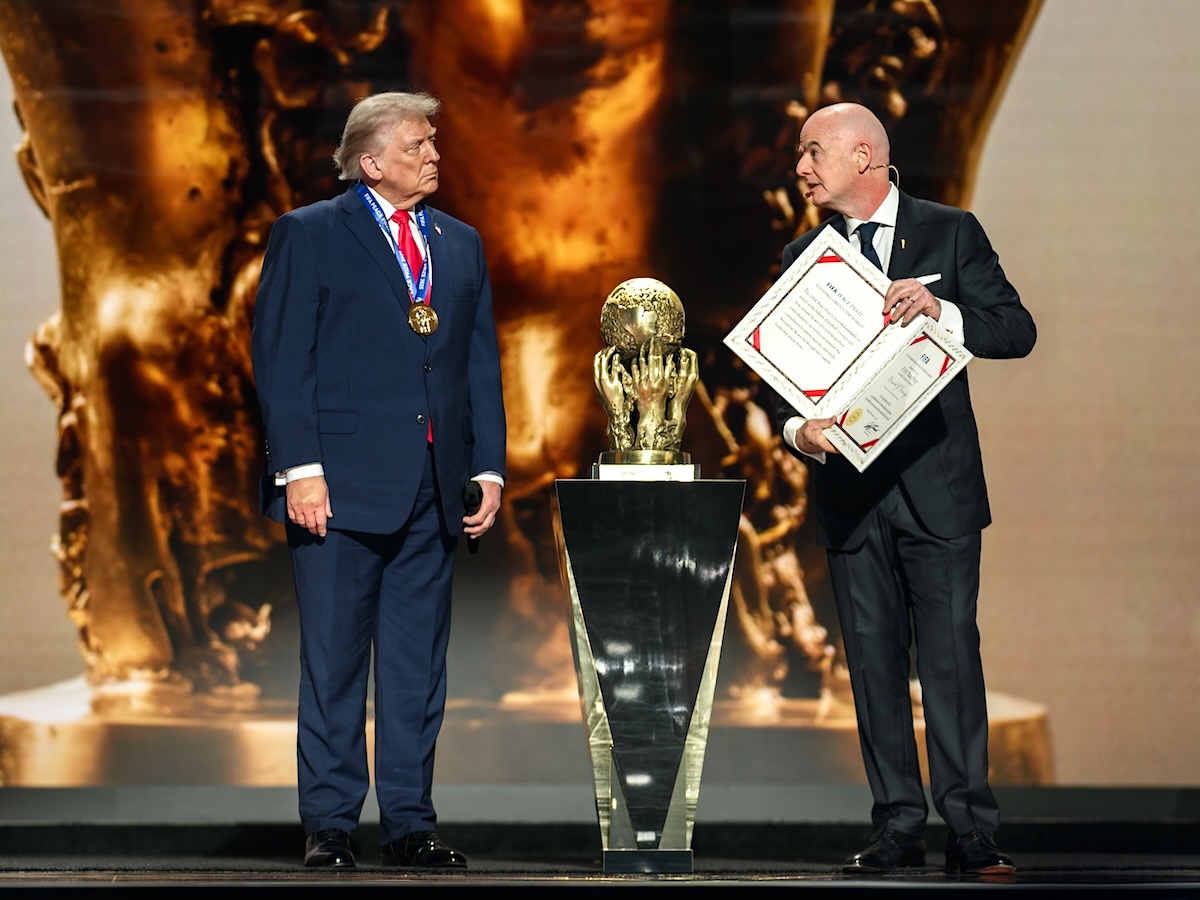
FIFA says it’s changed. But thousands of foreign workers died building infrastructure for the 2022 World Cup in Qatar. The organization still cuddles up with dictators, as you wrote about in The Tyee. FIFA even created a ludicrous peace prize and gave it to Donald Trump.
At some point, countries have to stop holding their noses and start saying no to FIFA’s demands and corruption.
Do you really think the costs of the Vancouver games will bring real benefits?
Olsen: We are on the same page, Paul, that countries have to say no to the corruption. And there are signs that is happening across the world.
Countries and cities also can and should continue to take a harder look at the costs related to hosting the games. In previous years — and in North America — FIFA has been able to sell the hosts on the glamour, soft power and supposed economic benefits that come from the tournament. That's getting harder and nations are getting savvier. Vancouver and Toronto could have probably driven a harder bargain too.
I do think, though, the costs — astronomical as they may be — may be worth it. Or at least the tournament might not be such a bad deal as you may argue.
Will the tournament bring in tax revenue to match its costs? No.
Is there enough fun to justify the cost? No.
Is the marketing of one’s country to international spectators enough? No.
But combine those three streams, and you may start to approach a world where hosting this party may make some financial sense. Parties, in general, are hard to put a price tag on. But there's a reason people spend $10 to drink a beverage with friends in a bar when they could sip the same drink at home. It's not a good deal, but it can help make life special.
Willcocks: But those people who decide to go to the bar with friends to make life special pay their own way. We’re being forced to pay for someone else’s fun.
I appreciate your positive attitude, Tyler. Since the games are coming, and the money is spent, it’s sensible to make the best of them.
But it’s hard when Vancouver’s politicians sold the event based on wildly understated costs and went along as FIFA’s rules and demands ended up hurting city life, from shutting down the Dragon Boat Festival to banning buskers to closing kids’ soccer fields. And when we’re being insulted with overblown claims of benefits. Sim said the city expects an influx of more than 900,000 visitors during and in the five years following the tournament, “providing a significant boost to our tourism sector and supporting local job creation.”
That’s just foolish. The 2010 Vancouver Olympics, a much bigger event, produced no increase in international visitors. Does anyone really believe that a ton of people will watch the football games and, based on glimpses of the mountains, start planning a vacation here? Or to Toronto or Mexico City?
Our biggest contribution would be doing a post-mortem to help other countries decide if they wanted anything to do with FIFA’s World Cup in future. The bloated, corrupt organization expects to take in about US$8.9 billion from this one — and still sticks countries and cities with major costs.
Meanwhile, go Canada.
Olsen: I also dislike the blind boosterism and Pollyanna-ish marketing predictions associated with the World Cup. But I'll close with two points.
In recent years, the World Cup has been held in authoritarian countries for a reason. Those nations have sought to use the World Cup to launder their reputations, boost their position in the world order and give their political systems a gleam of legitimacy when they don't do the hard democratic work to earn it from their people.
But democracies can use the World Cup, too, and take the opposite approach. In doing so, maybe we can bring the World Cup back to the people. We do that by debating its merits and celebrating the games, while also questioning the people running it.
We can show diverse populations cheering on diverse teams. Canada, in particular, can highlight the mosaic of people cheering on their teams — and, again, questioning FIFA and the world order. We've paid a lot of money for the right to do so, but maybe these conversations are how we reap some value from the World Cup beyond balance books. And maybe in pushing back while celebrating, we can provide a template for other future host countries and show FIFA that the World Cup can thrive by embracing democratic messiness, rather than avoiding it.
There's one more important thing for me.
The value of soccer — and sports in general — is not actually found on the playing field. I've played soccer for 35 years, and it has done far more than keep me and others fit and laughing. It has given me lifelong friends, taught me lessons and let me grow as a person.
Tomorrow, I'm going to drive to Clearwater with a team of 10-, 11- and 12-year-olds for Footy Fest, an annual tournament that brings together youth soccer teams from tiny towns around B.C.'s Interior. We're staying in a campground and the entry fee is $25 per player.
Soccer is the world's biggest sport because of its accessibility and affordability. And for all its faults, the World Cup is stoking the imaginations of kids just like my own.
Most won't attend any games, unfortunately. And that's on FIFA. But having the games in Canada, in our kids' backyard, is special for them in a way that's hard to quantify. Soccer has boomed in Canada in recent years, and my hope for the World Cup is not that it breaks even or brings tourists here, but that tuning in to a game because it's happening in Vancouver inspires parents and kids to learn about the sport, kick a ball around and launch themselves into something that will transform their lives for decades. ![[Tyee]](/design-article.thetyee.ca/ui/img/yellowblob.png)
Read more: Sports












Tyee Commenting Guidelines
Please note that email notifications for replies are not currently working due to a software issue which may be resolved in a future update.
Comments that violate guidelines risk being deleted, and violations may result in a temporary or permanent user ban. Maintain the spirit of good conversation to stay in the discussion and be patient with moderators. Comments are reviewed regularly but not in real time.
Do:
Do not: