


 SHARE:
I have always wanted to be a shoplifter.
My imagined life of crime has some very strict caveats, however. Rule No. 1: Steal only from evil corporations. The kinds that exploit their workers, feature wildly overpriced goods and are generally the most blatant examples of late-stage capitalism run amok.
When a branch of Nordstrom’s upscale department store chain took over the old Eaton’s location in downtown Vancouver in the 2010s, my urge to strike back against the U.S. chain was overwhelming.
Now there’s a new luxury shopping destination in town: Oakridge Park.
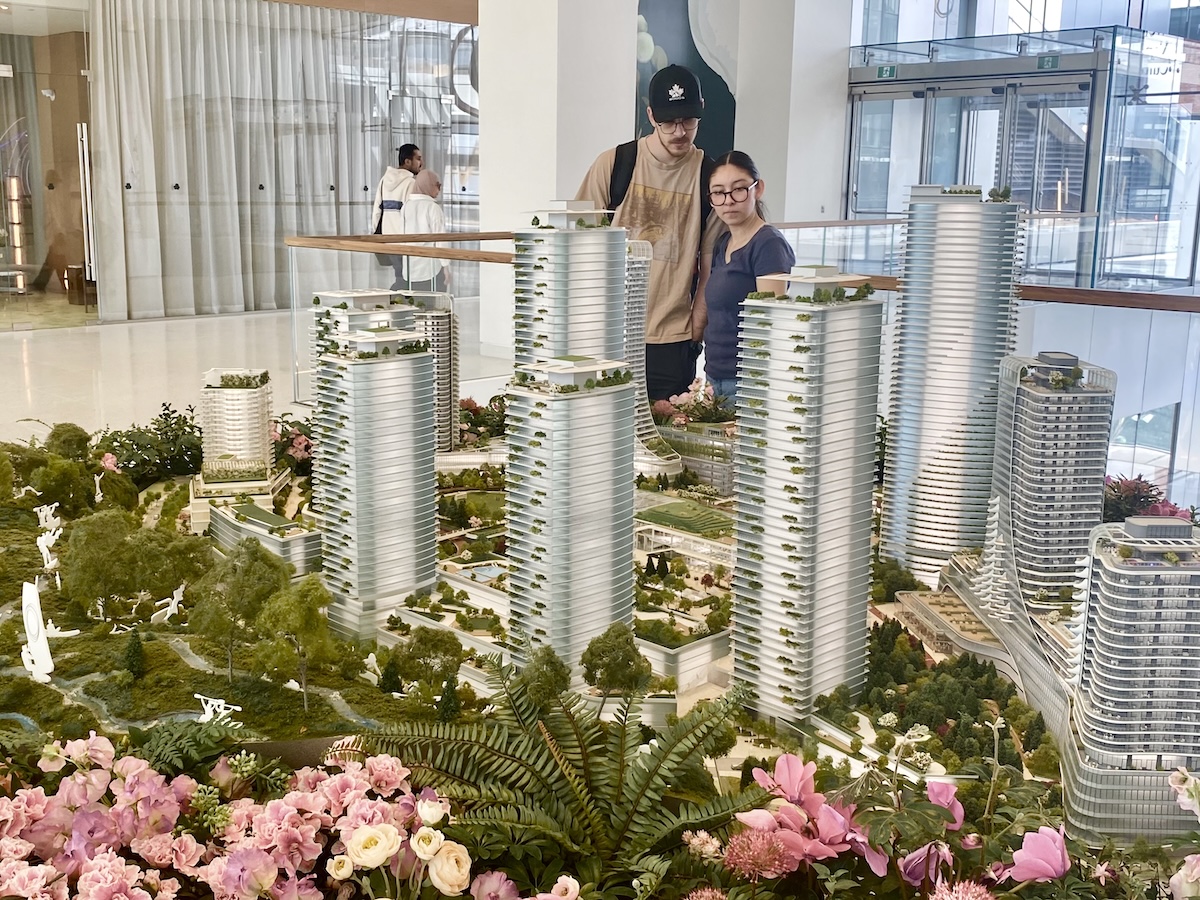
The long-delayed shopping mall finally opened its doors in Vancouver last week. It’s part of a much larger development that includes not only retail but also residential and cultural spaces, all branded with the ripest, most superlative language that marketers are capable of.
To be frank, Oakridge Park is emblematic of the myriad issues at play in the city, if not the larger social moment. Most of which have to do with elevation of money over everything else on the planet.
Before you visit Oakridge, watch ‘I Love Boosters’
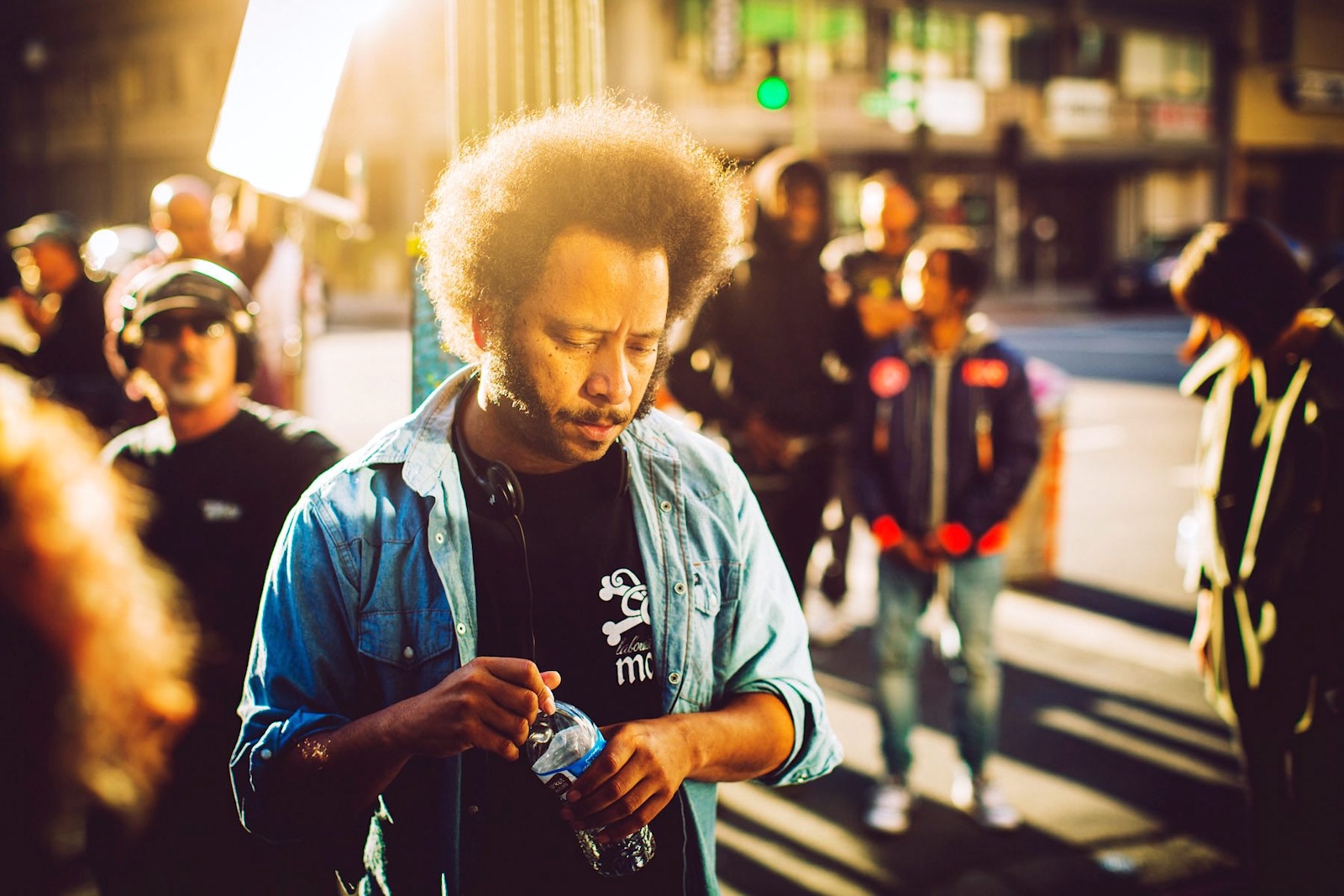
Because the universe loves coincidences, Boots Riley’s new film I Love Boosters opened on the same day as Oakridge Park last week.
Ideally, the two should be experienced together, or at least in quick succession. The pairing will prepare you for the absurdity of a luxury mall in a city riven with homelessness, poverty and other social issues.
If ever there was a filmmaker for this moment, it is Boots Riley.
A true force of nature, Riley is a radical auteur fond of wearing enormous hats and possessed of a cinematic vision unlike any other.
His previous work, Sorry to Bother You, told the story of a Black telemarketer named Cash (a bit on the nose, but OK) who code switches on the job, speaking with a white voice at work in efforts to connect better with customers.
That’s only the opening premise. After getting a promotion, Cash is upgraded to the high ballers’ suite, where he discovers that the corporation he’s working for is in the business of slavery and the illegal arms trade. Things get infinitely worse when he discovers the company is also engaged in creating a race of hybrid horse people designed and bred to create a pliant, powerful workforce.
From this you may correctly surmise that Riley is not afraid of politics, symbolism and surrealism in the pursuit of cultural and social critique.
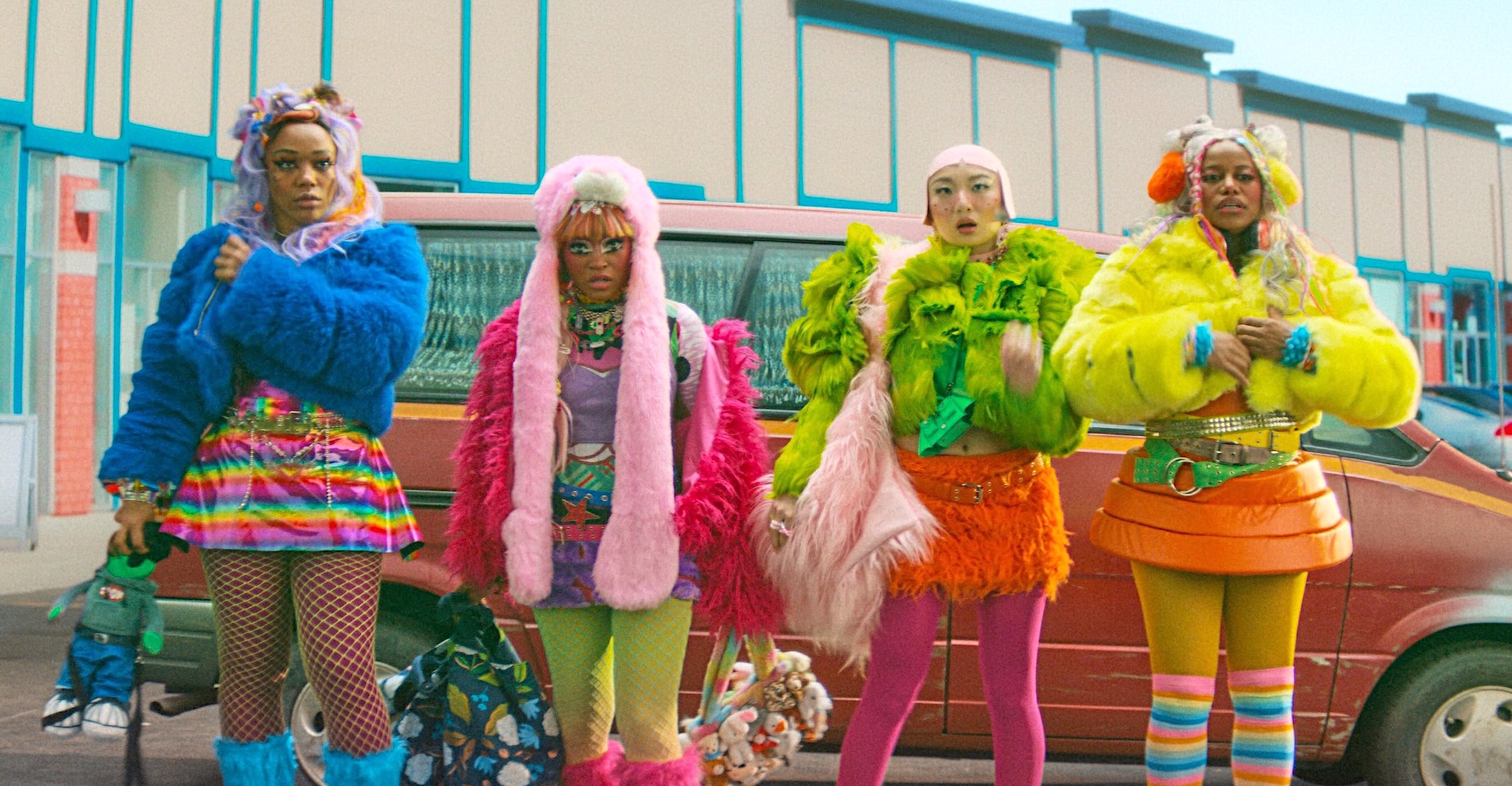
In I Love Boosters, Riley ups the ante, offering another evisceration of late-stage capitalism through the candy-coloured lens of high fashion. The film is laden with hefty ideas including dialectical materialism. But it’s also full-tilt boogie bananas, animated by a Tex Avery-style cartoon energy that is as serious as it is silly.
The “Boosters,” a slang term for shoplifters, consist of a group of female friends, otherwise known as the Velvet Gang, in the film. There’s Corvette (Keke Palmer), Mariah (Taylour Paige) and Sade (Naomi Ackie).
When we first meet the Velvets, they’re squatting in an abandoned fast-food chicken shack, subsisting on candy and planning to hit Metro Designers, a high-fashion chain overseen by the megalomaniacal designer Christie Smith.
Played with a boggling level of high camp by Demi Moore, Smith puts the shenanigans of real life designers like John Galliano to shame.
Smith is monstrous but also great fun to watch in her black-and-white ensembles that channel Cruella de Vil. Plus her office tower that is so slanted that the floor is set at a 45-degree angle. Everything slides.
The Velvets both loathe Smith and love her work, so they steal her clothes from colour-coded boutiques that pay workers low wages and force them to fork over their meagre salaries to buy outfits to wear while working the floor.
After their boosting efforts attract the spittle-flecked rage of Smith, who calls the Velvets “low-class urban bitches,” the struggle gets more real when Corvette discovers that Metro has stolen her design for a spiky jumpsuit.
In an effort to wipe out Smith entirely, the gang get jobs at a Metro store, but before they can put their heist into action, a lone figure beats them to the punch, stealing every last item of clothing with a mysterious device that sucks up all of the merchandise in mere moments.
This woman, Jianhu (Poppy Liu), is actually a factory worker from China who toils in a sweatshop that makes clothes for Metro Designers. In addition to poisoning its workers, the factory is also involved in creating teleportation devices to cut down on shipping costs.
When Jianhu and her cousin discover this, they steal a couple of the teleporters to use against the factory owners. Before you can say “Workers of the World, Untie!” Jianhu and the Velvets team up to unravel Smith and her fashion empire.
Oakridge Park: Who is it for?
All of this swirled through my head on a recent sunny afternoon when I took the Canada Line to Oakridge Park to take in the new mall.
First, a confession of sorts. I spent a lot of time in the old mall known as Oakridge Centre. When it was demolished in 2020 to make way for the new development, a seed of bitterness was planted deep in my heart.
It may seem a little goofy to mourn a mall, but malls aren’t just retail outlets. They are, arguably, a third space, a democratic place where all kinds of people can hang out, sit by the fountain, take their kids to the germ-ridden play pit, marvel at the clashing decorative patterns in the food court and generally feel like they’re allowed to be there, even if all they can afford is a small Orange Julius smoothie.
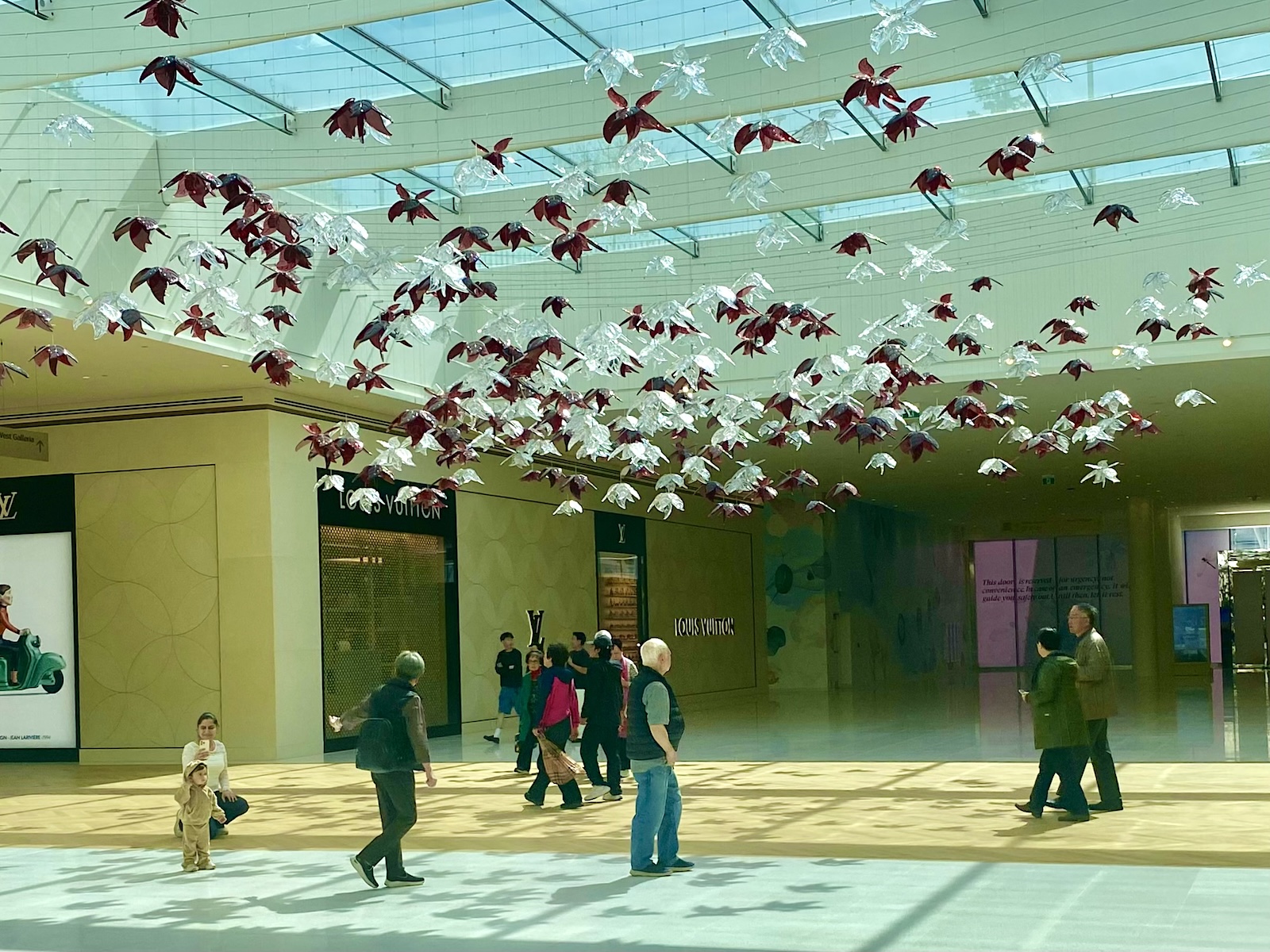
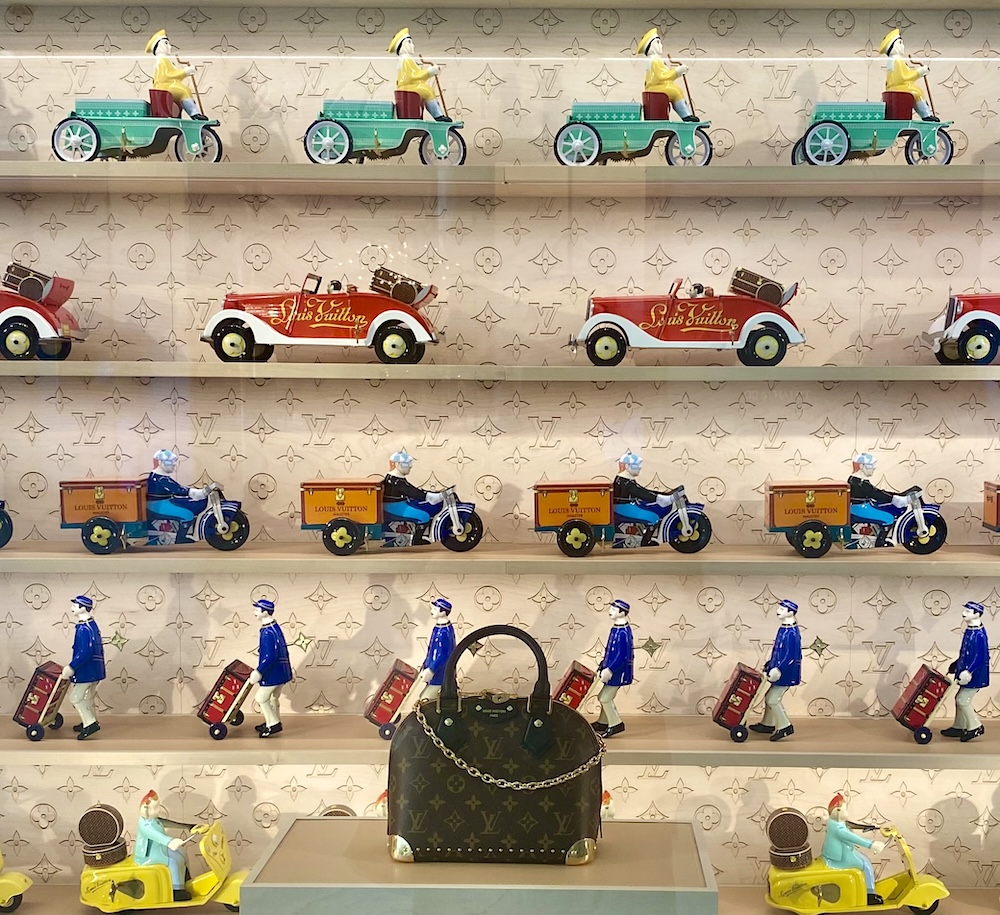
The new Oakridge Park doesn’t feel like it is for everyone. As someone noted the other day, “the poors” are not going to find many places to buy affordable goods. This ain’t no Zellers mall, after all. Many of the retailers are on the highest end of the luxury market: there’s Chanel, Dior, Max Mara, Loro Piana — stores you don’t set foot in unless you have a few spare thousand dollars to drop on a scarf or a purse.
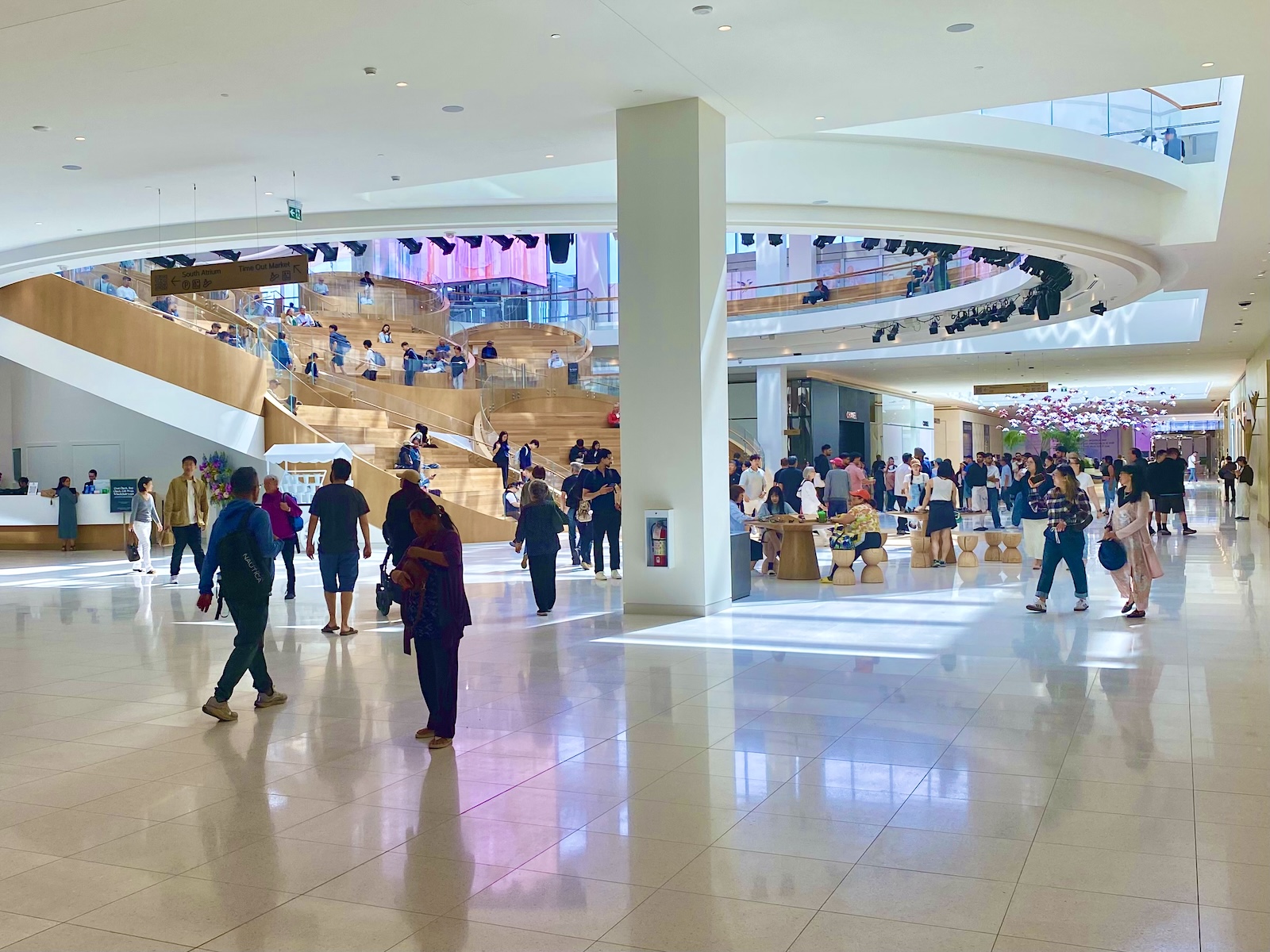
Lululemon and Aritzia, some of the only Oakridge Park retailers approaching moderate affordability, were swarmed with folks on Monday afternoon when I visited. Their more luxurious neighbours were largely empty, with only bored security guards and staff staring at their phones.
I thought about what would happen, then, if the movie world and reality were to somehow intermingle. In the I Love Boosters version of visiting Oakridge Park, I would have stolen a van, had sex with a soul-sucking demon (played by LaKeith Stanfield), teleported back and forth between Vancouver and China a few times, amassed heaps of Prada clothes, eaten a lot of candy and somehow incited a global uprising against the billionaire class.
Instead, reality being the distinctly unfun stuff that it is, I walked around the mall with a number of other Vancouverites, looking at the various displays and fancy pianos, and decided not to stand in line for 30 minutes just to get into the Time Out Market, Oakridge Park’s cheffy food court. Then I went home.
So, what is there to make of Oka-ridge Park and its commitment to luxury retail? Time will tell. Is there sufficient clientele to keep the place in business? Or will it wither on the money vine as life becomes even more expensive in this already unaffordable city?
As a palette cleanser, I dropped in on a thrift store on my way home, not just for the contrast but to remember that fashion is largely predicated on illusion.
The idea that a purse is worth $30,000 is just that, an idea. This is also the central conundrum of I Love Boosters. As much as the Velvet Gang hate the extractive business of fashion, they also love clothes. I relate so hard to this central conceit that it is almost painful.
Is a Prada technical taffeta coat in alabaster pink really worth $8,000? Probably not, but I can’t stop admiring its beauty.
The idea put forth by the film is “Fashion Forward Filanthropy” (sic). Which is where the thrift store ethos comes in. Desire is not eradicable, and the many campaigns to wean humans away from our planet-destroying commitment to consumption haven’t changed things enormously.
Fast fashion still rules the roost, but solutions are hard to come by. Luxury fashion doesn’t offer one. The only realistic option is the one the thrift store kids are embracing: a circular economy.
Oakridge Park opened in an interesting moment when a growing antipathy towards the billionaire class becomes increasingly difficult to ignore. It’s a widely acknowledged fact that wealth disparity is destroying the planet and poisoning human relationships.
In a recent interview with Boosters’ Liu in the Cut, the actress put things plainly. “The lie of capitalism is that it is every man out for himself,” Liu told the Cut’s culture writer Cat Zhang. “It’s violence to deplete people of a sense of imagination that the world can be different.”
Liu goes on to state: “Right now, you have this perfect storm of hyperindividualism and this desert of imagination, so you are the perfect vessel of the incentives of the billionaire class.”
Director Riley said it even more directly in an interview with the Guardian. “Theft is not outside of capitalism; it’s what capitalism was built on,” he told journalist Andrew Lawrence. “The bourgeoisie was no different in that they stole land, stole minerals, stole labour. But that theft is thought of as legal.”
What capitalism hath wrought in terms of human relations and where we go from here is truly the meat of the riotous Boosters.
So, here we are, with a fancy new mall that appears to cater largely to the moneyed class. We can look in the windows of this gated world or we can smash the glass and take back the means of production. Is there a third option? Maybe! Let the thrift store kids lead the way to a more equitable future, bright with colour, hope and, yes, fashion.
‘I Love Boosters’ is now playing in major theatres. ![[Tyee]](/design-article.thetyee.ca/ui/img/yellowblob.png)










Tyee Commenting Guidelines
Please note that email notifications for replies are not currently working due to a software issue which may be resolved in a future update.
Comments that violate guidelines risk being deleted, and violations may result in a temporary or permanent user ban. Maintain the spirit of good conversation to stay in the discussion and be patient with moderators. Comments are reviewed regularly but not in real time.
Do:
Do not: