


 SHARE:
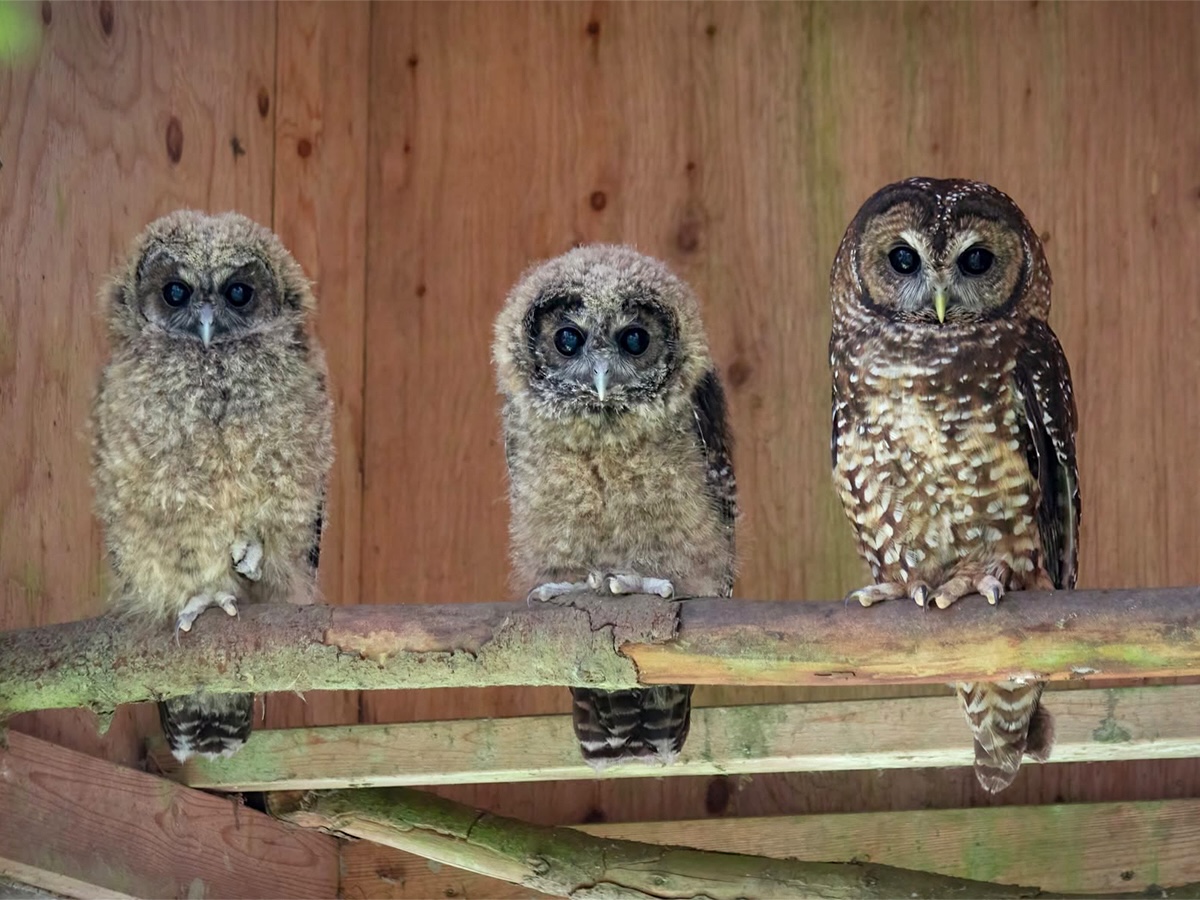
Canada’s last wild spotted owl was known as Skalula. In Nlaka’pamux, the Interior Salishan language spoken around B.C.’s Fraser Canyon, where the female owl lived, skelúleɁ is the word for owl.
Skalula nested in an old-growth tree in the remnants of an ancient forest in the Spuzzum Valley, about 100 kilometres northeast of Metro Vancouver, where she and her mate made history for another reason: they were the last wild spotted owls in the country to hatch chicks.
In 2019, the pair hatched a fluffy white chick, followed by two the following year. But the chicks didn’t live out their lives in the wild. As juveniles they were captured by B.C. government biologists and taken to a government-funded spotted owl breeding centre in the Lower Mainland. The government hoped to augment the dwindling gene pool of 30 captive spotted owls, whose eggs are hatched in incubators while forest sounds play in the background.
No official announcement was made when Skalula disappeared in 2023, the year after her mate died. No government news release or comment marked the Canadian demise of a bird that has been on the planet for 115,000 years, since before the human species Homo floresiensis lived in caves and used stone weapons to hunt food.
To this day, neither the provincial nor the federal government has publicly acknowledged the disheartening truth: the northern spotted owl, which nests only in old-growth forests, has gone extinct in Canada’s wild.
In the 1990s, as debate raged about logging the commercially valuable forests where the owl lived, Jack Munro, then president of IWA-Canada, a union representing B.C.’s loggers, famously told the New York Times, “I tell my guys if they see a spotted owl to shoot it.”
While shooting the owls was illegal, Munro’s wish was granted: spotted owls are no longer around to get in the way of logging some of the last old-growth forests in southwest B.C.
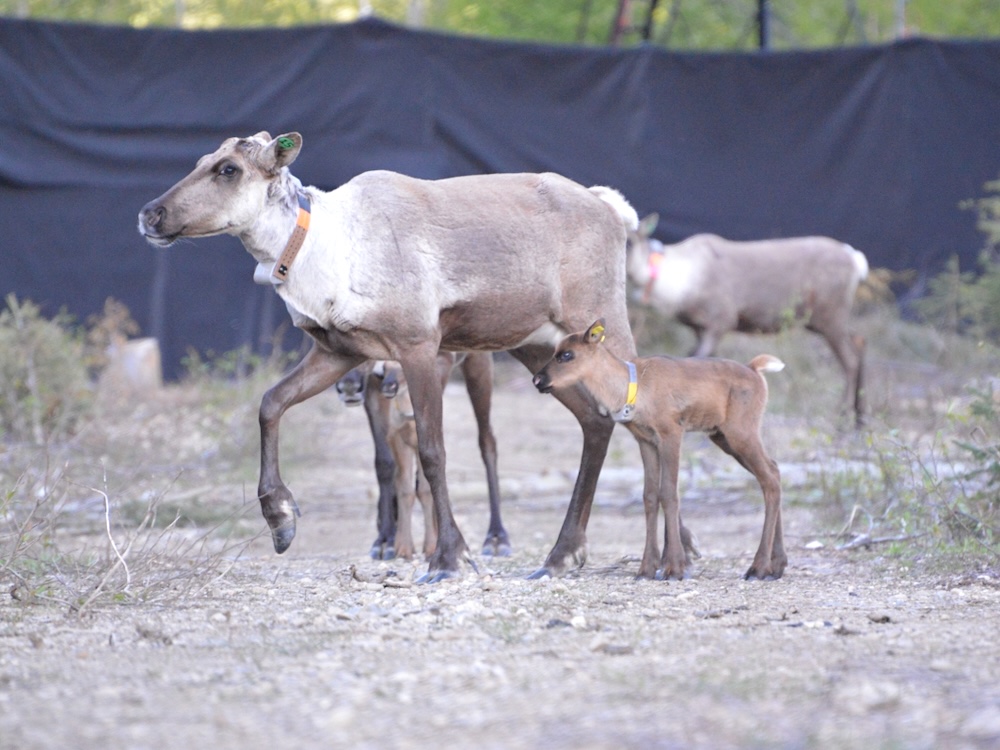
How did we so miserably fail the spotted owl? And what’s to stop B.C.’s other 2,600 struggling species — including western screech owls and the world’s only deep-snow caribou — from following in the owl’s flight path to extinction?
B.C. is Canada’s most biodiverse province, meaning that it has the greatest variety of life.
But the number of species at risk of extinction in the province — a key measure of biodiversity loss — is steadily climbing. And genuine improvements in their status are “exceedingly rare,” according to a recent study in the journal Facets.
Chris Johnson, the chair-elect of the Committee on the Status of Endangered Wildlife in Canada, says that the only way to help many struggling wildlife species is for the B.C. government to enact endangered species legislation.
“Made-in-B.C. species-at-risk legislation is going to address a lot of our biodiversity concerns,” Johnson, a professor of wildlife ecology at the University of Northern British Columbia, told The Tyee.
BC broke its promises to protect wildlife
Spotted owls don’t have the public allure of orcas, sea otters or Vancouver Island marmots. They’re a reclusive inhabitant of old-growth forests, not a creature you can watch spouting in Burrard Inlet, swimming in the harbour in Tofino or popping up from burrows around Mount Washington. But that doesn’t make them any less deserving of protection.
If you’d gone owling a few decades ago in southwest B.C.’s old-growth forests, the only place in Canada where the spotted owl lived, you would have scanned branches for a creature about the size of a football. Spotted owls have chocolate-brown feathers with namesake white spots, a small yellow beak and deep brown eyes set in a facial disc that resembles a friendly Halloween mask.
Take away old-growth forests, and you take away the very things the owl needs to survive.
Like many owl species, the spotted owl can’t build its own nest. Instead, the owl finds cavities in old trees where it lays one to three white or pearl-grey eggs.
Old-growth tree canopies provide shelter from extreme weather and predators, such as hawks or larger owls, and a safe place for young spotted owls to test their flight feathers and, when it’s time, to move safely to new territories. Pack rats hunted by spotted owls feed on the branch tips of shrubs and small trees that are part of the lush understorey in old forests.
Over the decades, as industrial logging extinguished most of southwest B.C.’s old-growth forests, the spotted owl flamed out too.
Today, as one arm of the B.C. government promises to protect the spotted owl’s critical habitat and reintroduce captive-bred owls to the wild, another arm of the government is busy auctioning off old-growth forests such as Fire Lake that are federally designated critical habitat for the owl — places that scientists deem essential for spotted owls to recover and survive.
But wait, you might ask, doesn’t Canada have a law to protect endangered species?
Doesn’t B.C. protect endangered species?
Yes, and no. Here’s where things stand.
Canada has a Species at Risk Act. But the act only automatically applies to federal land — about one per cent of B.C., including national parks, historic sites and military bases.
In 1996, B.C. signed a national accord promising to protect species on provincial land.
But, as the adage goes, promises and pie crusts are made to be broken. B.C. didn’t follow through.
Instead of a stand-alone law to protect the province’s growing number of species at risk of extinction, we have a mishmash of laws and regulations. Together, they are woefully insufficient to safeguard the spotted owl and other struggling wildlife.
B.C.’s auditor general said as much in a 2013 report that found the province was failing to protect wild species and biodiversity. B.C. even failed to use existing habitat tools to protect wildlife, the auditor general noted, calling the situation “troubling.”
The B.C. government promised to do better, saying it would “further protect and recover B.C.’s species at risk.”
Instead, things got worse.
Improvements ‘exceedingly rare’
Today, almost 500 species in B.C. are endangered, meaning they could soon be lost if nothing is done.
Another 1,230 are threatened with extinction and are on the path to an endangered listing if they don’t get help.
These figures don’t include more than 900 “ghost species” known to be in trouble that haven’t been assessed.
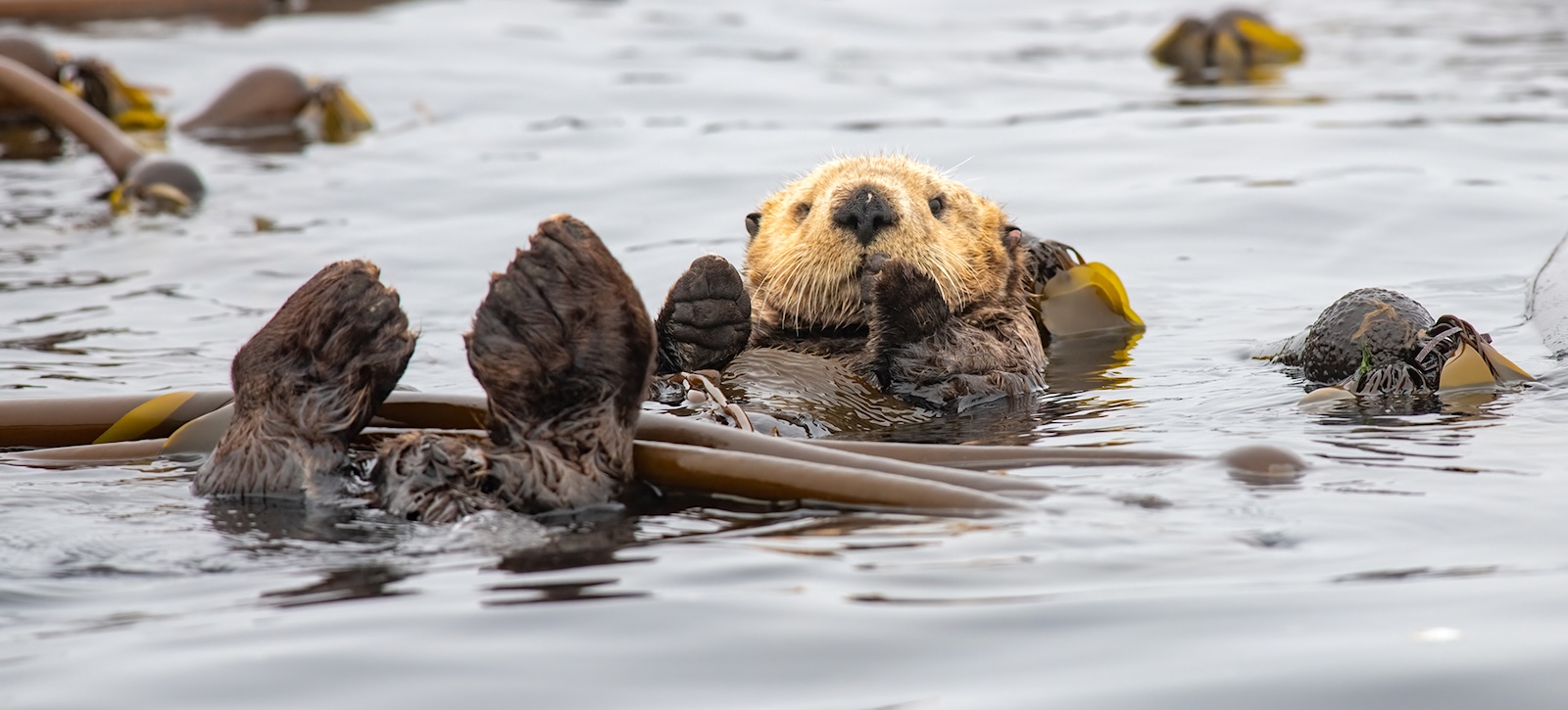
Only four species — the Vancouver Island marmot, burrowing owl, sea otter and American white pelican — are listed under B.C.’s Wildlife Act. And while the act prohibits some harms, it contains no requirements for habitat protection, recovery planning or timelines. In 2024, the B.C. government said it would update the act — but it has not yet done so.
B.C.’s Forest and Range Practices Act, which can protect critical habitat for listed species from industrial logging, hasn’t been updated for 20 years. Two years ago, the B.C. government considered adding more than three dozen plant and animal species — including western screech owls — to the act. But it didn’t follow through.
And the broken promises for spotted owls and other wildlife don’t end there.
When the BC NDP came to power in 2017, it promised to enact endangered species legislation. It promised again when the party was re-elected in 2020. Then the commitment was quietly dropped.
Scientists and researchers say that leaves a huge gap in Canada’s loosely strung safety net for critters and plants at risk of extinction.
“B.C. is such an interesting and frustrating example,” Andrea Olive, a professor at the University of Toronto who studies endangered species laws, told The Tyee. “When I ask students, they’re just bowled over that B.C. never passed an endangered species act.”
Olive, the author of a book about endangered species policy, said B.C. could have done far more to work with the federal government to protect the spotted owl and other species at risk of extinction. “It could have done something on provincial and private lands, and it’s opted not to.”
Endangered species legislation would ‘pay big dividends’
When the B.C. government backpedalled on endangered species legislation, it promised to introduce something it touted as even better — a “biodiversity and ecosystem health framework.”
The framework would provide a more “holistic” approach to nature protection than an endangered species law, according to Nathan Cullen, B.C.’s former minister of water, land and resource stewardship.
Randene Neill, the current minister of water, land and resource stewardship, elaborated further when she released a draft framework in 2023.
B.C.’s new approach would focus on entire ecosystems “instead of just a single species at a time,” Neill said. It would also help reduce overall costs “compared to a single-species management model,” she noted.
But talk of the framework has fizzled over the past three years, leaving Johnson wondering if it’s still on the table.
Moreover, Johnson and other scientists say B.C. still needs endangered species legislation even if the framework hasn’t gone the way of the dodo (and the spotted owl).
“The longer you wait, the fewer animals you have, the more expensive it gets to recover them and of course your chance of recovery also diminishes,” Johnson said.
Focusing on ecosystem protections and adding more protected areas will benefit many species, helping to ensure that they don’t reach the point where only small populations remain, he added.
“But the sad truth is a lot of species are struggling,” Johnson said. “There’s a whole pile that are going to fall through the cracks and potentially be lost if we don’t have those very reactive, oftentimes invasive, oftentimes expensive recovery efforts.”
Most of those efforts will be set in motion only by endangered species legislation, he said.
The choice isn’t between an endangered species law and ecosystem-based conservation, according to Johnson and other scientists.
“We need both,” Johnson said.
He called endangered species legislation a tried-and-tested tool that will “pay big dividends” for at-risk wildlife species, while also safeguarding biodiversity.
Trump removing protections for shared species
The need for stand-alone endangered species legislation in B.C. is even more pressing now that U.S. President Donald Trump is removing habitat protections for endangered species, because many wildlife species in the province — including spotted owls — are found on both sides of the border.
B.C. used to depend on a robust U.S. Endangered Species Act to help shared species, but now, as Olive told The Tyee, “we can’t rely on the American ESA.”
Thousands of northern spotted owls still live in old-growth forests in Washington and Oregon states and northern California. But that’s only because the U.S. Endangered Species Act, which includes state and private land, has protected their critical habitat over the past few decades. And even so, many American spotted owl populations are so small that they are at, or near, functional extinction, according to a recent study in the journal Ecological Applications.
So why doesn’t Canada’s Species at Risk Act kick in to help?
Under the act, Ottawa can issue an emergency order if the federal environment minister deems that a species like the spotted owl faces imminent threats to its survival and recovery.
An emergency order would allow Ottawa to make decisions that normally fall to the provinces, such as whether to issue logging permits in critical habitat for spotted owls around Fire Lake.
But it’s highly unlikely that Ottawa will come to the rescue of spotted owls in today’s turbulent political and economic climate, according to Olive.
Emergency orders were rarely issued even in more tranquil times. In the 24 years since the Species at Risk Act was passed, emergency orders were made for only two species — the greater sage grouse in Alberta and Saskatchewan and the western chorus frog in southern Quebec.
Cabinet declined to make an emergency order for the spotted owl, after B.C. lobbied against it on the grounds that the socio-economic impacts would be too severe.
“The federal government and British Columbia weren’t willing to disrupt forestry for the owl,” Olive said. “There are no owls left. It’s too late. The emergency order needed to be five years ago.”
And that decision was made before Trump was re-elected and threatened economic ruin and annexation for Canada.
With the Mark Carney government intent on forging a united Canadian front to deal with Trump’s browbeating, and garnering provincial support to fast-track major projects like a West Coast oil pipeline, Olive said it’s unlikely that the federal cabinet will deploy its full powers under the Species at Risk Act for other struggling wildlife and risk alienating B.C.
Syilx Okanagan Nation and Xatśūll First Nation recently asked the federal government to step in with emergency orders to protect caribou herds in their territories.
But Olive said it’s more likely that Ottawa will continue collaborating with B.C. and supporting stewardship initiatives, “and try to do things on federal land,” instead of making emergency orders.
“They’ve been working for years with the provinces on caribou, and we haven’t seen a lot of progress,” she said. “I just don’t see the federal government getting in any more natural resource extraction fights with Alberta or B.C.”
As we bid a silent adieu to Canada’s wild spotted owls, Olive and Johnson said the onus is fully on B.C. to make sure that thousands of other struggling wild species in the province don’t follow them into extinction.
“Time is the killer here,” Johnson told The Tyee. “And we’re spending too much time talking and not enough time acting.”
Olive said it’s impossible to protect wildlife species if we’re not protecting their habitat.
“The federal government can list all these species as threatened or endangered and if they have nowhere to live, you’re basically sentencing them to life in zoos and captive breeding programs.” ![[Tyee]](/design-article.thetyee.ca/ui/img/yellowblob.png)
Read more: BC Politics, Environment











Tyee Commenting Guidelines
Please note that email notifications for replies are not currently working due to a software issue which may be resolved in a future update.
Comments that violate guidelines risk being deleted, and violations may result in a temporary or permanent user ban. Maintain the spirit of good conversation to stay in the discussion and be patient with moderators. Comments are reviewed regularly but not in real time.
Do:
Do not: