


 SHARE:
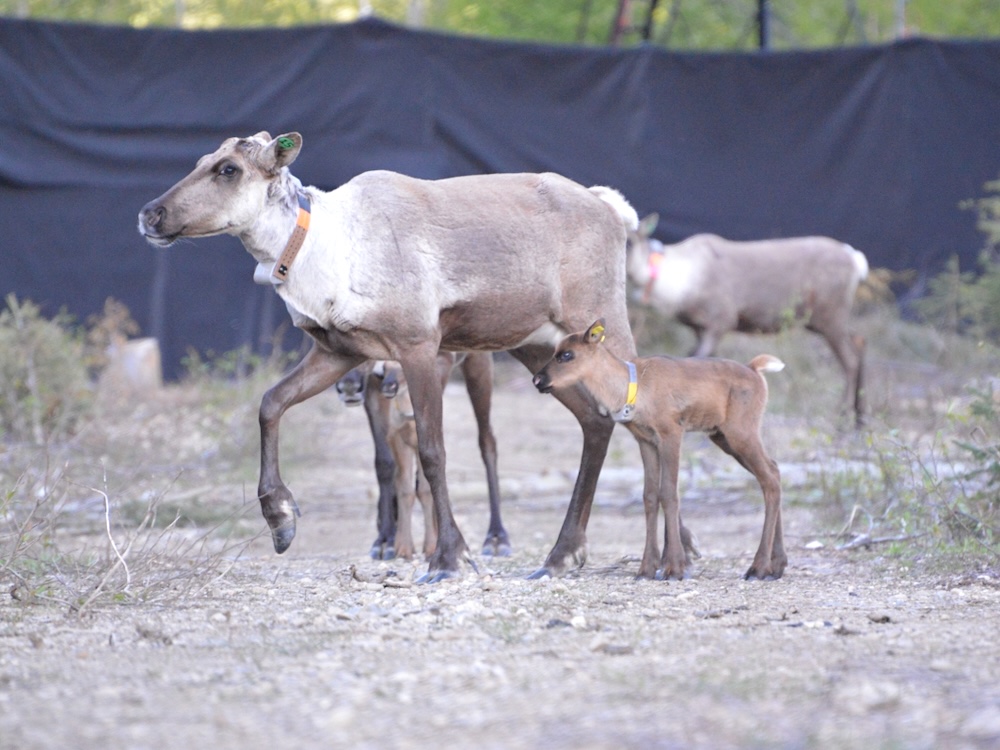
The Syilx Okanagan Nation is calling on Ottawa to take emergency action to protect the last three caribou herds in its territory, which are struggling to survive as old-growth logging destroys their critical habitat.
On Monday, the nation announced it has formally petitioned the federal government to step in with a rarely used emergency order under Canada’s Species at Risk Act.
The order would give Ottawa the power to make decisions that normally fall to the province, such as whether to issue logging permits in core caribou habitat in southeast B.C.
“We expect the federal government to issue an emergency order, and if they don’t, I’m sad to say that those herds are doomed,” Okanagan Indian Band Chief Dan Wilson told The Tyee. Okanagan Indian Band is one of the seven bands and communities that make up the larger Syilx Okanagan Nation.
Wilson said the B.C. government continues to sanction logging in critical habitat for the southern mountain caribou herds, which rely on the rare and disappearing inland temperate rainforest for food and shelter.
“Caribou are dependent on old-growth forests for habitat, and the old growth is continuing to be harvested at an alarming rate,” he said. “There’s a lot more that could be done.”
The three populations in question — the Frisby-Boulder, Central Selkirk and Columbia North herds — are known as deep-snow caribou because they use their snowshoe-like hoofs to balance on snow so they can reach hair lichens, their main source of winter food. Hair lichens grow in profusion only on old trees.
Deep-snow caribou are found nowhere else in the world but in B.C. In 2005, B.C. had 18 deep-snow caribou herds. Eight herds are now locally extinct, while the others are hanging on by a hoof.
Wilson said only eight animals remain in the Frisby-Boulder herd, near Revelstoke, B.C., which is now functionally extirpated.
The dwindling Central Selkirk herd has 27 animals, while about 185 animals remain in the Columbia North herd.
In a press release, the Syilx Okanagan Nation said that while the Columbia North population has increased, the growth “remains fragile” and is largely unrelated to habitat recovery.
The herds are the focus of elaborate recovery measures led or supported by the B.C. government.
Those efforts include shooting wolves and other predators that gain easy access to caribou through logging roads and other human disturbances, and flying pregnant caribou to a pen to give birth, so their calves will be strong enough to stand a better chance of surviving in the fractured landscape when they are released.
Wilson called the B.C. government’s recovery measures “ad hoc, fragmented and inefficient to reverse the long-term habitat degradation and population decline.”
B.C.’s Ministry of Water, Land and Resource Stewardship did not respond to The Tyee’s questions before press time.
Waiting to hear from Canada’s environment minister
The Species at Risk Act gives Ottawa the authority to intervene when a species faces imminent threats to its survival or recovery.
But the federal government has issued emergency orders only twice since the act was passed in 2002 — once to protect the western chorus frog in Quebec and once to protect the greater sage-grouse in Alberta and Saskatchewan.
It’s now up to Julie Dabrusin, the federal minister of the environment, climate change and nature, to determine if the three caribou herds are facing imminent threats to their survival and recovery. If so, Dabrusin must recommend emergency actions to the federal cabinet.
In 2024, a federal court ruled that former environment and climate change minister Steven Guilbeault broke the law when he delayed recommending that cabinet issue an emergency order to protect critically endangered spotted owls in B.C. The court found Guilbeault’s eight-month delay was unreasonable.
The final decision about whether to issue an emergency order is up to the federal cabinet, which is not compelled to provide reasons for its decision.
Wilson said the federal government has the power to help the three caribou herds by imposing management practices, old-growth forest protections and policies for land-use decision-making.
“We're trying to get the government to follow their own law, and get the province to follow the law as well,” Wilson said.
In October 2025, the Syilx Okanagan Nation Chiefs Executive Council passed a resolution called the styíłca̓Ɂ Protection Order, which affirms Syilx law and responsibilities to protect caribou and critical habitat across Syilx territory. The protection order establishes Indigenous-led protections grounded in Syilx stewardship, science and free, prior and informed consent for activities affecting caribou and their habitat.
“Despite this, habitat loss and disturbance continue to accelerate, underscoring the urgent need for stronger federal intervention and enforceable habitat protections,” the nation said in its press release.
Wilson said caribou are essential to Syilx culture, laws and food systems and Syilx law requires protection of “the land and the water and the animals.”
“That's what our ancestors did for us, protected land for us today, and it's our responsibility to do the same for future generations. We can't leave them a desolated environment and extinct species.”
Protecting the caribou herds would signal that the federal government is upholding the United Nations Declaration on the Rights of Indigenous Peoples, Wilson said. The declaration, commonly known as UNDRIP, became law in 2021.
“They're good at paying us lip service, but at the end of the day we're seeing the caribou herds continue to decline and we have a responsibility to raise awareness and to do our best to correct the situation,” Wilson said, adding, “We do have constitutionally protected rights, and we expect the Crown to uphold their own law.”
Councillor Jordan Coble, chair of the Syilx Nation Natural Resource Committee, said in a press release that continued logging in critical caribou habitat is inconsistent with Syilx forestry principles and standards, “yet the province continues to authorize logging in these core areas.”
Coble said only 35 per cent of core habitat for the Columbia North herd is protected.
Wilson pointed out that caribou, like salmon, are an indicator species. In other words, if they are healthy, so are other species that share the same ecosystem.
“If the caribou go extinct, that's not a very good sign for us. That means that other species are going to go extinct. It means that their habitat is not healthy, and that should concern all of us.”
Wilson said it’s up to the federal and provincial governments, along with the nation, “to put their heads together” and come up with a plan to protect the three caribou herds.
The federal Environment Ministry did not respond to The Tyee’s questions by press time. ![[Tyee]](/design-article.thetyee.ca/ui/img/yellowblob.png)
Read more: Indigenous, Environment










Tyee Commenting Guidelines
Please note that email notifications for replies are not currently working due to a software issue which may be resolved in a future update.
Comments that violate guidelines risk being deleted, and violations may result in a temporary or permanent user ban. Maintain the spirit of good conversation to stay in the discussion and be patient with moderators. Comments are reviewed regularly but not in real time.
Do:
Do not: