


 SHARE:
When the Cowichan Tribes v. Canada decision came down a year ago, there was panic across the country.
For many Canadians, the courts declaring that the Cowichan held Aboriginal title over a small section of Richmond was confusing, complex, even terrifying.
But for Arno Kopecky, the Cowichan decision is the beginning of something incredible. As part of a recent feature in Maclean’s magazine, the author and journalist knocked on doors in Richmond, walked the ground in dispute and came away not scared, but excited.
“You can see it as a threat to your personal interests and your own home and your way of living and your ability to make a buck,” he says, “or you can see it as this really beautiful opportunity to be a richer, better version of yourself, as a country, as a nation, as a culture.”
On this episode of The Tyee Podcast, Kopecky explains how Indigenous title can coexist with private property. And why the Cowichan decision is not the end of the world in Richmond.
Listen to this episode by clicking the embedded podcast player below or by following ‘The Tyee Podcast’ on Apple Podcasts, Spotify, iHeartRadio, Amazon Music, Pocket Casts or YouTube.
Transcript
Note: Episode transcripts may contain errors. Always check the corresponding audio before quoting any part of the transcript.
Harrison Mooney
Not a single Canadian has lost their house under the Cowichan decision. But basically every Indigenous person has had their home taken away by colonizers, and for a lot of Canadians, nothing is scarier than the idea that what goes around, comes around.
This is The Tyee Podcast. I'm your host, Harrison Mooney. Every episode, we dive deeper into the stories shaping the West Coast because Canada needs more B.C.
A year ago, B.C's Supreme Court declared that the Cowichan Nation held Aboriginal title over a section of Richmond. Panic ensued. There were claims that people's homes were no longer their own, that property rights no longer existed in Canada. But what does the Cowichan Tribes v. Canada decision actually say? And what is actually happening in Richmond? Arno Kopecky wanted to find out. The environmental journalist and Tyee regular knocked on doors, spoke with the town's mayor, and, in a recent feature for MacLean's magazine, tried to untangle two centuries of overlapping title claim and 12 months of fearmongering. On this episode, he tells us why the Cowichan decision isn't anything to be scared of. In fact, this is something we should all be excited about.
[music]
Harrison Mooney
Arno, one of the reasons I was so excited to talk to you is you were saying something that I don't hear often in this discussion, which is actually this is good. You know, you seem excited, you seem energised by all of these developments, while everyone else is clutching their pearls, or at best taking a cautious wait and see approach. So my question to you is: Is whence the optimism, Arno?
Arno Kopecky
I don't want to like downplay how complex and complicated this stuff is. It is insanely complex to navigate over 200 nations' relationships to the land. There's overlapping title claims. There's jurisdictional stuff. There's political stuff. It is it is really complicated and a difficult project. But I think you can approach that project in one of two ways. You can see it as a threat to your personal interests and your own home and your way of living and your ability to make a buck, or you can see it as like this really beautiful opportunity to be a richer, better version of yourself as a as a country, as a nation, as a culture, and I think a lot of British Columbians really do embrace that.
Harrison Mooney
You know, you answered a mystery that's been puzzling me for a while now. Back in March, I got this text message in a group chat from this dude I didn't know, just screaming about how the Cowichan were coming for our homes, and like I didn't really know who he was or what he was talking about, but his avatar seemed kind of MAGA adjacent, so I just blocked him and moved on, and then I spent the next little while wondering about where all of this panic was coming from, and it turns out it came from Richmond Mayor Malcolm Brodie's office.
Arno Kopecky
Yes, that office has been emanating that kind of message for basically a year now. But it began, you know, August 7, 2025, the BC Supreme Court dropped this decision that the Cowichan Nation has Aboriginal title to roughly 300 hectares of Richmond B.C. near the mouth of the Fraser River. And Mayor Brodie has been the mayor of Richmond for about a quarter century now. He's in his mid 70s, and will be retiring. This is his last term, but he's sort of like the uncle of Richmond in some ways, you could see that he took this decision personally. He was shocked and surprised by it, and basically took it as a personal assault on his city, and went on a bit of a tear with local media and then national media, saying, "Well, this is an assault on property rights, not just in Richmond, but potentially all across Canada. This is going to destroy the land title system that underpins our entire economy, and that's what he was saying early. You know, the decision dropped in in August, and so I think a lot of people weren't paying a lot of attention because they were at the lake or running from a forest fire or whatever you do in August. But then in September, September rolls around. He sits down. He has a strategy meeting with his, with his lawyer, the city's lawyers, and the other city councillors. And they say, “All right, we got to send a letter out to the to the people who live within this title area. Sends them a letter delivered to their house that says, ‘You should be advised that the B.C. Supreme Court has made a decision that could adversely affect your title, and we're going to have an information session at town hall, at city hall, if you want to come and learn more about that.’” And that unleashed a tsunami basically of panic and concern. People flooded his office with calls. It very quickly became apparent that City Hall was not going to be big enough to host all the people who wanted to find out about what was going on. So they moved the venue to the Sheraton Hotel at the airport, a big ballroom, standing room only. Over 700 people showed up. I wasn't there to be clear, but I talked to people who were, and it was all over the news. It became like a fresh news cycle, basically. The number of people who showed up and were just furious that they hadn't been told about the Cowichan decision. That while it was, you know, this was the longest trial in Canadian history, and everybody seems sort of like it's like a whale fell out of the sky and landed in their laps. They were just sort of amazed, including Mayor Brodie, and then this hugely contentious town hall where everybody really like he became a lightning rod for people's anger, and they blamed him for not telling them, and asked him questions like, “What does this mean? Do I still own my house?” And to which he looked at the lawyer beside him on stage and said, “I don't know. Do they still own their house?” And sort of, you know, I have to say, it came across as this shtick of like nobody knows what any of this means, but it's clearly awful for everybody. And you know this is coming from a learned mayor who is himself a former lawyer, and that just said you know. And he was very media friendly. He talked to every outlet he could. This message then, I don't want to give him the sole heroic role of spreading the sort of the manufacturing the panic and the mass hysteria that ensued from this decision, but he was a major protagonist in that.
Harrison Mooney
Yeah, I laughed aloud reading his one word response. You know, “Unacceptable.” I kind of imagined him shouting it in that high pitched voice, like the Earl of Lemongrab from Adventure Time. I don't know if you get that reference. Do you get that reference?
Arno Kopecky
I'm afraid I don't get the reference, but I can picture it.
Harrison Mooney
And I gotta say, like in his defence, his response is kind of unsurprising. You know, like he's 77. He's been the mayor for 25 years. I have to imagine a sort of complacency sets in after like a full quarter century, as well as an expectation that nothing is going to suddenly upend everything you know about property rights in your region, you know. In this story, he doesn't come off well, but like when it comes to Indigenous property battles, Canadians typically don't, and he was hardly the only Canadian to lose their shit about this. Just you know, maybe the first. So can you blame him?
Arno Kopecky
He’s, you know, no. In some respects, I would say he's an archetype for a vast cohort of Canadians. That's why I opened my story with him. He represents a huge segment of Canadian society, and especially, for sure, if you look at the cohort of people of lawyers and politicians who are who are sounding the alarm about this, they tend to be of a certain age demographic that came of age, not really appreciating the history of colonisation, especially in British Columbia, and the idea that First Nations might actually have title or power or any say over what happens in their land has was kind of outlandish. Like it was only in the last in my lifetime, in our lifetimes, you know, in the last 20, 30, years, that First Nations have been asserting their rights and title. This stuff is brand new. You know, this is the third time that a First Nation has won Aboriginal title in Canada. All three have been in B.C. I wrote a feature about the first one when the Tsilhqot'in Nation won theirs, and it's the same lawyers who were who represented the Cowichan, and so I talked to them this time, and what was really interesting. I was like, So why did the Tsilhqot'in Nation deliberately carve private property out of their? Because that's what happened. The Tsilhqot'in Nation, they got you know over 1,000 square kilometres, but in that territory, there's a bunch of private homes and ranches, and those were sort of excised from the title area. So that is the Tsilhqot'in left that out, and the lawyer said, “You know, well, that was the hardest decision they ever made, but they did it specifically because they wanted to increase their chances of winning the lawsuit, and they knew that if they tried to include private property, that would that might be a step too far for where the law,” you know, the law kind of it's been really interesting to watch this. The law proceeds cautiously and sort of tiptoes along, and so here we are now, 12 years after that first one, with the Cowichan decision, which, by the way, still has many years to go before it reaches Supreme Court and we get a final verdict. But as it stands right now, this is the very first time that private property has been included in an Aboriginal title claim in court. That stuff has been negotiated outside of court, and we can talk about that down the road here. But it is a legal precedent in that sense.
Harrison Mooney
Reading about this ruling, I did. I had the same question that you asked in your piece. What have the Cowichan got to do with Richmond?
Arno Kopecky
Exactly. I had no idea. I've been living on the West Coast for over 20, most of my adult life, over 20 years. I went to university in Victoria on Vancouver Island, and that's where the Cowichan are, on Vancouver Island. There's the Cowichan River there. There's Cowichan Valley, Cowichan Sweaters. That's where all of their reserves are, is the Cowichan Nation is there. So I thought, what the hell are the Cowichan doing getting title in in Richmond on the mainland on the Fraser River? Turns out, at the time of colonisation, the Cowichan Nation was the biggest, most populous nation, and. The dominant military force in the Salish Sea, and so they had villages and communities scattered around on all the all the Gulf Islands and up and down Vancouver Island. Every spring, early spring, all of them, thousands of them, and it's pretty striking image. They would converge in their canoe. They would canoe over together en masse, hundreds of canoes with thousands of people, and decamp to the Fraser River, where they would set up their village, and they would turn their canoes into catamarans with these with these pre-fashioned planks, big cedar planks, and then they would build basically the pre-colonial equivalent of modular housing and these huge longhouses that could then house you know thousands of them, and every summer, spring, summer, early fall, they would gather fish, mostly sockeye. The Fraser River is one of the most mightiest sockeye salmon rivers-not just sockeye, sorry-all five species of salmon rivers on the planet, and it supported the most dense population of humanity in North America up until colonisation. And so the Cowichan had this village there. They were not the only tribe or nation that had a village there, but they had one. And come colonisation, the first governor of British Columbia promises them, OK, if you agree to be peaceful and stop making war on us, we will carve out territory for you, including what they called Tsilhqot'in was the name of their village at the mouth of the Fraser River. That was a promise. The trial dug up a paper trail that these promises were made. It also dug up the paper trail that Colonel Moody, the principal scoundrel of all this, Richard Moody, who's just a dog. He was, you know, there's a whole town named after him now, Port Moody, but he was the surveyor who was in charge of surveying the reservations for not just this case but many many First Nations around B.C. He surveyed this particular village at the mouth of the Fraser River and then quickly started to sell it off himself and bureaucrats under him also got in on it and they all quickly bought up the land themselves and sold it off and then the Cowichan were just. Am I allowed to swear on this podcast?
Harrison Mooney
Oh please, swear lots.
Arno Kopecky
Maybe I'll watch my mouth a little bit. In this case, the Cowichan were [BLEEP] and they got [BLEEP] by the B.C. government that had promised them that they would not sell their land, but would actually give them their land. And so as soon as the Cowichan found out, “Oh my God, we've just had our village sold out from under us.” They started fighting to get it back. This is eight. We're talking the 1860s here, so almost 150 over 150 years, almost two centuries now. They went to England to petition the King of England twice in person. They petitioned Robert Borden, the Prime Minister of Canada. They petitioned various premiers of British Columbia. They tried to take this to court in response to which the federal government banned Indians at the time you know First Nations Indigenous peoples from going to court, they amended the Indian Act so for you know 30 years First Nations couldn't hire a lawyer couldn't go to court. You know they begged when the B.C. treaty process began in the early ’90s they said hey we've got this claim to this piece of land and the BC treaty commissioner wouldn't even have that conversation. They refused to entertain because by now a century had gone by, and they're like, “You guys, same as us, you and me.” You know, they're like, “You don't have anything to do with that part of the world. No, we're not going to talk about that claim.” And so the Cowichan finally said, “OK, well, I guess we have no choice left but to go to court, and now we're allowed to.” So they did. They amassed just a mountain of historical evidence. You know, anthropologists. They they've got letters from ship captains and priests and early settlers and various bureaucrats and everybody you can imagine. And they proved their claim and they won.
Harrison Mooney
You know, and actually, let's get into the legal nitty gritty here, because Arno, it seems like you know things, and I don't know anything. So, oh...
Arno Kopecky
Harrison, I know things, buddy.
Harrison Mooney
OK, so let's start with the big one. Do property rights still exist in Richmond?
Arno Kopecky
Property rights do still exist in Richmond and everywhere in Canada. The judge in this case was very explicit that property rights coexist. Private property rights are not displaced in any way by this decision, but they are now. There's now an extra layer of title. There's like a basically two forms of title now share the occupy the same piece of land. And she says, I accept that this introduces some uncertainty into the... I'm paraphrasing badly, but she uses the word uncertainty that the things will have to be figured out. But rest assured that the Cowichan Nation cannot just come along and kick everyone out of their homes. Property, private property rights remain intact. You have nothing to worry about in that sense. There's two pieces of this. There is a chunk of federal and basically federal land in the title area, and those property rights, which is a bunch of industry basically, that does revert to the Cowichan, the Cowichan now own that title outright. The federal government does not own that anymore once this judgement kicks in, which she gave it a year and a half to do. So that’s true, she declared those the federal government's title to be defective and invalid, but those two words, “defective and invalid,” are that those are strong words, you know. And one thing that Brodie and this whole slew of politicians and journalists did was to take those two words, defective and invalid, and attach them to the other half of the title area, which includes people's homes, private properties, which the judge Barbara Young explicitly said no. Where there is private property, where people have homes or businesses, they still own that property, and the government has to figure out how both of these things can coexist.
Harrison Mooney
Interesting. Yeah, it's funny, right? Because like, here's the thing: I understand this fear, like as a Canadian, this fear that you know the Cowichan are crossing the strait to steal everyone's houses tomorrow. You know, I'm a big horror movie guy, and one of the things that sets Canadian horror apart is this cultural fear that what's been done to the other will one day be done unto us, right? So I mean, you know that in mind, I can't stop thinking about something that one of your sources. I think it's Judy Kutney, said...
Arno Kopecky
Yeah, one of the homeowners. Yeah,
Harrison Mooney
She said “We bought this house in good faith. We have a fee simple title that says it's ours, and now they're trying to say it's not. I don't understand how you can come 200 years later and say this is mine. Where have you been for 200 years?” And like, where indeed, Arno? Like that's just…
Arno Kopecky
Oh man, Harrison. There is yeah. I spoke to a lot of I spoke to a lot of people who who said some version of that. You know, I don't want to shame people, but I think it's it's worth pointing out. You know, Alexa Loo was a city council is a city councillor who's running for mayor to replace Mayor Brodie. She said that too. She said, you know, you can't. It's hard to make amends for something that happened so long ago. It's not like anybody alive today is suffering because of what happened 150 years ago, and that just revealed again. You know, this is a the prevalent attitude in our society. The idea that it was just some ancient trauma that you know, it's like the Battle of Troy. Like all those people died thousands of years ago. Let's move on. There is a continuous, ongoing today level of suffering and anguish. I mean, the Cowichan tribes and nation they have one of the highest suicide rates on earth. Is that directly because of this village? Perhaps not, but there it's no coincidence that the place that the Cowichan Nation went to-not just for material sustenance, but for community and spiritual. This was a sacred place for them, a huge part of a bigger puzzle. That instead of they had that taken away from them, their children were put through generations of residential school. They lost a primary food source. They have a housing crisis on their lands today. There's all kinds of ongoing current suffering. They have been trying. They have passed this torch generation after generation to get this land back. They have not forgotten. Like the the. It's what's really inspiring to me is that they didn't forget, and they amidst all of their suffering and everything that they were going through, which is just beyond imagining, that in spite of and amidst all that suffering, they fought and they and they kept the dream alive and they and they and they prevailed.
Harrison Mooney
Yeah. So I mean that that idea that you know well this is done like no no there is a lasting trauma and I mean we can all see it. But I do I want to come back to that. There I have a few more questions here. Have people's homes been devalued?
Arno Kopecky
So they probably have in the in the short term. Yes, if you own property within the title area, I talk to various. You know, that's not my area of expertise, but I talk to people. You know, land assessors who are, and yes, property values are undoubtedly a bit down because of all the legal uncertainty and in part because of all the fear mongering that that has happened, that you know, if you hear if you're if you're a bank or a creditor and you hear powerful politicians saying that this is going to lower property values, well, that might have a bit of a self-fulfilling prophecy impact. So it's I think important to be honest that yes, this has absolutely impacted property values within the title area, and I think it's also important to say that once this gets resolved, again the B.C. government has to negotiate a final solution here with the Cowichan Nation to figure out a whole bunch of the details that do need to be resolved. And then once that certainty comes back, then property values should go right along back to where they were, and so that you know. But it's fair to say that yes, this has introduced damage to property values in the area.
Harrison Mooney
But also, you pointed out that this land is like a landfill and then mansions. So you know, it's it
Arno Kopecky
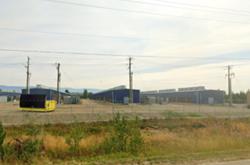
It is the strangest piece of land that I've ever seen. So people who live in and around Vancouver, if you've ever gone to the IMAX or to the trampoline park at the end of Number Six Road in Richmond, if you drive down Number Six Road, that's the that's there's one strip that has residential properties. I counted 45 homes there. Most of them are these multi- multi-million dollar mansions. I saw grand pianos and wine racks, and these are like very very expensive estates that are on prime agricultural land, and then it's mostly blueberry farms. But then you back off of that, and there's this huge garbage dump, which is just this. Yeah, it's a big landfill. There's an empty stretch of dike that Mayor Brodie was particularly covetous of because that's what the city of Richmond owns is this dike. It's overgrown with blueberry or blackberry bushes now, and then there's a bunch of industrial lots where it's like pretty much massive warehouses for industry. So it's this weird hodgepodge land. Also, the YVR airport stores a bunch of their jet fuel there. There's these huge six canisters. They've already agreed to carve that out. They don't want you know they don't they don't want to touch any of this stuff, but there's a bunch of empty land, including the dump and this this dike, where the Cowichan could build some homes and some property where they would like to be able to bring their youth and some of their people back and reconnect with the land that was sacred to them and have a footprint and get some of their land back.
Harrison Mooney
You're blowing my mind that the trampoline park...
Arno Kopecky
You've been there?
Harrison Mooney
...is being threatened here. What of our trampoline park, Arno?
Arno Kopecky
Don't worry, don't worry. The trampoline park itself is outside of the title area. You just have to drive through the title area to get to it. So our children's capacity to break their wrists and shriek with delight is intact and sacrosanct.
Harrison Mooney
Can Indigenous title coexist with private property? Yes, in fact, there's already a successful example of it right here in B.C. That's when we come back.
Harrison Mooney
Can Indigenous title coexist with private property? Is that possible?
Arno Kopecky
The answer is yes, my friend. In fact, it's already been done. Haida Gwaii has set the example of that. They reached this out of court. Although, OK, well, let's just answer the question as simply as possible. The Rising Tides Agreement that B.C. and Canada signed with Haida Gwaii two years ago, established Aboriginal title across all of Haida Gwaii, including the private property and the cities that are there. So nobody's home was taken away. You still own your home. You can buy and sell houses as before. If you die and you don't have anybody in your will to give the house to, then it goes to the Haida Nation. If you want to do developments or you know rezone your property or do anything like that, well, now you talk to the Haida Nation about that instead of the province of B.C. You still pay your property tax to the province of B.C. Province of B.C is still supplying power and water and taking care of a lot of the infrastructural details. This is a living document, so some of those things are evolving over time as the Haida assume the role and the responsibilities that the provincial government and the federal government have traditionally done. But in a nutshell, yes, private property. Everybody who owns a home, their stuff is fine. Their property values have not tanked. It is a total template. I talked to Niki Sharma, the Attorney General of B.C., she talked about trying to reproduce something like that here in this Cowichan decision. The First Nations, the Cowichan Chiefs that I spoke to, also invoked the Haida Gwaii situation as an example of look, this can actually happen. Yes, there are thorny details that need to be worked out around, you know, just logistics of who's gonna, you know if there's a fire who puts it out? Who's gonna supply power? Who's gonna run infrastructure? There's 1,000 little things like that. Who's in charge of zoning? But these are questions that can be answered and worked out, and they have been in Haida Gwaii.
Harrison Mooney
I have a I have a related story. Will you permit me an anecdote?
Arno Kopecky
I would love to hear a Harrison Mooney anecdote.
Harrison Mooney
Hooray! OK, so years ago I went to stay at Yellow Point on Vancouver Island. It's like this little vacation complex, and I was going there to work on a draft of my memoir, like off-season, when the place was kind of abandoned. Right, so it was pretty empty except for my cheapest possible suite, and then like a really nice suite below me where this this elderly woman lived, and we talked a lot because we both just smoked a lot of cigarettes then, and you know, eventually we just like would smoke together and chat. And she used to live in the Queen Charlotte Islands, and that's what she called them, right? And I remember thinking when she said that, like, where the hell is that? So she explained that that's what white folks used to call Haida Gwaii, and then she said that that's why she had to move. And I thought, like, oh my God, they took your house. And she said, no. Her husband died, and she wanted to live closer to her daughter, so she sold the estate for like a million billion dollars. And I thought, oh well, that seems fine, you know, seems fine. And you know, similarly, out in Richmond, it really does seem like this isn't the end of the world.
Arno Kopecky
There is not a single white person's house in Canada that has been taken by an Indigenous person. There are countless, like basically every single Indigenous person in Canada has had their home taken away by white people. So this, like you said, this sort of underground fear, the subterranean psychological fear that a lot of people have, that finally, the Indians are going to get revenge. You know that. I think that is like an undercurrent of dread that a lot of people associate with the word reconciliation, and so that's there. It is a totally fabricated fear. The Cowichan themselves have said repeatedly, “We're not taking anyone's house away. We know what that feels like, and we don't want to do that to anybody else. What we want is what was taken from us back, and we would like to find a way to like have a footprint there and to coexist with the people who live there.” So I think part of what what's happening here is it's insanely complex. It's totally legit for people to be a bit confused and even a bit concerned. There's over 200 First Nations in British Columbia, this province famously signed almost no treaties at Confederation. They just took the land, they stole the land, except for a couple of tiny exceptions, and so now all of these nations, after 150 years of cultural genocide, turn out not to have been completely annihilated. They're getting their voice and their feet back, and they're saying, “OK, we would like to have some of our land. We would like to have some autonomy.” Everybody, I think, genuinely recognises that if you actually start kicking white people off their land, that's not going to be a very viable political project. And it's also ethically and morally not right to replace one injustice with another. Like these are basic principles that everybody agrees on. So you've got all of these land claims that are mostly being negotiated out of court. Sometimes, when the negotiations break down, a First Nation will decide, “OK, we're going to take this to court.” That has happened now three times in the history of Canada, or at least in the history of B.C. It is a monumental undertaking to prove Aboriginal title in court. Like I said, the Cowichan decision was the longest court case in Canadian history. It costs untold millions of dollars. Basically, takes up the energy and resources of an entire generation of the nation in question to get what is always about you know five or 10 per cent of what they're trying to get back. So it's much preferable for them to not go to court. But First Nations have had, especially in B.C., a pretty amazing track record. Not just in title claims, but in when it comes to resource extraction on their territory and proving that you know most of the big Supreme Court decisions around rights and title have been won in British Columbia. So that has influenced, you know, First Nations know they have a good negotiating hand. BC knows they have a good negotiating hand, and so we've seen this shift in the last decade or two, where First Nations actually have some legal clout, and they're using that to their advantage.
Harrison Mooney
It's funny when you describe these things; it stops sounding frivolous and cruel. But I think that's because we like we project right. We imagine that it's going to happen the same way that it happened before to them.
Arno Kopecky
Yeah, like it's going to happen the way we did it to them is how they're going to do it to us. I'll just the last thing I'll say is, you know, most of us immigrants and newbies, relative newbies, whether you've been here for one or eight generations, our interests are not actually threatened by this stuff. Like your personal property will remain your personal property. The economy is not going to collapse because of Indigenous land claims. If you're worried about the uncertainty that they introduce, well, banning them is not going to eliminate the uncertainty. That uncertainty has been growing for over a century because they are human beings, and if you just try, like, unless you're going to kill them all, they're not going to stop agitating for injustice to be righted, and so that is the uncertainty that exists. And so I think these land claims are a measure to eliminate the uncertainty, and then we can get on with the business of living in this province and logging responsibly in this province and extracting whatever resources we want and conducting our business with the full participation of the original inhabitants of this land who are still here and are very much wanting to collaborate.
Harrison Mooney
You know, listeners of this podcast or maybe just people who listen to me talk anywhere know that I'm a huge proponent of uncertainty. Like you know, you can just live in that space, right? Things can be uncertain, and so often what Canadians want to do is ignore the uncertainty and call that certainty. You know, and that's just not how that works. We live in denial, and it's just not freedom. Like you can be free. You can just face this uncertainty, work your way through it, and be free.
Arno Kopecky
I'm inspired by the very fitful, and God knows there's a long ways to go. But there is an awakening and a resurgence of power and strength and cultural assertion that is, I think, to me just incredible, and it's a testament to humanity's ability to prevail over just the most dire imaginable circumstances, that First Nations here have endured everything they endured over the past 150, 200, 250 years, and are still here to tell the tale. And not only that, but are now reclaiming some of their land. I also am an environmental journalist. I, I don't want to sanctify First Nations. Pretend that they're all forest nymphs and fairies who just sprinkle dust around and protect the landscape. But they have a relationship with these landscapes that predates salmon, basically. Like in their mythologies, they tell stories about the first rivers appearing out of the melting glaciers and the first salmon coming and the first cedars coming, they have been they have actually been stewarding this land since you know as they say time immemorial since the last ice age, thousands of years and so I think to like I just think it is such an inspiring and fascinating development that you know you fly into the Vancouver Airport and you see this beautiful artwork and these totem poles from these master carvers and artists and it's all Indigenous and it's striking and it's beautiful and that's just the art you know and so I see title as one piece in that puzzle of enriching our cultural fabric and making us a more interesting group of people.
Harrison Mooney
I mean, you know, speaking from a like a Black perspective on this, I'm a huge proponent of Black and Indigenous solidarity, and so you know, I see something like this, the Cowichan decision, as a win for us. But so far, it's been framed as a troubling win for them. And I just think that's such a you know just a nasty way to live. Like no, like we can actually all be cheering for one another and working our way through and building a larger collective Canadian identity. And it drives me nuts that Canadian leaders so rarely try to pump us up like this. Like I, I guess maybe one of my last questions here for you is why is it so rare to hear Canadian leaders articulate a vision of the benefits of what we're seeing here to non-Indigenous Canadians?
Arno Kopecky
You know, if I had a simple answer for that, I would give it to you. I think part of it is it is complex. The legal, all this stuff. It's we've been talking for 30, 40, minutes here, and I still feel like I barely scratched the surface. I don't know if I've left your listeners more confused than they started. Hopefully not. But it takes genuine political talent to articulate that vision. I've been watching David Eby struggle with it all year. Like I think in his heart, you know, him and the NDP are-they've been greater champions of Indigenous rights and title than any other government we've had in this province, and yet you see them just boxed into a corner by the right-wing talking points, and feeling the NDP seems to feel like they have to like portray themselves as no, don't we're not giving your property away. Don't worry, like we're going to defend your property too, rather than launch what I would love to hear is like a passionate articulation of why this struggle is good and why this is making us a better, richer nation. He does say those things, you know. David Eby he defended the North Coast from the oil tanker ban, and he was the first person to say like, look, you know, we have deep commitments with First Nations up there, and they are the first people to be pro LNG and all kinds of industry, I mean that's putting it in sort of resource extraction terms. But I have heard him articulate some of this stuff and talk about the importance of partnerships with First Nations and that they do enhance our ability to run a province and keep the economy going. He does say those things, but he also says we are going to go to the wall to protect private property for you know regular citizens, and so he's sort of playing. He just seems to be boxed into a corner, and he hasn't figured out a way to have a steady, articulate a thing. I think the last thing I'll say on that is I think we're also living through a period of you know immense uncertainty and upheaval, and I like you appreciate uncertainty, but it is unsettling for a lot of people, and when people are afraid, you know that's when scapegoats start getting, you know, generating a lot of political currency. If you can be the party that is just going to blame the Indians, a lot of people will vote for you. You know, and the BC Conservatives and the and the whatever they were before that, the what was it? The United, the predecessor of the BC Conservatives. Sorry, it's failing me now. They really.
Harrison Mooney
BC United, I think.
Arno Kopecky
BC United. Thank you. Sorry, I had a brain fart. BC United before them. They really ran on this sort of anti-reconciliation agenda, portraying reconciliation as a threat, and you know this radical land back agenda of the NDP, and it almost worked. They came within a hair of winning the election. I know that wasn't the only factor, but it was a big one, you know. And so I think a lot of politicians are thinking to themselves, probably, gosh, if I come out too supportive of First Nations rights and title, that's gonna ding me. I don't know if I'll be able to win the next election. I would say, well, you just you need to be persuasive and reach within yourself and find that ability to articulate it. But I don't think it's easy, and I think there's a lot of latent racism in Canada. I don't know if you've ever heard that before, Harrison.
Harrison Mooney
It's news to me.
Arno Kopecky
Yeah. Well, let me tell you, it's they're out there. Yeah, you just got to scratch the surface.
Harrison Mooney
Yeah I mean, and certainly it's a soundbite issue, right? It's a lot easier to say “Be afraid of this” than it is to articulate why treaties and land title might actually make things better for us. I don't know if you can articulate that in like three sentences before we say goodbye. But hey, Arno, how do treaties and land title...
Arno Kopecky
I just wrote a 6,000-word...
Harrison Mooney
That's right. You did. It was a long-form.
Arno Kopecky
I wrote a 6,000-word long-form piece, and it generated about 1,000th of the attention that everybody else's little, you know, the Indians are coming for your house tweet generated. So that tells you something right there. I'm taking it as I'm learning as I go myself.
Harrison Mooney
Well, it got my attention, Arno. Thank you so much for coming on this podcast and for talking through these things with us and sitting in the uncertainty and also explaining.
Arno Kopecky
Thank you, Harrison. It's such a pleasure to chat with you. I really appreciate you having me on.
Harrison Mooney
There's no uncertainty about where you can find Arno Kopocky's work. His story about the Cowichan decision is in the August edition of MacLean's Magazine. And you can find more of his writing on our website, thetyee.ca. Did you enjoy today's episode? Let us know by sending an email or voice note to [email protected]. The Tyee is a nonprofit, reader and listener-funded journalism organisation made possible thanks to the support of our Tyee Builders. That could be you, listener. Head over to support.thetyeee.ca to sign up so we can keep publishing journalism in the public interest. That's support.thetyee.ca. If you want to advertise on this podcast, we have a team that wants to hear from you, and you can email them at [email protected]. Today's episode was hosted by me, Harrison Mooney. It was produced by Jacob Boon and engineered by Isaac Phan Nay. Our music is by Bryan Binnema. Join us again in two weeks.
Read more: Podcast, Indigenous, Rights + Justice, BC Politics, Media

Tyee Commenting Guidelines
Please note that email notifications for replies are not currently working due to a software issue which may be resolved in a future update.
Comments that violate guidelines risk being deleted, and violations may result in a temporary or permanent user ban. Maintain the spirit of good conversation to stay in the discussion and be patient with moderators. Comments are reviewed regularly but not in real time.
Do:
Do not: