


 SHARE:

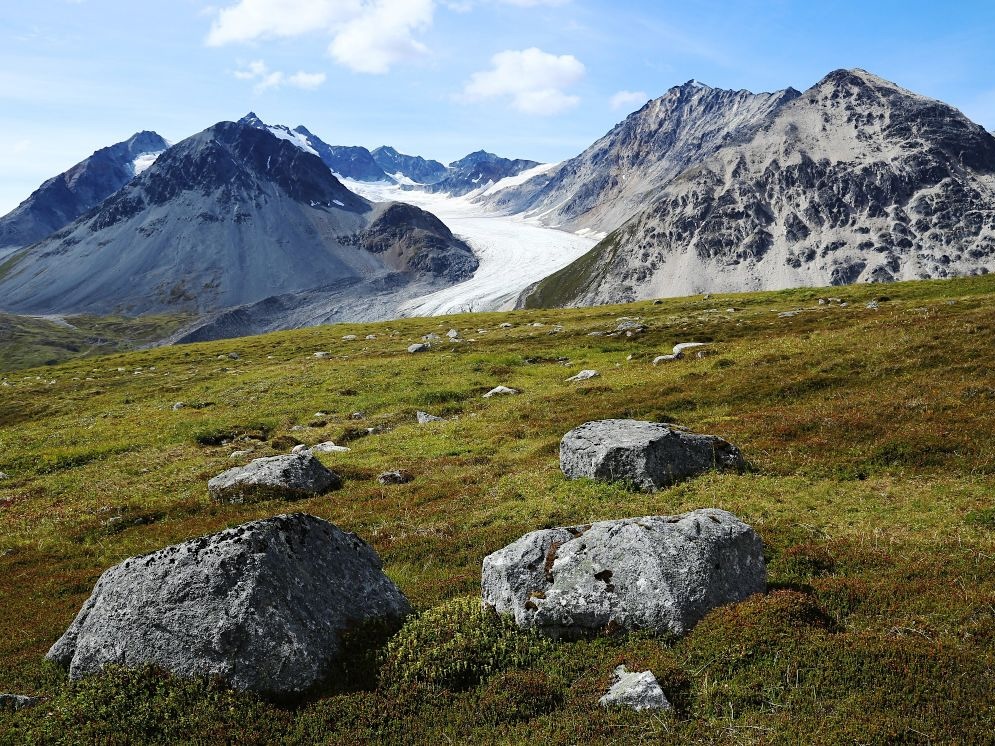
A private company is advancing plans to mine copper and cobalt in Tatshenshini-Alsek Park in northwest B.C., part of a transboundary UNESCO World Heritage Site, The Tyee has learned.
Dominion Critical Minerals aims to reopen the Windy Craggy mine, which was in pre-production development in the 1990s when the B.C. government determined the project was “too hazardous environmentally,” according to documents obtained under freedom of information legislation.
The documents — a briefing note with attachments, prepared in June for then-minister of environment and parks Tamara Davidson — say the B.C. government subsequently added the mine site to the existing park and gave the mining company at the time “an equivalent of” $120 million in compensation.
The company that owned mineral rights in the 1990s, Geddes Resources Ltd., was not required to remediate its Windy Craggy exploration sites, which continue to leach acid rock drainage into the environment, including a tributary of the salmon-bearing Tatshenshini River, the briefing note says.
One exploration area has “distinctive orange-coloured water discharging from it.” According to the briefing note, the discharge was what initially attracted the attention of Dominion Critical Minerals, a junior mining company that incorporated in B.C. in September 2025.
The briefing note says Dominion conducted satellite analysis and provided documents stating that the former exploration site is an environmental concern. The company proposes to mitigate the acid rock drainage while mining the site.
Dominion “seems to have strong financial backing and determination to see their proposal go forward despite Windy Craggy being in a park and the First Nation concerns,” Davidson was informed.
The briefing note doesn’t elaborate on those First Nation concerns.
Tatshenshini-Alsek Park is in the territory of Champagne and Aishihik First Nations, which have a management agreement with B.C.’s Environment Ministry. The nations, whose territory extends across northwest B.C. and southwest Yukon, were not available to comment before press time.

Davidson was told that Dominion’s plans have changed “at a rapid pace to address concerns.” The company’s most recent proposal is to build a 37-kilometre tunnel to access the deposit and “not impact the surface,” the briefing note says.
Because mining is not permitted in Class A parks in B.C., the Environment Ministry suggested Dominion apply for a park boundary adjustment, noting that a decision about removing the proposed mining area from the park would be up to B.C.’s environment minister.
While most park boundary changes in B.C. are made to expand protected areas, the Environment Ministry is currently considering a request from BC Hydro to remove part of the Swan Creek Protected Area to accommodate the North Coast Transmission Line.
It’s not clear if Dominion, which does not have a website or publicly available contact information, has submitted an application to change the park boundary.
In response to an email, the B.C. Environment Ministry told The Tyee that media communications are limited to critical health and public safety information until the new provincial government is sworn in, likely in mid-November.
Tatshenshini-Alsek Park is part of a UNESCO World Heritage Site that B.C. shares with the Yukon and Alaska.
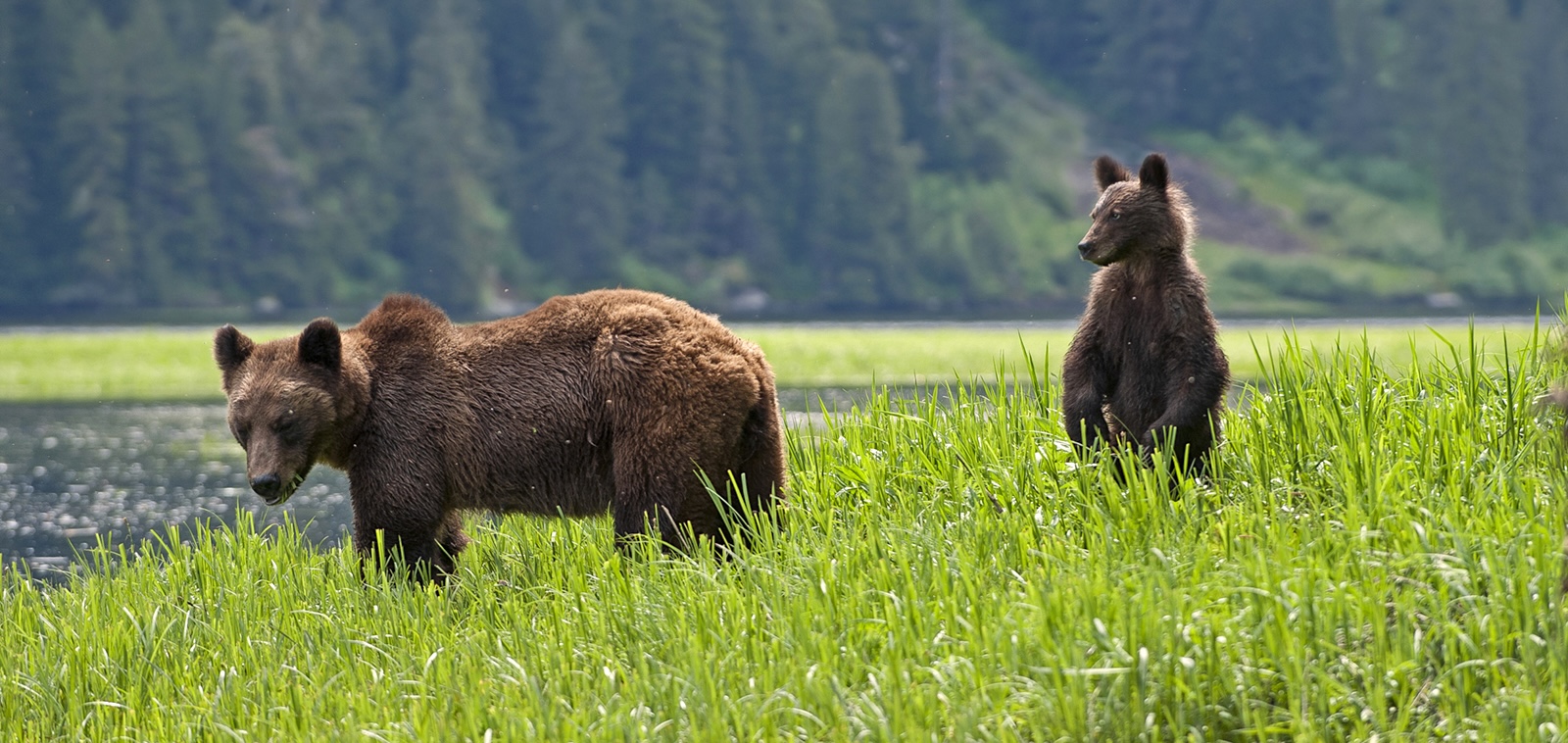
UNESCO describes the site as a dramatic landscape with deep river canyons, calving glaciers and fiord-like inlets. The area is rich in biodiversity, with healthy populations of iconic species that are endangered elsewhere, including caribou, Dall sheep, grizzly bears, salmon and mountain goats.
UNESCO says the Tatshenshini and Alsek river valleys are “pivotal” because they allow ice-free linkages for plants and animals migrating from the coast to the interior.
The two rivers roughly form a lopsided Y. The original Windy Craggy mine would have been at the crotch of the Y.
Johnny Mikes, a conservation specialist and adviser for the Canadian Parks and Wilderness Society who was involved in the creation of Tatshenshini-Alsek Park, told The Tyee that the original mining proposal included building a road through the Tatshenshini Valley, “which would be essentially ripping apart the heartland of this wilderness.”
Mikes described the Tatshenshini and Alsek rivers as “ribbons of green, ribbons of life that flow through these largely rock and ice landscapes of some of the World Heritage Site areas that are adjoining.”
Developing the river valleys would undermine the reasons why the park and World Heritage Site were created in the first place, he said.
High environmental hazards
An attachment to Davidson’s briefing note says the Windy Craggy project is “the most environmentally hazardous mining project ever proposed in Canada,” because the ore consists of an average 35 per cent sulphide.
The site is in the most earthquake-prone area of North America, making it “impossible to guarantee the long term, failsafe operation of tailings dams at Windy Craggy,” it also notes.
The proposed mine site is on “an important U.S.-Canadian fisheries river,” the note says, adding that the original Windy Craggy proposal included a port site in Alaska for shipping out minerals.
Exposing sulphides to oxygen and moisture through mining has the potential to generate “vast amounts of sulphuric acid which would then leach out heavy metals from the bedrock,” the attachment says.
Known as acid mine drainage, this combination of acids and heavy metals persists for thousands of years and is lethal to fish.
Values threatened by the original Windy Craggy mine project include transboundary fisheries estimated to be worth tens of millions of dollars a year, the Glacier Bay National Park and World Heritage Site in southeast Alaska, and the “subsistence fishery and traditional lifestyle” of Yakutat First Nation at the mouth of the Alsek River in Alaska, the note says.
The original mine, along with its associated roads and slurry pipeline transport system, also would have threatened “exceptional” grizzly bear and rare glacier bear populations and “irreversibly impacted a pristine wilderness of world class wildlife, ecologic, recreational and scenic value,” the document says.
The original Windy Craggy mine proposal sparked strong public opposition, and B.C., Canadian and U.S. agencies deemed the project to be environmentally unacceptable. Canada’s fisheries minister rejected the company’s slurry pipeline application as inadequate, while U.S. administration and congressional leaders said they were prepared to use the Boundary Waters Treaty to block the mine, according to the documents.
The briefing note for Davidson says BC Parks has been working with qualified professionals to ensure a monitoring plan is in place for the acid rock drainage, even though the ministry did not receive “adequate funding” for remediation and management of the Windy Craggy site when the project was halted.
Geddes left about 65 kilometres of diamond drill holes and four kilometres of linear underground features, known as adits.
Monitoring shows the acid rock discharge meets “acceptable” water quality objectives when it reaches the closest tributary, the note says, adding that BC Parks expects monitoring this year will show enough improvement to move from a five-year monitoring cycle to a 10-year cycle. Current monitoring costs $20,000 every five years, it says.
Tori Ball, conservation director for the B.C. chapter of the Canadian Parks and Wilderness Society, told The Tyee that she believes Tatshenshini-Alsek Park and other parks must be off limits to industrial activities.
“If a World Heritage Site and provincial park is not safe from industrial activities like mining, then no place in Canada is,” Ball said.
She said she has faith that B.C.’s new Conservative government will uphold core values shared by British Columbians and ensure Tatshenshini-Alsek Park remains fully protected.
“We do not have to choose between protecting natural resources that are important to British Columbians and to fish and wildlife habitat [and] strengthening the economy,” Ball said.
Nature is one of Canada’s “most valuable economic assets,” Ball added. 
Read more: Environment









Tyee Commenting Guidelines
Please note that email notifications for replies are not currently working due to a software issue which may be resolved in a future update.
Comments that violate guidelines risk being deleted, and violations may result in a temporary or permanent user ban. Maintain the spirit of good conversation to stay in the discussion and be patient with moderators. Comments are reviewed regularly but not in real time.
Do:
Do not: