
 SHARE:
Incumbency isn’t what it used to be.
Well beyond Vancouver — from Surrey and Langley to Prince George and Kamloops — voters have ousted mayors in many of the province’s largest cities. The rejected mayors range from the pragmatic to the controversial, as voters in many B.C. cities chose new leaders
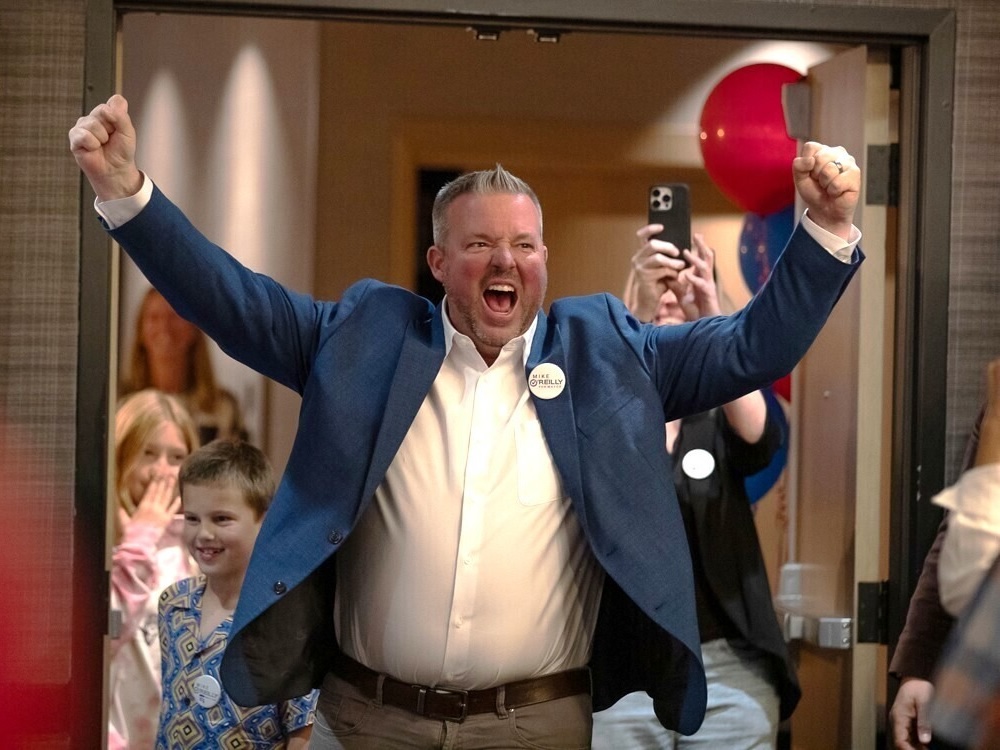
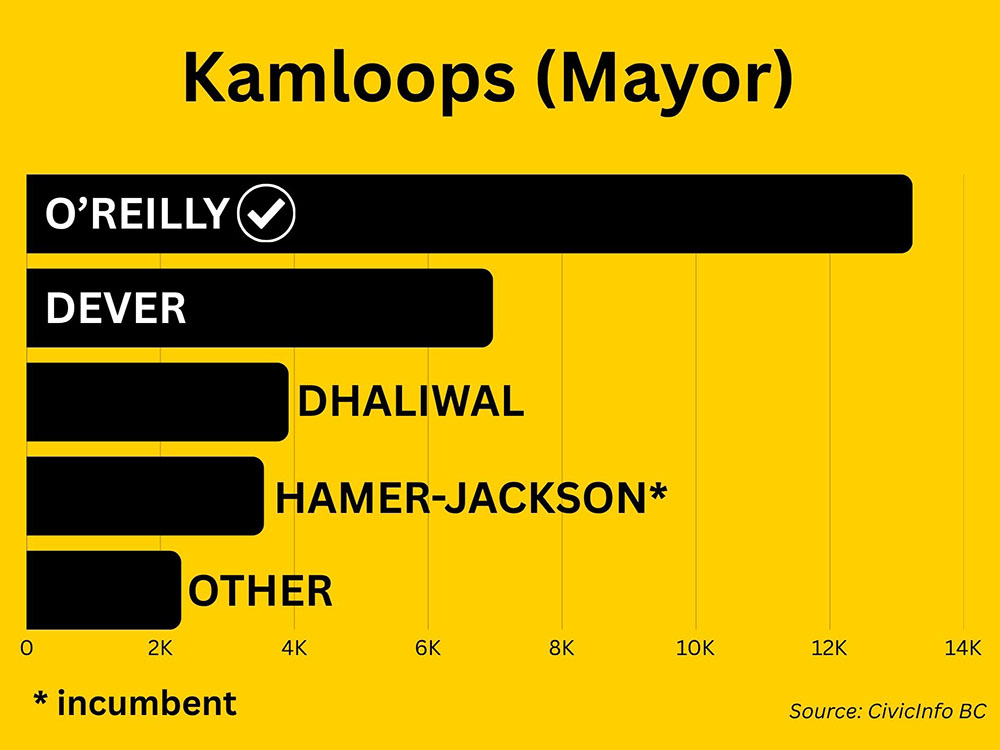
Many races were relatively close. Kamloops Mayor Reid Hamer-Jackson’s contest was not one of them.
Hamer-Jackson, the centre of a series of lawsuits and controversial incidents, finished fourth in a six-person field, garnering just 12 per cent of the vote. Mike O’Reilly, previously a councillor and a Hamer-Jackson foil, easily topped the charts, with 44 per cent of ballots.
Although a series of independent adjudicators had ruled Hamer-Jackson was more to blame than the eight councillors who aligned against him, Kamloops voters didn’t fully exempt council from responsibility. Of seven councillors seeking to regain their seats, just three — Katie Neustaeter, Kelly Margot Middleton and Kelly Hall — were re-elected.
B.C. lost other controversial mayors in West Vancouver, where Mark Sager was ousted in favour of former journalist Kirk LaPointe, and in Quesnel, where Ron Paull suffered a massive defeat to a former BC Liberal MLA.
In Harrison Hot Springs, meanwhile, voters rejected Ed Wood’s attempt to regain the mayoralty. He had resigned suddenly in 2024 after two years of strife in Harrison Hot Springs but sought to return to council. He was favoured by less than 15 per cent of voters, however.
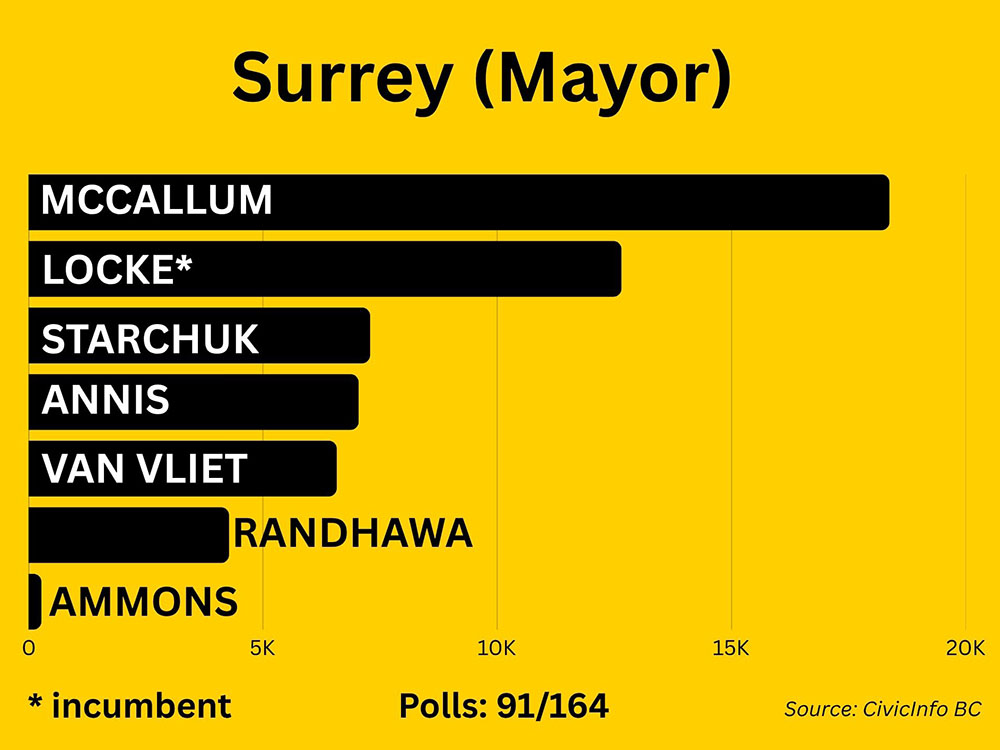
In Surrey, voters also ousted their incumbent, while returning a previous mayor to office.
That city elected Doug McCallum, who was mayor between 1996 and 2005, and then again from 2018 to 2022. McCallum beat incumbent Brenda Locke in a crowded fielded in which five different candidates earned more than 10 per cent of the vote. His Safe Surrey Coalition was also in line to claim seven of eight council seats, as of press time, even though McCallum claimed just 33 per cent of the vote.
Next door to Surrey, voters in Langley Township and Langley City rejected both their incumbent mayors, who had squabbled with one another.
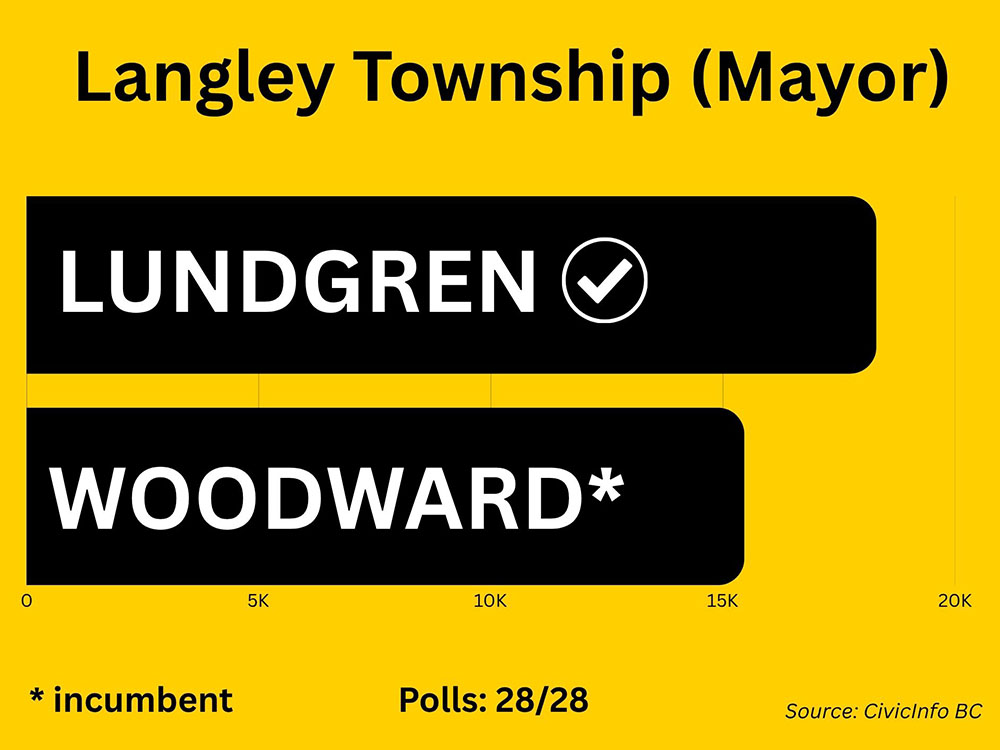
In the Township, Jay Lundgren and his Langley Strong party toppled incumbent mayor Eric Woodward and his Progress for Langley party from power after four years of infrastructure development — and borrowing.
Since winning election in 2022, Woodward and his party had embarked on a massive infrastructure program, which the Township financed with hundreds of millions of dollars of debt. The fast-growing Township planned to repay that money as development occurs and builders contribute amenity fees. But critics had questioned the interest costs associated with the building program — and the risks if development slows down.
Woodward had faced a challenge from Jay Lundgren and a new party called Langley Strong. Lundgren has called for the municipality to scale back the use of debt to bankroll infrastructure spending. Voters wanted a change in direction, and Lundgren won 54 per cent of the vote, with his party claiming six of eight council seats.
In Langley City, voters also said no to their mayor, Nathan Pachal, a prominent urbanist advocate, in favour of Delaney Mack, who had previously launched a legal action against the city. Mack’s party, Achieving for Langley, also won a majority.
In Prince George, Penticton and many other B.C. cities, voters also denied incumbents in favour of challengers.
Penticton’s new mayor, Dan Ashton, defeated Julius Bloomfield, who had pointed to the city’s work addressing social issues, providing more housing, and reducing crime. He had taken criticism, however, for the city’s bike lane programs. As The Tyee reported, Penticton has only re-elected a mayor once in 30 years. That mayor happened to be Ashton, who had served two terms more than a decade ago before leaving to serve as an MLA.
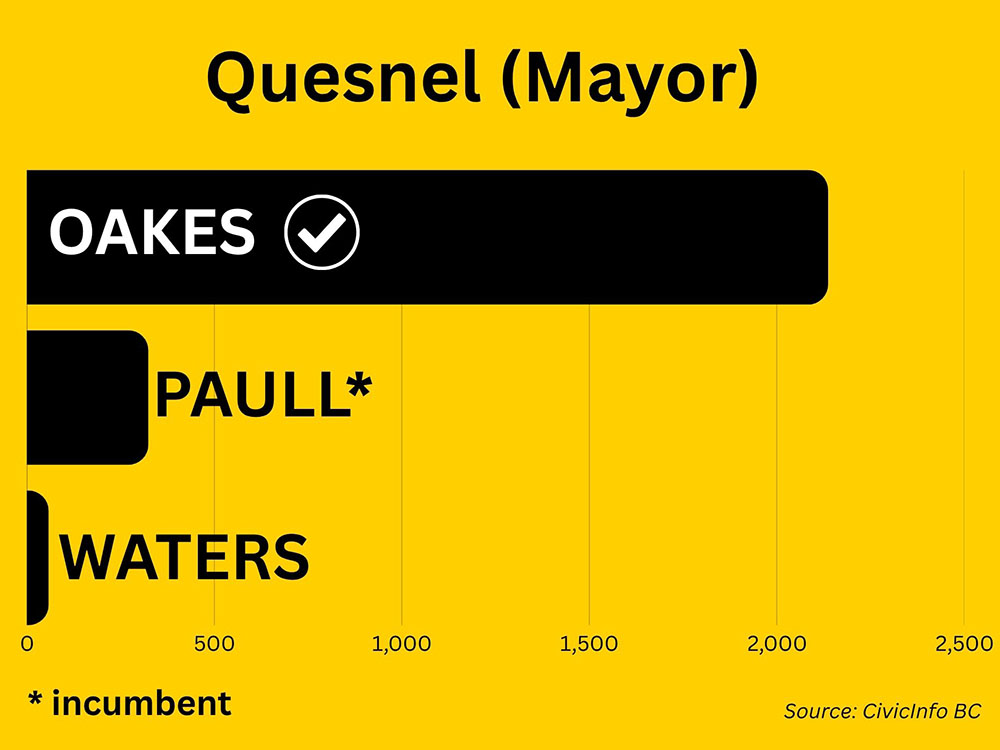
Ashton was one of three former BC Liberal/United MLAs to seek and win mayor seats Saturday. Tom Shypitka in Cranbrook and Coralee Oakes in Quesnel also easily won their races.
Oakes defeated incumbent Ron Paull in a landslide, winning with 84 per cent of the vote. Paull had been at the centre of controversy after his wife shared a book questioning the harm caused by residential schools. The matter had inspired wide-spread condemnation and several lawsuits. In running for re-election, Paull had suggested he wanted to give voters a chance to deliver their verdict on the situation.
Not all incumbent mayors were doomed, however.
Victoria, Nanaimo, and Abbotsford all re-elected incumbents with healthy margins of victory in each
Williams Lake Mayor Surinderpal Rathor also easily won re-election to a second term.
Prior to the election, First Nations in the Williams Lake area endorsed Rathor over his competitor, former mayor Walt Cobb, saying their experience with both was very different. When he was mayor, Cobb had apologized for sharing a post saying there was an “other side” to residential schools. Rathor claimed victory with two-thirds of the vote.
Grand Forks Mayor Everett Baker also earned a second term, beating challenger — and former Castlegar mayor Kirk Duff.
Baker and Grand Forks’ council had taken a unique approach to supporting local health care when they decided to pay the rent and utilities of the community medical clinic in an attempt to lure new doctors to the community. Health care is normally paid for by the provincial government, and Baker described the plan as a short-term solution and called the endeavour a success after the arrival of three new physicians. Health experts, however, have warned municipalities against starting bidding wars for doctors.
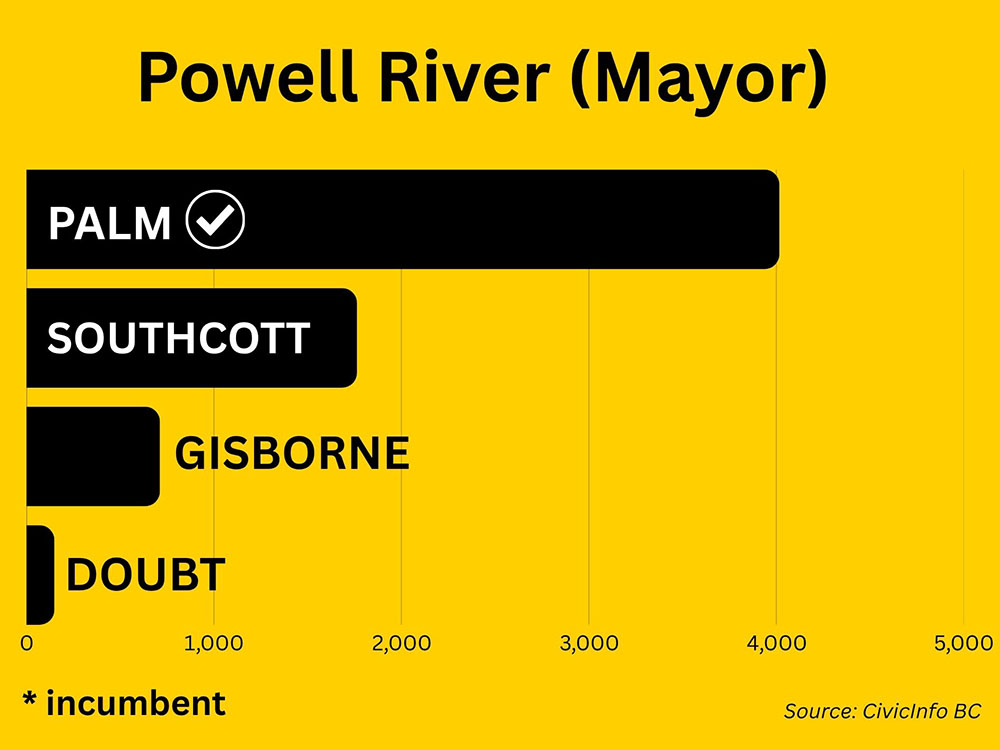
In Powell River, Jim Palm was elected mayor, alongside an unofficial slate of five councillors he’d shared with voters in pamphlet form. Palm, previously a councillor, apologized during his last term after he “belittled and mocked” the Ayajuthem language while discussing the town’s potential name change.
Ted Vizzutti, not on Palm’s slate, was the sixth councillor voted in. As The Tyee reported on previously, Vizzutti was been a paramedic in Powell River for many years before he “elected to retire early” during a BC Emergency Health Services union investigation into allegations that he had been “circulating racist, anti-Indigenous and defamatory content on social media and door to door” and “referring to Indigenous people as ’Indians.’” These actions “impacted the Tla’amin Nation community wherein they do not feel safe to call 911,” a letter sent to Vizzutti by the union said. The letter containing these allegations was made public by Rebel News, which interviewed Vizzutti.
Not every race will be settled tonight, however.
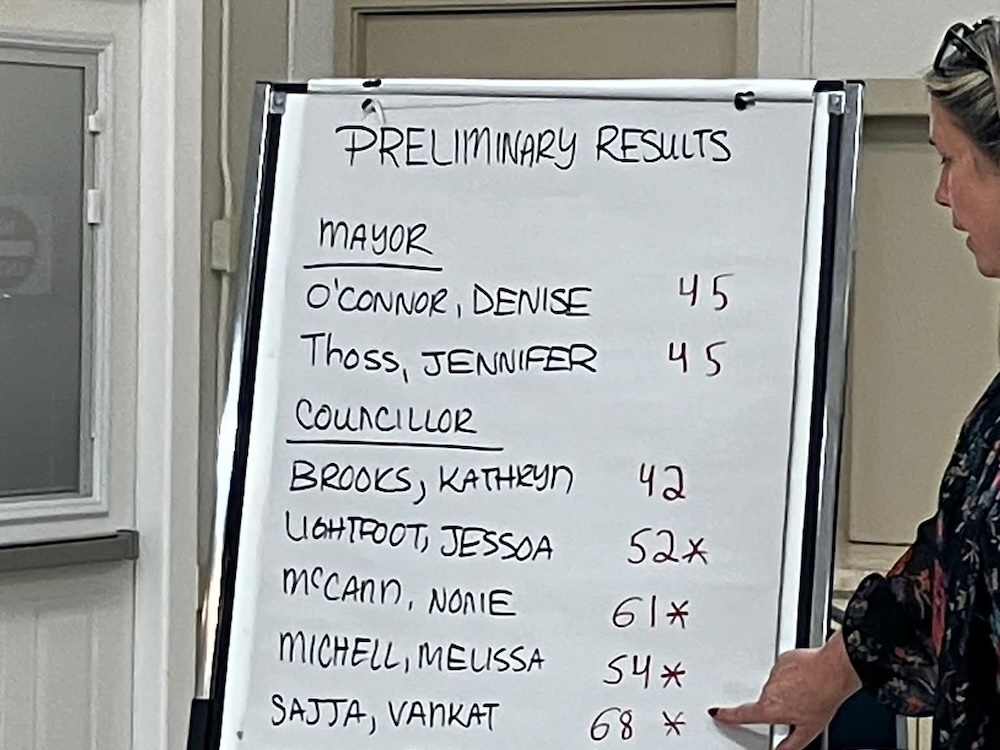
In Lytton, one of B.C’s smallest (and oldest) municipalities, Incumbent mayor Denise O’Connor, who had been elected in the wake of the 2021 fire that burned the village, faced off against councillor Jennifer Thoss, who had questioned the financial management of the rebuilding process. But the election has produced a rare tie, with each candidate chosen by 45 voters. In B.C., ties are settled either by the drawing of lots or a run-off, depending on the local bylaw. Lytton’s by-law is not online. The Tyee has asked the municipality what comes next, but an official said they would need to check with the local election officer on Sunday.
Voters’ feelings about wildfire response also played a role further south in the Fraser Canyon, where fire had threatened Boston Bar earlier this year. There, voters elected Attila Banhegyi to be their new electoral area director at the Fraser Valley Regional District. He defeated incumbent Diane Johnson. Banhegyi, who shared his fire diary with The Tyee, manages the non-profit that runs the local landfill. He had criticized the FVRD’s response during the evacuation of Boston Bar and surrounding areas. ![[Tyee]](/design-article.thetyee.ca/ui/img/yellowblob.png)
Read more: Municipal Elections 2026, BC Politics





Tyee Commenting Guidelines
Please note that email notifications for replies are not currently working due to a software issue which may be resolved in a future update.
Comments that violate guidelines risk being deleted, and violations may result in a temporary or permanent user ban. Maintain the spirit of good conversation to stay in the discussion and be patient with moderators. Comments are reviewed regularly but not in real time.
Do:
Do not: