
 SHARE:
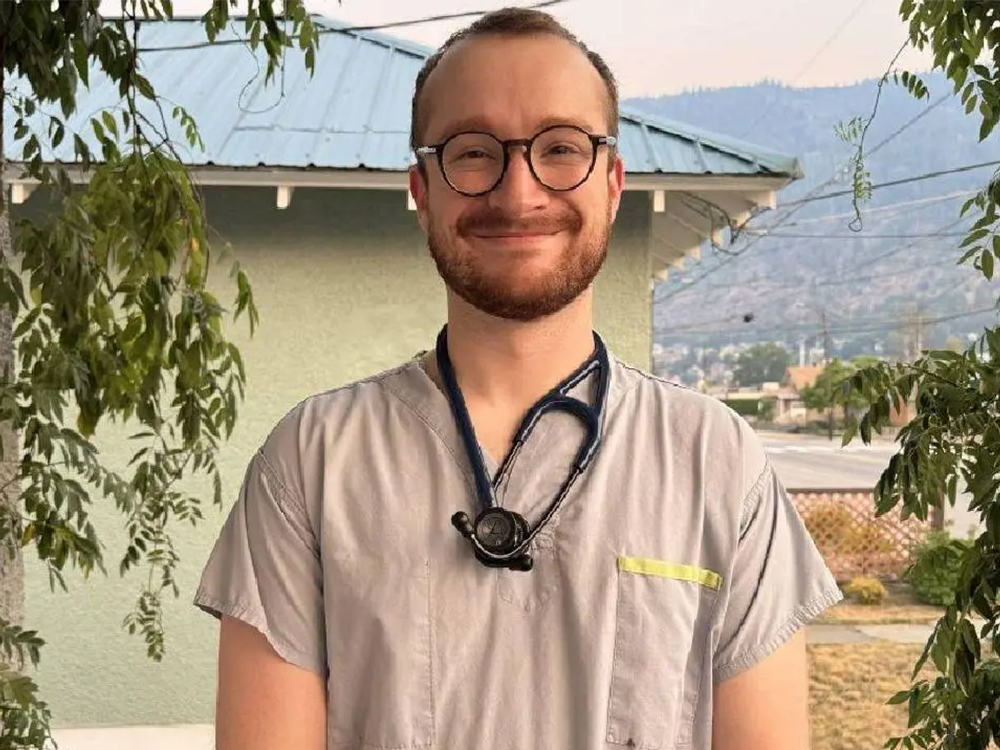
Paying for health care is not the job of a municipality. Grand Forks and a handful of other local governments are doing it anyway.
Last year, a local physician warned Grand Forks’ council that two of the town’s five doctors were planning to leave the community. In response, the municipality, alongside a local non-profit and the region’s electoral area directors, committed hundreds of thousands of dollars to cover the costs of operating the local medical clinic.
Local officials were told that paying for the medical clinic’s costs would help attract and retain physicians. And the advice panned out: since they took over rent, utilities and licensing, Grand Forks has welcomed three new physicians to town.
Similar efforts have taken place, and shown promise, in Colwood and Sicamous.
But municipally funded health-care efforts raise thorny questions for both local and provincial politicians — and one expert warns that “haphazard” local health-care initiatives could set off counterproductive bidding wars for physicians.
A town’s dilemma
Grand Forks is a small town of about 4,000 people located just north of the U.S. border in the West Kootenay’s Boundary region.
Last year, Dr. Mark Szynkaruk visited Mayor Everett Baker and his council to warn about the departure of physicians from his clinic — and the potential for upcoming retirements.
The medical clinic’s physicians shared the cost to rent the aging, 60-year-old clinic where they saw patients. As doctors left, those who remained had to shoulder a greater cost of the rent. Grand Forks faced its own version of a common story, in which the loss of one or two physicians reduces the happiness of remaining doctors and makes it harder to recruit replacements.
Local governments, however, are limited in how they can respond to health-care challenges. Municipalities cannot, for instance, directly finance private businesses, including doctors’ offices. And the province and its health authorities are traditionally the ones who pay physicians and set rates for incentives like those designed to fill vacancies in rural communities.
Municipalities also have limited finances that are dwarfed by the scale of health-care spending; the provincial health-care budget of $35 billion is more than double the combined spending of every municipality in B.C.
But that hasn’t stopped some municipalities from innovating. The Victoria suburb of Colwood, for instance, directly hired doctors, as it would other specialist employees. Sicamous, meanwhile, helped build a brand new medical clinic for its health-care professionals.
Mayor Baker and Grand Forks found a similar workaround.
Earlier this year, the municipality began funding the clinic’s hard costs: its rent, utilities and licences.
The Grand Forks arrangement increased the financial incentive for physicians to choose to move to Grand Forks. It also amounts to a health-care subsidy.
In exchange, the municipality got doctors to sign an agreement in which they pledged to provide sufficient and ongoing care both in the local hospital and in the medical clinic. The doctors would also cover the cost of staffing the clinic. A year later, Grand Forks has recruited several new doctors and Baker said they should provide family doctor coverage for about 7,900 residents — roughly the number of people living in the town and surrounding rural regions.
“If you come to Grand Forks, you are guaranteed to have a family physician,” Baker said. “I don’t know how many communities can guarantee that.”
Grand Forks has an aging community and is seen as an affordable destination for retirees. Baker said health care is needed to ensure the continued vibrancy of the town.
“This is not only a health issue, but it’s an economic driver for our community,” he said.
The annual costs for the municipality, the local non-profit and the regional district amount to $187,000. That’s not a small sum for a community the size of Grand Forks. But Baker said he recently told Health Minister Ravi Kahlon the cost is well worth the expense, especially in the context of the cost of other health-care spending.
“This goes to show,” he said he told Kahlon, “for $200,000 you could pretty well guarantee that you’ll have a clinic operating, you’ll have your emergency ward open.”
Baker, who owns a Grand Forks funeral home, calls himself a “free-enterpriser” and previously served as the constituency assistant for a BC Liberal member of the legislature. But he was complimentary toward the BC NDP’s help and says he doesn’t blame the party for health-care problems that predate the government.
Still, he and others note that the contribution of municipal funding to health care is a band-aid solution that doesn’t fix deep, systemic challenges.
‘I don’t think it’s sustainable’
“I personally would not want this to be a permanent solution,” Baker said, adding that the partnership in Grand Forks will cover the costs “until government gets their shit together.”
Baker’s challenger for mayor in this fall’s election, Kirk Duff, is less convinced of the program’s future, even as he hails its current success.
“I don’t think it’s sustainable in the current model,” said Duff. A longtime councillor in Kimberley and Castlegar, Duff served as mayor of Castlegar between 2021 and 2022 after winning a byelection. (Health concerns stopped him from running for re-election, and he subsequently retired in Grand Forks. He said his health is now improved.)
Duff said he would have preferred Grand Forks to have undertaken a project like their neighbours’ in Castlegar, where local doctors and the municipality signed an agreement to create a new health centre within a larger mixed-use building.
However, that project has since been reshaped because of a lack of funding for the medical component of the building.
Duff said Castlegar’s planning laid the stage for a long-term facility when funding is available. The Grand Forks effort, Duff said, “is better than doing nothing” but isn’t his preferred approach.
“I’m always concerned with casual downloading that becomes permanent,” Duff said.
The experiences of the two Kootenay communities highlight a common concern for local officials: when they wade into health care and other issues that fall under provincial jurisdiction, it can strain local resources and let the province off the hook for its own responsibilities. When municipalities contribute funding, it can also result in unequal distribution of critical services that are supposed to be accessible throughout the province. But sometimes, if municipalities don’t intervene, it can take years for a more systemic provincial solution to materialize.
“To take property tax money and use it for health care is a bizarre concept,” Duff said. Grand Forks’ contract with the clinic expires in the spring, and he said council will have to consider it and ensure it is working and actually responsible for the increase in local doctors.
Provincial parties’ responses
The NDP’s Josie Osborne, who served as health minister until August 2026, said the examples in Grand Forks, Colwood and Sicamous are positive developments.
“These are examples of the kind of collaboration that really is required to attract and retain doctors, particularly in smaller communities,” she said.
A former mayor of Tofino, Osborne said she has frequently heard complaints that they represent downloading of costs onto municipalities, but she disagreed, framing the contributions as business investments.
“Communities of all sizes have long made investments into local economic development, whether it’s through an economic development officer, supports for small businesses, undertaking local business retention and expansion strategies,” she said.
“A strong health-care system in a small community is also an economic strategy; businesses and families aren’t going to move into smaller towns if they’re uncertain about whether they’re going to get a family doctor.”
She said Grand Forks’ program wasn’t an indictment of the province’s own efforts to help keep doctors in small communities.
“There’s at least eight specific physician recruitment programs supporting rural communities,” she said. “We know there’s a role for local communities to really express themselves as to what they have to offer. The province can’t do that for communities. I don’t think it would be appropriate for the provincial government to tell local communities that this is exactly how you need to do things.”
Green Party candidate Lisa Lapointe told The Tyee that municipal health-care efforts signal trouble for the provincial system.
“Places like Grand Forks are having to step up and fill the gap,” she said. “That is not their responsibility, but they feel an urgent need to respond to what their communities are experiencing.”
Lapointe said the Greens are proposing that each riding have an “integrated community health-care centre” that would address burnout challenges. She also cited the “downward spiral” that can arise when health-care practitioners start to burn out.
The Conservative Party of BC declined The Tyee’s request for an interview, with its communications director writing in an email: “Our candidates are laser focused on door knocking and speaking with voters right now.”
A long-term problem
Recruiting and retaining physicians is a long-term, systemic and demographic challenge, said Steven Lewis, a health-care researcher and adjunct professor at the University of British Columbia.
The challenge is connected to larger urbanization trends that can make it hard for smaller communities to recruit professionals who are trained in big cities and may not want to leave. The issue is also linked to the way doctors are usually paid in British Columbia, he said. Lewis said a “capitation” model, which would pay doctors to serve a specified population, would incentivize doctors to move to smaller communities better than the current fee-for-service payment structure, which is largely based on physicians receiving fees for one-time services.
Lewis said smaller regions would also be served by the creation of robust and well-staffed primary care clinics that offer more support to individual doctors — like that pitched for Castlegar. He said the province should also focus on training existing nurses to become nurse practitioners who can effectively treat the most common ailments that local family physicians encounter.
The fact that municipalities have begun to wade into health care “shows a certain amount of desperation,” Lewis said.
He cautioned municipalities against setting the precedent of contributing funds to address their community’s doctor deficits.
“I think municipalities should be very wary of setting this precedent,” he said. Some communities might be rewarded by being the first to offer an incentive, “but as soon as the community succeeds by sweetening the pot... then the next municipalities are going to say, ‘Well, we have to do that too.’”
“It is a connected system and if municipalities all start to do it, they’re just going to have bidding wars and it’s going to cost them more and more money, and it doesn’t magically produce more physicians or nurse practitioners.”
Back in Grand Forks, though, Everett Baker is focused on the present. He hopes that while Grand Forks has attracted new doctors with financial support, the town will keep them by demonstrating itself as a great place to live.
“I look at it like: If we can get them here, see our lifestyle, get to enjoy the community and build that relationship with the physicians, then they’ll stay and we’re no longer one of 10, we’re one of one.”
Whether that works over the long term remains to be seen. But Baker said the effort has delivered doctors today, even if health care is traditionally not a city’s job.
“As a mayor,” he said, “I’ll dance a jig for a doctor if he wants me to.” ![[Tyee]](/design-article.thetyee.ca/ui/img/yellowblob.png)
Read more: Health, Municipal Elections 2026, BC Election 2026, BC Politics, Municipal Politics









Tyee Commenting Guidelines
Please note that email notifications for replies are not currently working due to a software issue which may be resolved in a future update.
Comments that violate guidelines risk being deleted, and violations may result in a temporary or permanent user ban. Maintain the spirit of good conversation to stay in the discussion and be patient with moderators. Comments are reviewed regularly but not in real time.
Do:
Do not: