


 SHARE:
When Zohran Mamdani appeared on comedian Kareem Rahma’s popular internet talk show Subway Takes during his successful run for New York City mayor last year, the interview was a sensation, garnering nearly three million likes across Instagram, TikTok and YouTube.
The subway interview marked yet another jewel in the crown of a formidable new media strategy that helped the 34-year-old democratic socialist win the November 2025 New York City mayoral election with 50.78 per cent of the vote. Mamdani’s short-form vertical campaign videos endeared him to younger and newcomer voters who supported him at the ballot box. His campaign became an object lesson for political strategists.
Like other progressive politicos across North America, BC NDP insiders seem to be inspired by Mamdani’s breezy, big-tent approach to viral content creation with a political edge. They also seem to have studied the subtle genius of Subway Takes, where comedian Rahma interviews guests on the New York City subway, speaking into a microphone affixed to a MetroCard regional transit pass.
Each episode of Subway Takes follows the same structure. Rahma opens by asking, “So what’s your take?” His guests, who have recently included children’s entertainer and human rights advocate Rachel Accurso, comedian Dan Yang, novelist Mary H.K. Choi and actor Andrew Garfield, respond to the question by sharing a point of view.
“Some nursery rhymes and kids’ songs need to be retired,” Accurso declared.
“There are too many passwords,” Yang offered.
“I should be the mayor,” Mamdani said.
By engaging interviewees and audiences in a way that follows a consistent, seemingly low-stakes format, Subway Takes is a master class in effective content creation at a time when the media ecosystem and its audience are undergoing rapid transformation.
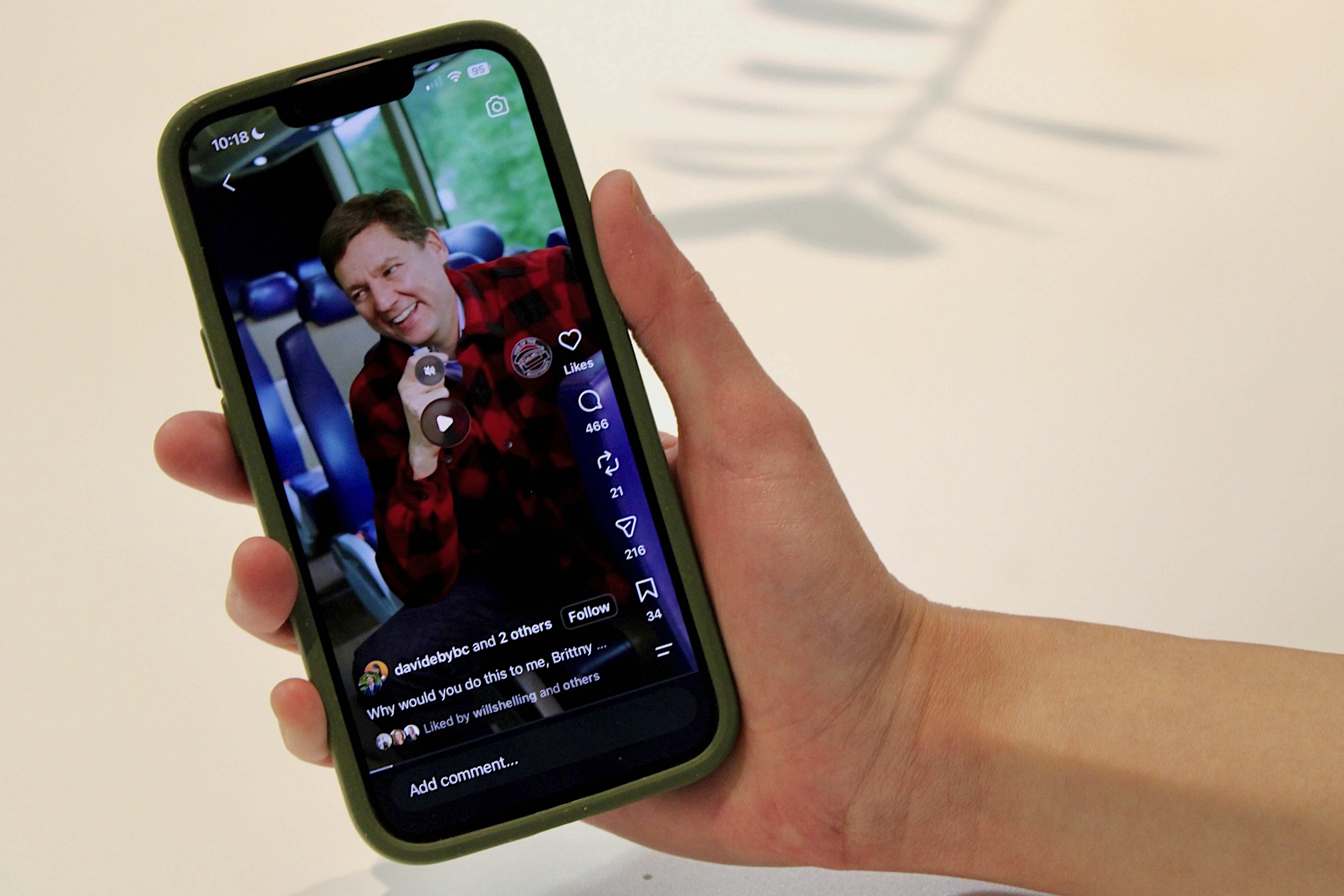
Two weeks after Premier David Eby announced a snap provincial election during the lead-up to the 2026 B.C. municipal elections, his team launched a vertical video series called “Bus Takes.”
Each episode begins with Eby, 50, seated on his campaign bus with a guest interviewee. He adapts Rahma’s famous opening line: “What’s your take?”
Eby’s videos mimic the popular internet talk show for good reason. Millennial and gen-Z fans of Subway Takes in B.C. will be primed to recognize what “Bus Takes” is referring to, and their social media feeds may be algorithmically positioned to push similar content their way.
Eby interviews his wife, Cailey Lynch, fellow BC NDP candidates Brittny Anderson and Richard Zussman and some unnamed younger people extolling the virtues of work experience in the service industry and Big Way Hot Pot.
They’re relatable slice-of-life snippets with a Sisyphean task: to make the premier seem appealing to an increasingly skeptical electorate. From the beginning of the election, polls have consistently shown that voters are not impressed with Eby’s decision to call a snap election, timing the provincial campaign to happen at the same time as municipal races.
An Oct. 14 poll from Leger finds the Conservative Party of BC holding a two-point lead among decided voters. The poll suggests that 42 per cent of decided voters support the Conservatives, and 40 per cent support the BC NDP. Green support, meanwhile, has fallen to nine per cent in October from 13 per cent in September, marking a "statistically significant decline," according to Leger. The data is from an online survey involving 1,000 British Columbians 18 or older who were randomly recruited through Leger's LEO online panel. The survey took place between Oct. 9 and Oct. 12, 2026.
Could vertical video have an impact on who wins decisive votes in the 2026 provincial election? Or turn a skeptic into a supporter?
Changing media consumption patterns suggest social media is occupying an increasingly central role in how prospective voters find and understand information.
A 2024 Abacus Data poll on disinformation, democracy and culture commissioned by the Cable Public Affairs Channel, or CPAC, showed 56 per cent of survey respondents aged 18 to 29 learned about current affairs through social media.
A 2025 report from the Media Ecosystem Observatory suggested political content from influencers had more reach on social media than traditional news media or politicians.
In a helter-skelter 2026 provincial election cycle in which candidates have had only a few weeks to mount and execute their campaigns, the lines between politician and influencer, as well as the lines between audience engagement and voter education, are being tested and blurred in real time.
Professional charm
Mamdani’s 2025 mayoral campaign was notable for its effective deployment of short-form vertical video that conveyed a public image of a charismatic leader who both reflected and advanced voters’ struggles with wealth inequality and the oppression of living through the Trump administration.
The videos had a cumulative effect. “Before long,” wrote Dodai Stewart from the New York Times, “he was a vibe. He was a meme.”
The videos were often on the silly side — Mamdani’s team filmed him running into the Atlantic on New Year’s Day 2025 to discuss freezing rental rates, and posted a clip of him riding a Citi Bike away from a person calling him a communist. (“It’s pronounced ‘cyclist’!” Mamdani replied.)
“Often underrated in campaigns is the power of a candidate who seems happy in his or her work and enjoys connecting with voters,” wrote governance expert E.J. Dionne Jr. for Brookings.
“This skill has nothing to do with ideology. It was an asset for earlier generations of politicians, too, including moderate Democrats such as Bill Clinton and former Pennsylvania governor Ed Rendell, and Republican George W. Bush. Politicians who convey a sense of hope — think FDR, Ronald Reagan and Barack Obama — can similarly reach voters who may or may not agree with them on everything. Mamdani presented as a happy and hopeful warrior.”
The leaders of B.C.’s three major political parties seem to be separately striving to project a happy, hopeful image of leadership on social media, pitched to different audiences.
Fifty-eight-year-old Conservative Party of BC interim leader Lorne Doerkson’s social media team teed up the soul duo Sam & Dave’s 1966 single “Hold On, I’m Comin’” for a recent reel promoting the Cariboo-Chilcotin MLA’s hopeful promises for change in the legislature.
The British soul group Hot Chocolate’s 1978 single “Every 1’s a Winner” soundtracks another campaign reel from Oct. 4 filmed in Doerkson’s home riding. “Way better music than Eby,” one commenter quipped appreciatively.
It might be easy to say that the music choices from Doerkson’s team cater to older voters. There’s also something else at work.
By presenting him as a personable candidate who loves his mom, affably hangs for coffee and adores his granddaughter, Doerkson’s team is working to offer voters a straight-shooting, capable alternative to the drama that has characterized his party’s recent past.
Eby called the snap election days after former Conservative Party of BC leader Kerry-Lynne Findlay resigned. The strategy was seen by some as a means of capitalizing on an opposition party in disarray.
Meanwhile Doerkson has emerged as a contender that Eby may not have been expecting.
“This is a quick 180,” said Michael MacKenzie, a Vancouver Island University professor who is the school’s inaugural Jarislowsky chair in trust and political leadership. He notes that Doerkson’s videos are very different from what he calls the “chaos” of Findlay’s leadership, which sparked outrage and divisiveness.
Doerkson, by contrast, “really lays it on thick in terms of the emotional content that he’s trying to convey,” MacKenzie said. “The videos are pretty clunky and not very hip, but you know, he is conveying a clearer message to people.”
The BC Green Party, meanwhile, features 26-year-old leader Emily Lowan at the centre of a social media campaign that reflects a Mamdani-style effort to engage younger audiences.
With eye-catching graphic design, a reel that went viral months before the election was called, and recent vocal opposition to both the snap election and unregulated AI, Lowan’s slick presence could win her the support of disgruntled would-be BC NDP supporters.
Her provincial election campaign has also featured high-traffic vertical video endorsements from nature education influencer Ross Reid (3,043 likes) and contemporary artist Spencer Keeton Cunningham (724 likes).
To receive a political endorsement from an artist, even one who does not seem to reside in B.C., might be seen as a brass ring in this arena. Cunningham’s skateboarding video endorsing Lowan to the tune of electro-punk band Le Tigre’s 1999 single “Deceptacon” echoes the work of U.S. street artist and skateboarder Shepard Fairey during Barack Obama’s successful 2008 presidential campaign.
Fairey’s memorable portrait of Obama with the word “Hope” became a backbone of a campaign during a North American election cycle where, for the first time, Facebook played a role.
Even in Canada, where a federal election took place a month before the 2008 municipal elections in B.C., people uploaded Facebook profile pictures featuring a mash-up of their own faces in the “Hope” poster to signify their support for Obama.
‘There’s a real risk because of all this improvisation’
On the phone from Nanaimo after teaching a class, Vancouver Island University’s MacKenzie reflected on recent weeks in provincial politics.
Last month he told the Times Colonist the snap election call was “bad for democracy,” and today he holds similar concerns about the risks of a provincial election cycle that has, by necessity, moved so quickly.
“We saw the Conservative party member who was ousted last week for making comments on social media in the past. That was bound to happen,” he noted of Doerkson firing former Victoria-Beacon Hill candidate Joachim Agou on Oct. 8.
“We knew they were compiling their roster in a frantic kind of unorganized manner because they didn’t expect to have to run an election campaign, and normally parties want to do pretty good due diligence in selecting candidates, and I knew they weren’t doing it this time,” he said.
“This time there’s a real risk because of all this improvisation.”
An outcome of the improvisational quality of the 2026 provincial election, MacKenzie added, is an increasingly blurry boundary between audience engagement and voter education that is playing out in the candidates’ short-form videos.
Eby’s “Bus Takes” and Lowan’s artist endorsement, he said, are bereft of content that would help educate and inform the electorate during a frenzied election cycle. They are “engaging voters, but they have very little content.”
Doerkson, on the other hand, is taking a different approach with his short-form videos, offering more policy content that is also less emotionally engaging.
“They’re a lot less engaging, and in fact, people were a lot less engaged with them,” he said, noting how many more social media users have commented on Eby’s videos over Doerkson’s.
Whether the three party leaders’ social media strategy will help secure them decisive votes remains to be seen.
In the 2024 provincial election, Eby spent a total of $17,053 on sponsored election advertising expenses. Most of that amount, $10,121, was spent on promotional materials such as newsletters, brochures, buttons and novelty items. His second-largest advertising expense was $5,332 on new signs, followed by $778 on social media, $500 on other online advertising and $321 on in-person or telephone canvassing. Eby didn’t list any spending on newspaper, radio, podcast or TV ads.
In that same election, when Doerkson ran with the Conservatives in Cariboo-Chilcotin, he declared zero spending on social media. His top three sponsored advertising expenses that election went to signs ($12,120), ads in printed newspapers and periodicals ($11,712) and radio and podcast ads ($9,870).
In the September 2025 Green Party of British Columbia leadership contest, the most recent available record of election spending for Lowan, her top advertising expense was for social media, at $11,025, followed by commercial canvassing in person or by telephone ($4,139) and promotional materials including newsletters, brochures, buttons and novelty items ($2,842).
It can be clarifying to see social media as a line item on an expense sheet. The razzle-dazzle of the medium, which offers audiences seemingly off-the-cuff, personal access to candidates’ interior lives, can obscure the fact that social media is part of a larger political strategy to produce a perceived emotional connection, or even a parasocial relationship, between voters and candidates.
Done well, short-form vertical video can elicit dopamine hits through the fun and sense of connection they can engender.
Their use in political campaigns can obscure some of the less-fun realities, and consequences, of elections.
Writing for the Nation on the eve of Donald Trump’s presidential victory in 2016, U.S. author Rebecca Solnit’s description of the electoral process continues to resonate 10 years later.
“I think of voting as a chess move, not a valentine,” Solnit wrote.
“It’s just a little part of the picture of how we make the world.” ![[Tyee]](/design-article.thetyee.ca/ui/img/yellowblob.png)
Read more: Politics, BC Election 2026, Media, Science + Tech






Tyee Commenting Guidelines
Please note that email notifications for replies are not currently working due to a software issue which may be resolved in a future update.
Comments that violate guidelines risk being deleted, and violations may result in a temporary or permanent user ban. Maintain the spirit of good conversation to stay in the discussion and be patient with moderators. Comments are reviewed regularly but not in real time.
Do:
Do not: