
 SHARE:
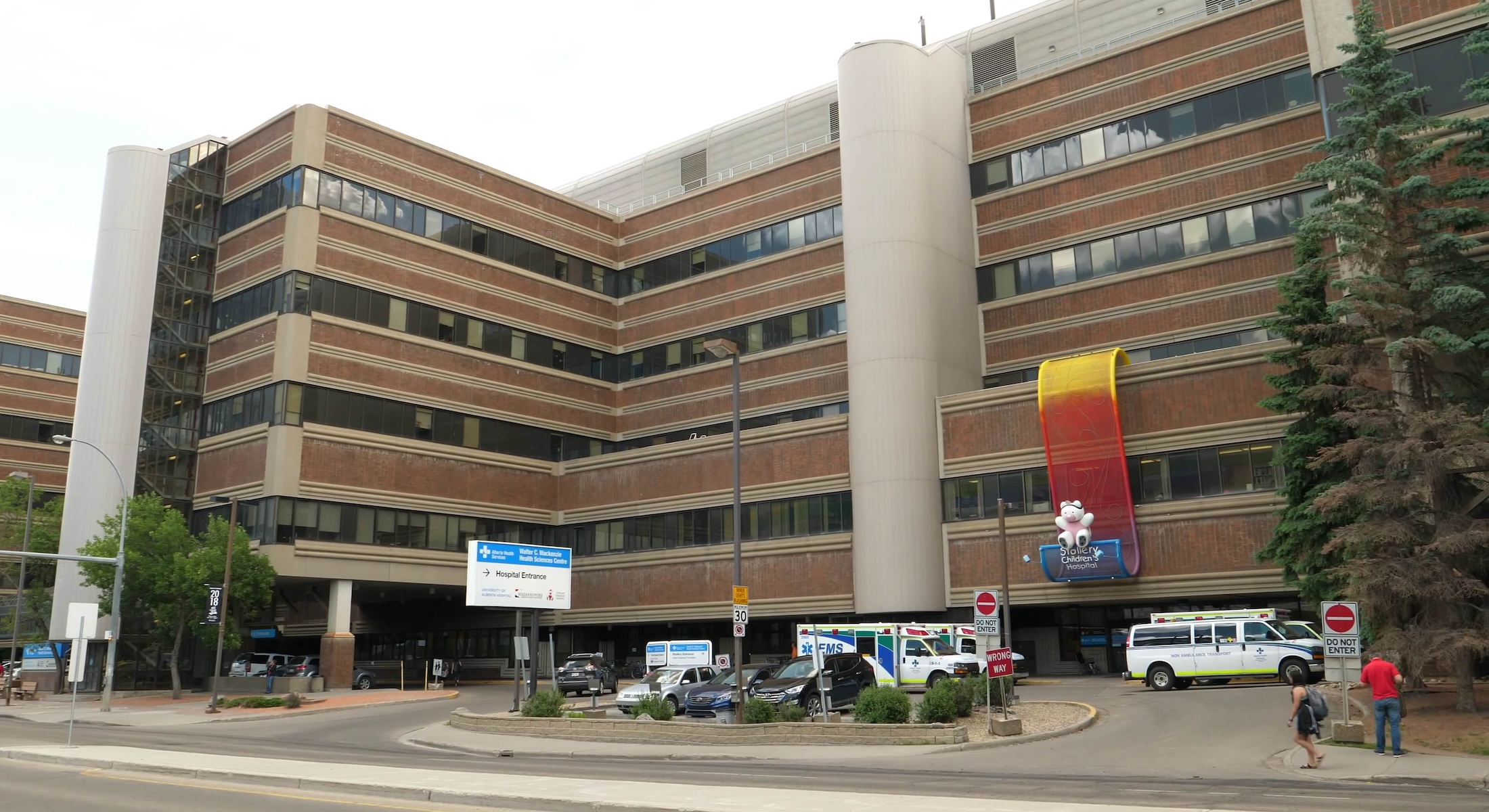
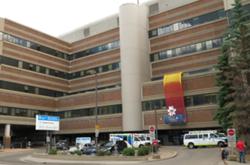
I took my daughter to the Stollery Children’s Hospital in Edmonton after work. Because she’s a teenager and deserves her privacy, I don’t want to share too much about why, but I will say, with her permission, that it was a mental health concern. I was worried about her safety.
The question I couldn’t shake was: The next time she was on her own, could I trust that she would be OK?
I had decided to go at that time because it was a weekday evening. Not too early, and not too late. I figured it would be better than going on the weekend, and still I expected to wait five hours, maybe even seven. I was okay with that.
We packed snacks, books, chargers and headphones. I put her medication in my purse and told her to bring a change of clothes. She even thought to bring her toothbrush, just in case.
When we arrived, the waiting room was about three-quarters full. The line for triage was short. We were second in line and were triaged quickly. I explained as best I could what was going on with her and why we were there. There had been an incident earlier in the week that really scared me.
In hindsight, I wonder whether I should have stressed the urgency more, how I could have done that, and whether anything I said at triage had much to do with why we ultimately waited 17 hours.
We just needed to talk to someone
We found seats next to each other and were in good spirits for the first four hours. There were a lot of crying babies and toddlers. My daughter was shocked and checked in with me to make sure that they would be seen first.
Somewhere in those first few hours, an announcement came on saying all the beds were gone and nobody would be admitted overnight. They were moving to a different model, and we needed to put our bags on the floor and not on chairs to make sure everyone had a seat.
Otherwise, they’d have to limit family members, which they never wanted to do in a children’s hospital.
We were okay with all of that. We didn’t need to stay overnight, and our bags were already on the floor.
We just needed to talk to someone. I needed to talk to someone.
I needed help almost as much as my daughter did. I felt like I was failing in every conceivable direction. Rationally, I know that’s probably not true. I know I’m an engaged parent. I know my kids enjoy being around me. I know I’m a reasonably intelligent person.
But still, there’s only so much one person can do. I felt stretched thin.
I’m a single parent with two neurodiverse kids. Not the kind of single parent who has a co-parent on the weekends, or every second weekend, or even for a month in the summer. No, it’s just me.
Although I was raised in Alberta and have lived much of my adult life in the province, my kids have lived largely in B.C.
I don’t understand Alberta’s system the way I used to, or the way I understand B.C.’s. It has changed significantly since I was younger. It’s only recently that we’ve spent any significant time in hospitals, and I was surprised, both in B.C. and Alberta, by the level of security and the lack of freedom to move around. That has changed even since my children were born.
Nearly 56,000 visits are made to the Stollery emergency department each year — more than 150 a day. It is the only specialized pediatric emergency department and referral centre for children in central and northern Alberta.
Another woman near us was visibly overwhelmed. She was sick and her toddler would not stop screaming. Another hospital — or maybe a doctor’s office — had told her there would be a bed waiting for her at the Stollery. There wasn’t.
She told staff her child kept having seizures. From the triage desk, a nurse told her they were watching, hadn’t seen one and that she needed to remain in her chair. They called back and forth across the room.
The mother had reached the point where politeness and careful language no longer seemed to matter. I recognized the desperation.
Security came to talk to her as she became increasingly upset. Eventually, they both fell asleep, her toddler sprawled across her lap while she cocooned him, her head bobbing. His bottle fell out of his lap and rolled across the floor. I placed it on the chair next to her.
I remember what it’s like to be a young mom, stressed out and worried about your child. I had hoped they would take her soon, but it would be another three or four hours.
The police came in with a teenage boy in handcuffs. He was young — under 15, I would guess — and seemed resigned to his situation. He was there almost as long as we were.
The police officer who brought him in sat with him and chatted easily. I was impressed by his gentleness and how considerate he was. The officer seemed at ease in his role, wherever it took him. There was no scolding or lecturing in his voice. He was genuinely curious about the boy — not as a criminal, but as a human.
I was reminded of how one person, at the right time, can be a lifeline for a child. I imagined the officer knew that as well.
The teenager fell asleep. As the night went on, his handcuffs moved from behind his back to in front of him, and eventually came off altogether. Later, the police officer guarding him was replaced by a security officer.
I wanted to put a blanket over him, like the other kids who were resigned to sleeping in chairs that night. But I didn’t know whether I was allowed. I had already passed blankets out to some of the other kids, so I assumed they knew they were available.
Several times my daughter asked me, “How much longer?”
Each time, I told her, “I don’t know. Maybe one to four more hours.”
The last time I told her, she just laughed. There was no truth to what I was saying any longer. There was no certainty left in anything we were told.
We were so tired that reality itself was beginning to feel slippery.
We had arrived just before 8 p.m. By 5 a.m., I was thinking about how awful it would be if we were finally seen only to have to drive home in morning rush-hour traffic.
Clearly, we weren’t up next
I slept in 10-minute chunks, my head resting on top of my bag. I had been afraid to sleep during the night because sometimes staff called a name and, if no one answered, moved on.
By late morning, I simply could not stay awake any longer.
The nurse who had triaged us the night before came back on shift. A full cycle had completed.
What had she done while we were sitting there? Had she gone home, had dinner, maybe gone out with friends, slept a blissful eight hours and come back? I was jealous.
I wished I’d packed a toothbrush ... and my medication.
Around 7 in the morning, a nurse called me over and asked what my daughter would want for breakfast.
I got excited. They didn’t feed you in the waiting room; they only fed you once you’d been admitted. That must mean it was coming, right? She told me the next available bed was ours.
About an hour after we had been told breakfast was being ordered for my daughter, I went to a different triage nurse to ask about it.
He told me that wasn’t going to happen until she was admitted.
“We’ve been here 12 hours,” I said.
“Yes,” he replied, flatly.
What I really needed to know was whether I should go get her breakfast. We weren’t supposed to leave in case we were called. He tapped at his computer.
“Yes, I think that would be a good idea.”
My heart sank. Clearly, we weren’t up next.
I left my daughter there and scurried across the street to Tim Hortons. Other parents were there with their orange tags labelling them as family and friends from the Stollery Children’s Hospital. Other parents had waited all night. Other parents with hungry kids.
She lit up when she saw me. “I’m so hungry.”
They told us we were up next again around 9 a.m., when they checked my daughter’s vitals to make sure she was still stable.
The nurse apologized to her profusely. “The next bed is yours.”
They told us there were only a few mental health beds, whatever that means.
I was still trying to be understanding, even though by then I had been awake for 26 or 27 hours (I’d lost count) without any real sleep.
We still had some snacks left, but I had been handing them out to people who hadn’t thought to bring any.
Around noon, I got back into the triage line to ask again when we might be seen. I wanted to know if I should go out again and get my daughter lunch. What I really wanted to know was what she wanted to know: When could we get out of here?
The triage nurse didn’t even call me over. She walked up to me while I was standing in line.
“How can we help you?”
“It’s almost been 17 hours,” I said.
“Yes,” she said, in the same flat tone the man had used earlier. I don’t remember what I had planned on saying.
“I don’t know what to do,” I said. My voice cracked.
Her demeanour changed immediately, and she called me over to the booth.
“I don’t know,” I told her. “Right now she’s safe because she’s here and we’re watching her. But if I take her home, I don’t feel like that’s the case.”
The nurse disappeared into the back. Five minutes later, we were called in.
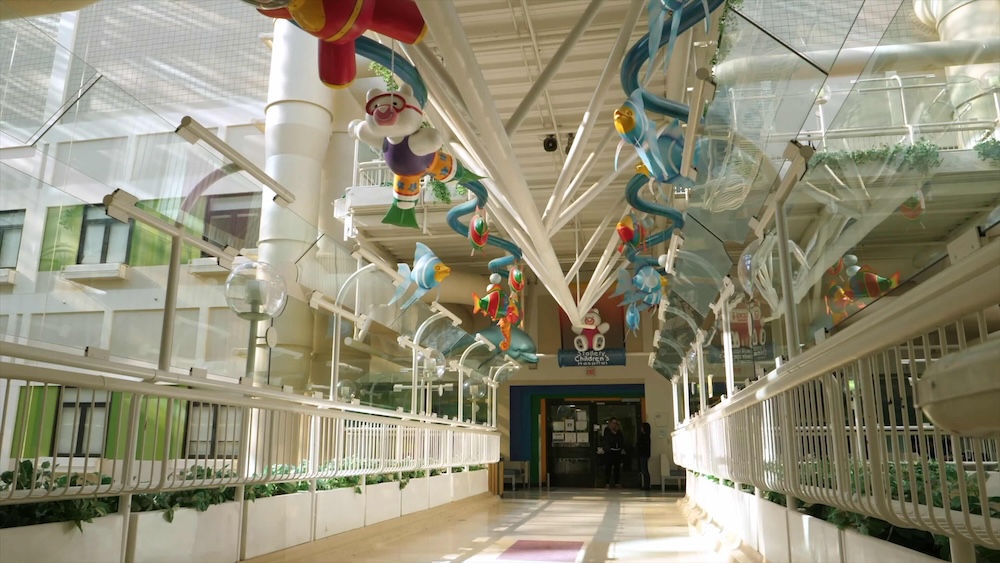
What if I hadn’t started to cry?
I still don’t know whether that was a coincidence, whether a bed happened to become available at that exact moment, or whether finally saying out loud that I was afraid to take my daughter home changed how our situation was understood.
I’ve wondered ever since: How much longer would we have waited if I hadn’t started to cry? Would we have been seen sooner if I had broken down earlier?
The room they put us in had solid walls and a door. After hours and hours and hours of wailing toddlers, the silence was shocking bliss.
They wanted to talk to my daughter first, so they sent me away. I went for a walk. Fresh air. I hadn’t realized how much I missed it.
I got a tea, and for the first time that day I realized I had been born in this same hospital complex.
About 25 years earlier, I had stayed there for a week with my grandma while she received treatment at the Cross Cancer Institute.
Now I was here with my daughter. I had passed through this space with three generations of my family.
The nurses called me back afterward to talk to me privately. Before I went in, I stopped to drop off a wrap for my daughter and saw that they had given her snacks too.
Her eyes were red.
“I hope you shared everything,” I said.
She nodded. “So much, Mom. I cried.”
As cruel as it sounds, I was happy to hear that. She doesn’t like sharing the things that are darker and scarier. She doesn’t want people to think she’s too weird or too broken.
The nursing staff took me into another room. They were empathetic. They listened to me as I spilled out recent events and my fears.
They agreed that she needed help. They also reassured me that they weren’t seeing some of the worst-case possibilities I had been imagining.
They were going to get her into the system, which is why we went in the first place.
Finally, I felt hopeful.
After all the stress of being there, after talking and hearing that help was available, I could almost physically feel the tension leaving my body.
We drove home in rush-hour traffic. It was 4:30 p.m. I didn’t even care.
We cranked up the music and sang. Both of us were relieved. When we got home, I slept for 12 hours.
I grew up in a family of teachers with grandparents who needed a lot of health care during the Ralph Klein era.
I remember the conversations about budget cuts and everything we seemed to lose because of them.
How is this still a thing?
Alberta’s health spending has not kept pace with demand
Alberta is spending more on health care in absolute dollars today. Budget 2026 includes $1.9 billion in new health funding, including $91 million over three years to expand emergency-department and operating-room capacity.
But headline totals don’t tell the whole story.
The Canadian Institute for Health Information says Alberta’s health spending did not keep pace with population growth and inflation from 2022 through 2024.
Its 2025 forecast shows that hospital spending per person in Alberta, in current dollars, increased 15.4 per cent from 2015 to 2025 — the smallest increase in the country — compared with 43.1 per cent across Canada.
More money is going into the system now, but the province is trying to catch up to demand that is already here. Money allocated today doesn’t instantly become another mental-health bed, another nurse or another room.
Governments count beds, staffing levels, construction projects and dollars spent. They must.
But there are other costs that are harder to put on a balance sheet: missed meals and medication, lost sleep, parents pushed beyond exhaustion and frightened children spending the night in chairs.
I wonder how much we save when the cost is transferred to the people who are already at the end of their rope.
Maybe someone reading this will think my daughter shouldn’t have been in an emergency department because what brought us there was mental health.
But the Stollery emergency department is one of the routes Alberta’s health system uses to refer children into its urgent psychiatry clinic.
It’s hard to know exactly when things take an urgent turn. Maybe she could go weeks, months or years without needing urgent mental health intervention, but the stakes of gambling on that are too high.
I just knew that, in that moment, I needed somebody else to step in.
If an emergency department isn’t where families like mine are supposed to go, then there must be somewhere else we can walk into at 8 p.m. on a Thursday and say, “I’m afraid to leave my child alone.”
We can’t lose sight of our humanity. A health-care system shouldn’t be judged only by whether care eventually arrives, but by what children and families are asked to endure to reach it.
Missed meals, missed medication, lost sleep, fear and hours of childhood spent in a waiting-room chair may never appear on a provincial balance sheet.
But they are costs all the same. ![[Tyee]](/design-article.thetyee.ca/ui/img/yellowblob.png)









Tyee Commenting Guidelines
Please note that email notifications for replies are not currently working due to a software issue which may be resolved in a future update.
Comments that violate guidelines risk being deleted, and violations may result in a temporary or permanent user ban. Maintain the spirit of good conversation to stay in the discussion and be patient with moderators. Comments are reviewed regularly but not in real time.
Do:
Do not: