


 SHARE:
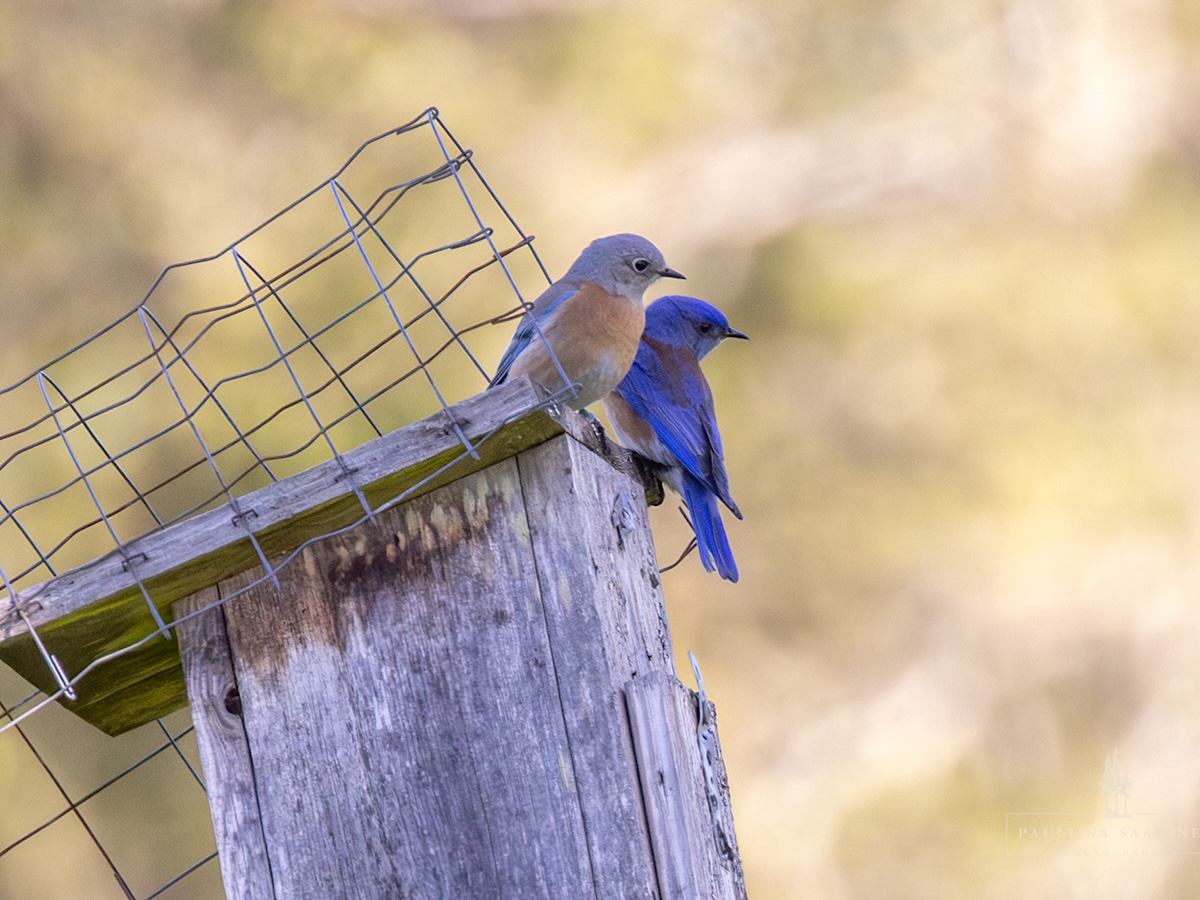
Western bluebird families are as varied and quirky as human families.
One lovey-dovey pair in the Cowichan Valley always perch together on a tree branch, their babies lined up neatly beside them. Two helicopter parents in the valley are fiercely protective of their offspring, scolding if anyone comes near.
A male who lost his mate flies back and forth from a feeder to his nest box like a marathon runner, dropping mealworms into the beaks of his begging babies as he does the work of two parents.
And then there’s the extra-large bluebird family that Jacquie Taylor, co-ordinator for the Cowichan Bring Back the Bluebirds Project, visits on a brilliantly sunny day in early September.
Taylor, a biologist, says she didn’t expect to be dropping off a recycled tzatziki container full of squirming yellowish-brown mealworms so late in the season.
But the bluebird pair that she’s feeding laid a rare three clutches of eggs and hatched 15 babies this year.
“It just blew us away,” Taylor tells The Tyee. The older juveniles help the parents by popping worms and insects into the gaping beaks of their youngest siblings, which hatched in early August, she says.
Taylor is standing in front of a wizened apple tree on a private rural property near Maple Bay, on southern Vancouver Island. The air shimmers with streaks of vivid blue and orange as 10 members of the family of 17 take to the air, whirring around a feeder in anticipation of Taylor’s delivery.
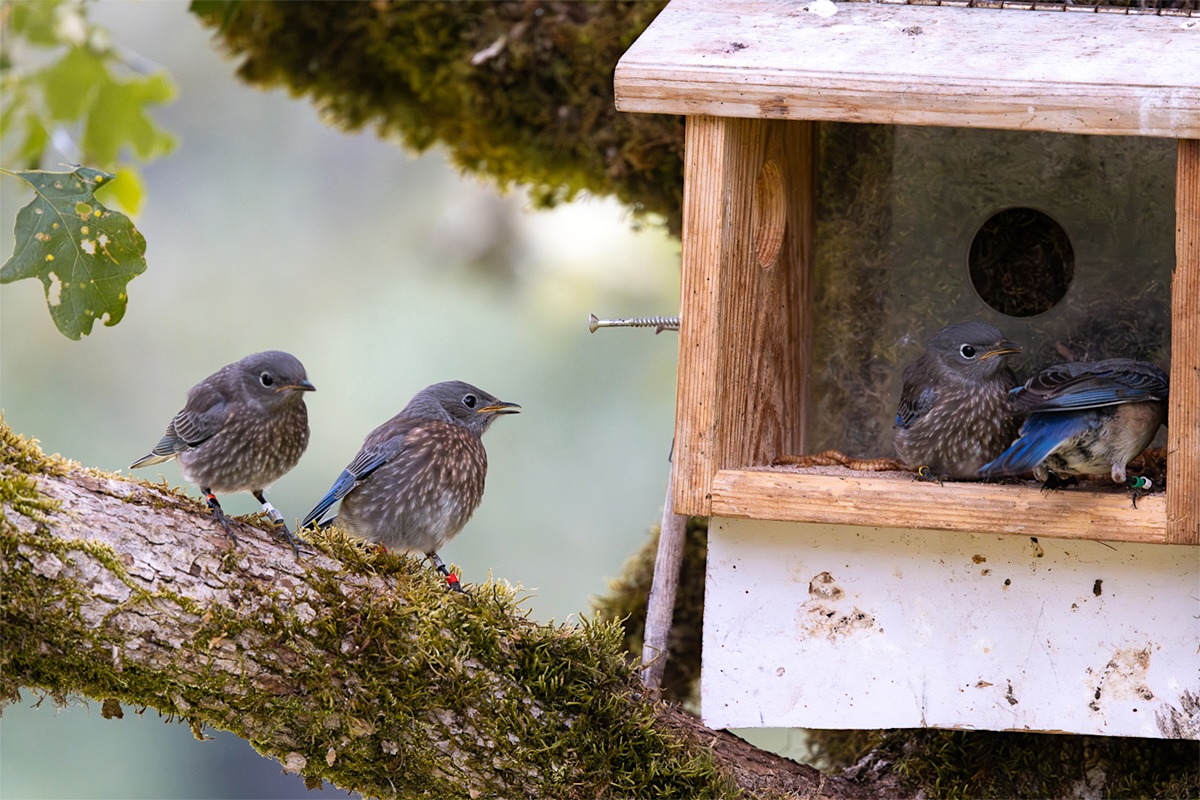
But most noticeable is the sound: a gentle musical chortling so cheerful and soothing that it immediately banishes all thought of the ills of the world.
The bluebirds are back, and everything is just as it should be. Or so it seems.
Seventy years ago, bluebirds were so common on southern Vancouver Island and the southern Gulf Islands that their return from overwintering grounds in balmy American states heralded the arrival of spring.
The bluebirds nested in cavities in Garry oak trees that grow in tandem with camas meadows, an ecosystem tended by First Nations for millennia.
But after First Nations were dispossessed of their cultures and displaced from the land, and as 95 per cent of the Garry oak ecosystem was gradually lost to agriculture and urban development, bluebirds began to disappear.
In the mid-1990s, bluebirds were declared extinct on Vancouver Island and the southern Gulf Islands.
International bird handovers, permits and a lot of mealworms
The journey to bring back the bluebirds hasn’t been easy or quick. But, as Taylor points out, it demonstrates what Canadians and Americans, working together to save a transboundary bird they mutually cherish, can accomplish through a shared vision to protect nature.
“It feeds my soul,” she says.
The return of the bluebirds involves a military base in Washington state, bird handovers at a gas station near the international border, a slew of permits from both countries, 1,000 volunteer hours this year alone, 70 private property owners and Cowichan Tribes, who all host bluebird nest boxes — and mealworms. Lots and lots of tiny, wriggling mealworms.
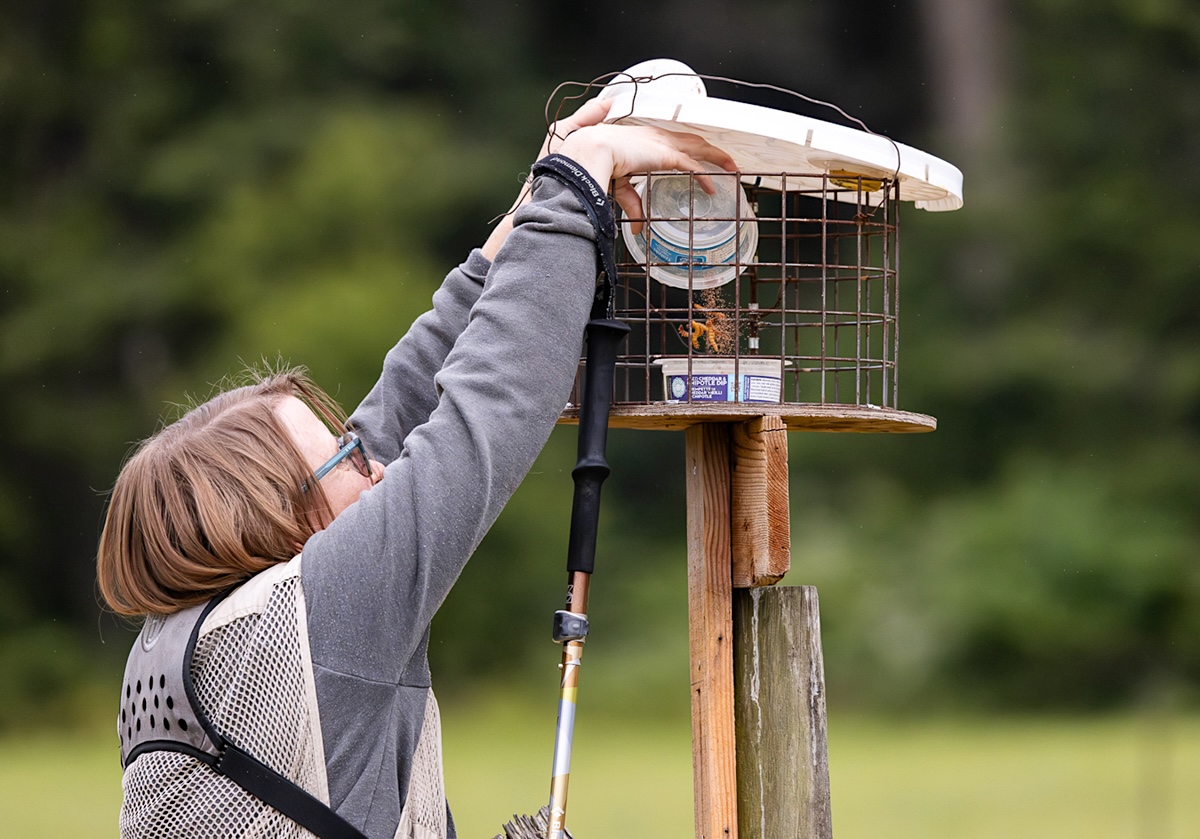
The project has spent about $6,000 on mealworms this year, Taylor says. In addition to worms raised in the apartment of a Cowichan Valley volunteer, the project orders live mealworms from a supplier in Saskatchewan, which ships them by Canada Post in cardboard boxes with little holes for air.
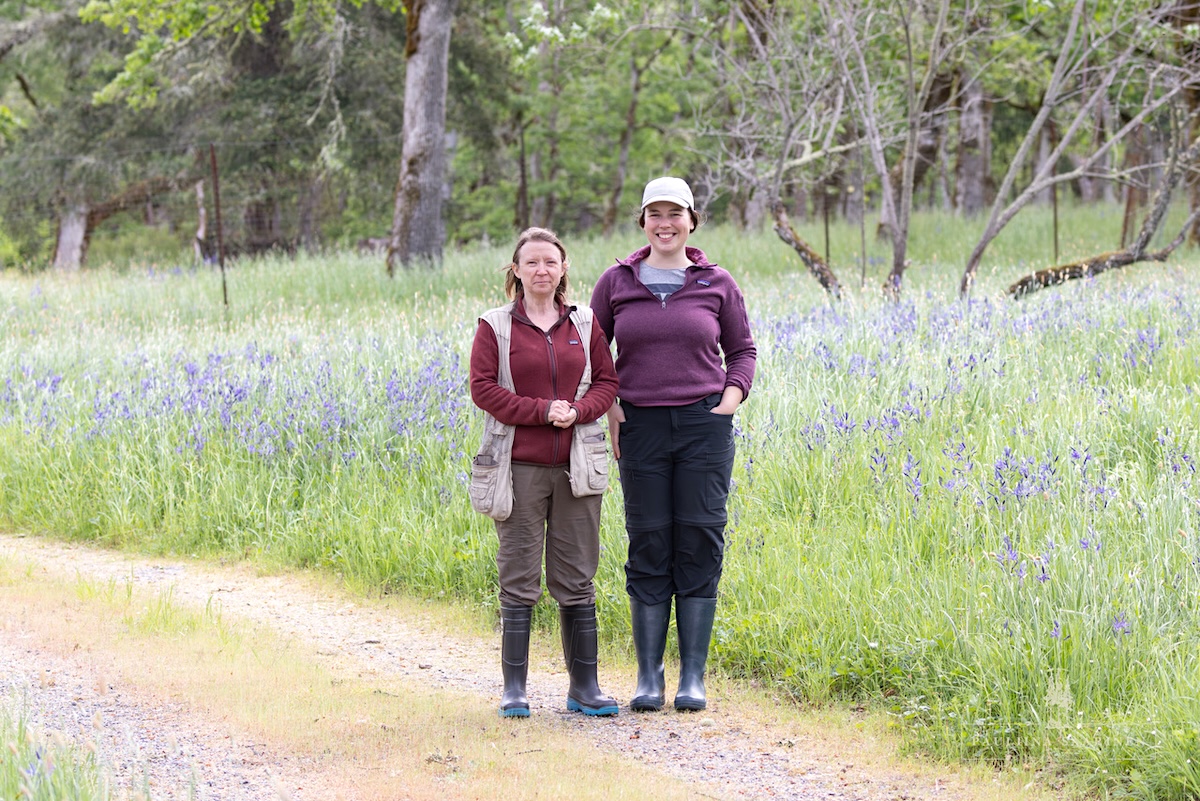
Taylor, who has a notebook tucked under her arm to record observations, didn’t use to be a bird aficionado. But she wanted to work in hands-on conservation, so she jumped at the opportunity to join the bluebird project in 2019, when the non-profit British Columbia Conservation Foundation took over the project from the volunteer-run Cowichan Valley Naturalists’ Society.
“It hasn’t always been about birds for me,” Taylor says. “I would happily protect a little sea slug. I love the biodiversity that surrounds us, and I want to have a hand in helping to protect it.”
Initially, Taylor was motivated by her desire to help save the endangered Garry oak ecosystem. Less than five per cent of it is left on southern Vancouver Island and the southern Gulf Islands. And what little remains could soon disappear, as Garry oaks continue to be cut down in many places and meadows are paved for housing and other developments.
But the bluebirds immediately charmed her.
On her first day of work, driving up to a rural property in the Cowichan Valley that housed nest boxes, a male bluebird landed on Taylor’s side-view mirror. “I guess I’ve arrived,” she remembers thinking.
“They’re sweet little birds,” she says. “They’re not just brightly coloured, but they also have this very sociable personality.”
Mimicking bluebird habitat
The Cowichan project aims to mimic habitats found in Garry oak ecosystems, where bluebirds perch on gnarled oak branches watching for movement, diving down to feed on insects such as wasps, grasshoppers and moths.
Properties are often chosen to house bluebird nest boxes because, like the one near Maple Bay, whose owners requested anonymity, they’re near at least one Garry oak tree and a meadow.
“Garry oak trees are a great source of insects,” Taylor explains. “They have a real biodiversity of their own, things that live in the bark and on the trees.”
In addition to the loss of Garry oak ecosystems, bluebirds faced a whammy of secondary threats that contributed to their demise. Cats killed them, pesticides reduced their food sources, and dead trees — often with cavities suitable for nesting — were cut down because they were considered dangerous to humans.
Worsening an already dire situation, invasive European starlings and English house sparrows elbowed bluebirds out of remaining nest spots, competing for ever-scarcer food.
A similar story unfolded on the San Juan Islands, which sit between the state of Washington and Vancouver Island, where much of the Garry oak ecosystem was also lost to development.
U.S. wildlife ecologist Gary Slater led efforts to reintroduce bluebirds to San Juan Island, the most populated of the chain of islands with the same name.
From 2007 to 2010, Slater and his colleagues released 80 adults and 26 juveniles they captured on the Pacific Northwest’s largest military base, Joint Base Lewis-McChord, just outside Tacoma. The base contains 90 per cent of the remaining prairie ecosystem in western Washington and has a healthy population of bluebirds.
Slater and his colleagues made wooden nest boxes and built aviaries where they held the birds for two to three weeks. Bluebirds often return to the area where they were born, so they reasoned that the chicks, once fledged and released from the aviary, would return to San Juan Island. The experiment was a success.
When naturalists on Vancouver Island heard about the bluebird’s return to San Juan Island, they contacted Slater. Starting in 2012, bluebirds captured at the military base were also translocated to the Cowichan Valley, with promising results.
This year, a record 30 adult bluebirds were documented nesting in the Cowichan Valley. Together, they produced 126 young.
A cross-border journey
In early June, Taylor drove to the Peace Arch border crossing to pick up four adult bluebirds and their 10 babies, which were about a week shy of fledging. The nests were tucked into a plastic cup lined with a cloth. Each family travelled in a little birdcage covered in a cloth to calm them.
Taylor lists some of the permits required for the cross-border journey: an Environment and Climate Change Canada scientific permit, a B.C. Wildlife Act permit, a Canadian Food Inspection Agency permit to import live animals, a U.S. Fish and Wildlife scientific collection permit and a U.S. banding permit.
Taylor met the U.S. crew at a gas station near the border for the handover. On the way home, with the cages in the back seat of her car, she could hear the bluebirds quietly chattering as they fed their babies mealworms.
The newcomers were released into aviaries in two different locations in the Cowichan Valley.
“They get a little bit of a chance to calm down and see what’s around them,” Taylor says. As soon as the young fledge, the birds are released “and can call this home.”
The project has nailed a few hundred nest boxes to posts and some trees on participating properties in the valley.
Saltspring Island has about 200 nest boxes, but no bluebirds yet. About 50 boxes in Victoria — where the project is scouting out additional locations for nest boxes and aviaries for future releases — are also awaiting bluebirds.
To deter house sparrows, which are the same size as bluebirds, from using the nest boxes, volunteers make a “sparrow spooker” — strips of tinfoil that wave in the breeze above the boxes. Sparrow spookers are installed only once a bluebird family has built a nest and is invested in the box, Taylor explains. Bluebirds will put up with the tinfoil, but house sparrows will not.
Most of the bluebird nest boxes in the Cowichan Valley are still empty or are occupied by tree swallows, which also frequent Garry oak ecosystems. Tree swallows and bluebirds have a cordial relationship once initial jostling for nest space is over, Taylor says. “We’ve seen cases where the tree swallows will guard the bluebird boxes and help protect them.”
Bluebirds are slightly bigger than tree swallows, “so if they want the box, they get it,” she adds.
Four nest boxes on the property near Maple Bay were empty for 10 years before the prolific bluebird pair arrived in early April and wove a nest of grass, straw, pine needles and plant fibres in a box near the apple tree.
“The birds were reintroduced elsewhere, and they just came here naturally,” Taylor says.
She lifts a metal mesh container on the feeder, designed to let bluebirds in and out — the openings are too small to allow starlings entry — and empties the mealworms into a recycled BeeMaid Honey plastic container. The bluebirds immediately squeeze in to feast, chattering gaily.
One of the youngest fledglings begs for food next to the container, its yellow-rimmed beak wide open and pointed to the sky. Its baby fluff makes it seem larger than its parents. The dad, which has a resplendently blue head, wings, throat and back, with a rusty orange chest like a vest, picks up a beakful of worms and drops them into his offspring’s gaping mouth. Then the dad gulps down a few worms himself. The fledgling, impatient, decides it’s time to feed itself and dives in.
The worms augment the bluebird’s natural diet, Taylor says, signalling that food is plentiful and encouraging pairs to produce more than one clutch of blue eggs.
Steps towards a success story
It’s much easier to recover ecosystems and populations of species at risk of extinction before they’re on death’s doorstep, Taylor says.
Taylor compares the situation to heart health in humans. “If you wait until it’s a bypass, that’s a pretty traumatic kind of thing, and you may or may not be successful. But if you catch things when the doctor’s saying you’ve got some indicators of heart disease, then you can have a flourishing, healthy life.”
The bluebirds, Taylor says, still have time to recover. She’s heartened that bird identification bands, which are placed on all birds that are part of the project, reveal that six juveniles born in the Cowichan Valley settled on San Juan Island, and that initial work to rebuild a Victoria bluebird population is underway. Populations are starting to connect, which she says is an important part of resilience.
“Aside from the beauty and wonderfulness of the birds themselves,” Taylor says, if bluebirds recover, “it would be one more success story of stopping biodiversity loss.”
“We need hands on to make that happen,” she says. “And we can do it one species at a time.” ![[Tyee]](/design-article.thetyee.ca/ui/img/yellowblob.png)
Read more: Environment





Tyee Commenting Guidelines
Please note that email notifications for replies are not currently working due to a software issue which may be resolved in a future update.
Comments that violate guidelines risk being deleted, and violations may result in a temporary or permanent user ban. Maintain the spirit of good conversation to stay in the discussion and be patient with moderators. Comments are reviewed regularly but not in real time.
Do:
Do not: