


 SHARE:
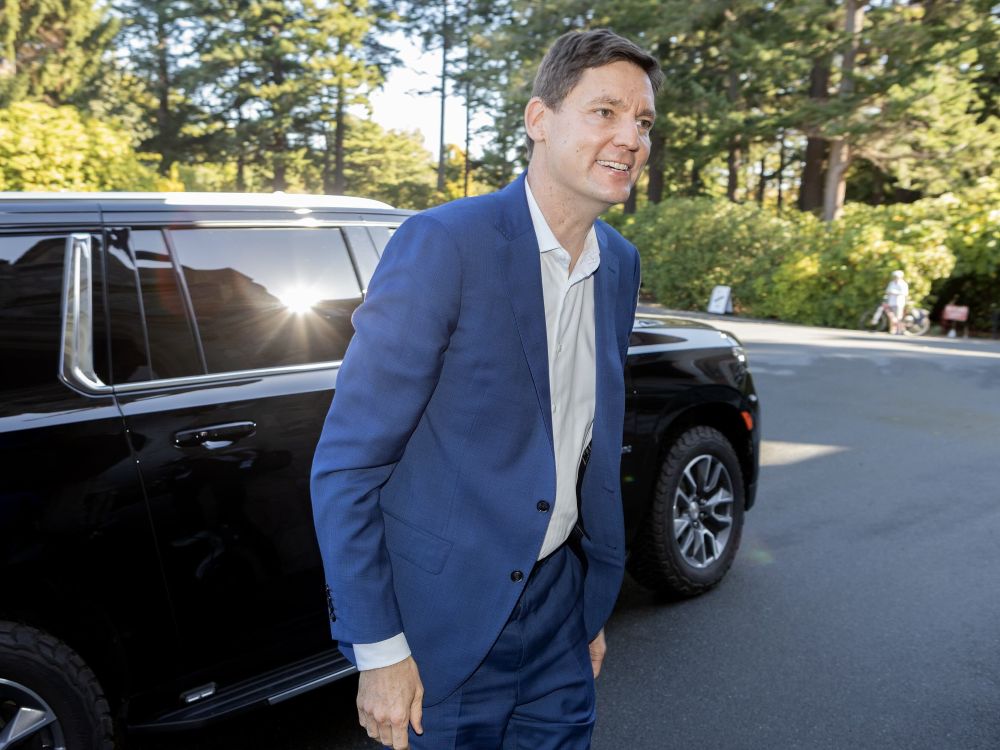
Premier David Eby sent British Columbia into a snap election today, just two years into the NDP’s mandate and as the fractured opposition parties move quickly to organize themselves into a viable alternative.
“We have big decisions to make as a province and you, British Columbians, deserve a say in the direction that we choose,” Eby said Tuesday afternoon, announcing he had asked Lt.-Gov. Wendy Cocchia to dissolve the legislature ahead of an Oct. 24 vote.
He presented the choice as one between Trump-style chaos and division from the opposition parties or an NDP government that would stand up to U.S. President Donald Trump, protect British Columbians and build a stronger province.
“The conditions in our country have changed,” Eby said, comparing the NDP to a fire break in a wildfire. “When you smell smoke, you don’t sit and wait to see what happens next. You act.”
Eby had signalled in recent weeks that despite the NDP’s majority in the legislature and the two years left until the fixed election date, an early provincial vote was increasingly likely.
The provincial election will be one week after local government elections for mayors and councillors, and the campaigns will overlap.
The election call comes as the opposition parties scramble following Kerry-Lynne Findlay’s resignation on Sunday. Findlay won the leadership in a narrow vote in May, but was plagued with a series of scandals, criticisms of her staffing choices and the departure of many MLAs.
The party that had won 44 seats in the last election and narrowly missed forming government had shrunk to 24 by Friday, though some MLAs who had called for Findlay’s resignation have since rejoined the party.
The Conservative party’s interim leader is Cariboo-Chilcotin MLA Lorne Doerkson.
Meanwhile at least eight former Conservative MLAs merged last week with CentreBC, a party formed by disgruntled BC United members after the 2024 election.
Peter Milobar, who came fifth in the B.C. Conservative leadership race, was to be the interim leader of CentreBC.
Shortly after Eby’s announcement, the Conservative Party of BC released a statement saying Doerkson and Milobar “have come together to give British Columbians a viable governing alternative to the NDP chaos.”
Later Tuesday afternoon Doerkson spoke with reporters at CRAB Park in Vancouver.
“I think David Eby is going to regret this, and it’s because this election actually offers an opportunity for hope and for real change,” Doerkson said, backed by Milobar and about eight Conservative incumbents.
He criticized Eby for blowing through the government’s budget surplus while raising taxes, weakening the economy and failing to protect private property.
“The NDP’s failure to grow and diversify trade has left us even more vulnerable to the United States and the attacks from that bully,” Doerkson said, stressing his opposition to Trump’s attacks on Canada. “We need a government that is strong, united and willing to fight for our province, and that's exactly what a united, Conservative government is going to provide.”
Asked for a brief description of who he is, Doerkson said he was born in the Bridgeview neighbourhood of Surrey and moved with his family to Salmon Arm when he was around 13. “I went to the Cariboo when I was a very young guy, looking for work, and I've been there ever since. I've raised two girls, and my wife Shelley is at home right now.”
Angelo Isidorou, who left as executive director of the Conservative Party of BC after Findlay became leader, was at Doerkson’s campaign launch. The party is on the right track talking about the economy, jobs, investment, tariffs and the crisis in health care, he said.
The election will be different from the one two years ago, he said. “In the face of tariffs, in the face of a hyper-aggressive president, you need to present a vision that is not only one of change, but change that is stable, that doesn't frankly scare voters while still being bold. It’s a tightrope you need to walk.”
Caroline Elliott, who narrowly lost the leadership race to Findlay, was also at the launch.
The party, which reportedly has enlisted Katy Merrifield as campaign director and Dimitri Pantazopoulos as deputy campaign manager, may prove to be stronger than expected.
Despite the provincial party’s woes, the Conservative brand remains strong in large parts of the province. Even amid the turmoil, an Ipsos poll released last week found 35 per cent support for the Conservatives, with just a 10-point gap to close with the NDP.
The party also has financial resources. In the first two quarters of the year, a period that included its leadership race, it raised $2.2 million, which was about $400,000 more than the NDP. Both parties also get about $1.8 million a year in public subsidy based on the results of the last election.
CentreBC, which receives no public subsidy, has raised a total of just over $44,000.
A statement from CentreBC president Mike Wignall said: “We are disappointed that Peter Milobar and others did not stand by commitments made to this party, its Executive Council, and its members.”
CentreBC remains committed to its foundational values and “will not be selling out to divisive politics,” he said, adding that the party will field as many candidates as it can.
Elenore Sturko, the MLA for Surrey-Cloverdale who has sat as an Independent since Rustad kicked her out of the Conservatives, said she is staying with CentreBC, where she will become leader.
The next big hurdle for the Opposition Conservatives will be to nominate candidates and ramp up a campaign, challenges made more difficult by last week’s change of leadership and the purging in recent months of officials who were key to the party’s surge in 2024.
Doerkson said Findlay will not be running for the party. Nor will her husband, Brent Chapman, the incumbent in Surrey South, who announced he has joined Dallas Brodie’s OneBC party.
It became clear over time that not everyone in the Conservative caucus shared the same understanding of the party’s principles or platforms, Chapman said. “The disagreements within caucus, and increasingly in public, made that difficult to ignore,” he said. “This is not the party I joined 15 years ago. It does not reflect the party we presented to British Columbians in 2024. I say that with sadness, not anger.”
The NDP will also have some changes. Cabinet minister Lana Popham, first elected in 2009, announced she won’t be running again in Saanich South. After the election call, two more cabinet ministers said they won’t run: Kelly Greene in Richmond-Steveston and Ravi Kahlon in Delta North. Others may bow out in the coming days.
The party will also have to decide whether to stick with its equity mandate. When an elected female NDP MLA retires, she can be replaced only by another woman. When a male MLA retires, the replacement has to be either a woman or a member of another equity-seeking group.
The mandate, which is largely credited with the B.C. legislature reaching gender parity, has been mostly followed except in extenuating circumstances, such as in 2020 when the party failed to find an eligible woman or a member of another equity-seeking group to run in Stikine.
The BC Green Party said leader Emily Lowan and the party’s two incumbents — Jeremy Valeriote in West Vancouver-Sea to Sky and Rob Botterell in Saanich North and the Islands — will announce their intentions today.
The party sent out a notice seeking volunteers to help collect signatures on nomination papers in hopes of running candidates in all 93 constituencies.
Veteran Vancouver Sun columnist Vaughn Palmer wrote that there’s no demonstrable urgency for a provincial election. “Rather, Eby is moving to capitalize on a split opposition to rescue a political career that was on the rocks a few months ago,” he said. “The result will be as cynical and dishonest and unnecessary an election call as I have witnessed in more than 40 years of covering B.C. politics.”
Brad Zubyk, who was former Conservative Party of BC leader John Rustad’s chief of staff, wrote on the social media platform X that criticism of the election call will dissipate quickly.
“The argument that the Eby government doesn’t deserve another mandate is easy to make but the argument that there is a viable alternative is more challenging.”
In a month Eby could look like a fool or a hero, Zubyk said. “He could end up regretting his impatience.... Campaigns matter and this one will as well.”
With files from Jen St. Denis. ![[Tyee]](/design-article.thetyee.ca/ui/img/yellowblob.png)
Read more: BC Politics





Tyee Commenting Guidelines
Please note that email notifications for replies are not currently working due to a software issue which may be resolved in a future update.
Comments that violate guidelines risk being deleted, and violations may result in a temporary or permanent user ban. Maintain the spirit of good conversation to stay in the discussion and be patient with moderators. Comments are reviewed regularly but not in real time.
Do:
Do not: