


 SHARE:
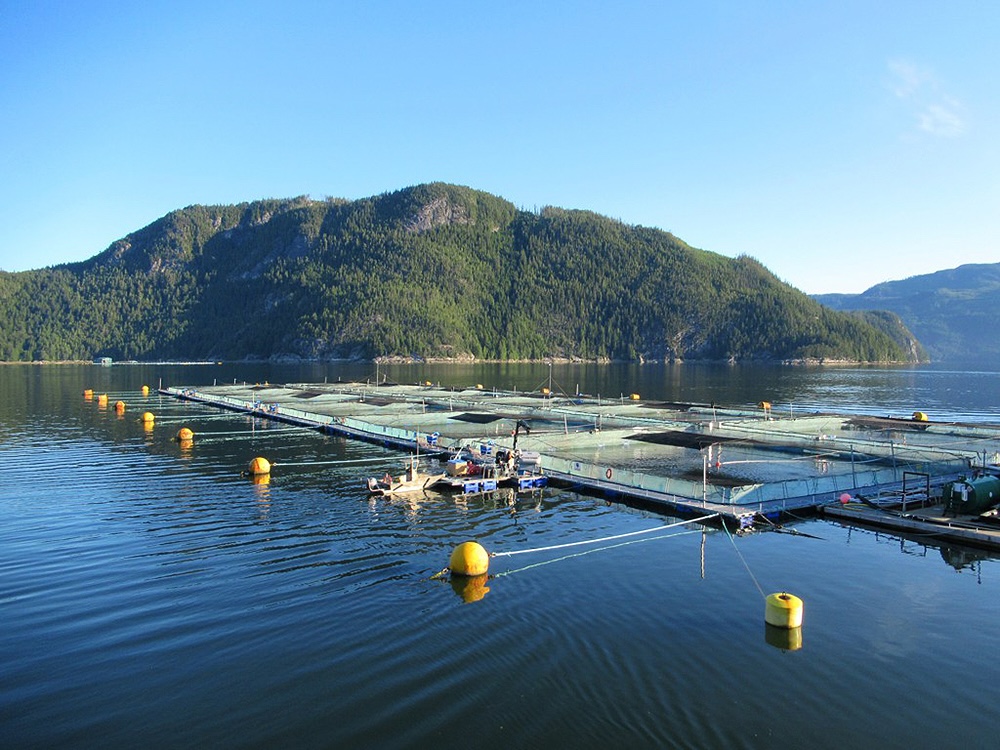
International aquaculture industry groups are lobbying Prime Minister Mark Carney to overturn an impending ban on open-net salmon farming in B.C., saying the ban is being “weaponized by extreme activists” around the world.
Executives from salmon farming industry groups in seven countries wrote to Carney in April 2025, one month after he took office, according to B.C. freedom of information documents obtained by Watershed Watch Salmon Society and shared with The Tyee.
The executives took aim at former prime minister Justin Trudeau’s 2024 decision to end open-net salmon aquaculture in coastal B.C. in 2029.
“We are very concerned and perplexed about the Canadian government’s recent federal policy that ‘bans’ net pen salmon farming in British Columbia,” they wrote in a two-page letter to Carney.
“This policy of your predecessor lacks scientific, economic and technical credibility.”
The letter is signed by executives from industry groups in Norway, Denmark, Iceland, Ireland, Chile, Scotland and Australia.
For decades, as many as 100 salmon farms have raised mostly non-native Atlantic salmon in open-net pens along the B.C. coast.
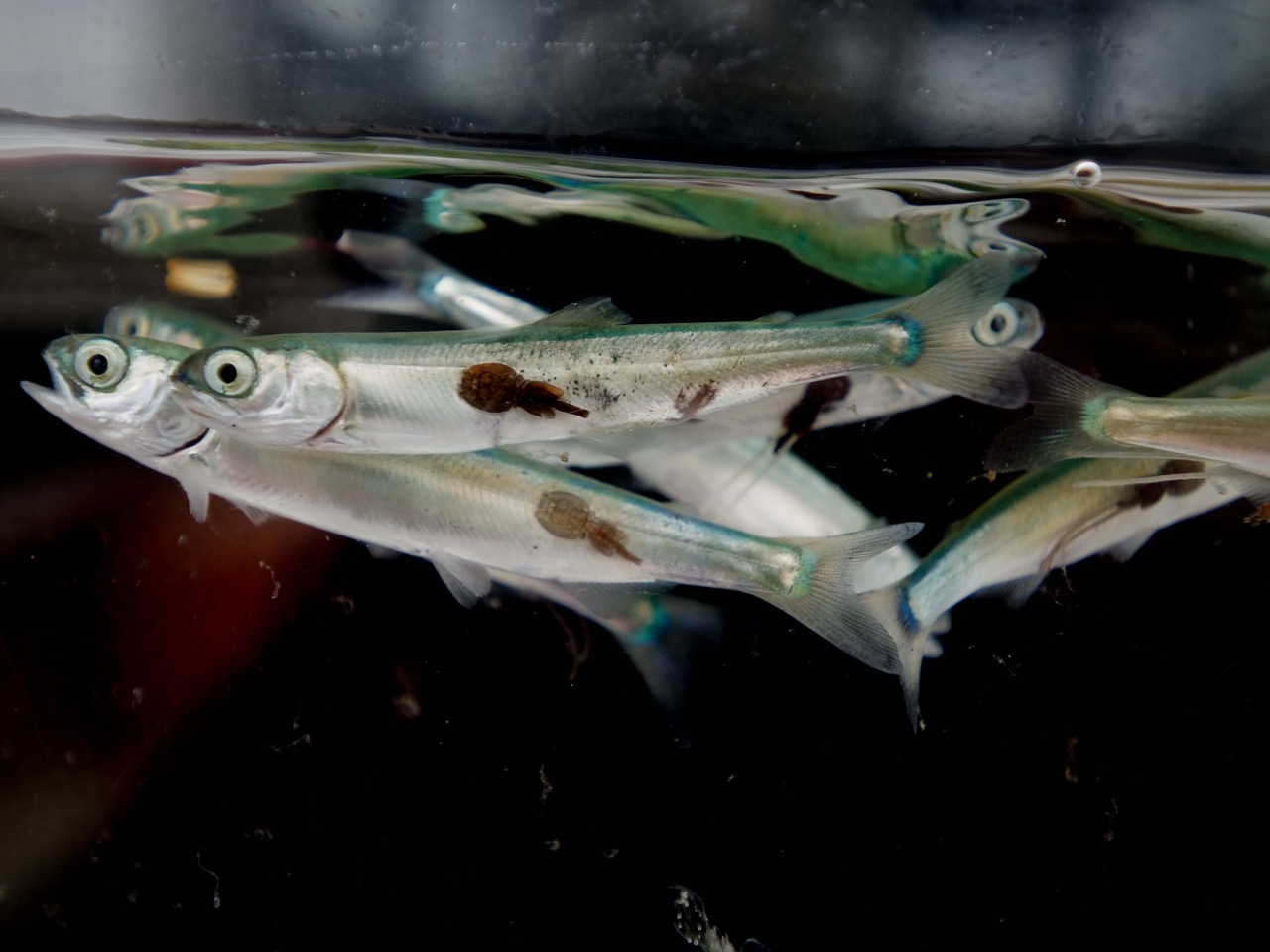
Many farms lie along migration routes for Pacific salmon, and scientists have warned that sea lice and diseases from farmed fish are being transferred to wild juvenile salmon.
Sea lice are parasites that cause damage and stress to immune systems, making fish more vulnerable to diseases. Those diseases include Piscine orthoreovirus, which is linked to a host of fish health problems, including hemorrhages in internal organs.
Stan Proboszcz, senior science and policy analyst for Watershed Watch, told The Tyee that he believes international lobbyists should not be able to influence Canadian policy and end the open-net salmon farming ban.
“I don’t think the federal government should be listening to international, foreign companies,” Proboszcz said, referring to salmon farming corporations represented by the industry associations.
Fisheries and Oceans Canada, commonly referred to as DFO, referred The Tyee’s questions about the letter and status of the salmon farming ban to Innovation, Science and Economic Development Canada, led by Minister of Industry Mélanie Joly.
Joly’s department did not respond before publication.
The Tyee recently reported that DFO has gutted a world-leading genomics program that produced science critical of aquaculture, including evidence of disease transfer from salmon farms to wild fish.
A spokesperson for the B.C. Ministry of Water, Land and Resource Stewardship told The Tyee that the B.C. government respects federal decisions but is concerned about broad economic pressures facing people in First Nations and coastal communities that have relied on the salmon farming industry.
“We will keep calling on the government of Canada to take timely action and provide clarity to communities, the sector and the province,” the spokesperson said. “We remain committed to working collaboratively with federal partners to support this challenging transition.”
Domestic efforts to overturn the ban are also ramping up
Disclosure of the letter to Carney comes as the BC Salmon Farmers Association and the Coalition of First Nations for Finfish Stewardship ramp up efforts to overturn the ban.
Last week the coalition, representing 17 First Nations, held a press conference in Ottawa to announce a plan to continue open-net salmon farming past 2029.
The plan includes First Nations-issued salmon aquaculture licences and a new Indigenous Centre for Aquatic Health Science that would blend western science with Traditional Knowledge.
Michelle Franze, a spokesperson for the BC Salmon Farmers Association, told The Tyee the ban “runs counter to the federal government’s priorities and restricts Canadians’ ability to buy Canadian.”
Franze said that while the letter to Carney was sent from international organizations, the BC Salmon Farmers Association shares their concerns.
“While none of the organizations that signed the letter spend money in Canada, they recognize the federal policy as extreme, technologically impossible and scientifically unwarranted,” Franze said, adding that it sets “a bad precedent for other salmon-producing regions.”
The aquaculture industry group executives told Carney the B.C. ban is being “weaponized” against salmon farming in other jurisdictions.
Removing the ban “will provide the signal... that global investors can be confident in Canada once again,” the letter said.
Proboszcz of Watershed Watch said the reference to weaponization “sounds like rhetoric,” pointing to mounting criticisms of the global salmon farming industry.
In Scotland, almost 36 million farmed salmon died in mass mortality events from January 2023 to October 2025, sparking a public outcry.
Rapid expansion of the salmon farming industry in Chile has been linked to ecological damage and concerns about worker safety, while Norway’s wild salmon face an “existential threat,” with sea lice linked to salmon farms a contributing cause.
And in the Australian state of Tasmania, four million salmon died prematurely at fish farms in 2025, leading to calls for companies to be fined under animal welfare legislation.
Looking at the science
The executives also told Carney in their letter that “assertions” about the impact of fish farms on wild salmon are “not supported by current science.”
Proboszcz called the statement “absurd,” saying the letter fails to acknowledge an extensive body of peer-reviewed science showing risks to wild salmon from open-net pen salmon farms, including transfer of sea lice and diseases.
“This is a well-established scientific record that has informed federal policy for years,” he said.
In January, the Federal Court of Appeal upheld Ottawa’s 2023 decision to phase out open-net pen salmon farms in B.C.’s Discovery Islands — between north-central Vancouver Island and B.C.’s mainland — when it dismissed a challenge from Mowi Canada West, a subsidiary of the world’s largest salmon farming company.
The Appeal Court said former Fisheries and Oceans Canada minister Joyce Murray acted fairly and reasonably when she refused to renew salmon farm licences in the area due to concerns about impacts on wild salmon.
It was Murray’s responsibility “to act in a heightened precautionary manner to mitigate the risks to wild salmon and to the First Nations’ right-based fisheries,” the court found.
Transitioning to closed and land-based farming
Instead of raising salmon in open-net ocean pens, companies are expected to transition to closed containment systems or land-based salmon farms.
But the international industry group executives informed Carney that a transition to closed containment salmon farming by 2029 is “simply not feasible” and will result in the collapse of the B.C. salmon farming sector — a claim echoed by Franze from the BC Salmon Farmers Association.
“To expect the entire sector to transition to a type of technology that has not been proven to be viable on a commercial scale by 2029 risks the entire salmon farming sector in B.C.,” Franze said, pointing out the sector employs more than 4,000 people full time, mainly on Vancouver Island and in the Lower Mainland.
Proboszcz said a transition away from open-net pen salmon farms is already underway, with about 40 per cent of B.C. sites removed.
“It’s time for the federal government to keep their promise and finish the job,” Proboszcz said.
Lobbying in BC
The freedom of information documents obtained by Watershed Watch Salmon Society are heavily redacted, mainly on the grounds they contain policy advice for B.C. officials.
But they also show that on the same day international industry group executives wrote to Carney, Grieg Seafood BC, which holds licences to operate 13 Atlantic salmon farms in the province, forwarded the letter to Nathan Nankivell, an assistant deputy minister in the B.C. Ministry of Jobs, Economic Development and Innovation (now the Ministry of Jobs and Economic Growth).
In an email to Nankivell, Jennifer Woodland, managing director of Grieg Seafood BC, told him she would be seeing his minister — then Diana Gibson — twice in the coming week and would give the minister a hard copy of the letter.
The documents indicate that ministry officials requested information from Grieg and other companies about the economic contributions of salmon farming after the Trudeau government announced the ban.
Proboszcz said he hopes the B.C. government also solicited information about the negative economic impacts of salmon farming, pointing to a large diesel spill at a Grieg Seafood salmon farm on the west coast of Vancouver Island in December 2024 that closed shellfish harvesting. ![[Tyee]](/design-article.thetyee.ca/ui/img/yellowblob.png)
Read more: Politics, Environment








Tyee Commenting Guidelines
Please note that email notifications for replies are not currently working due to a software issue which may be resolved in a future update.
Comments that violate guidelines risk being deleted, and violations may result in a temporary or permanent user ban. Maintain the spirit of good conversation to stay in the discussion and be patient with moderators. Comments are reviewed regularly but not in real time.
Do:
Do not: