


 SHARE:
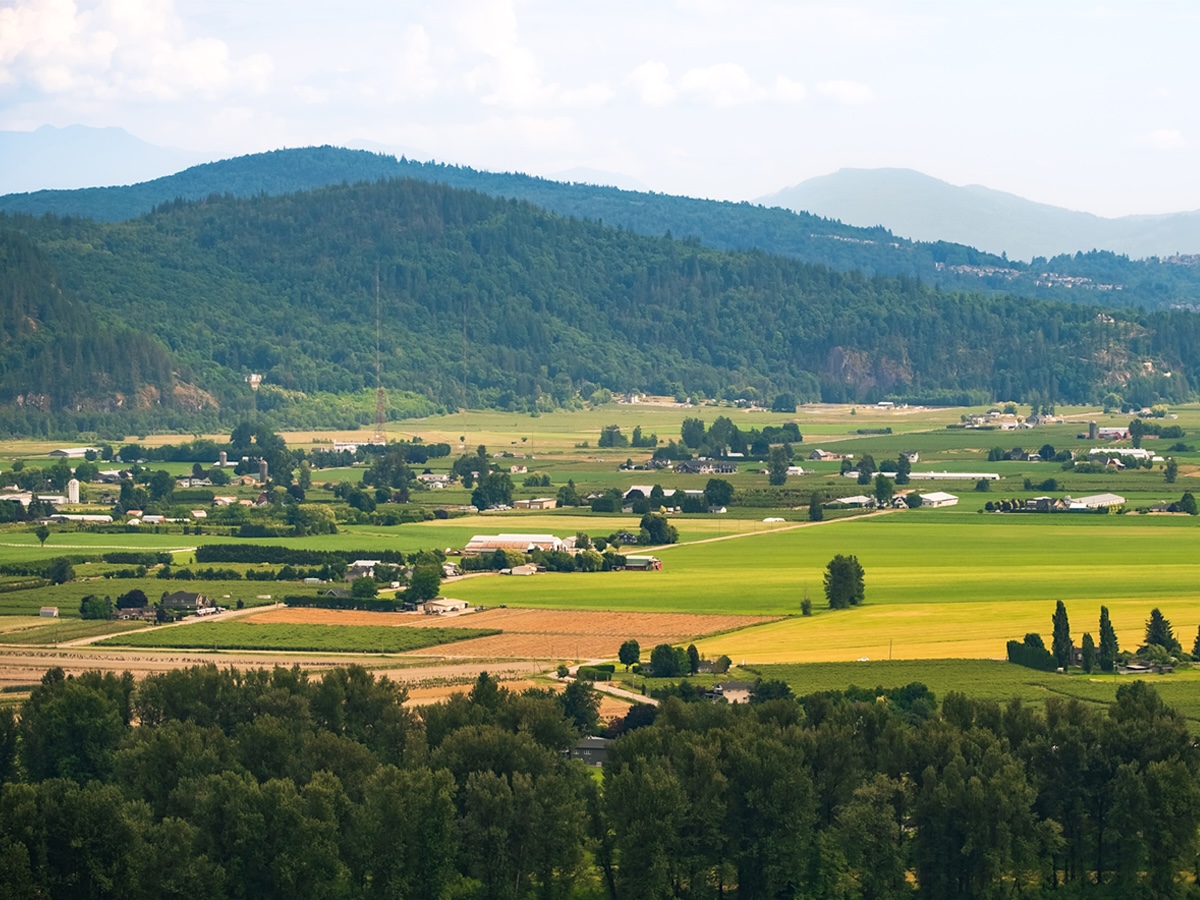
Former British Columbia NDP cabinet minister Joan Sawicki says the province’s current NDP government should shelve its proposal to increase food processing in the Agricultural Land Reserve, or ALR.
“On every level this is so blatantly negative for our farmers and farm communities,” said Sawicki, who served as Speaker and minister of environment, lands and parks in NDP governments in the 1990s. “I cannot see any benefit whatsoever to agriculture. In fact, I see very serious negative impacts.”
The government’s consultation period on proposed changes opened in midsummer and closes Sept. 18.
Under current rules, food processing is allowed on farms anywhere in the ALR as long as 50 per cent of what’s being processed is grown or raised on that farm or on farms it is in a member association with. Current rules don’t tie processing requirements to soil quality, which is classed from a high of 1 down to a low of 7.
The proposed changes, outlined in a four-page discussion paper, would alter the rules about food processing on Class 5 to 7 land.
Under new rules the minimum amount of local product that would need to be processed at a new facility on those lands would be reduced from 50 per cent to just five per cent. That local percentage could be grown or raised anywhere in the province, not just on the farm hosting the facility, and the rest could come from anywhere in the world.
Processing would also be allowed on Class 4 land if that land is already serviced — meaning there is road access, electricity, municipal water and sewage — at the time the rule is implemented.
The government is not proposing changing the rules for the three highest classes of farmland, where food processing is allowed as long as it meets the 50 per cent rule.
To build a new food-processing facility on the lower classes of land, a proponent would need to have the soil assessed by a registered professional agrologist to make sure it meets the criteria. They would also need to meet the requirements for permits from local governments, the Ministry of Water, Land and Resource Stewardship and the Ministry of Environment and Parks.
The government’s discussion paper says the proposal’s aim is to “encourage more food processing in the ALR, while protecting and strengthening the ALR’s primary purpose of agricultural production.”
“It ties food processing in the ALR back to farming in the ALR. When done right, processing does not compete with farming, it creates new markets for farmers,” the paper says.
The proposal would make as much as 1,000 hectares in the Lower Mainland and Fraser Valley available for food-processing development, the discussion paper says. About 90 per cent of the ALR in those areas would remain protected due to the soil classification condition.
The government would also cap the amount of land included under the proposal at 0.25 per cent of the private land in the ALR.
There are 4.5 million hectares of land in the ALR, just under five per cent of the province.
‘A fundamental contradiction’ of the ALR
“This is not tinkering, in my mind,” said Sawicki, who before becoming an MLA was an early employee of the Agricultural Land Commission when the province created it some 50 years ago. “It’s a fundamental contradiction of the principles that are the foundation of the ALR, and I do believe it’s a betrayal of B.C. farmers who rely on a scarce but secure land base.”
There has always been pressure from developers, speculators and businesses to get access to cheap farmland, she said. “That was the whole point of the ALR in the first place, because farmland and farmers just couldn’t withstand the pressures from so-called higher uses, which means more expensive uses.”
Agriculture and Food Minister Lana Popham was unavailable for an interview. A spokesperson said the minister is focused on hearing directly from British Columbians and stakeholders and the minister will be available after the engagement process ends and the ministry has analyzed what it has heard.
Business interests pushed for at least a year to have the 50 per cent rule scrapped, and representatives of the Greater Vancouver Board of Trade and Abbotsford Chamber of Commerce applauded the launch of the engagement process.
Nobody from the BC Agriculture Council was available for an interview. A spokesperson said the organization has been engaging with its members and board as it continues to work on the response it will submit to the province.
The Union of BC Municipalities, or UBCM, said in a post on its website that to participate in the consultation process, it made a submission focused on the need for local regulation and support for enforcement.
UBCM said its understanding is that local governments could not prohibit food processing that meets the provincial government’s requirements but that they would be able to use zoning and other land-use planning tools to regulate it.
“As there could be instances where combination of adjacent uses, the capacity of existing infrastructure and other local factors would make a parcel unsuitable for food processing,” it said, “UBCM is asking that the Ministry reconsider the ability of local governments to prohibit this use of ALR land.”
UBCM also wants the ministry to recognize that the proposal would increase the need for enforcement and to consider the impact it will have on the finances and capacity of local governments and the Agricultural Land Commission.
Big business in BC
Food processing, which includes “storing, packing, preparing and processing of farm products,” is already big business in the province.
“By sales, food processing is the second largest manufacturing sector in B.C.,” the government’s discussion paper says. “It generated an estimated $14.3 billion in 2024, contributing $3 billion to GDP. The food and beverage manufacturing sector is also a driver of employment in the province, creating 37,430 jobs in 2024.”
Allowing more food processing will support farming, it argues.
To Sawicki, the government’s argument that the changes will protect and strengthen the ALR and create new markets for farmers makes little sense.
The existing rules already allow food processing in the ALR, she said, but with an application to the Agricultural Land Commission and consideration of whether there’s actually a benefit to local producers.
“The Agricultural Land Commission can then assess, is this a legitimate food-processing use, will it use the produce that our farmers are producing, and can we put enough checks and balances or conditions on this non-farm use to make sure it doesn’t have negative impact on adjacent agriculture?” she said. “That’s all legitimate and the Agricultural Land Commission has been doing that for decades.”
When the government introduced the 50 per cent rule in 2002, it was already a compromise, Sawicki said. Before that, food processing was allowed in the ALR only if it was to process local products grown or raised on that farm.
Reducing and weakening the requirements for local content won’t help local farmers or strengthen B.C.’s food security at a time when it’s facing tariff threats from the United States, she said.
“How does allowing food processors to import 95 per cent of their raw product from outside B.C., how does that help reduce our dependence on imported food and how does that help our own farmers market their products? I mean, it’s ludicrous in my mind,” she said.
“The related question in my mind is if there are food-processing proponents saying to government they won’t locate here if they’re required to buy local produce, grown by our own farmers, why would we want them?”
The consultation period was initially set to close Sept. 3, but the government extended it two weeks to Sept. 18.
The time to make submissions is still too short at a time of year when farmers are busy, Sawicki said.
The necessity of food processing
It’s true that there’s a need for businesses to be able to process food from B.C. farms, but it’s a question of where it happens, Sawicki said.
“There’s a really important direct connection between food production and food processing, but it doesn’t have to happen on farmland, and that’s the big issue.”
Food processing should instead happen outside the ALR, added Sawicki, in industrial zones where businesses would have much more flexibility if for any reason what they are doing needs to change in the future.
The government’s own food-processing figures suggest the sector is already thriving under the current rules and isn’t hindered by the Agricultural Land Commission’s involvement, she said. “In fact, food processing has increased in recent years.”
Ultimately, allowing more food processing on farmland will make it more difficult for farmers to afford to farm, said Sawicki.
“As soon as you allow industrial food-processing uses in the ALR, that’s going to dramatically increase land prices in the ALR,” she said. “We’re making it more difficult for B.C. farmers to grow the food that feeds us.”
The government argues the proposal will affect only a small part of the ALR, but the impact will be concentrated in the Okanagan and Lower Mainland where there’s already the most pressure on farmland, she said.
“Just when we need to protect our farmland the most in order to increase our food security because of trade wars etc., then government comes up with a proposal that totally destroys the system that was put in place exactly for this situation,” she said. “That’s the irony of it in my mind.” ![[Tyee]](/design-article.thetyee.ca/ui/img/yellowblob.png)
Read more: Food, BC Politics








Tyee Commenting Guidelines
Please note that email notifications for replies are not currently working due to a software issue which may be resolved in a future update.
Comments that violate guidelines risk being deleted, and violations may result in a temporary or permanent user ban. Maintain the spirit of good conversation to stay in the discussion and be patient with moderators. Comments are reviewed regularly but not in real time.
Do:
Do not: