

 SHARE:
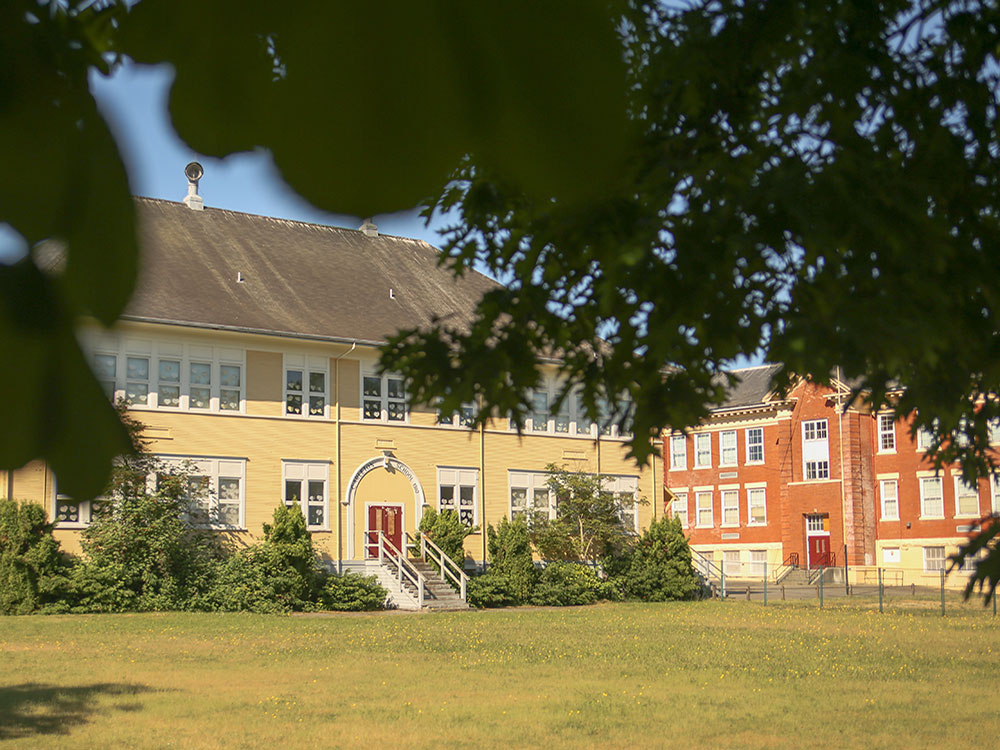
A parent-organized election forum that was supposed to feature nine candidates running for five MLA seats in Burnaby on Oct. 1 shined a small but telling spotlight on how the parties view education priorities this election.
At least, how the BC NDP and the BC Greens view education priorities. None of the invited BC Conservative candidates showed up.
Despite confirming that they would attend the forum organized by the Burnaby District Parent Advisory Council, all four Conservative candidates — Deepak Suri, Dharam Kajal, Han Lee and Michael Wu — cancelled within nine days of the event, and Suri cancelled less than two hours before the forum, according to Harinder Parmar, chair of the Burnaby DPAC.
“That’s a bit of a sad reflection on what [their] commitment is,” Parmar said.
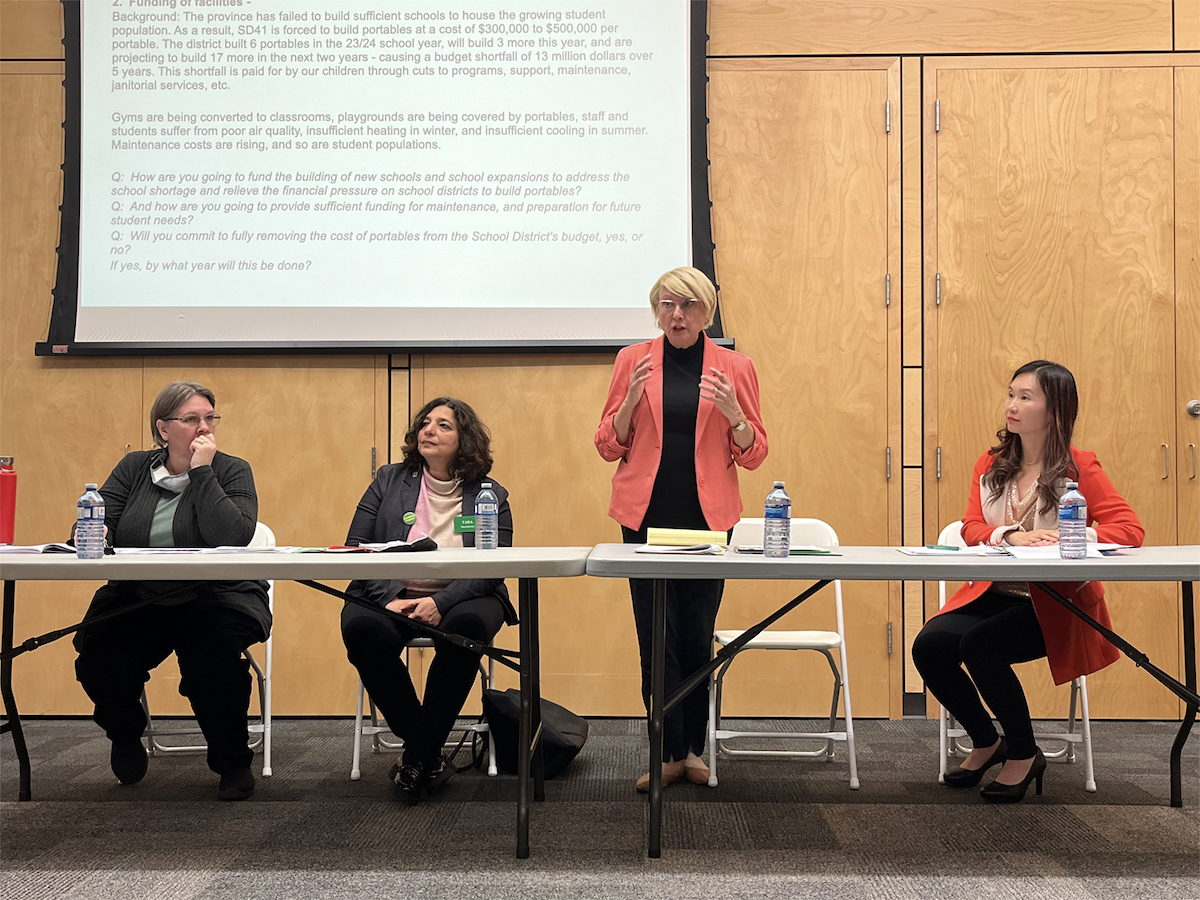
Two NDP candidates, incumbents Anne Kang and Janet Routledge, joined the two invited BC Green Party candidates, Carrie McLaren and Tara Shushtarian. Kang and Routledge represent two of five NDP candidates invited.
The four political hopefuls expressed a passion for education before a crowd of nearly 40 community members attending the forum at Burnaby Central Secondary.
This passion is reflected in their parties’ election platforms — and the BC Conservatives’ late-in-the-game and detail-light platform —which we get into below.
The NDP’s platform
If they form government for another four years, the NDP pledge to build more than 20,000 new student spaces in 58 education capital projects.
But asked at the Burnaby forum whether the party would change the process for new school builds to ensure they are not over capacity when they open, NDP incumbent Kang, who is on a leave from the district as a teacher, was vague.
“I am committed to having this hard conversation to do what we can to shift the dialogue,” she said. “Because it has been too long where we have not been able to shift this dialogue.”
The only mention of portable classrooms in the NDP platform is in reference to a John Rustad suggestion of increasing classroom sizes as a way to decrease portable usage.
Portable classrooms are used in many districts in the province, most notably Surrey. They do not have washrooms, are often inaccessible for students with physical disabilities and have poor ventilation.
A CBC investigation last year found Burnaby had 132 portable classrooms, the cost of which came out of the school district’s operating budget.
At the Burnaby forum, NDP incumbent Routledge would not commit to a deadline for removing the cost of portable classrooms from district budgets.
“What I want to remove is the need for portables,” said Routledge, who added she only recently learned districts were paying for portables with their operating budgets.
The NDP platform does mention expanding free school meal programs, though it’s unclear if this is what was already announced in 2023 or represents further program growth.
The platform includes affordable before- and after-school care for kids up to age 12. But instead of promising to “work towards providing universal access” as they did in their 2020 platform, they now say they’ll bring such programs to all 60 public school districts.
School buses — for districts that have them — would be transitioned to an entirely electric fleet. BC Hydro rebates on solar panels for schools would continue, too.
Regarding student mental health, the NDP pledge every public school in B.C. will have access to a school counsellor. Currently the counsellor-to-student ratio in B.C. is one counsellor for every 693 students.
They also promise an education assistant for every classroom in kindergarten to Grade 3, as well as before- and after-school care programs.
An NDP government would work with teachers to identify struggling students who may need additional learning supports, while expanding those supports and interventions, including but not limited to previously promised supports for dyslexic students.
Schools, the platform says, will see their drug use prevention training “strengthened” in order to reduce levels of addiction in the province and increase the chances of kids “making good choices to protect themselves and their friends.”
Between 2019 and 2023, 126 people under 19 died in the ongoing toxic drug crisis in B.C.
In an emailed statement to The Tyee before the writ dropped, an Education Ministry spokesperson said charter schools, a type of public-private hybrid school popular in the United States, are “not contemplated within the School Act.”
The only charter schools in Canada are in Alberta, which removed a cap on the number of charter schools allowed in the province under then-premier Jason Kenney in 2019.
While independent school operating funding is required under the provincial Independent School Act, the ministry spokesperson wrote in their emailed statement, it comprised less than six per cent of the ministry’s annual budget last year. The ministry does not provide capital funding to independent schools.
The NDP pledged to hire more teachers to end the ongoing educator shortage, but didn’t cite numbers or set a deadline. They did promise to fast-track teacher certification for uncertified educators already substituting in schools, and to provide unnamed incentives to attract teachers to work in “high need areas.”
Other than the BC NDP’s platform mentioning seismic upgrading in reference to work and $4 billion in funding already underway, seismic upgrading of the 245 remaining schools without upgrading plans is not mentioned in the platform.
The costing at the end of their platform is broken down by initiatives, not by ministry. Education is represented under a section called “Support for Students, Teachers and Staff” that would cost an additional $98 million in 2025-26 and $71 million in 2026-27.
On the $9-billion deferred maintenance backlog depleting school infrastructure and crippling district budgets provincewide? Crickets.
The BC Green Party’s platform
The BC Greens staked their position on education with a September press release promising that every student would have access to a psychologist, counsellor and social worker at school; to create a universal school food program; to provide every middle and secondary school student with a laptop; and to create a digital literacy secretariat.
Their full platform, which would cost $1.2 billion for education by their third year in power, includes a promise to improve drug education for kids and youth, specifying it must be “evidence-based.”
The Greens pledge to increase the number of teachers, education assistants and mental health professionals, though numbers are not provided. This includes committing more funding for school psychologists, counsellors and social workers, while shrinking the student-to-counsellor ratio to an unspecified number.
The Greens say they’ll “modernize” operational funding for schools — no details on what that entails — as well as increase existing grants to school districts, to ensure funds meet education needs.
They promise to reform facilities management, i.e., custodian, building repair and groundskeeper work, to ensure a consistent level of safety, functionality and climate resilience among existing schools. All schools will be outfitted with HEPA air filters, a process begun in response to the COVID-19 pandemic.
For new school buildings, the Greens propose working with other ministries and the construction industry to design universal school building templates, updated every decade for climate resilience, to shorten the building period.
Community schools, specifically those that fulfil broader community needs beyond education, would receive increased funding under a BC Green government.
For neurodivergent students and students with disabilities, the BC Greens want to create provincewide education inclusion policies to ensure no kids are forced to stay home. They would also continue individualized funding for kids with autism.
Funding for early intervention and diagnoses, regulation tools for students, accessible recreation programs and outdoor programs for all is promised, too.
The BC Greens would also expand disability inclusion and awareness in all levels of schooling, creating safer environments for impacted kids and drawing attention to ableism and “its harmful effects.”
A BC Green government would ensure non-profits that work with schools, such as ArtStarts and Take a Hike, would see long-term and stable government funding. They would also make sure every district has the funds to ensure students have accessible recreation programs, as well as invest more in outdoor education.
The existing school food program would become universally available, meet nutritional guidelines, procure from local producers and “promote sustainable food practices” by partnering with B.C. farms and community organizations to educate students about healthy eating.
Speaking of elections, a BC Green government would facilitate the introduction of civics and voting education in the B.C. curriculum, coinciding with lowering the voting age to 16.
The Greens promise more money to expand language education, including Indigenous languages, and say educators would be better equipped to teach students about critical thinking topics, including but not limited to the Holocaust, the Nakba, South African apartheid and the impacts of colonization. They would also develop digital literacy guides for students.
Finally, the BC Greens included their support of expanding sexual orientation and gender identity resources in schools and supports for LGBTQ2S+ students by creating “inclusive school environments.”
BC Green Party Leader Sonia Furstenau told The Tyee, after a similar education forum held by the BC School Trustees Association last spring, that she would continue funding independent schools.
“The way to address this is to properly fund public education,” said Furstenau, a former teacher in B.C. “Make public education so appealing and so effective that it makes independent and private education obsolete.”
The Tyee reached out by email to ask her party’s position on charter schools but did not receive a response.
Where the NDP platform mentions seismic upgrading only in reference to work already happening, the BC Green platform doesn’t mention it at all.
The BC Conservatives’ platform
Normally in a provincial election, a major party like the BC Conservatives, who have been giving the BC NDP a run for their money in opinion polls, would release a fully costed-out platform before the televised debate.
That didn’t happen this time. Instead the Conservatives waited another five days — after advance voting polls had opened and broken provincial voter turnout records — before releasing their education platform, which they’re calling a “Learning-First Education” plan, via emailed press release on Oct. 13. Twice.
The initial platform email included a subsection called “Safe Classrooms, Free from Ideology,” which called for eliminating educational material that “instills guilt based on ethnicity, nationality or religion.”
Three hours later the party sent an updated version of the platform that changed “Safe Classrooms, Free from Ideology” to read “Classrooms for Learning.” The new version removed mention of guilt, instead saying the Conservatives would “uplift all kids by ensuring the ideological neutrality of classroom materials, and that kids are made to feel proud about who they are.”
In June, Rustad told the Globe and Mail he planned to convene a committee to review all literature and textbooks used in public schools to ensure they’re appropriate for children. This has been viewed as a call to ban certain books from schools.
You can see all the differences between the two versions of the Conservatives’ platform, including removing references to “empowering” teachers and school administrators to “maintain discipline in classrooms and ensure disruptive behaviour is addressed,” here.
To get a sense of what the Conservatives would plan for teachers and students in B.C., we’ve combined platform pledges from the party’s 11th-hour platform released on Oct. 15 with previous press releases and the emailed backgrounder, as well as other education priority statements party leader John Rustad has made.
Overall the party’s pledges are estimated to cost an additional $60 million to the existing school budget between the 2025-26 and 2026-27 fiscal years.
On the ideology-free note, the Conservatives affirmed their long-standing promise to remove SOGI 123, an optional, government-approved set of age-appropriate education resources and lesson plans that discuss sexual orientations and gender identities with an eye to making schools a more welcoming place for LGBTQ2S+ students.
The updated version of their platform removes an initial reference to SOGI 123 as a “disaster” that “promotes ideas like child transition to second graders.”
“Child transition” is likely a reference to gender-affirming medical care for trans youth. There is no stated age limit on the Trans Care BC website for hormone treatment and top surgery, but a CBC report on trans care for youth across Canada notes both are typically for older teenagers and are approved only after extensive assessments from medical health professionals.
Lower surgery is limited to adults 19 and over in B.C.
Youth who have begun puberty can receive puberty blockers, which pause puberty and are reversible.
The Conservatives would replace SOGI 123 with “zero-tolerance anti-bullying programs” that would protect all students. They would “respect parental rights” and “protect kids” by ensuring parents are informed of any “suicidal ideations” expressed by their child, too. They also promise “improved access to mental health professionals” in schools.
A “backgrounder” released shortly after the second version of the education platform was issued adds they would also remove any and all “lesson plans, seminars, policy guides, curriculum elements, and practices stemming from SOGI 123.”
Rustad has been widely criticized for comparing SOGI 123 to the residential school system.
Over 150,000 Indigenous children were forcibly removed from their parents and sent to these institutions in Canada, where they were beaten for using their language, sexually assaulted, malnourished and subjected to harsh and unsanitary living conditions.
Thousands of children died at residential schools, the last of which closed in the mid-1990s.
Lindsay Shepherd, a Conservative Party of BC board member, has declared she refuses to wear an orange shirt “because to do so would convey I am OK with being misled about the history of Canada, and that I am OK with various First Nations claiming they have found ‘unmarked graves of missing children’ without presenting reliable evidence.” *
A new research report from the Stigma and Resilience Among Vulnerable Youth Centre at the University of British Columbia links SOGI 123 resources to a significant reduction in bullying experienced by queer, lesbian, bisexual, gay and heterosexual students.
Trans and gender-fluid youth were not included because the survey changed their gender identity question in 2018.
Using results from the 482 schools that participated in the 2013, 2018 and 2023 BC Adolescent Health Survey, the report found a decrease in bullying and discrimination based on sexual orientation for all students since SOGI 123 was introduced.
B.C. also already has Erase — Expect Respect and a Safe Education — which includes sections on bullying in the form of gender-based violence, homophobia and transphobia, and racism.
It’s unclear how Rustad’s anti-bullying program would differ.
The platform promises to restore the letter-grade report card for grades 4 through 9, referencing a change to report cards made under the NDP, cementing a pilot program started under the BC United party that Rustad was a member of until 2022.
Under a commitment to ensuring all students have access to a quality education, the Conservatives promise “parental choice” in their child’s education. The original platform email spelled this out as ensuring independent, public and home-schooled children have “equal support.”
The Conservatives pledge to work with municipal governments to fast-track approvals for new independent schools, while ensuring “adequate land availability and zoning flexibility for all types of schools.” Some of those new independent schools will specifically target kids with autism spectrum disorder and other “special needs.”
Their platform says the party would “listen to parents” to ensure all barriers to home-schooling are removed and support is “enhanced.” They would also reverse cuts to distributed learning programs.
As mentioned above, last February Rustad suggested increasing class sizes in B.C. schools to cut down on the number of portable classrooms. He didn’t see it as a long-term plan, adding that a BC Conservative government would speed up school construction.
The Oct. 13 platform pledges to “revamp” the Education Ministry’s capital budget process to ensure schools are built faster and to meet the needs of current student populations.
The party promised to “phase out” portables and instead use modular classrooms, which some districts have already begun using under the NDP.
The Conservatives also pledged to hire more support workers to cut down on the wait times for “special needs” assessments — which is misleading, as these assessments can be conducted only by psychologists.
The platform also accuses Eby of cutting autism supports to families as part of a “radical plan.” But Eby paused a Children and Family Development Ministry plan to reform autism funding in 2022, thus restoring autism funding for families. The plan has not been revisited since.
The Conservatives also pledge to reinstate all cancelled school liaison officer programs by creating a provincial program.
“We will restore discipline,” Rustad is quoted as saying in the education platform release. The backgrounder adds that a Conservative government would work with school districts to “review and update standards for administrative conduct regarding discipline.”
The official platform says the Conservatives would implement the Truth and Reconciliation Commission Calls to Action related to education. But according to the B.C. government, these were already implemented between 2012 and 2018.
Instead of “predominantly focusing on injustices,” the platform says, the Conservatives would ensure the education system recognized the province’s “successes.”
The Conservatives also promised to hold an “immediate inquiry into the BC Teachers’ Federation’s role in pushing biased materials that promote one-sided views on the Israel-Palestine conflict,” fund private security outside of Jewish institutions including schools, and hire a “Special Advisor to monitor and combat antisemitism.”
There are no references to seismic upgrading in the Oct. 13 released platform or backgrounder, or in the full platform released on Oct. 15.
The Tyee tried to clarify Rustad’s position on independent school funding and whether the Conservatives planned to introduce charter schools in B.C. directly, on several occasions. We were told to watch out for the party’s education platform. The platform doesn’t mention independent school funding amounts or the Conservatives’ position on charter schools.
* Story updated on Oct. 16 at 9:52 a.m. to directly quote Lindsay Shepherd.
Want to get even more of The Tyee’s election coverage? Sign up today for The Run. It’s a free B.C. election newsletter full of smart voices unpacking key issues, fact-checking politicians and exposing disinformation to clarifying light. Go beyond the horse-race headlines and subscribe now. ![[Tyee]](/design-article.thetyee.ca/ui/img/yellowblob.png)
Read more: Education, BC Election 2024, BC Politics




Tyee Commenting Guidelines
Comments that violate guidelines risk being deleted, and violations may result in a temporary or permanent user ban. Maintain the spirit of good conversation to stay in the discussion and be patient with moderators. Comments are reviewed regularly but not in real time.
Do:
Do not: