


 SHARE:
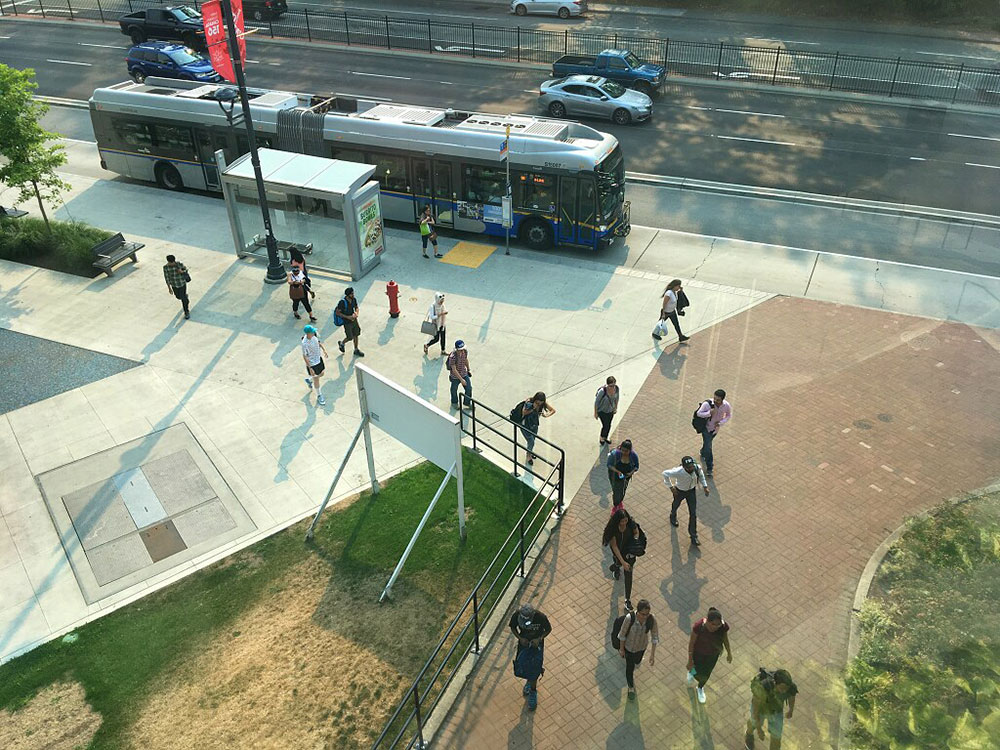
As B.C. voters prepare for both the municipal elections on Oct. 17 and provincial elections on Oct. 24, the recent past offers useful context for what we’re facing right now.
The 2024 U.S. election, for example, was notable for a major lurch towards right-wing politics.
But here’s a quiet yet significant truth that didn’t make national headlines, and which sticks with me today as the executive director of Movement, a group fighting for better public transit in our region.
On the same day that President Donald Trump was elected for a second term in office, an overwhelming majority of Nashville residents voted to boost public transit funding by US$3 billion through a 0.5 per cent sales tax.
It may sound surprising that red-state voters in Tennessee wanted to increase their own taxes to pay for public transit. But 87 per cent of the transit taxes that were on the U.S. ballot that year were OK’d by voters.
The 2024 situation in Nashville reflects an international, enduring truth: transit funding is really, really popular.
That same year, a survey of Canadians found that 81 per cent of respondents supported an increase in transit funding.
The survey also demonstrated that public transit was the single most popular policy that could also be considered a climate measure.
Those running for office should take note!
But for whatever reason, voters’ love for public transit hasn’t yet been reflected in the policy announcements of B.C.’s two largest provincial parties.
Why are the big parties stuck in neutral?
Early in the campaign period, on Sept. 27, the Conservative Party of BC dropped a press release declaring that it would not introduce any new taxes.
Then, on Oct. 2, the BC NDP announced it would rule out a vehicle levy as a potential public transit funding tool, despite it having a lot of merits as an option.
A vehicle levy could be designed to vary depending on the value of a car. For example, a 20-year-old Toyota Corolla’s vehicle levy could cost its owner only $30 a year, while a brand new Maserati could cost $3,000 per year. (In fact, that’s exactly what Seattle does, as it continues its $54-billion transit expansion rollout.)
A vehicle levy is also remarkably fair, as the benefit of transit investment largely accrues to motorists through reduced roadway congestion. TransLink also uses some of that money to maintain 675 kilometres of roads.
Motorists historically covered 35 per cent of TransLink’s operating budget through a gas tax.
Today, that’s down to 13 per cent, due to a remarkable reduction in gasoline sales that is only going to accelerate.
What options does that leave us? Last year, Movement hosted a competition cheekily called “Transit’s Next Top Funding Model” where we heard pitches on how the next round of transit expansion should be funded.
Vehicle levy was the audience winner, while the panel of judges chose a sales tax, which would be exempted from most essential items, just like PST.
Sales tax is relied upon as a transit funding tool across the continent, and one excellent feature of that tool is that it is paid by tourists.
Currently, our sales taxes are currently the third lowest in Canada, giving us room to, say, bring it to parity with Ontario.
The cost of ruling out road tolls
Back to the Oct. 2 statement from the BC NDP. In the same press release where they said no to a vehicle levy, the BC NDP also ruled out road tolls, which again puts us as an outlier on the continent.
Ninety per cent of North Americans live in a state or province that has road pricing. New York City recently introduced a de-congestion charge that actually boosted consumer spending in the affected area.
What does it matter if transit funding stays static? It turns out that without a new transit funding tool, we could end up with devastating transit cuts.
Metro Vancouver was in this exact situation last spring, when a 50 per cent service cut was contemplated.
The maps TransLink published of the potential cuts were devastating.
One of the scenarios proposed eliminating every single bus route in Langley, White Rock, South Delta, Port Coquitlam, Maple Ridge, Pitt Meadows and much of the North Shore.
The situation was resolved when the province and mayors each contributed funds to fill the gap and actually boost service by five per cent.
The province’s $100-million per year contribution was meant to be temporary and would be replaced by a new revenue tool in 2028 that would finally ensure they aren’t lurching from crisis to crisis.
BC risks transit service cuts
At this point, we’re all presuming that the vehicle levy was that tool, and if it’s out of the equation, is there a risk that we could see transit service cuts?
In 2024’s provincial election, both front-runners promised they wouldn’t let transit cuts happen.
So far this campaign, we’ve seen such a promise only from the BC NDP.
As a transit advocate, I’d like to set a higher standard for transit funding than simply preventing Armageddon.
Seattle has a $54-billion long-term transit expansion plan that has multiple new lines (though cost overruns have forced them to make some tough trade-offs).
Ontario’s rate of transit investment is mind-boggling, with $70 billion planned over the next 10 years.
TransLink has an ambitious plan on the books to actually double the amount of transit service on the road, but it remains unfunded. A doubling of transit service may seem unrealistic, but keep in mind that roadway congestion is not linear.
As a street approaches its maximum capacity, a five per cent increase in traffic volumes can cause a 30 per cent increase in delay.
As our region continues to grow, but our major arterials such as Hastings and Granville remain the same width, transit is the only way to stave off gridlock — not to mention all the climate, equity and health benefits that higher transit usage would bring.
With more funding, the province could enable a number of impactful investments in public transit that could change the health of our region for the better. Those include a low-income transit pass, a commitment to building a SkyTrain to the University of British Columbia, an intercity bus network linking the province’s regions together, and simply putting more buses on the road.
Consider the level of public transit investment in South Korea or Switzerland an inspiration. Realistically, I would be thrilled if we could at least match the investment underway in Seattle or Ontario.
This provincial election, my transit-loving colleagues and I would like to see candidates put forward a vision of how much better transit can be in B.C. ![[Tyee]](/design-article.thetyee.ca/ui/img/yellowblob.png)
Read more: Transportation, BC Election 2026









Tyee Commenting Guidelines
Please note that email notifications for replies are not currently working due to a software issue which may be resolved in a future update.
Comments that violate guidelines risk being deleted, and violations may result in a temporary or permanent user ban. Maintain the spirit of good conversation to stay in the discussion and be patient with moderators. Comments are reviewed regularly but not in real time.
Do:
Do not: