


 SHARE:
On July 23, I attended a midsummer virtual information session for First Nations hosted by the Major Projects Office regarding the proposed West Coast Oil Pipeline project. It was a jarring experience.
Passed by Parliament in June 2025, the Building Canada Act allowed the federal government to create the Major Projects Office, which would manage all the procedural aspects of answering whether a major project is in the “national interest.” If a project is determined to be in the national interest, it is guaranteed to move forward — no longer is the question a matter of if the project will go ahead, but how.
Despite the summer heat, the proceedings left a chill. The presentation was bureaucratic and rigid. We were reminded multiple times by the administrators that the question — whether or not the West Coast Oil Pipeline is in the national interest — is narrow, and we were cautioned to not get ahead of ourselves.
If the project is successfully listed under the Building Canada Act, the mechanisms, such as environmental assessments, through which our concerns — and the concerns of Canadians — would otherwise be raised will still exist. Those mechanisms just won’t have any power to determine the outcome.
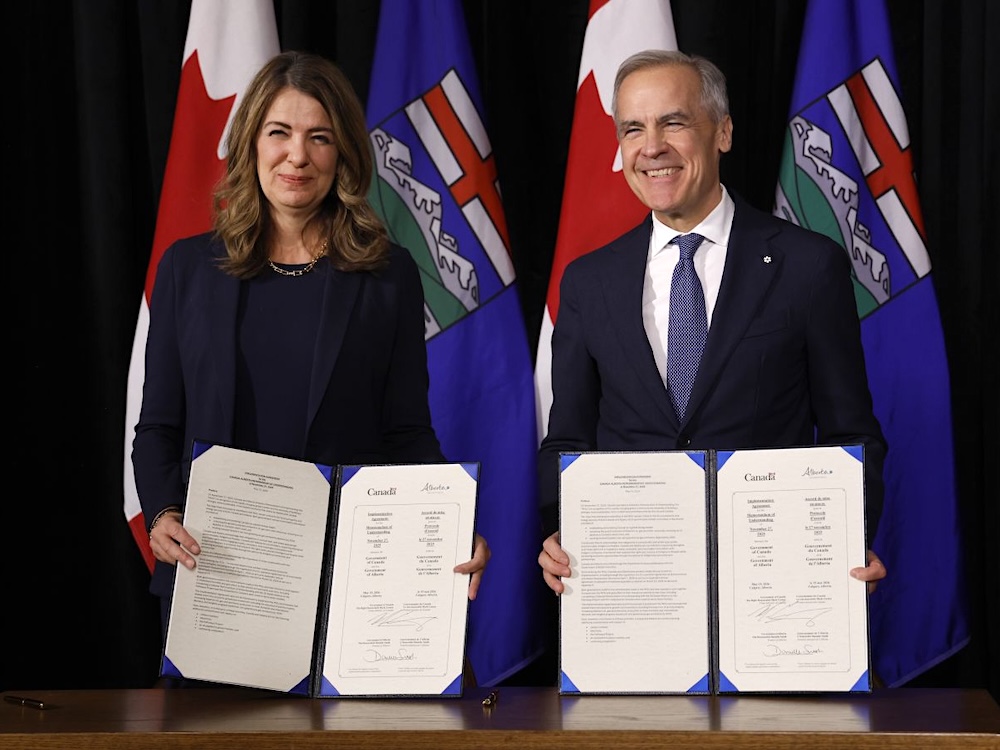
The process to build another pipeline west from Alberta started with a political declaration on Nov. 27, 2025. A bilateral memorandum of understanding between Canada and Alberta declared the intention to create an unnamed “Alberta bitumen pipeline” — now officially called the West Coast Oil Pipeline — to be in the national interest months before Alberta found a proponent, or determined a route.
That memorandum propelled us into a stampeding summer consultation, set against a manufactured deadline imposed by governments who know that summer is the worst time to meaningfully and respectfully engage First Nations.
This is not genuine consultative behaviour. It is a performance.
The Building Canada Act restructures the regulatory process for the projects listed as in the national interest.
Section 6(1) states: “Every determination and finding that has to be made and every opinion that has to be formed in order for an authorization to be granted in respect of a national interest project is deemed to be made or formed, as the case may be, in favour of permitting the project to be carried out in whole or in part.”
The “in favour” there is key.
The Major Projects Office stated it clearly in the information package attached to the July 10, 2026, letter to the First Nation I work for: “If a project is listed, the Building Canada Act specifies that all remaining federal authorizations necessary for the project to proceed will be granted. This is intended to shift the regulatory focus from ‘whether’ the project should proceed to ‘how’ it should proceed.”
They also acknowledge the extraordinary pace at which they are operating. They demanded a response regarding the West Coast Oil Pipeline, a project that has yet to be designed, before Aug. 26, 2026. Forty-seven days. After many First Nations communities pushed back on the original timeline, the Major Projects Office extended the deadline to Sept. 18, 2026, citing competing priorities and wildfire impacts in Alberta and British Columbia.
The information session made it obvious: the federal government has skilfully constructed a two-act bit of bureaucratic theatre to play out the story to its predestined conclusion. And the calendar they built to dispense with their obligation lands in August, when they know that First Nations leadership don’t meet in August, and many First Nations people are out harvesting.
In the meeting, the Major Projects Office laid out the government’s timeline. The self-imposed Sept. 1, 2027, deadline for a conditions report demands the minister list the project by Oct. 1, 2026. When that happens, and it most certainly will, there will be an 11-month sprint for Act 2 to design the project and develop the conditions by which it will proceed. A Major Projects Office representative remarked the time period “is shorter than anything we’ve ever seen.”
To determine if the pipeline is in the national interest, the Major Projects Office will consider if the project will: advance the interests of Indigenous Peoples; strengthen Canada’s autonomy, resilience and security; provide economic or other benefits to Canada; have a high likelihood of successful execution; and contribute to clean growth and to meeting Canada’s objectives with respect to climate change.
There is something missing from that list.
We know for sure that upholding the honour of the Crown is in the national interest. While the five factors may address pipeline policy, what is off the table is whether the process used to reach (or confirm) the decision is itself honourable — that is, lawful and legitimate. A process design that pre-decides its outcome and then compresses the only formal input window in a month and half in the middle of summer fails the standard regardless of what it concludes.
The honour of the Crown requires respectful dealings, not self-imposed urgency in a condensed consultative process that demands answers from First Nations based on completely absent design and technical detail.
Crown-Indigenous relations aside, the same mechanism that pre-empted consultation with First Nations pre-empts every other check in the system. First Nations are just the first ones finding that out. What that means for anyone else in the path of a “national interest” project is a separate piece.
Prime Minister Mark Carney’s government is mobilizing with astounding efficiency. The urgency is framed as a response to a rapidly shifting geopolitical landscape, a defence of Canadian sovereignty and a message to investors that Canada is open for business.
But none of these factors requires a summer deadline, especially when government knows exactly the cost of that timing to First Nations’ ability to engage in the process effectively.
The prime minister means business. However, we are still a democracy. The federal government still has legal and constitutional obligations, and the Crown acting honourably in its relations with Indigenous Peoples is one of them. So far, that obligation is not being met. ![[Tyee]](/design-article.thetyee.ca/ui/img/yellowblob.png)
Read more: Indigenous, Energy, Alberta









Tyee Commenting Guidelines
Please note that email notifications for replies are not currently working due to a software issue which may be resolved in a future update.
Comments that violate guidelines risk being deleted, and violations may result in a temporary or permanent user ban. Maintain the spirit of good conversation to stay in the discussion and be patient with moderators. Comments are reviewed regularly but not in real time.
Do:
Do not: