


 SHARE:
Canada’s insurance industry is gathering today in Vancouver for its national insurance conference just as the B.C. provincial election campaigns kick off. This is fitting because skyrocketing home insurance rates should be an election issue.
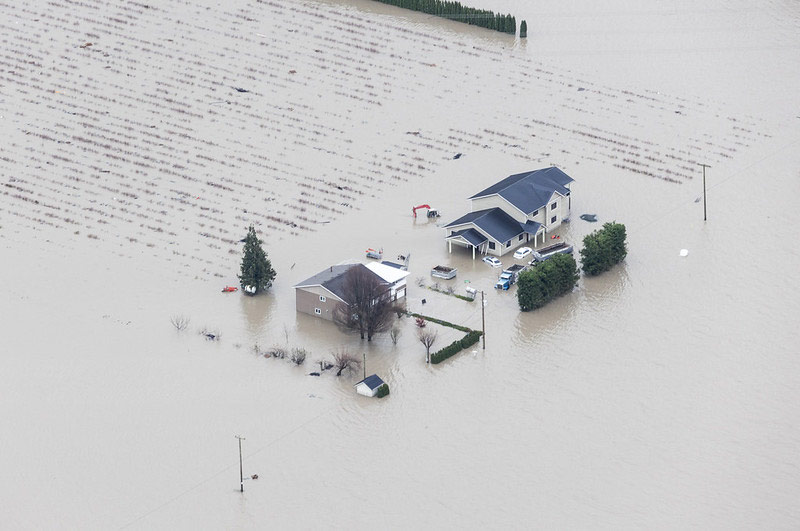
British Columbians know better than most how much destruction unprecedented fires and floods are causing to their property and their communities. These kinds of climate damage are showing up in home insurance bills, which jumped by 18 per cent in B.C. last year, the largest spike in the country.
This is causing strain on everybody’s wallets, not only when paying for insurance, but also when paying taxes, since governments are contributing more towards disaster relief and repairing damaged infrastructure.
Less well known is that the insurance industry is complicit in driving the cycle of increased damages and increased costs, and that, unlike with car insurance, the B.C. government has thus far failed to stop it.
By our calculations, Canada’s seven largest insurance companies invested more than $19.5 billion in fossil fuels in 2023. Moreover, these insurers also underwrite fossil fuel projects — Canada’s Fairfax appears on the top-10 list of the largest insurers of fossil fuels in the world.
The resulting climate damage is showing up in rising claims. In just four weeks this summer, natural catastrophes led to five times the average claims seen over the past 20 years. Weather-related insurance claims have surged by 93 per cent in the last decade.
2024 is the costliest year on record for weather-related disasters, such as with the Jasper wildfire, which caused $880 million in insured losses — the second most expensive in Alberta’s history. Or the Calgary hailstorm in August, which hit $2.8 billion in insured losses, ranking as Canada’s second most expensive disaster in history.
Insurance companies not only pass along these costs to consumers in the form of higher rates, but also keep hiking dividends to their shareholders. Last year, Intact raised its dividend by 10 per cent and Fairfax raised theirs by 50 per cent.
How other places rein in insurers
Insurance companies seem content to drive this damaging cycle until something breaks. Already, Canadians are turning to crowdfunding in order to pay insurance costs, but this can’t go on forever. Ultimately, we need to break the cycle, and regulators need to play their part.
In the U.S., states like California and Florida that experience a lot of damage from wildfires and hurricanes have "prior-approval" laws requiring insurers to seek permission before raising rates. This is done to protect consumers.
In fact, all U.S. states regulate home insurance rates more than any Canadian province. State regulators must approve rate hikes to ensure that they are not excessive, and that they don't unfairly burden consumers while allowing insurers to remain solvent.
Meanwhile in Canada, while auto insurance rates are regulated across all provinces, home insurance lags behind. This leaves B.C. homeowners vulnerable to an industry that is hiking premiums in response to the very climate risks they are helping to foster.
A critical step for BC
The BC Financial Services Authority oversees insurance and other financial institutions. Expanding its mandate to include home insurance rate approvals would be a critical step in protecting homeowners from escalating premiums, to place a check on practices like prioritizing shareholders over consumers.
And, when evaluating a proposed rate increase by an insurance company, the regulator should factor in the role of that company in driving the climate crisis — does it have a credible transition plan to reduce its facilitation of the fossil fuel industry via underwriting and investment? If not, it bears greater responsibility for the proposed price hike.
As the insurance industry kicks off its conference, B.C. election candidates also have a role to play in addressing this pressing issue. Voters deserve answers on how the next provincial government will ensure home insurance remains affordable, while holding insurers accountable for their role in exacerbating the climate crisis.
Want to get even more of The Tyee’s election coverage? Sign up today for The Run. It’s a free B.C. election newsletter full of smart voices unpacking key issues, fact-checking politicians and exposing disinformation to clarifying light. Go beyond the horse-race headlines and subscribe now. ![[Tyee]](/design-article.thetyee.ca/ui/img/yellowblob.png)
Read more: BC Election 2024, Housing, Environment










Tyee Commenting Guidelines
Comments that violate guidelines risk being deleted, and violations may result in a temporary or permanent user ban. Maintain the spirit of good conversation to stay in the discussion and be patient with moderators. Comments are reviewed regularly but not in real time.
Do:
Do not: