


 SHARE:
David Tywoniuk’s main focus in life is easy to identify.
Row after row of GM muscle cars line his property on the outskirts of Edmonton, from rusted-out Firebird bodies to fully restored Camaros, a collection accumulated throughout his 50-year obsession turned business of repairing, buying and selling F-body coupes.
But lately Tywoniuk has been concerned with a different kind of restoration.
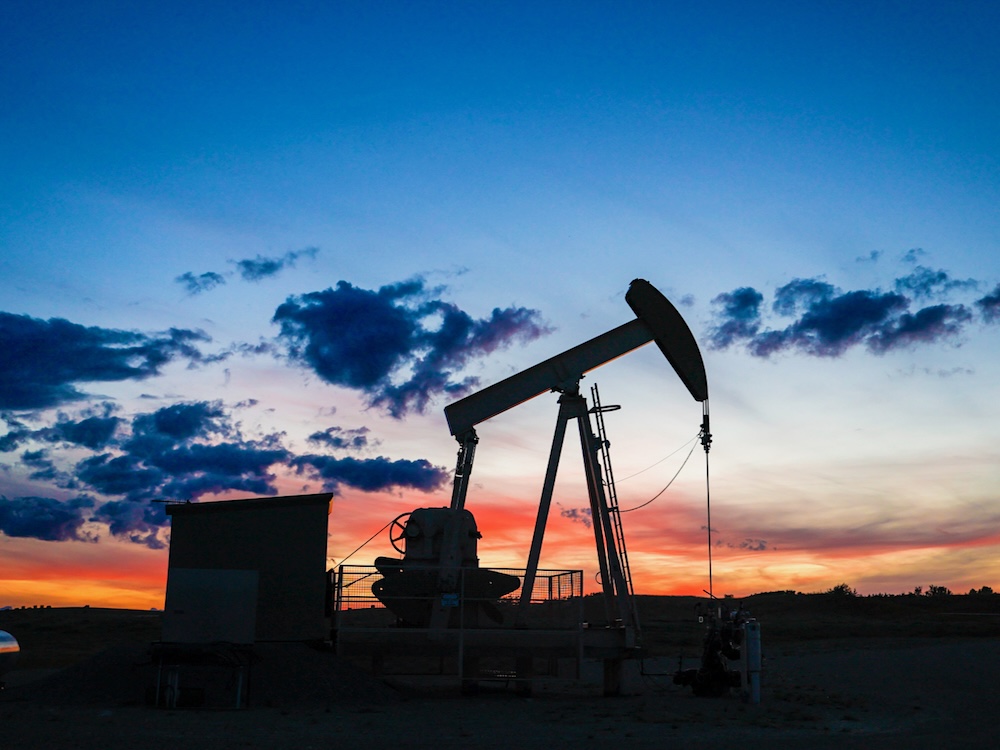
His nine-acre lot is also host to two derelict oil and gas well sites operated by MAGA Energy. Tywoniuk said he has spent years trying to chase down the company to recover missed lease payments and reclaim the contaminated land.
“We’re trying to get them to clean it up so we can have the property and sell it, because I can’t afford to own it. I mean, the land taxes are just out to lunch,” Tywoniuk said. “What we’re waiting on is a ground cleanup. They had ignored, covered, buried: it’s just not good.”
The two wells have changed hands half a dozen times throughout their decades-long life cycles. When MAGA Energy took over the well licences in 2017, both wells were listed as suspended by the province’s energy regulator, meaning they were inactive and not producing oil and gas. In July 2021, the licence statuses were changed to abandoned, and shortly after, the company stopped paying its lease with Tywoniuk.
In May 2025, Alberta’s Land and Property Rights Tribunal, or LPRT, ruled that Tywoniuk was owed compensation for three years’ worth of unpaid surface lease agreements and directed Alberta’s environment and protected areas minister to pay the $144,974 bill.
The quasi-judicial tribunal handles recovery of compensation claims brought by landowners for overdue oil and gas leases and has the power to order Alberta’s government to pay the landowners and take on the responsibility of recovering the debt from the company.
An investigation by the Investigative Journalism Foundation collected and analyzed more than 3,100 LPRT direction-to-pay orders issued in 2025, totalling almost $23 million. The data provides a previously unavailable look at the companies responsible for the mounting debt shouldered by Alberta taxpayers, including profitable firms that have continued to pay millions to shareholders.
The payment to Tywoniuk was the largest directed by the LPRT in 2025. He said he’s thankful to have finally got the money he was owed but added that it’s a bittersweet victory knowing MAGA’s debts are just being transferred to public coffers.
“I sure hope they're going to pay for that. Because I still am the guy paying taxes, and you sure don’t feel good about the government paying oil companies’ bills. That's how I feel,” he said.
‘Liability dumping’ becoming public debt
Since 2020, Alberta’s government has paid $163.7 million to landowners to cover missed lease payments from oil and gas companies, according to reports from the tribunal.
Between 2010 and 2024, Crown collections recouped less than one per cent of these funds from oil and gas companies, according to reporting from the Narwhal.
Around 480 oil and gas companies were named in payment orders issued by the tribunal in 2025. The 50 highest-owing companies are responsible for about 60 per cent of the total debt to landowners recorded last year, according to data from tribunal decisions.
AlphaBow Energy was responsible for the largest share of missed payments covered by Alberta’s government last year. Tribunal decisions included a total of $3.1 million to be paid for leases held solely by AlphaBow and another $721,000 for leases where multiple companies have shared interest or responsibility.
In cases where more than one company is named as a site operator in a tribunal compensation order, provincial legislation dictates the companies are jointly responsible for the amount owed.
AlphaBow was created through a series of transactions between 2016 and 2018 in which the Perpetual Energy group of companies transferred ownership of a large number of non-producing wells with reclamation and municipal tax liabilities to newly created companies. The Alberta Energy Regulator, or AER, wrote in a 2024 appeal decision that AlphaBow had experienced financial difficulties from the beginning, and concerns about its ability to handle liabilities related to its operations worsened with time.
In 2020, Alberta landowners filed a class-action lawsuit against AlphaBow over unpaid surface leases. The AER imposed an administrative sanction in 2022 restricting the company’s ability to acquire and transfer licences for oil and gas development, citing its inability to meet liability obligations and debts owed for municipal taxes and surface lease payments.
The company with the second-highest unpaid lease bill in 2025, Sequoia Resources Corp., was also a product of the same transactions that created AlphaBow. The Government of Alberta paid landowners $2.6 million last year on behalf of Sequoia.
Legal scholars at the University of Calgary and PwC, the trustee in Sequoia’s bankruptcy proceedings, have alleged that both AlphaBow and Sequoia are examples of “liability dumping,” where a company’s troubled assets are spun off to other corporations that can’t, or don’t intend to, cover the cost of maintaining or reclaiming well sites.
‘Is this what we're coming to?’
The province has taken steps to curb the offloading of non-producing wells. In November 2025, an Alberta court refused an application to split off the troubled wells of the Cleo Energy Corp. to facilitate the sale of its profitable assets, a process known as a reverse vesting order.
Cleo Energy filed for bankruptcy in late 2024, and payment of more than $1.5 million for surface leases was shifted to Alberta’s government the following year.
The appointed receiver in Cleo Energy’s bankruptcy case argued that if its liabilities weren’t moved to a new company during the sale, they would likely end up being transferred to the Orphan Well Association, the provincial entity that manages well reclamation.
In Cleo’s case, the judge said, there wasn’t enough evidence to support the proposed restructuring. The issue of orphan wells, however, is deeply enmeshed with the problem of unpaid surface leases.
Last year, the Alberta government paid more than $1.2 million to landowners for compensation owed by Long Run Exploration. The beleaguered oil and gas company was named as the sole operator in LPRT decisions totalling roughly $843,000.
In April, the AER announced that some 4,000 oil and gas wells belonging to Long Run Exploration had been turned over to the Orphan Well Association.
The province also paid more than $539,000 in missed lease payments owed by MAGA Energy in 2025. After years of financial and regulatory problems, the AER ordered MAGA Energy to shut down its operations in September. The company has until Sept. 30 to submit an abandonment plan to safely close its wells, pipelines and facilities, but critics have cast doubt on whether the order will effectively prevent the financial burden from being shifted to the public.
Phillip Meintzer, a spokesperson for the advocacy group Coalition for Responsible Energy, said part of the blame for the increasing industry debt being shouldered by taxpayers falls on Alberta’s energy regulator, which he accused of dragging its feet on enforcement and underfunding the Orphan Well Association.
A previous investigation by the IJF found that MAGA Energy and several other companies continued to be granted new well licences despite owing tens of thousands in tax arrears and lease payments.
In March, two landowners set up a barricade on a property in southwest Edmonton to block MAGA Energy from entering the site following three years of missed payments. One month later, the AER ordered the company to suspend its operations.
“Is this what we’re coming to?” Meintzer said. “It feels like it’s getting out of hand that disruption is the only language that’s getting across to the regulator.”
Alberta’s orphan well fund is, in theory, a backstop to protect taxpayers by covering reclamation costs for bankrupt companies, he said.
“The problem is just that our regulator chooses to set that industry levy far too low,” he said. “And it’s not just about cleanup either. It would reduce the burden on ordinary taxpayers if the orphan fund was properly capitalized, because we pay landowners on behalf of delinquent companies until those sites are fully reclaimed.”
The Orphan Well Association is funded through an industry levy, the amount of which is recommended by the AER to Alberta’s government each year. In 2026-27, that levy is set at $154.56 million, while the estimated total cost of cleaning up abandoned wells is $1.66 billion.
Delinquency cost ‘borne by Albertan taxpayers’
A 2026 report from clean-energy think tank the Pembina Institute noted that because there are no regulated timelines for closing unused wells in Alberta, operators frequently let wells sit idle for years to postpone paying for closure. Many put off cleanup until they reach bankruptcy, at which point their inactive wells become the responsibility of the Orphan Well Association.
These bankruptcies are “frequently foreseeable,” the report’s author Amanda Bryant wrote, and land rent payments made by Alberta on behalf of delinquent companies are one warning sign of financial distress. If oil prices drop, “more wells may become financially unviable, increasing the likelihood that the liabilities borne by Albertan taxpayers will continue to grow.”
“Every dollar of public money spent to cover the unmet financial obligations of the oil and gas industry is a dollar not spent on essential public services such as education and health care,” Bryant wrote.
To safeguard against companies gaming the system, the Pembina Institute recommended measures including establishing security requirements, imposing an escalating inactive well fee and raising the orphan well levy.
Meintzer said that the industry remains profitable, and policies could be changed to prevent costs associated with well sites from becoming the public’s responsibility.
“As an example, I think CNRL [Canadian Natural Resources Ltd.] made $10.8 billion in profit just last year alone,” he said. “Not that this would ever happen, but CNRL could foot the bill for the cleanup of all of the existing orphan inventory — that’s $1.66 billion — out of their last year profits and still have walked away with over $9 billion.”
CNRL was named as an operator in LPRT decisions totalling about $1.3 million in 2025, one of several apparently profitable companies whose rent was paid by the province.
CNRL did not respond to a request for comment.
Tribunal orders recorded approximately $300,000 in rent owed by Success Resources, with an additional $17,700 owed jointly by Success Resources and other operators.
Pine Cliff Energy was named alongside other companies as being jointly responsible for $315,000 owed to landowners. In a submission to the tribunal, the company argued it should only be responsible for a partial payment based on its interest in a site. However, the tribunal reaffirmed that in situations where multiple companies are involved, they are “concurrently responsible to pay compensation.”
Pine Cliff is a publicly traded company, and it reported paying out $9.4 million to shareholders in 2025.
Pine Cliff and Success Resources did not respond to emailed questions by the time of publication.
Regulator lacks enforcement power
The AER factors in unpaid land rent in its evaluation of an oil and gas company’s financial position, which it uses to determine whether a company should be issued new well licences or if intervention is needed.
In 2023, a directive from Alberta’s minister of energy and minerals established rules restricting companies that owe more than $20,000 in municipal tax arrears from acquiring new well licences. But there is no set amount for unpaid land rent that triggers sanctions from the regulator.
“Although the AER encourages parties to resolve outstanding issues and concerns on landowner-company agreements, commitments are private arrangements between parties,” the AER said in a statement.
Landowners can register surface agreements in the Private Surface Agreements Registry, which “allows the AER to help resolve concerns.”
“The AER cannot enforce commitments between a landowner and a company not included in a written agreement,” the regulator said.
As of June, responsibility for the LPRT and authority for legislation governing recovery of compensation payments was moved to the Ministry of Service Alberta and Red Tape Reduction from the Ministry of Environment and Protected Areas. Neither ministry responded to questions from the IJF, including how much of the land rent paid by the government in 2025 had been recouped from oil and gas companies.
‘It's worthless’
Tywoniuk said that because his land is in Edmonton’s industrial area, it’s worth more than properties of rural landowners facing problems with oil and gas companies. But the issues of delinquency, pollution and who is left paying for it are the same.
While the contamination from the well site would drive down the sale price of the land, he said it barely makes a dent in the property tax he has to pay to the city to keep his business running.
“I’ve argued that fact. I’ve said, ‘Well, what am I going to sell it for? You’re charging me tax on it, and it’s worthless.’”
For many landowners, the extra income brought in from leasing the well site is a positive arrangement, until the company falters and the long-term costs start piling up.
“Some of those supposedly ironclad leases, they paid like $3,000 a year on a farmer’s field, which bought him a new car. But what about the contamination and all that stuff, right?”
How we did the story
The LPRT publishes its decisions in an online portal, but the tribunal does not compile or analyze aggregate data, including total amounts directed to be paid by each operator. To get the data for this story, the IJF first built a web-scraping tool to download all decisions posted to the LPRT portal. We then wrote a second program using R to convert the PDF decisions to text and extract data like the decision code, date, operators named, municipality and amount of the compensation order. Data cleaning was performed in spreadsheets, which included verification, standardization of names (such as making every “corporation” “corp.”) and correction of obvious typos. Otherwise, the names of companies and information is retained as it appears in the original LPRT decisions. Finally, company summaries were calculated using Claude, and the totals for the companies were then manually verified. ![[Tyee]](/design-article.thetyee.ca/ui/img/yellowblob.png)
Read more: Energy, Alberta, Environment











Tyee Commenting Guidelines
Please note that email notifications for replies are not currently working due to a software issue which may be resolved in a future update.
Comments that violate guidelines risk being deleted, and violations may result in a temporary or permanent user ban. Maintain the spirit of good conversation to stay in the discussion and be patient with moderators. Comments are reviewed regularly but not in real time.
Do:
Do not: