


 SHARE:
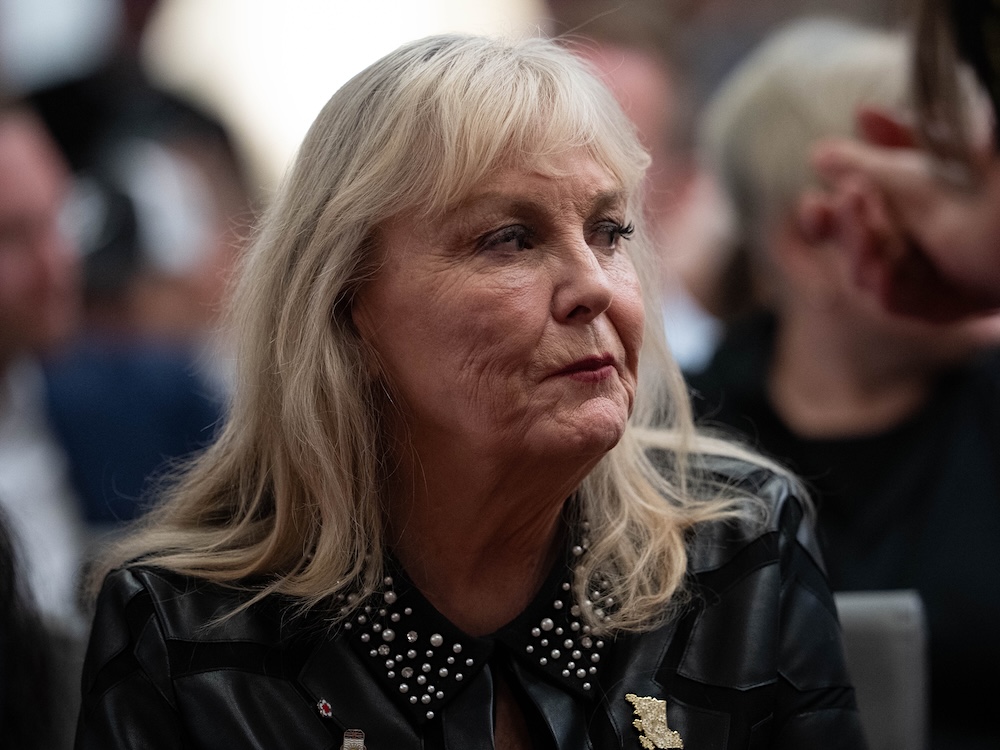
Even though the Conservative Party of British Columbia has been bleeding MLAs, it will continue collecting more than $1.7 million a year in public funding.
As of publication time, the Conservative party is down to 28 MLAs, a significant drop from the 44 seats it won in the 2024 election. Ten MLAs have left in the three months since Kerry-Lynne Findlay narrowly won the leadership. Former Abbotsford-Mission MLA Reann Gasper resigned so that Findlay could run in a byelection. The rest cited concerns with the party’s direction under Findlay.
But under rules introduced in 2017, the public subsidy to each party is calculated based on the total number of votes its candidates received in the last general election.
Unlike the funding provided through the legislature for MLA offices, staff and caucuses, the per-vote subsidy is not tied to individuals. Even if an MLA leaves a party, their former party keeps receiving the per-vote subsidy.
It’s a rule the provincial government might want to reconsider, said Stewart Prest, a lecturer in political science at the University of British Columbia.
“These MLAs have very good reason to say the Conservatives no longer have their trust under this leadership, and there should be some accountability for that money,” Prest said.
“There is something odd about the sight of the B.C. Conservatives remaining so flush and essentially undamaged despite the departure of a quarter of their caucus, which by some logic should affect a quarter of their taxpayer subsidy.”
‘We are trying to provide a stability of funding’
The government began paying subsidies to political parties at the same time that it changed the Election Act to ban corporate and union contributions and put a cap on donations from individuals.
The allowances are paid through the chief electoral officer to all parties that got at least two per cent of the votes cast provincewide or at least five per cent in all of the electoral districts where the party endorsed candidates. Based on the 2024 election results, three parties met the threshold.
This year the subsidy, which rises to match inflation, is $1.89 per vote. The NDP received the most votes and gets the largest payment, nearly $1.8 million. The Conservatives get slightly less than that, and the BC Green Party gets about $328,000.
UBC’s Prest said the government had reasons to tie the funding to the parties. “The logic there is that we are trying to provide a stability of funding to these parties that provide a crucial public service in organizing the political space in the province,” he said.
The allowance, he said, gives the parties some resources “so the election’s not just decided by whichever party has the best access to well-heeled dollars.”
It made some sense to restrict it to the larger parties and not make it available to MLAs who might splinter from them, Prest said. “The rationale, I presume to be, to stop money going to fringe voices, to support fringe causes, without having that established larger appeal that an established party would have, but it does have some quirky effects as we see here.”
The scenario playing out with the Conservatives is one the government likely failed to foresee when it made the law, he said.
“If a party radicalizes after an election in a way that alienates a significant portion of its membership, should it be entitled to keep that per-vote subsidy? It turns out that’s a very good question to ask and perhaps should have been examined a little more carefully in the drafting of the act.”
In the last fiscal year, the BC Conservative caucus received $5 million
It would be reasonable for the government to make a change that would go into effect after the next election, saying that the per-vote money would go to the party an MLA is a member of, allowing them to take the funding with them, Prest said.
“Voters are entrusting their judgment with that MLA to represent their best interests, and these MLAs are very clearly, many of them, making the choice to leave the Conservative party in spite of the damage to their electability,” he added. That trust could extend to where the subsidy goes.
Another option would be to neither allow the party to keep the subsidy nor allow the MLA to take it, he said. Instead the money would simply remain unspent.
As things are, the public subsidy will give the Conservative Party of BC a steady source of funding even if its donors respond to the recent turmoil by cutting their contributions. So far fundraising reports haven’t showed declines and the party is sending out frequent pitches for donations, but some observers expect a drop in coming quarters.
One stream of public funding that is affected by MLAs changing affiliations, and where the Conservatives will see a decline, is the amount that party caucuses and Independent members have available for the work they do in the legislature.
That money is distributed based on a formula set by the legislative assembly management committee, and adjustments are made as soon as there is a change. The calculation gives caucuses a budget of $121,240 per member this year, but that amount is halved for cabinet ministers and doubled for Independents.
In the fiscal year that ended March 31, legislative assembly financial records show, the Conservative Party of BC caucus received $5 million. The caucus’s budget will be significantly reduced because of recent departures. As Prest observed, “it would be a hit for the actual caucus staff, so they would be having to do more with less.”
As the party with the second-largest number of seats in the legislature, the Conservatives remain the official Opposition.
For a new party, a new annual budget
Two former Conservative MLAs, Peter Milobar from Kamloops Centre and Ian Paton from Delta South, have said they plan to form a new party. On Friday three other former Conservatives — Rosalyn Bird from Prince George-Valemount, Bruce Banman from Abbotsford South and Áʼa:líya Warbus from Chilliwack-Cultus Lake — said they will join them. It is so far unclear how many more will follow.
Any party with at least two members, the number required for official party status, also receives funding for a leader’s office at a level that’s pegged to half the amount for the leader of the official Opposition’s office. Party status also provides pay increases for a leader and other officials.
The BC Greens, with two MLAs, had an annual budget of $668,000 last year.
In the case of OneBC, the party briefly had official party status, but when its two MLAs fell out with each other they went back to being Independents, who each get annual funding of $242,480 for their offices.
As Milobar and Paton’s party grows to five MLAs and sets up a leader’s office, it will have an annual budget of more than $1 million.
A critical number to watch, Prest said, is whether enough MLAs join those five to surpass the Conservatives and make the new party the official Opposition. That would reduce funding for the Conservative leader’s office and diminish the party’s role in the legislature.
“The Conservatives can bleed a fair amount without something dramatic happening,” he said, “but there’s a moment where things tip pretty quickly and it’s not just about financial resources but it’s also about pride of place and the ability to drive the agenda.” ![[Tyee]](/design-article.thetyee.ca/ui/img/yellowblob.png)
Read more: BC Politics








Tyee Commenting Guidelines
Please note that email notifications for replies are not currently working due to a software issue which may be resolved in a future update.
Comments that violate guidelines risk being deleted, and violations may result in a temporary or permanent user ban. Maintain the spirit of good conversation to stay in the discussion and be patient with moderators. Comments are reviewed regularly but not in real time.
Do:
Do not: