

 SHARE:

In mid-July, Texada Island resident Candi Little was out for a solo paddle, trailing a pod of orcas down the western shoreline of the island. When the pod wheeled out into the open waters of the Strait of Georgia, she took her cue to head back.
And that’s when she noticed something peculiar on the shore.
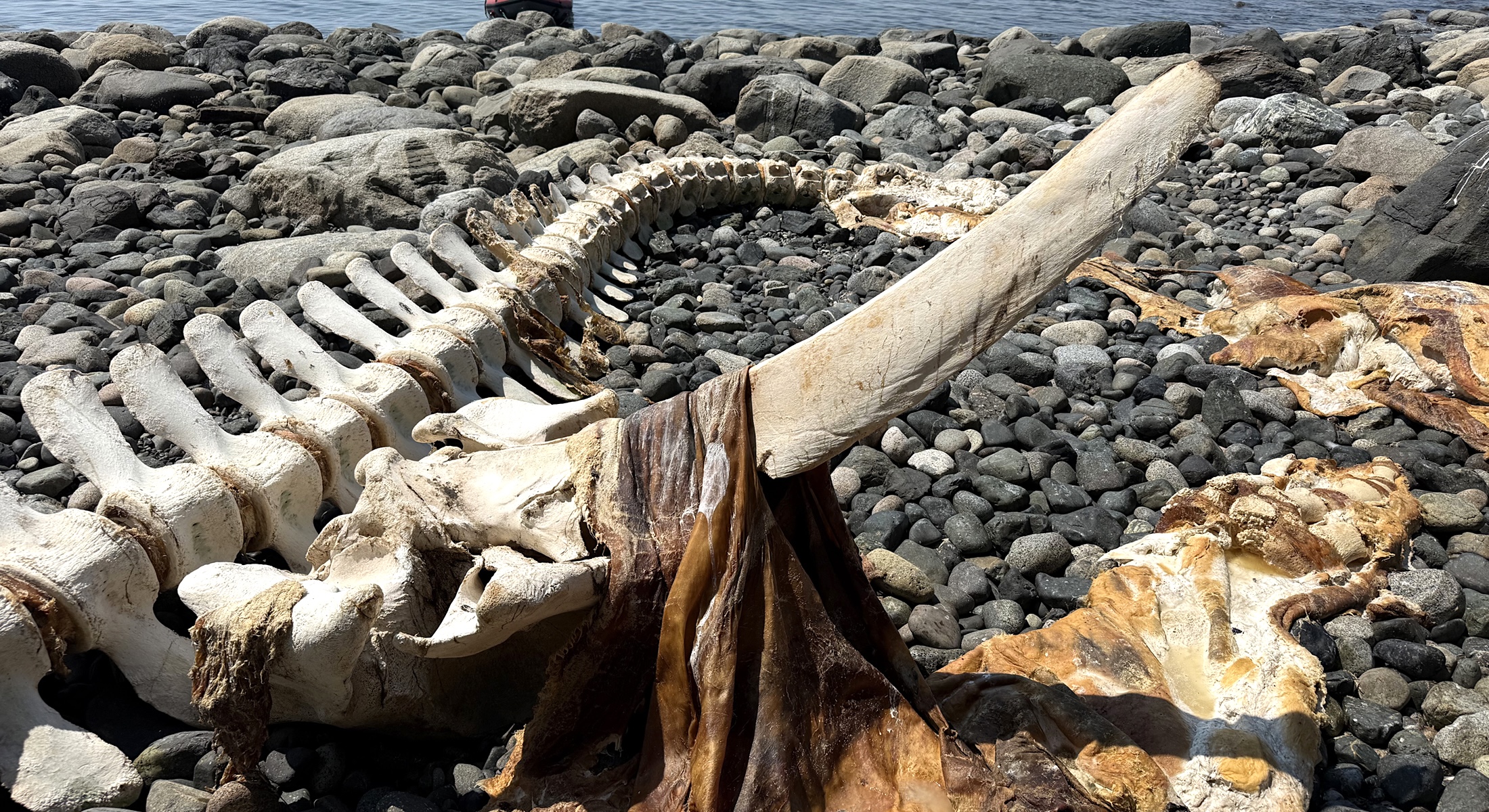
It looked like a discarded piece of logging equipment — maybe a Caterpillar track? But the turkey vultures circling above hinted at something else. As she approached, the details sharpened, and she realized what she was seeing: a tractor-sized skull draped in a thick blanket-like hide, with a chain of knee-high vertebrae extending out almost 40 feet behind it. Ribs the size of elephant tusks were scattered nearby.
“Oh my God,” Little recalls thinking. “This is a whale.”
Little texted a friend, who reached out to a whale researcher, who contacted two of B.C.’s prominent “whale people” — Jim and Mary Borrowman.
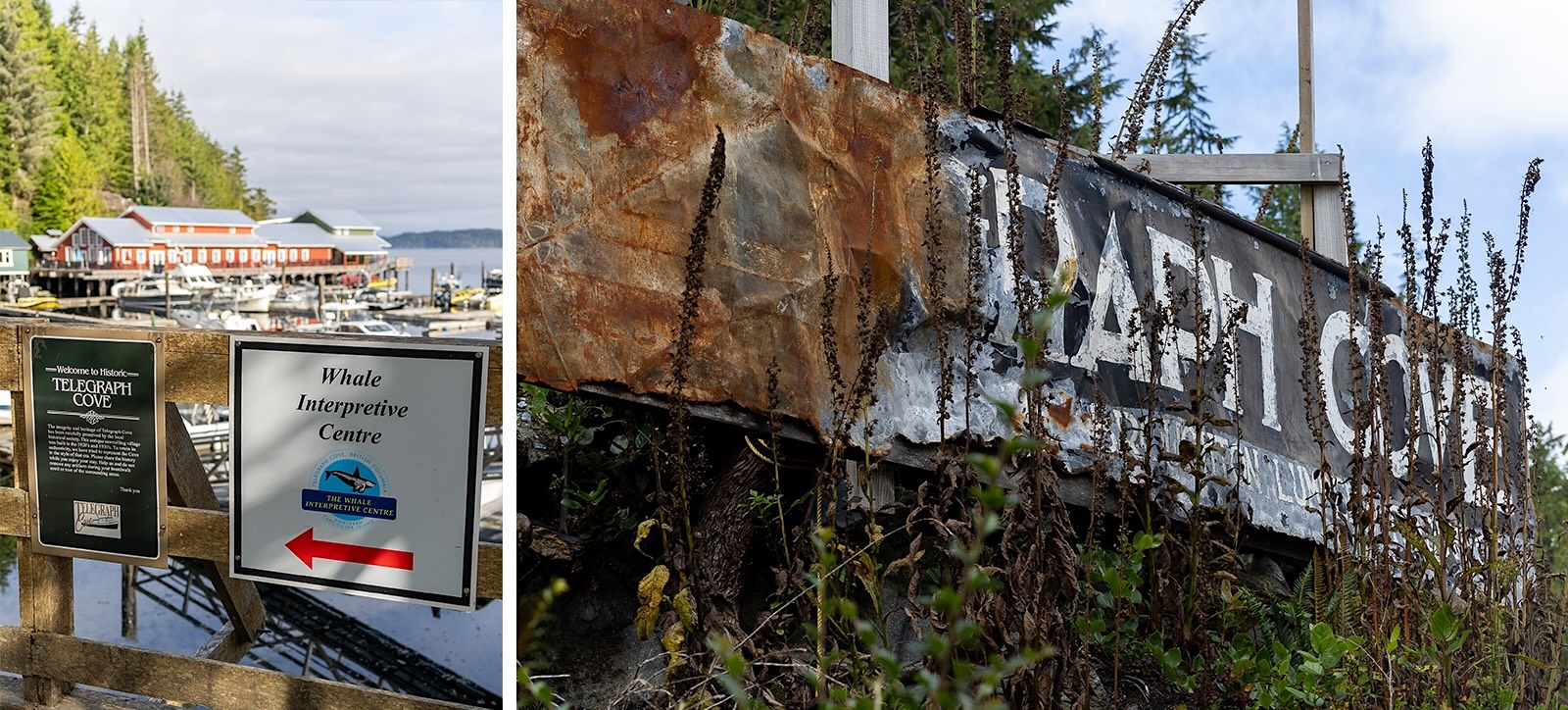
The Borrowmans are directors of the Whale Interpretive Centre in Telegraph Cove, based over 200 kilometres north of where Little found the bones.
The grey whale Little found was one of at least 40 that washed up on B.C. and Washington-state shores this year.
The situation was sad, and concerning. But the discovery of an intact skeleton did offer a rare opportunity, and a glint of hope: the Whale Interpretive Centre lost most of its collection in a 2024 fire and is now rebuilding from scratch.
With the right permissions, and a successful co-ordinated effort to move the bones, the centre could secure the first major new addition to its collection.
Rising from the ashes
Telegraph Cove’s Whale Interpretative Centre, opened in 2002, is a volunteer-led labour of love.
Co-founder Jim Borrowman, a self-taught marine skeleton articulator, added to the centre’s collections of skeletons and exhibits, painstakingly, over decades. By the time an electrical fire hit its boardwalk location in December 2024, they’d amassed the largest displayed collection of marine mammal skeletons in Western Canada, Mary Borrowman estimated. Specimens on display included a 20-metre fin whale skeleton, a Bigg’s orca skeleton and a juvenile resident orca skeleton. Over 12,000 people visited annually from across the globe.
The fire undid decades of work.
“The building was burned right to the beach,” Jim Borrowman says.
Firefighters rescued parts of the fin whale skull and dragged it out onto the boardwalk, but the damage was done. “If you touched it, it collapsed,” he says. “Just fell apart in your hands.”
Their limited insurance covered the building, but only a fraction of the centre’s collection.
The community was struck by grief. Letters and photo memories poured in.
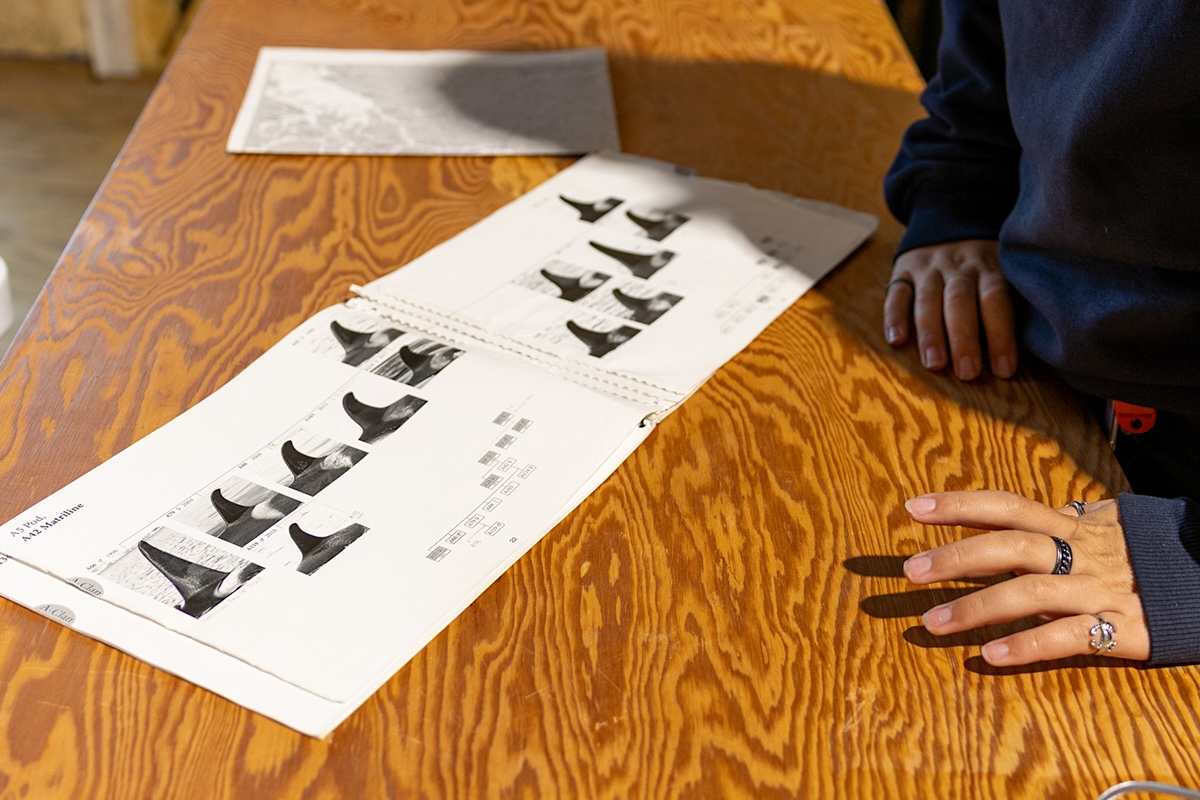
Soon, the Borrowmans and the board of the centre began to rebuild. By 2025, they’d hired one of their summer staff, Tyra Bain, full time and set up a kiosk on the reconstructed dock. Armed with a few plastic totes of bones that had been on furlough when the fire struck, and a handbook of dorsal fins arranged in an orca family tree, Bain spoke to travellers, whale-watchers and kayakers who stopped by — excited to share what they’d seen and find out which whales they might have encountered.
This year, the interpretive centre had a soft reopening in a new building at the end of the pier.
They hope their new centrepiece, the 14-metre grey whale skeleton that Little found on Texada, will join them soon.
‘We view them as our relatives’
When Little, who first visited the Whale Interpretive Centre years ago, heard it might be interested in the grey whale skeleton, she felt relieved — the sadness of the whale’s death could be redeemed a bit by honouring its skeleton with a place of pride. “That’s something,” she recalls thinking.
After seeking permission from Fisheries and Oceans Canada, commonly referred to as DFO, who in turn asked for permission from the Tla’amin Nation, the centre directors gave Little and her friends the go-ahead to start saving bones. Texada, which carries the name sayayɩn in Ayajuthem, is located in the Tla’amin Nation’s traditional territory.
“Whales are very important and spiritual to the Tla’amin people,” a spokesperson from the Tla’amin Nation told The Tyee via email. “We view them as our relatives and it is very sad when one passes. It is important to acknowledge their life and the loss to their families — who do also grieve. It is important that we offer prayers for their spiritual journey and thank the creator for the life they gave.”
“It is important to reach out to the local First Nations to understand their culture and practices in these events and work together to do this good work,” the spokesperson added.
Over the following weeks, Little and her friends drove down an old logging road and hiked over a steep embankment to the beach. They brought gloves and plastic bags.
“We were lifting up these heavy pieces of skin,” Little says. “And of course you had all the blubber.
“The smell was pretty bad.”
Little and her crew took smaller bones home for safekeeping. They piled any bones that were too large to carry above the high-tide line. They took the whale’s baleen — the comb-like keratin plates in its mouth, used to filter water from prey, such as amphipods and other organisms from the ocean floor — home and put it into a freezer.
John Ford, former director of the cetacean research program at DFO and another of the Whale Interpretive Centre’s directors, inventoried the bones with the help of his son.
Success: the skeleton was remarkably intact.
The next step? Getting it off the beach. They’d need a high enough tide, calm conditions for the boat, and weather good enough to coax out volunteers willing to carry stinky bones across slippery rocks.
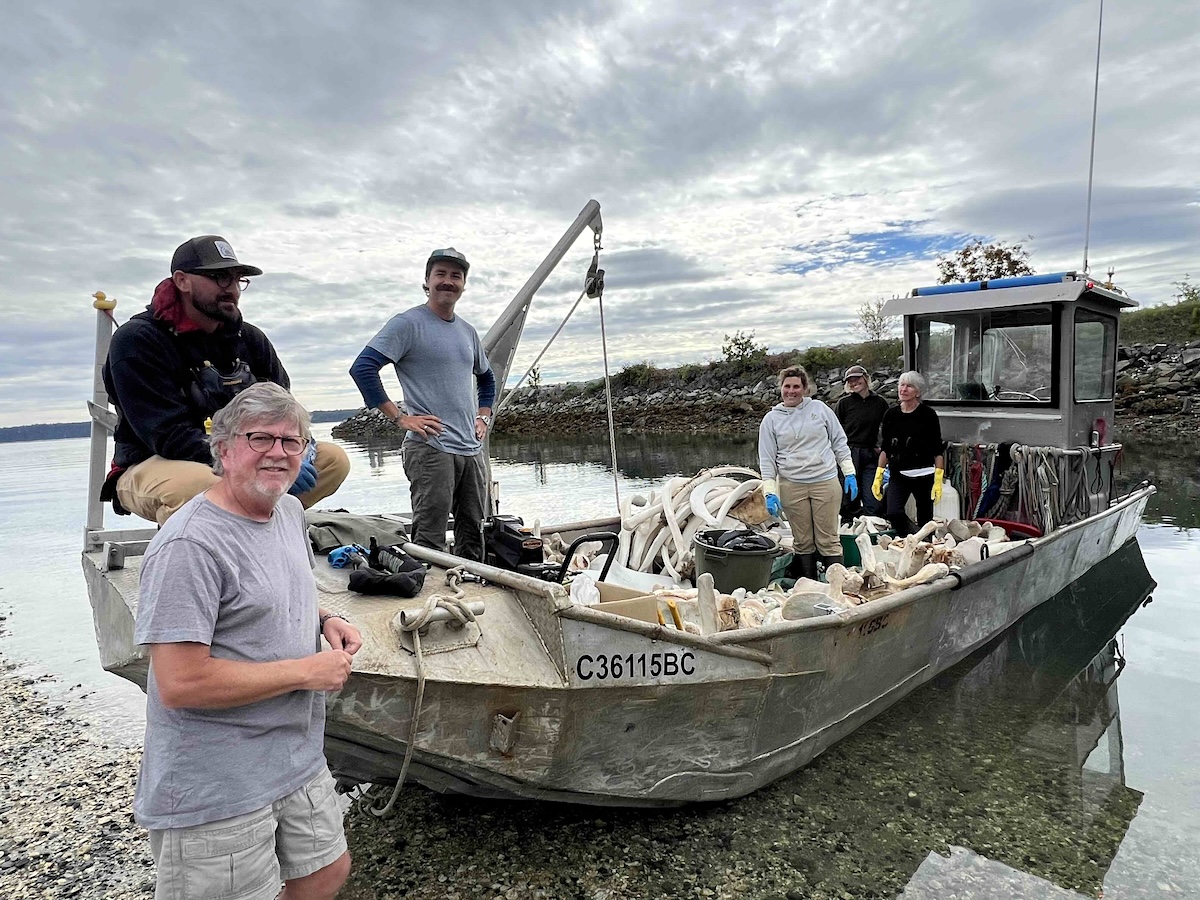
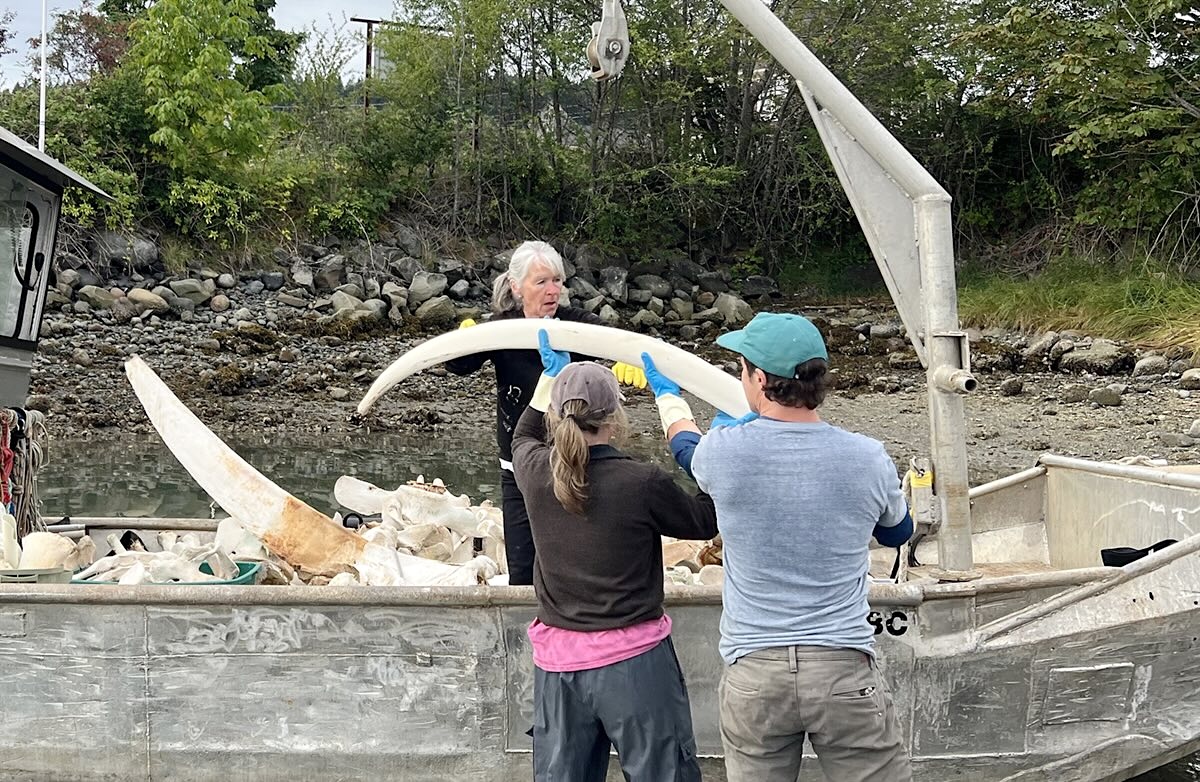
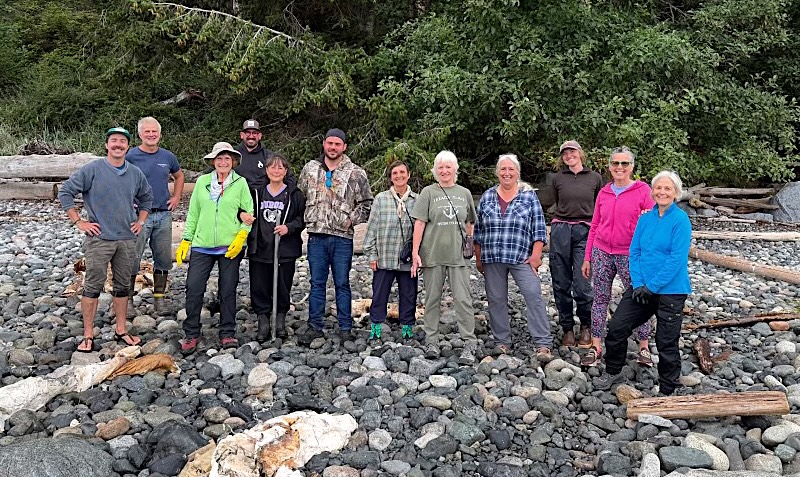
On July 31, nine volunteers from sayayɩn, five contractors and two boats met at the beach. They formed an assembly line across the rocks, passing bones from one set of hands to the next. They cut up the spinal column and removed excess tissue. It took four people to carry a makeshift stretcher holding the skull.
From there, the bones had one more stop to make before heading to Telegraph Cove.
The bones have a story to tell
Before a whale skeleton hangs majestically from the ceiling of a museum, all the gooey stuff of life must be thoroughly removed.
A marine biologist by training, Michael deRoos is one of only a handful of people in North America skilled in articulating whale skeletons, and perhaps the only one who does the job full time.
DeRoos, who got his start at the Bamfield Marine Sciences Centre, was hired by the Whale Interpretive Centre in 2002 as one of its first summer staffers. DeRoos started learning the art of whale bone de-gooing and skeleton assembly at the elbow of Jim Borrowman.
DeRoos’s partner, Michiru Main, who is also a marine scientist, joined him in the practice in 2007.
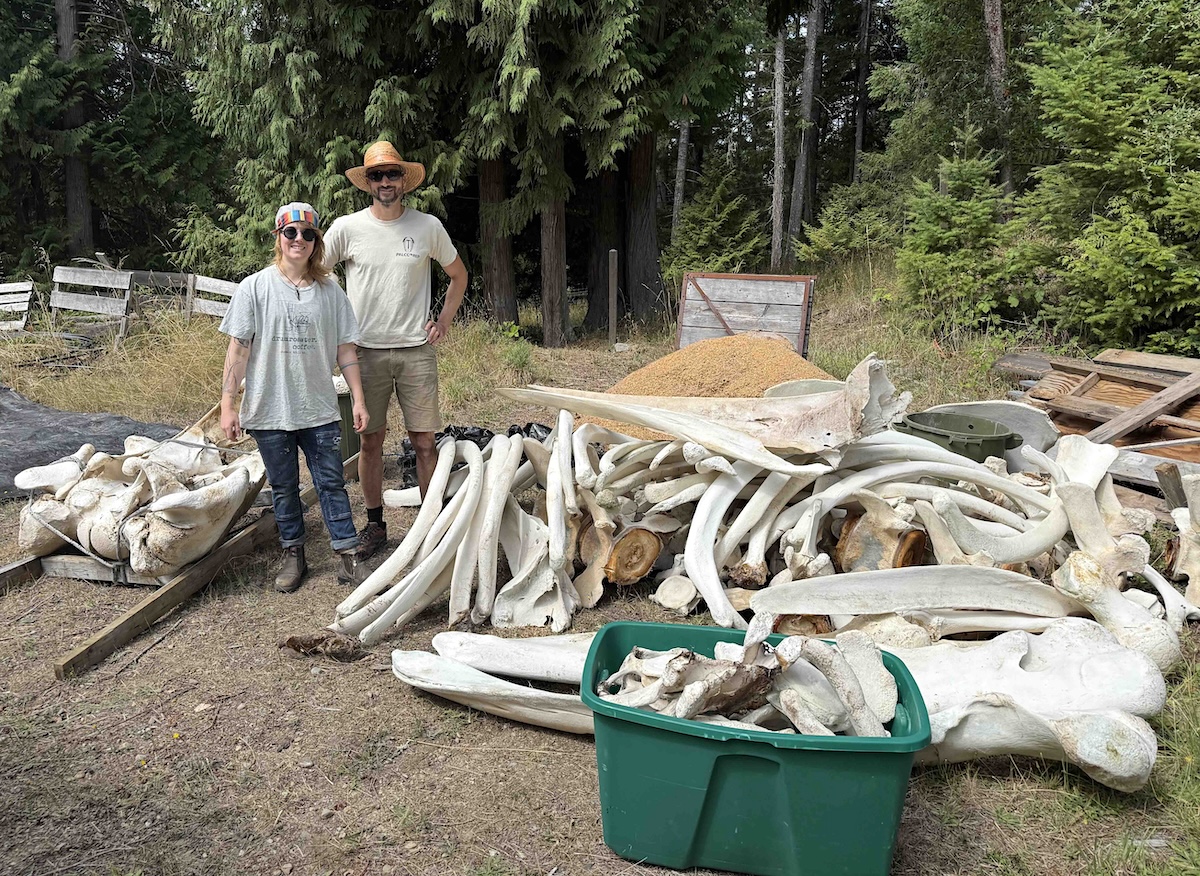
Cleaning whale bones is part art and part science. As microbes do most of the work, the main task is to build the environment that will allow them to thrive.
DeRoos and Main have experimented with different methods, including tying bodies in protected bays or burying them in horse manure. So far, the best method has been to immerse the bones in a warm bath.
DeRoos fills a 350-gallon insulated tank with rain and well water, heats it to 32 C and adds compost. The same organisms that thrive in compost also enjoy the warm bath and the buffet of leftover soft tissue around the whale bones. It is similar to adding a culture starter to a new batch of yogurt, deRoos says.
It takes five to 10 weeks for soft tissue to break down — a process called maceration.
“We basically just have to wait for microbes and nature to take its course,” deRoos says.
The skeleton of the grey whale, which weighed an estimated 35 tonnes while it was alive, stretches 14 metres long and now weighs almost one tonne — meaning DeRoos and Main will need to clean the skeleton in batches.
But deRoos estimates the maceration process will be on the short side for this whale.
While a healthy whale can hold up to half its weight in bone oil, making its skeleton dense and time-consuming to clean, this whale’s bones were bleached and light — likely because it metabolized much of its oil before dying.
“It’s part of the whole story,” deRoos says. “This whale starved to death.”
The death of grey whales in the Pacific
Grey whales undertake one of the longest annual migrations of any mammal, feeding on benthic creatures from deep in the bottom of the ocean in Alaska and the Bering Sea, then swimming through a gauntlet of marine traffic, discarded industrial fishing nets and pollutants to Mexico’s warm shallows to mate and give birth.
Grey whales can live up to 80 years and begin reproducing at about eight years of age. They give birth to one calf at a time after a gestational period of 12 to 13 months. The majority of the population, known as the Eastern North Pacific population, relies on fat stores accumulated in Alaska to travel all the way down to Mexico and back.
Grey whales were initially recovering well after being nearly wiped out by whaling in the 1800s. Their population reached a recent high of about 25,000 to 30,000 individuals in 2016. But that began to change in 2018, when they began washing up on shores, starved, and calf production dropped.
This year, the crisis deepened. While scientists estimate the total population rose from 2025, the number of whale strandings sets a grim new record.
“We were very complacent,” Ford told The Tyee. “They were looking good until essentially 10 years ago.”
“It could be global warming. It could be changing ice conditions. It could be more local events like marine heat waves,” Thomas Doniol-Valcroze, a grey whale researcher for DFO, says.
“Regardless of the actual reason, they got [to the Arctic] and food wasn’t great.”
Doniol-Valcroze compares the optimism of a long migration to a bet. “It’s like driving on a tank of gas, and you hope that when you get there, there’s going to be an open gas station,” he says.
As of mid-August, 187 grey whales have washed up between Mexico and Alaska this year.
Doniol-Valcroze has been studying a subset of the population that appears to be shortening its migration patterns. Instead of going to the Arctic, they are staying in Oregon, Washington and B.C. through the summer. So far, this subset is showing early signs of population stability, and maybe even growth. But scientists believe this is likely a short-term solution that doesn’t address the food shortages caused by climate change.
As for the whale Little found, what deRoos knows so far is that it was mature, likely male because of its length, on its way north and nearly void of natural oils.
In other words, it ran out of gas on its way home to its summer feeding area.
Rebuilding the bones. And the centre
Reassembling the skeleton is like putting a puzzle together, deRoos says. But it also includes developing a vision for how the whale will exist in space.
“You can tell a much more powerful story of how the animal lived and how it interacts with its environment if you pose or position the skeleton in a more dynamic fashion,” he says.
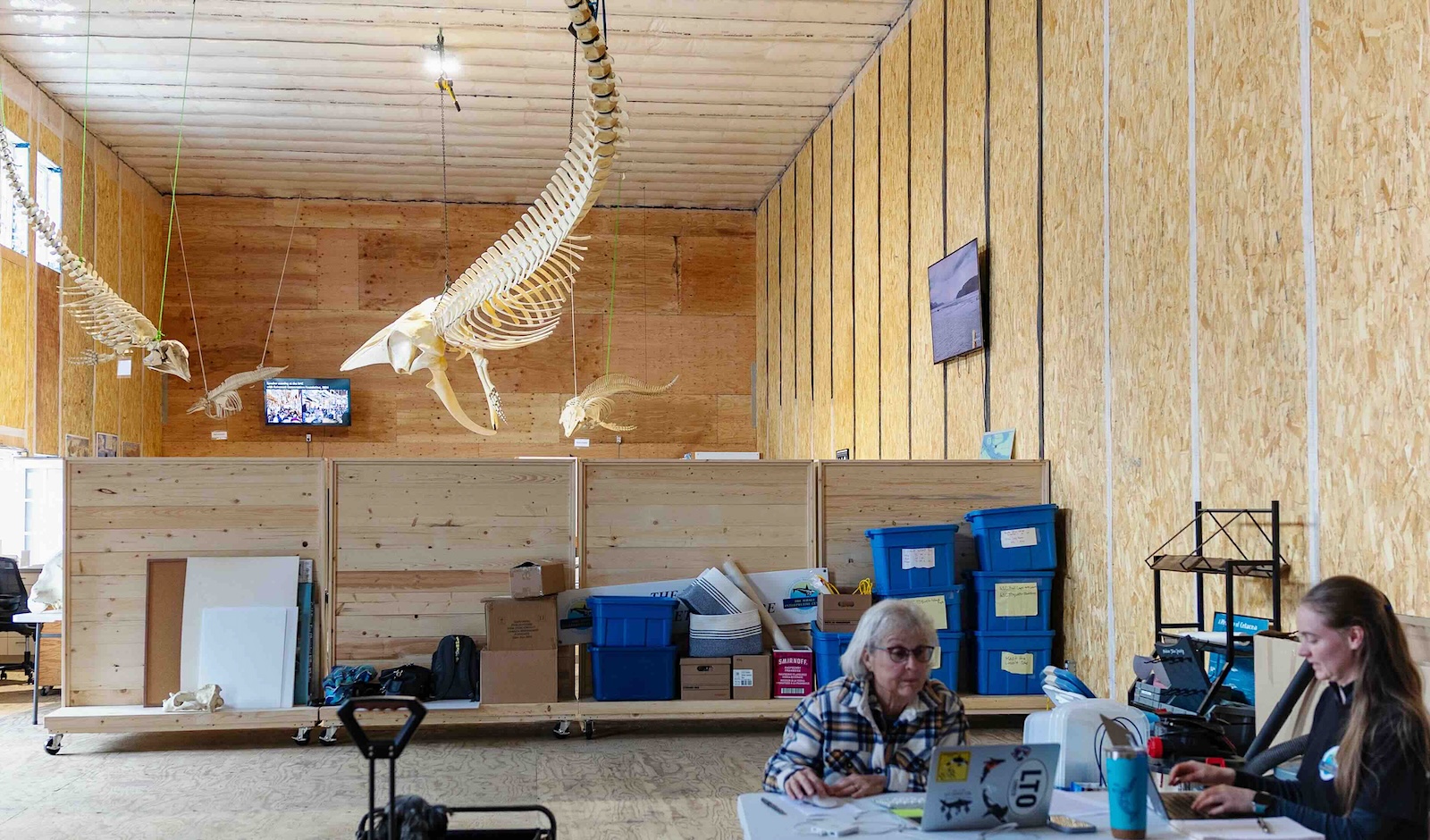
When it comes to the whale Little found on sayayɩn, deRoos is still considering the most appropriate action pose. In the Deep Bay Marine Field Station, the last grey whale deRoos articulated breaches through a flight of stairs. For this one, he is thinking of finding a way to show the animal’s feeding technique. But many unknowns remain. Much depends on the bacteria’s work and whether any bones are missing.
The centre is looking forward to working with the nation to ensure that the whale is displayed with respect and care, Bain says.
After deRoos decides on his vision, a metalworker will weld an interior structure to hold the bones together. Then deRoos will figure out how best to balance the hanging form in the centre.
It’s a long, expensive process. And in this case, there’s a deadline: deRoos is aiming to have the whale ready for next spring’s grand reopening at the Whale Interpretive Centre.
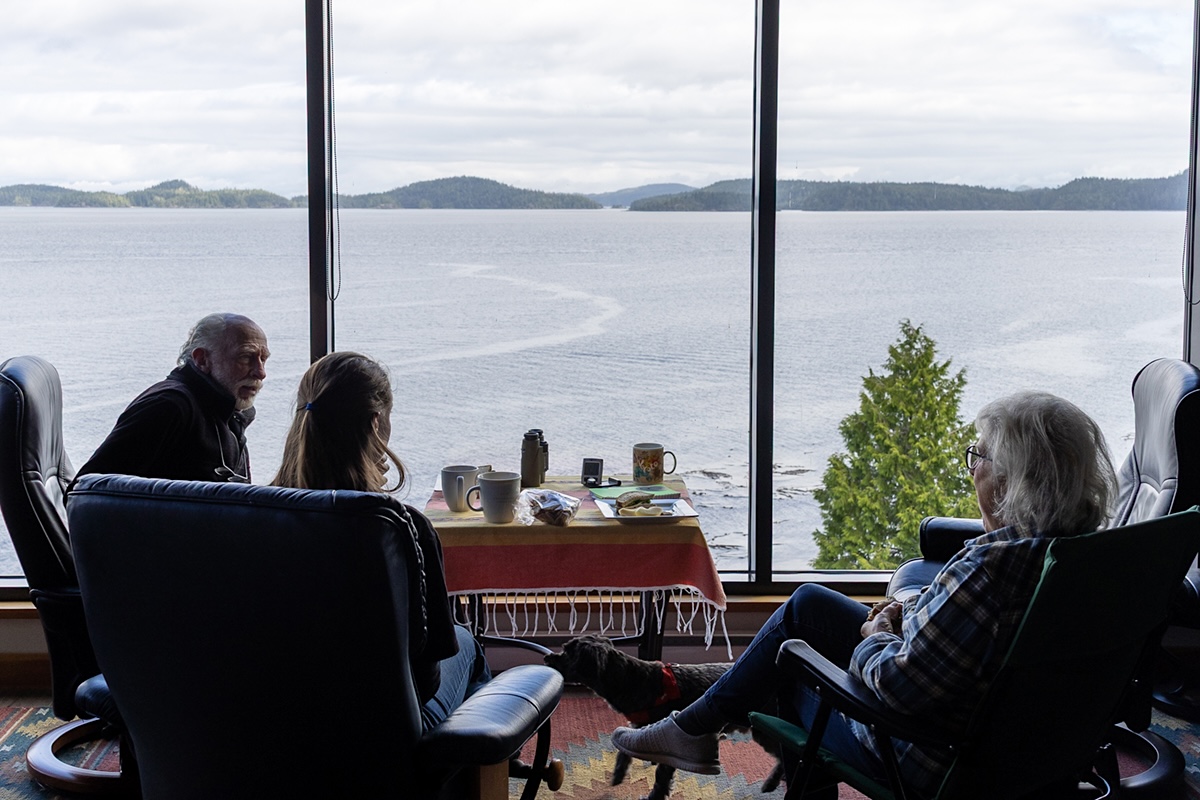
And this is where two sad stories converge into a hopeful one. The grey whale will help the centre begin its new chapter.
Bain, the centre’s manager, says the older yellow cedar building had an impressive presence — but it had its shortcomings, too.
“You could see the ocean beneath your feet,” Bain says. “It was very, very cold. Even in the summer months.”
“We built it like a rabbit hutch the first time,” Jim Borrowman says.
“We’re going to have a proper washroom,” he adds.
With insulation, temperature control and better security, the centre will be able to take steps towards achieving museum status and trading pieces with other museums.
So far, their new collection includes a Bryde’s whale, a pygmy sperm whale, a Risso’s dolphin and a Dall’s porpoise. This winter, they’ll fine-tune the ambience of the space, using proven techniques to make sure the centre’s bones stand out — details The Tyee has been asked to keep secret so there is a surprise for visitors next summer — and add a more sophisticated tracking system on which to install the displays.
The grey whale will be a “wow factor,” Jim Borrowman says, adding that the centre is still fundraising to meet its goals. They’re aiming for $1 million. So far, they have raised just over $250,000 from far and wide — from people who hope to visit one day, and from those touched by past visits.
The grandson of one of the Borrowmans’ neighbours, a six-year-old who has spent hours learning from centre staff, has raised more than $3,000 collecting cans.
Rebuilding the whale centre is really for young people and the next generations, Mary Borrowman says.
“Our reward is to watch young people come in and get excited about marine mammals.”
As for the whale, he’ll soon be given a new name by the Tla’amin Nation. 
Read more: Environment




Tyee Commenting Guidelines
Please note that email notifications for replies are not currently working due to a software issue which may be resolved in a future update.
Comments that violate guidelines risk being deleted, and violations may result in a temporary or permanent user ban. Maintain the spirit of good conversation to stay in the discussion and be patient with moderators. Comments are reviewed regularly but not in real time.
Do:
Do not: