


 SHARE:

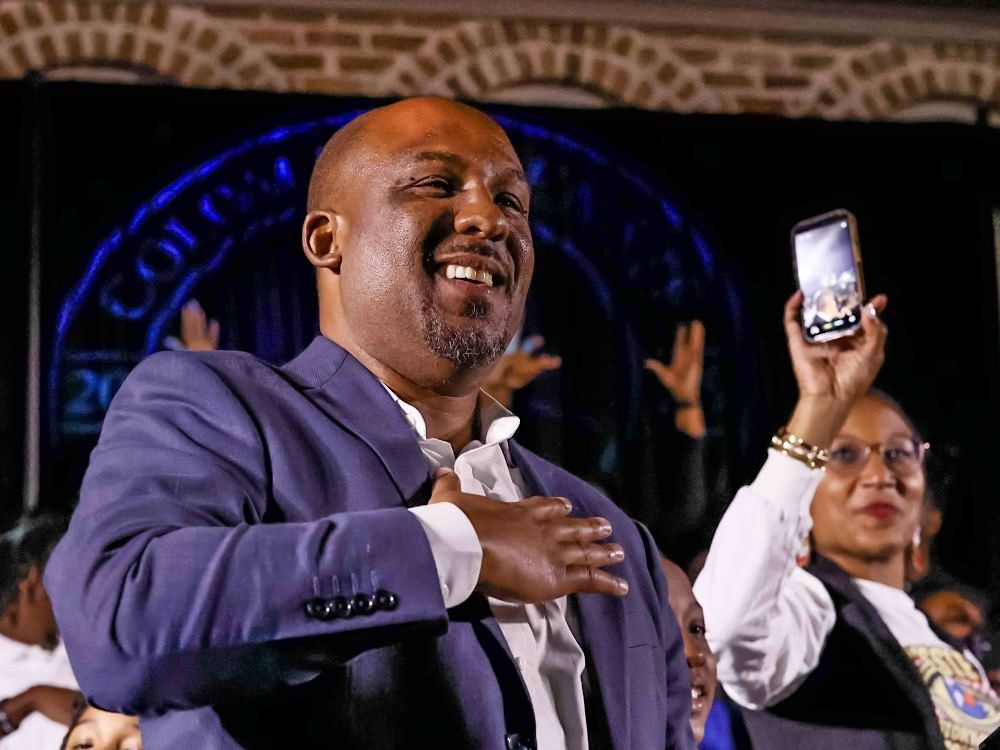
Most Canadians, and Americans, were greatly cheered by the Democrats’ wins in the Nov. 3 U.S. midterm elections. Solidly Republican states turned Democratic. The House of Representatives will have an enormous Democratic majority. And the Senate, with a majority of 56 Democrats if Alaska Democratic candidate Mary Peltola wins (as of Nov. 15, she leads at 49.9 per cent with 97.4 per cent of votes counted), is no longer the shield protecting President Donald Trump and his regime.
We can be forgiven for thinking justice is at hand.
But it won’t be as simple as that. The Trump presidency is likely to get worse before it gets better.
The Democrats did so well in large part because of their progressive wing, whose members tend to be people of colour, women and those happy to be attacked as “socialists.”
Ever since Alexandria Ocasio-Cortez arrived in Washington back in 2018, the progressives have been strange bedfellows of “establishment” Democrats who have dominated the party since Bill Clinton was sworn in back in 1993.
Clinton effectively surrendered the Democratic role as champion of the working class, Black Americans and other minorities. Since Ronald Reagan, the Republicans had moved right, finding a loyal base in southern and rural white voters and entrenching neoliberal ideology that transferred wealth and power from the people to the one per cent.
The Democrats under Clinton moved right as well, seeking rich donors to compete with the emerging oligarchs who were funding the Republicans.
Elected president in 2008 after George W. Bush, Barack Obama didn’t move the Democrats back to the left. He nearly lost during the 2008 primaries when he talked about rural and small-town voters, saying “They cling to guns or religion or antipathy to people who aren’t like them,” thereby making a gift of them to Donald Trump.
And after one term of Trump, the election of Joe Biden in 2020 created a sense of relief in voters.
But Biden’s election did not take effective action against Trump and the now triumphant oligarchs.
No golden age
Two years into Trump’s second term, many grassroots Democrats have moved left because the Democratic establishment has been as ineffective as Biden in resisting Trumpism.
As progressives, they would agree with Mark Carney that nostalgia is not a strategy. Without a new political order, the United States will relapse into still more Trumpism, not into the Democrats’ 1960s golden age.
It remains to be seen how the Democratic establishment and progressives will find a way to work together, and on what projects. They might simply try to thwart Trump’s future actions, or roll back some of his tariffs, or hold investigations into his staff and cabinet, picking them off one by one.
They might do all those things, plus bring in new legislation even if Trump and the Republicans in Congress reject it — and publicize that rejection.
Bills to defund an agency such as Immigration and Customs Enforcement, or ICE, even if defeated, would draw more attention to ICE and its enormous budget.
Defunding the war on Iran would remind the country of who’s responsible for the spending after all.
Releasing the unredacted Epstein files, and holding hearings about them, would please a great many voters, especially if those named in the files were then subpoenaed, charged and put on trial.
Gaming the law won’t be enough
Trump has litigated his way through life, and law schools will no doubt study his methods of gaming the law. But he won’t be able to litigate cover for all his friends and supporters. Even those close to him will begin to hear the footsteps of special prosecutors coming closer, and some of them will talk in televised hearings.
The White House is already trying to deter such investigations by warning Democrats that it would be “blatant criminality” to conduct oversight hearings about Republican malfeasance.
As an expert in flooding the zone, Trump could very well go on doing still more outrageous and illegal things, adding to the uproar over whatever congressional investigators turn up about the past two years. The public might be so baffled by the charges and countercharges that it would tune out.
Trump may also run into trouble with looming scandals like Nvidia CEO Jensen Huang’s affair with a Chinese spy. The combination of illicit sex, espionage and the high stakes of a multitrillion-dollar AI industry makes the Huang affair big enough to trigger the bursting of the AI bubble and a 2008-style economic collapse.
Obama staved off disaster in 2008, but Trump and his oligarchs aren’t likely to find a similar rescue by asking the advice of Claude or ChatGPT.
While Trump stays on the defensive, the Democrats have a chance to offer constructive improvements as a platform for whomever they run for president in 2028.
One likely project would be Medicare for All, supported by many Democrats and an idea more Americans are beginning to take seriously.
Abdul El-Sayed, the newly elected Democratic senator for Michigan, might not be a presidential candidate, because he’d need more than just two years in the Senate to be a credible nominee. But in 2020 he published Healing Politics: A Doctor’s Journey into the Heart of Our Political Epidemic.
Writing as an epidemiologist and public health official, El-Sayed diagnoses insecurity as the malaise afflicting Americans and suggests Medicare for All — a government-owned, single-payer insurance plan — as at least part of the cure.
Making lives more affordable
In his book, El-Sayed argues that a single-payer insurer, and the only purchaser of medical goods and services, could set the prices:
In a monopsony, [the] buyer has supreme market power, allowing it to, in effect, dictate the price of the good in question. Under Medicare for All, the U.S. government would become the monopsony buyer of health care on our collective behalf, allowing it to vastly reduce the costs of care for all of us.
Medicare for All could greatly improve the affordability of Americans’ lives.
Another potential vote-getter could be Rep. Rashida Tlaib’s 2025 bill “to provide a universal payment to adults between the ages of 19 and 67 to increase the take-home pay of American workers and enhance their financial stability, and for other purposes.”
This would not be universal basic income, but it would be a step in the right direction.
Working people would be able to turn down poorly paid work, get more education, afford child care or simply afford to live more easily. It would reduce insecurity and give people a little more control over their own lives.
Both ideas would be hard sells in a country with a $40-trillion debt, but once implemented, they would boost productivity and consumer spending and dramatically cut spending on health care.
A tectonic change
These are ideas for the short term — between now and November 2028. The 2026 midterms may have triggered one change that is not merely seismic, but tectonic: the breaking of the once “Solid South.”
Ever since the failure of Reconstruction after the U.S. Civil War, white people in southern states that fought to preserve slavery have voted as a bloc.
For almost a century the bloc voted for Democrats, and Democratic federal governments tolerated the systemic oppression of Black Americans in exchange for white votes. This arrangement extended even to Franklin Delano Roosevelt, whose New Deal was really for white workers and farmers.
Only with the passage of the Civil Rights Act in 1964 did Black Americans begin to approach political equality. Lyndon Johnson, the Texas Democrat who got the bill through Congress and signed it, knew the price would be high.
At the time, he told his trusted aide Bill Moyers, “Well, I think we may have lost the South for your lifetime — and mine.”
Richard Nixon exploited that opportunity when he ran and was elected president in 1968, and Ronald Reagan locked down the white racist vote in 1980.
But in 2026, Black Democrats (most of them women) took power in the Texas state government, and Black candidates in most southern states were elected to the House of Representatives.
Even Mississippi is sending a Black man to the Senate for the first time since Reconstruction.
The mere presence of so many Black Democrats in Trump’s Washington will be a revolution, and the whole party may become something like the Republicans in the administration of Ulysses S. Grant, who created the Department of Justice specifically to protect the civil rights of Black citizens after the Civil War.
If southern Democrats can consolidate their power in Republican states like Mississippi and Texas, they can outvote and outgovern the remnants of Trumpism — which will survive far longer than Trump himself.
But Trumpists will be reduced to a bitter minority, overshadowed by a happy and confident majority.
The United States has lost the trust of Canada, and the world, for your lifetime and certainly for mine. But if Americans can break the power of the Trumpists and the oligarchs who pay them, they can eventually rejoin global democracies as friends and equals. 
Read more: Rights + Justice, Politics












Tyee Commenting Guidelines
Please note that email notifications for replies are not currently working due to a software issue which may be resolved in a future update.
Comments that violate guidelines risk being deleted, and violations may result in a temporary or permanent user ban. Maintain the spirit of good conversation to stay in the discussion and be patient with moderators. Comments are reviewed regularly but not in real time.
Do:
Do not: