

 SHARE:

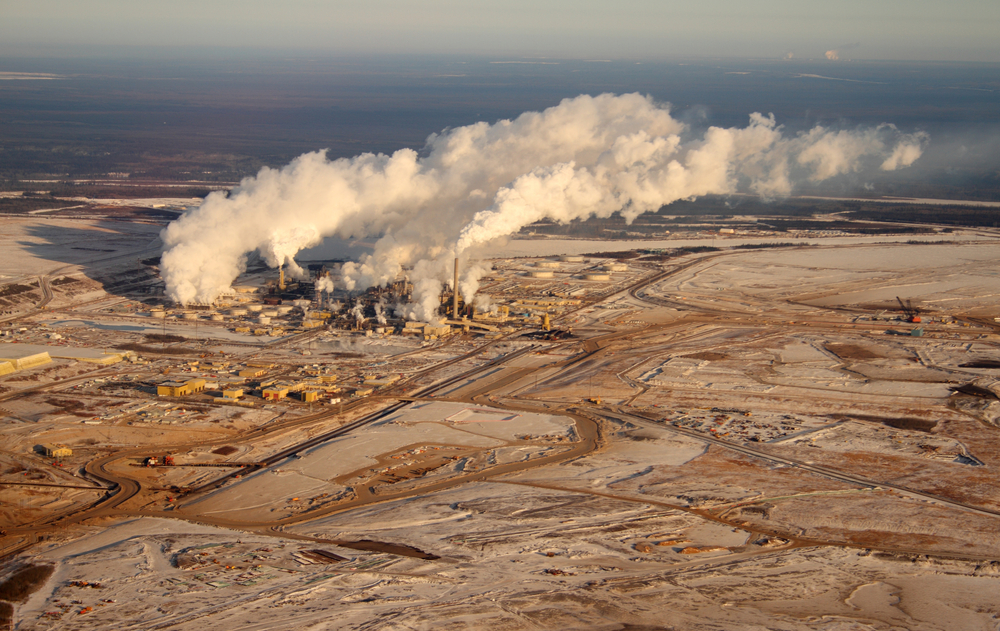
The Alberta government’s new “oilsands growth program,” announced Friday, turned out to be pretty much as anticipated. We’ll slash the province’s already low royalty rates in the hope oilsands companies will promise to create enough new jobs to give voters a reason to re-elect the United Conservative Party.
We won’t quite be giving the stuff away, but as the salesmen on the beach in Mexico say about their T-shirts, a two per cent royalty for five years will be “practically free.”
After that, the royalties paid by some of the most profitable corporations in the world will climb ever so slowly by one per cent a year until they reach a maximum of six per cent.
The current royalty structure starts at one to nine per cent in a project’s early years, depending on oil prices, and then rises.
As Janetta McKenzie, director of the Calgary-based Pembina Institute’s oil and gas program, put it Friday: “This new royalty system will return even less of the oil’s value to Albertans and even more to corporate shareholders.”
“At a time when families are enduring an unprecedented cost-of-living crisis, many will ask why even more of their tax dollars are to be gifted to oil corporations that are enjoying historic profits,” McKenzie said. Of course, UCP strategists are counting on it that Alberta voters will do no such thing. They may very well be right.
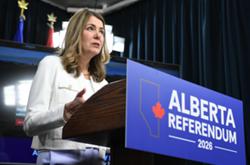
Needless to say, unlike the clean-energy think tank’s analyst, the phalanx of Big Oil bosses that lined up at the government’s news conference in Calgary Friday afternoon to support Premier Danielle Smith, Energy Minister Brian Jean and Finance Minister Jason Nixon practically cheered themselves hoarse, metaphorically speaking, during the hour and five minutes of mutual admiration and happy talk.
Indeed, the whole production yesterday looked a bit like a Broadway musical, with the smiling premier at the podium, flanked by her ministers of energy and finance, in turn supported by a chorus line of oilpatch big shots. All it really needed was for the lineup of anonymous workers behind them in UCP-blue coveralls and white hard hats to start singing.
But the claims made in the government’s press release that this big giveaway will potentially generate “approximately $205 billion in cumulative additional revenues by 2040 and over $1.3 trillion by 2060” sound fanciful, as did Nixon’s suggestion in response to a reporter’s question that the resulting investment could create as many as 600,000 new jobs.
All the theoretical benefits for taxpayers are years down the road, as always turns out to be the case in such matters as these. The big payoff for giant oilsands corporations will be closer at hand. The question is whether voters will believe the hopium peddled by the premier and her ministerial sidekicks.
Could happen. It’s been known to work before.
Smith claimed during the news conference that Alberta will just be putting off receiving its cut for a little while. “It’s just delaying the amount of additional new revenues that will come in,” she chirped. Readers are invited to believe that if they please.
To return to McKenzie’s analysis, she noted that “Alberta taxpayers are already footing the bill for large investment tax credits, a $43-billion pipeline that private investors wouldn’t touch, tens of thousands of inactive and unsecured wells, and hundreds of millions of dollars in unpaid municipal taxes from the energy sector.”
“Now,” she continued, “taxpayers are being asked to further subsidize the oil industry to fill another taxpayer-subsidized pipeline.”
“The provincial government has not presented any evidence that indicates the existing royalty system is an obstacle to investment in the oilsands or in conventional production,” McKenzie added. “At a time when the industry is amassing billions in windfall profit due to the conflict in the Middle East, the private sector is absolutely capable of financing production expansion if they believed in sustained long-term oil demand.”
Ah, but do they? The current conflict in West Asia may in fact have something to do with this. While the giveaway — pardon me, investment enhancement — aims to create a stable environment that will encourage oil companies to stick around in Alberta while Smith achieves her ambition of doubling our oilsands output, its success still hinges on sustained demand and continued high prices.
One of these days, perhaps sooner than later, the United States’ war on Iran will draw to a close and prices may settle down thereafter. Moreover, when the Ukraine conflict ends, Russian energy may again go unvexed to the factories of the Rhine.
Given the factors McKenzie touched on, some of the giants now making bank on high oil prices to prop up the high-cost extraction of oil from the oilsands may be tempted to pack up their profits and slip quietly out Alberta’s side door.
Is the UCP brain trust nervous that could happen on their watch? 




Tyee Commenting Guidelines
Please note that email notifications for replies are not currently working due to a software issue which may be resolved in a future update.
Comments that violate guidelines risk being deleted, and violations may result in a temporary or permanent user ban. Maintain the spirit of good conversation to stay in the discussion and be patient with moderators. Comments are reviewed regularly but not in real time.
Do:
Do not: