


 SHARE:
Ecologists have long studied how life returns after a devastating wildfire. In B.C.’s forests, for instance, wildflowers, such as fireweed, and grasses are often the first plants to poke through the charred soil. Shrubs come next, then seedlings like aspens and willows. Animals also trickle in: woodpeckers feast on the insects hiding in dead trees, while deer and elk devour tender shoots and berry-laden shrubs.
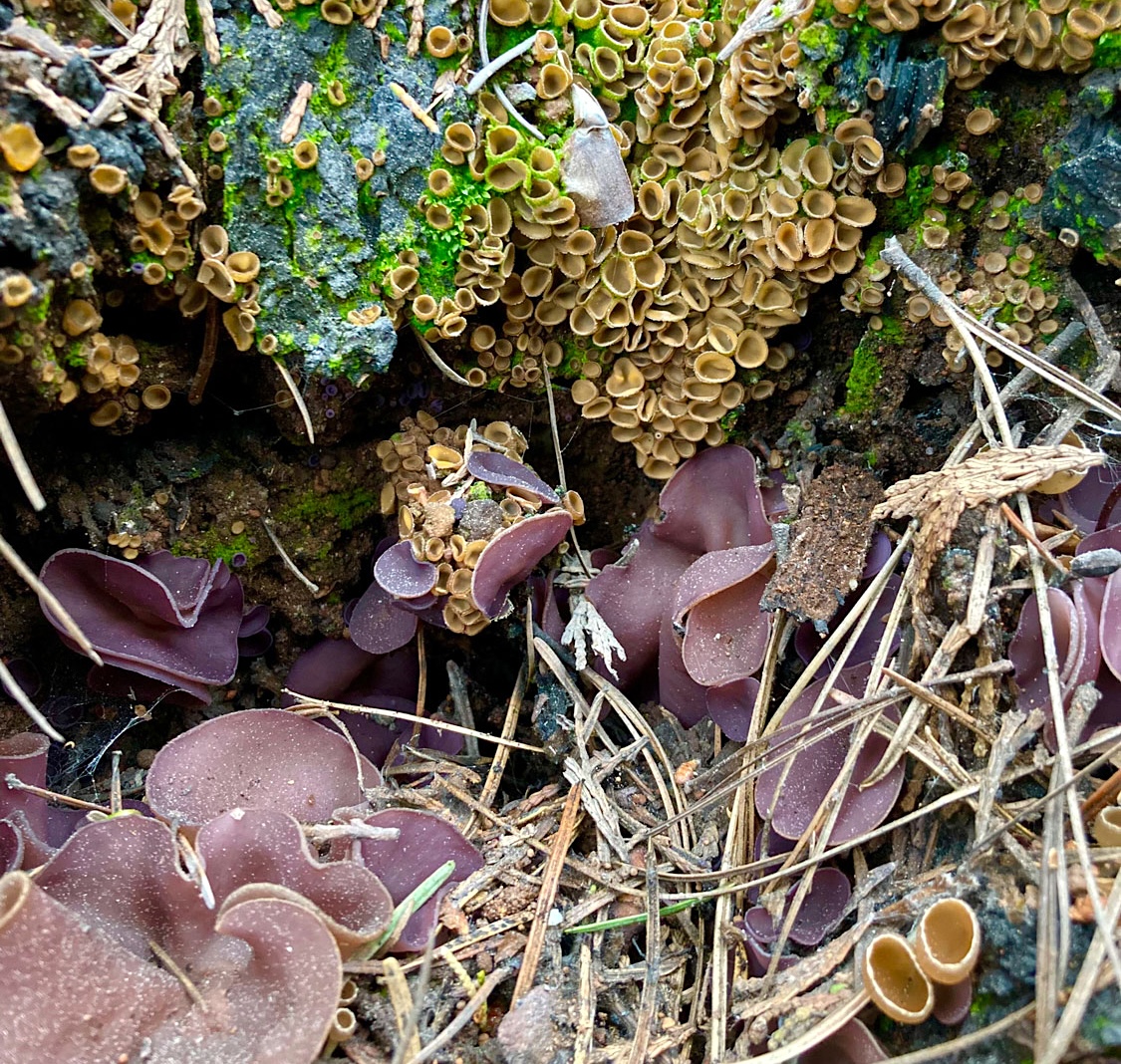
Yet in the grand succession of life after a wildfire, the first beings to appear are neither plants nor animals, but fungi. Species of pyrophilous fungi — from Greek for “fire-loving” — thrive in the burned terrain. Just weeks after a blaze tears through a landscape, swaths of fungal fruiting bodies emerge from the soil to release spores, briefly dominating the otherwise barren surface.
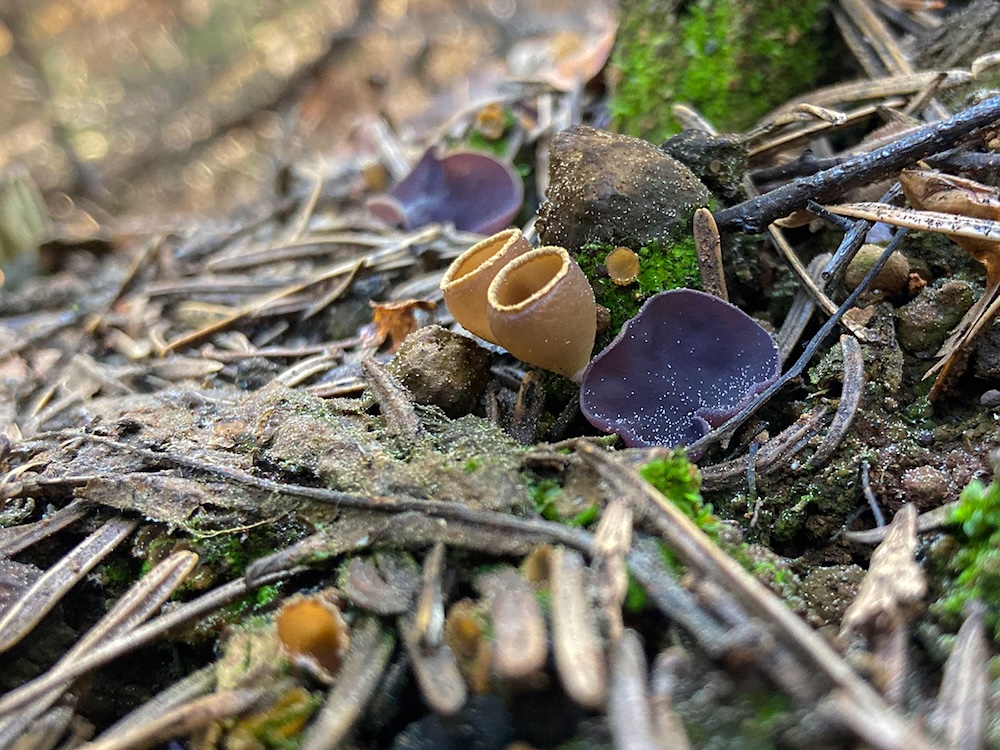
“A lot of them make little, teeny-tiny, adorable, all-colours-of-the-rainbow cups,” says Monika Fischer, a mycologist at the University of British Columbia.
These fire fungi carpet the recently scorched earth with splashes of warm ochre, deep mauve, fleshy pink and bright orange.
Now, Fischer and other researchers are updating the ecological succession playbook, studying these fungi up close to find out exactly what they are and what they’re capable of.
“They really seem like the first responders,” says Fischer. “They’re the things that are growing the most rapidly first.”
So, whatever these fungi are up to — biologically speaking — likely impacts the rest of post-fire succession and recovery, she says.
Relatively little is known about these fire-loving fungi. Many do not have common names, and many more species are likely still awaiting identification. Nevertheless, researchers believe pyrophilous fungi have an important role to play in a world that is increasingly prone to severe wildfires.
As well as killing or driving off most of the life in an ecosystem, high-intensity wildfires, which can reach temperatures over 1,000 C, leave behind a landscape that is largely inhospitable to new growth.
“In an extreme forest fire, the top layer of soil and stuff basically burns — along with any organisms that are in there — and turns into pyrolyzed organic material,” says Matt Traxler, a microbiologist at the University of California, Berkeley, who oversaw some of Fischer’s previous work.
Pyrolyzed organic material, essentially soot and charcoal, is mostly carbon, but it’s not in a form that’s easy for organisms to use, Traxler says. The carbon atoms form rings, which are then fused together into complicated clumps.
“Very few microbes — or very few organisms — could just take that in to try to eat it,” he says. This burned substance also contains toxic compounds called polycyclic aromatic hydrocarbons.
And yet, pyrophilous fungi seem to thrive in this otherwise unwelcoming soil. In laboratory experiments, Fischer and Traxler showed that one iconic post-fire species — Pyronema domesticum — can grow even when burnt soil is the only carbon source around. When growing in the pyrolyzed material, this resourceful little fungus turns on genes to produce enzymes to help break down the charred material, ultimately transforming it into a more bioavailable form that could help kick-start the rest of the food web.
“They’re sort of jump-starting that nutrient cycling,” Fischer says.
A recent study from scientists at the University of California, Riverside, revealed that other species of pyrophilous fungi also possess key charcoal-digesting genes.
Fischer and other scientists think that aside from making carbon more accessible, fire fungi play an important role in revitalizing the structure of the soil after a severe burn.
In a big fire, says mycologist Karen Hughes of the University of Tennessee, Knoxville, burnt soil forms a water-resistant, waxy coating that prevents water from seeping into the land. This makes the area more prone to landslides and leads to dry, crumbly soil that is difficult for seeds to grow in.
But after the 2016 wildfires in Great Smoky Mountains National Park, which straddles North Carolina and Tennessee, Hughes and her collaborators surveyed the local fungal biodiversity. They found networks of mycelial mats — tangled webs of the fine, rootlike structures that many fungi use to absorb water and nutrients — which could help stabilize soils after a fire.
Other researchers have observed similar structures following wildfires in the northwest U.S. and in southeastern Australia.
For her part, Fischer thinks fire fungi — and the mycelial mats they create — likely play a big role in helping seeds germinate and get established after a fire. But it will take more work to prove that connection. Traxler adds that while scientists are developing a better understanding of the fungal communities that proliferate after a fire, it’s not yet clear how initial differences in these communities could ripple out to affect the long-term pace of recovery, or the diversity of plants and animals that eventually recolonize the land.
A lot of work still needs to be done, Hughes acknowledges. With as many as five million species of fungi living on the planet, there is, to put it mildly, “a ton of stuff we don’t know,” she says.
But by studying all facets of the fungi that flourish after a fire, Fischer says, scientists could turn that knowledge into a tool kit to help promote post-fire regeneration.
This article first appeared in bioGraphic and is republished here with permission. ![[Tyee]](/design-article.thetyee.ca/ui/img/yellowblob.png)
Read more: Science + Tech, Environment










Tyee Commenting Guidelines
Please note that email notifications for replies are not currently working due to a software issue which may be resolved in a future update.
Comments that violate guidelines risk being deleted, and violations may result in a temporary or permanent user ban. Maintain the spirit of good conversation to stay in the discussion and be patient with moderators. Comments are reviewed regularly but not in real time.
Do:
Do not: