


 SHARE:
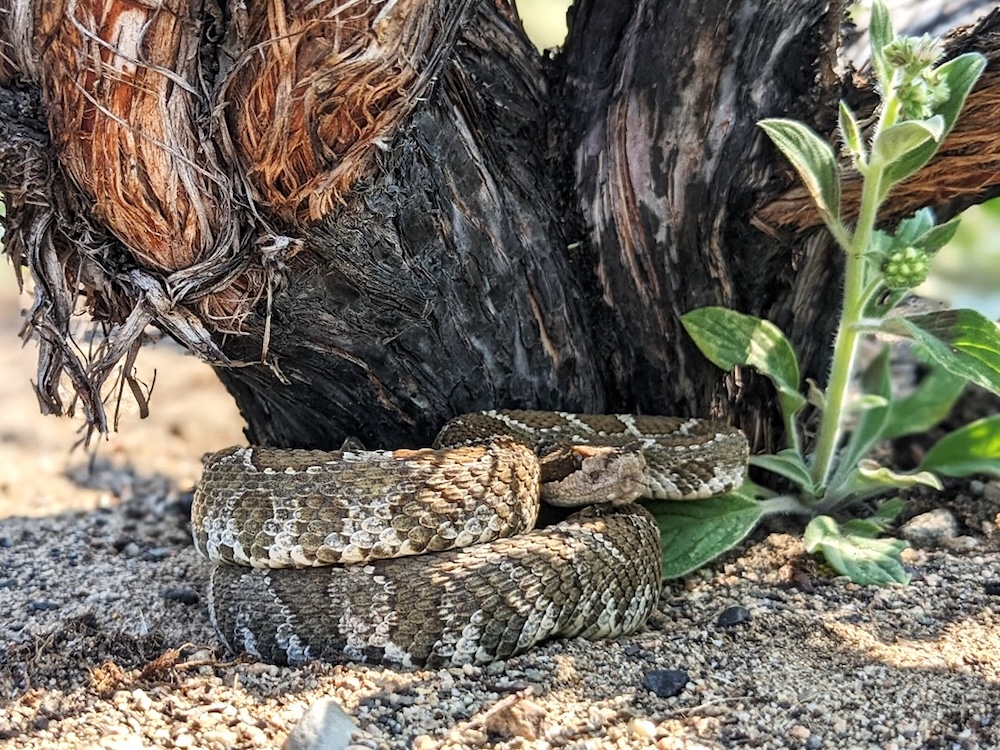
In 2021, the Nk’Mip Creek wildfire tore through nearly 20,000 hectares of land in the South Okanagan, burning reserve and Crown land and forcing the evacuation of hundreds of properties.
One population that benefited? The region’s western rattlesnakes, which were nearly hunted to extinction a few hours north, near Vernon, in the 1930s and ’40s, and are currently listed as threatened in Canada’s Species at Risk Act.
Rattlesnakes are fans of the environmental impacts of the wildfire because “they’re lazy,” Lindsay Whitehead says.
Whitehead is the lead biologist at the Osoyoos Indian Band’s Nk’Mip snake research program, the longest-running snake study in Canada. Since the Nk’Mip Creek fire, she has been tracking snakes using microchips to see how they are surviving in the post-fire landscape.
They’re actually doing quite well, Whitehead has found.
Western rattlesnakes are B.C.’s only truly venomous snake, although they are typically timid and avoid people rather than bite them.
The Osoyoos Indian Band reserve population was estimated at 355 snakes a decade ago. Some biologists warn that because rattlesnakes can live for up to 30 years, it could be hard to tell that a population is at risk until it is on the verge of collapse.
So any beneficial change to their habitat, even in the short term, is good for the long-term future of the species — especially if they would rather be lazy.
In areas unaffected by fire, western rattlesnakes travel up to four kilometres from their dens to their summer foraging grounds.
Snakes in the Nk’Mip fire area have decreased their range significantly in the years since the fire.
That’s likely because the fire created better basking spaces closer to their winter dens, Whitehead says, so they can get out into the sun and regulate their body temperature. (Fires can also occasionally increase small rodent populations, which would also help out rattlesnakes, although that doesn’t seem to be the case with the Nk’Mip fire.)
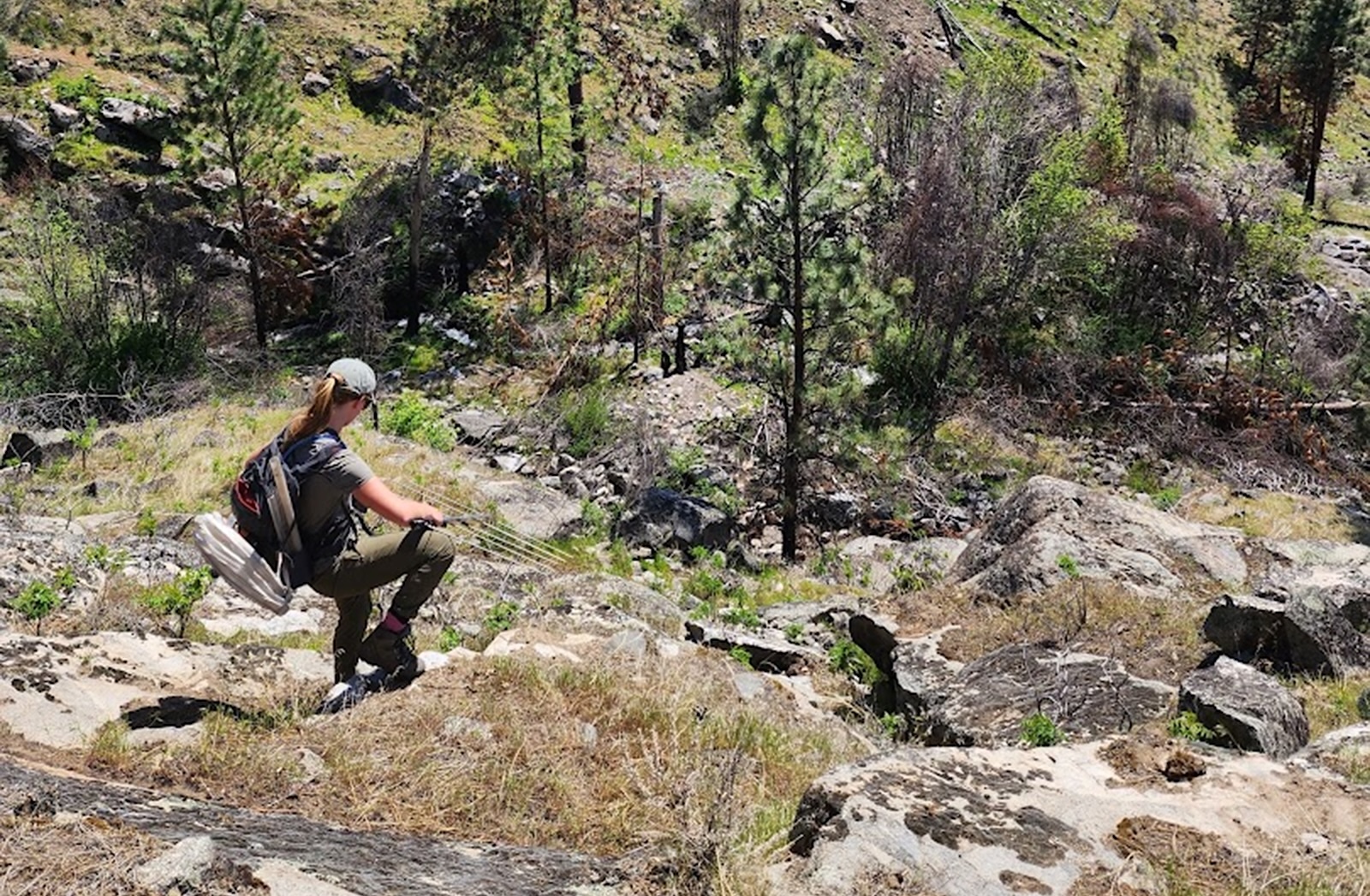
Of course, the fire did cause some complications.
Snakes use scent trails to find their way around their environment. Pheromones left by other snakes help create olfactory highways for other snakes to follow. The wildfire seems to have broken those highways apart.
Whitehead says that since the fire, rattlesnakes have had much higher tortuosity — meaning the snakes are moving in much more wiggly ways than before.
The rattlesnakes were also much more likely to end up in the wrong dens. Rattlesnakes have high den fidelity, meaning they use the same underground spaces year after year. (The dens themselves can sometimes have been in use for more than 100 years.)
After the Nk’Mip Creek fire, Whitehead found that rattlesnakes were six times more likely to switch dens.
Western rattlesnakes are well adapted to survive moderate wildfires like the Nk’Mip Creek fire four years ago.
Exactly what they did to survive that wildfire, and ones like it, is “unfortunately a tough thing to prove with our data set,” Whitehead said.
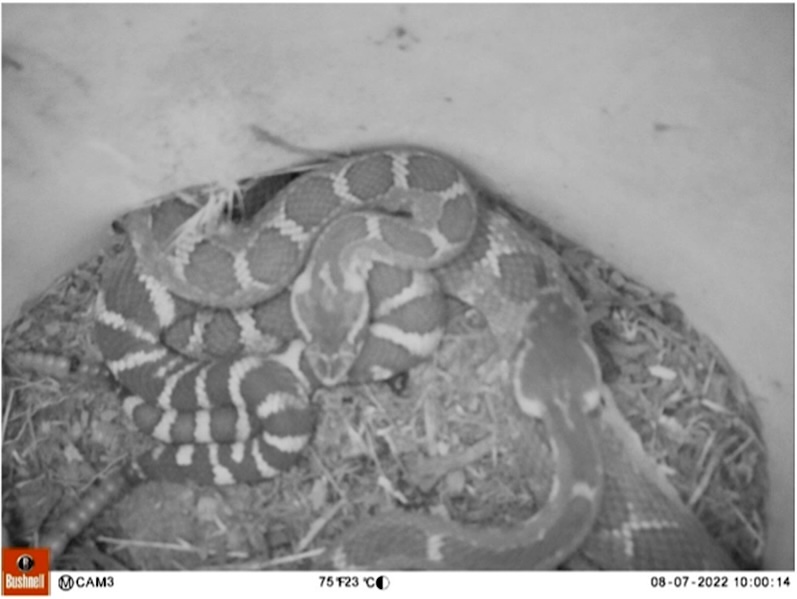
But she can guess. Some snakes likely fled to the surrounding lowlands to escape the burn, while others burrowed deep into rocks. A colleague of Whitehead’s monitoring a similar fire near Twin Lakes in 2023 saw at least one snake book it to its den, where it stayed until the following spring. Many of those snakes survived.
Rattlesnakes on the west side of the lake two years later were not so lucky.
The Eagle Bluff wildfire started in the United States near Oroville in late July 2023 and burned more than 13,700 hectares of land on both sides of the border. The high-severity fire caused a state of local emergency and is now the centre of a civil suit against two Americans who may have sparked the blaze.
Whitehead visited the site in the spring after the fire and found the ground charred, blackened, with few trees and even fewer shrubs. She did find a small handful of snakes, including a mother and three babies. The mother had likely given birth to her live young deep in her den while the fire was raging that summer.
But, she said, “compared to the number of snakes we expected to be there, it was pretty much a total decimation scene.”
“Hopefully I’m wrong and there’s more snakes out there,” she said. But, if megafires become more common in rattlesnake habitat, it will be harder for western rattlesnakes to survive the flames — and enjoy the post-fire habitat it brings. ![[Tyee]](/design-article.thetyee.ca/ui/img/yellowblob.png)
Read more: Environment











Notice about commenting changes
The Tyee’s commenting system will be moving to a new platform on Nov. 12. If you’re already a Tyee commenter you must register with the new system on or after Nov. 12 with your preferred username.More information can be found here.