


 SHARE:
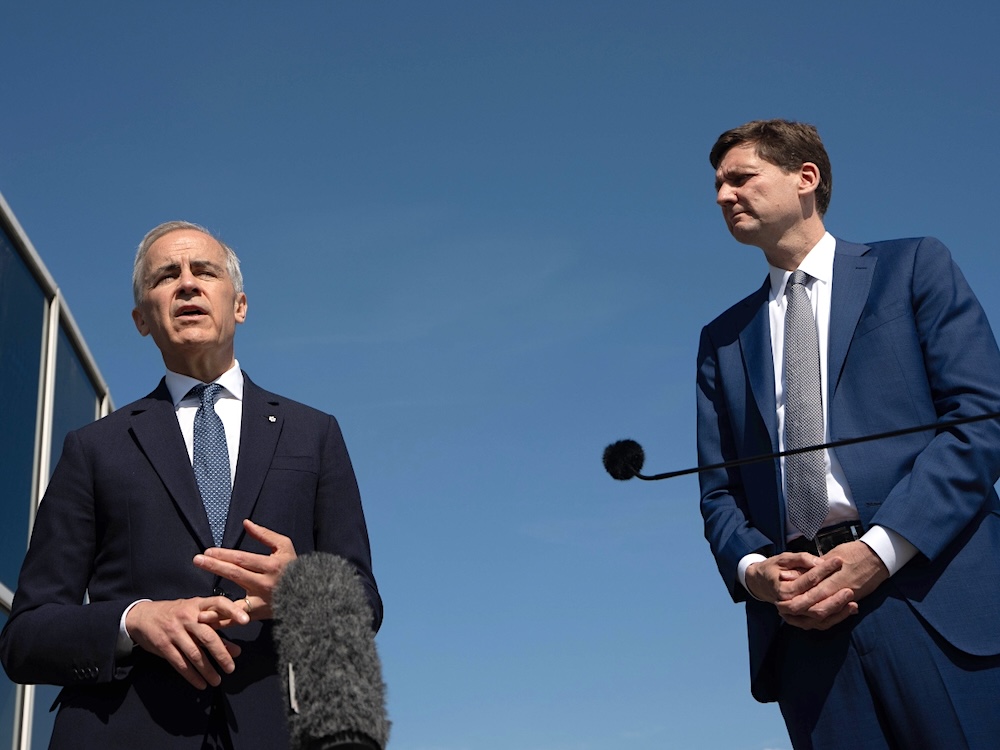
On July 2, the governments of British Columbia and Canada announced a memorandum of understanding that provided the framework by which a new oil pipeline to the West Coast will be built.
It is just one of a series of pieces of an increasingly complex web of commitments, agreements and political rhetoric between Canada, Alberta, British Columbia and major oil producers.
But approval for the West Coast oil pipeline at the centre of the deal between Canada and B.C. is not unconditional. Three separate agreements share a key premise: the pipeline cannot proceed without a carbon capture and storage project. What is not shared is a timeline. British Columbia accepts the pipeline risks now. Alberta and the oil industry are committed only to work toward carbon capture on a schedule stretching to 2045.
In my last piece, I shared my experience in meeting with the newly formed Major Projects Office. The office is the federal government’s concierge service for major projects navigating the Building Canada Act process. They are the chauffeur in a black car service tasked with getting projects their inevitable “national interest” designation and developing conditions that must be met for the projects to be built.
The Canada-B.C. agreement is heavy on promises of future negotiation through a bilateral “Implementation Committee.” While it explicitly maintains the North Coast tanker ban and offers a $3-billion federal bailout for the BC NDP’s beleaguered George Massey Tunnel replacement project, many of the other details are vague, or to be worked out later. One point is clear, though: British Columbia acknowledges that the one project is “dependent” on the other.
Premier David Eby has promised that British Columbians will provide certainty for a new million-barrel oil pipeline to the south coast. Doing so accepts the immediate and indefinite risks of a pipeline to our fragile coastline long before Alberta has proven it can deliver on the reversible half of the bargain — namely the Pathways Project, which isn’t slated to be fully operational for nearly two decades.
The November 2025 memorandum of understanding between Alberta and Canada states that both governments “agree that the Pathways Project is also a prerequisite to the approval, commencement and continued construction of the bitumen pipeline, given that the two projects referred to in this MOU are mutually dependent.”
The asymmetry is obvious. Under the dark cloud of Alberta’s threat to leave Canada, British Columbians are forced to accept another taxpayer-funded pipeline proposal by this October. Meanwhile, Alberta doesn’t have to prove the prerequisite carbon capture and sequestration project is viable until long after the construction starts on the pipeline and damage in British Columbia is already done.
The B.C.-Canada deal explicitly acknowledges that Canada’s agreement with Alberta lacks any real enforcement mechanism to ensure the Pathways carbon capture and sequestration project is actually built.
The national-interest designation and project conditions on the oil pipeline will be set within the next year. Alberta and the oil and gas industry will have collectively obtained regulatory certainty for a new pipeline, long before they need to deliver on any of their commitments. This is hostage taking, not nation building. And it gets worse.
On the same day the Canada-B.C. deal was announced, the public learned of a trilateral memorandum of understanding between Canada, Alberta and the Oil Sands Alliance — a collection of major oil companies including Canadian Natural Resources, Cenovus Energy, ConocoPhillips Canada, Imperial Oil and Suncor. That agreement describes a “shared objective” for the industry, which says it “intends” to reduce emissions by six million tonnes by 2035 and has set a “common goal” to further reduce emissions by 10 million tonnes by 2045.
Alberta and the oil and gas industry are seeking regulatory certainty for a new West Coast pipeline while offering British Columbians and Canadians aspirational emissions reductions in return.
There are at least three issues British Columbians need to get serious about in the next few months. The first is timing. British Columbia carries all the upfront risk while Alberta and the industry public relations muse about their “intentions,” “shared objectives” and “common goals” for the next decade.
Next are the legitimate concerns about execution. The promise of carbon capture and sequestration has never been delivered, and certainly not at the scale being considered here. The potential ability to capture some of the carbon they create has always been the elusive carrot dangled by the oil and gas industry to increase social licence.
Third is the uncapped taxpayer-funded subsidization of these projects. The trilateral memorandum of understanding doesn’t lock in what Canadian taxpayers are on the hook for. It simply commits Canada to “maintain appropriate fiscal support to enable the required investments” and to keep reviewing the existing regulatory framework and tax credits that cover up to half of the capture equipment cost and 37.5 per cent of transport and storage infrastructure.
Not surprisingly, the Oil Sands Alliance wants more from the public. Jon McKenzie, the chair of the Canadian Association of Petroleum Producers and head of Cenovus Energy, said the industry is ultimately looking for the government to cover three-quarters of capital costs and more than half of operating costs.
Meanwhile in British Columbia, more than 20,000 residents are evacuated from their homes because their communities are reduced to ash by wildfires, while thousands more cannot get insurance to protect their private property. Those are the real consequences to everyday British Columbians held captive by an industry asking us to accept a decade more of emissions in exchange for hopes, dreams and propaganda.
Each memorandum of understanding is consistently clear about one thing: a new West Coast oil pipeline is contingent on a viable carbon capture and sequestration project. Not just the “approval” of a new pipeline, but also the “commencement and continued construction.”
That means Eby has important work ahead. The pipeline’s economic and revenue framework, royalty payment and environmental liability fund are all to be negotiated before Dec. 1.
Most importantly for British Columbians, Eby cannot cave to Canada and Alberta because he has a desperate need for federal cash to fund his failing administration.
Once the federal government gives national-interest designation to a new West Coast oil pipeline a few weeks before Alberta’s referendum on separation in October, the Building Canada Act process will be concerned only about answering the question of how the pipeline will be built.
But if the pipeline is truly contingent on a successful carbon capture and sequestration project, then the two timelines need to align. British Columbia must insist that Alberta and the Oil Sands Alliance have a construction timeline, not a promise. They must put their money where their mouth is and have industry’s contribution in the bank.
If they believe British Columbia should provide them certainty on our half of the bargain, then British Columbians should also receive certainty. Not some elusive pipe dream two decades from now. ![[Tyee]](/design-article.thetyee.ca/ui/img/yellowblob.png)
Read more: Energy, Alberta, Environment








Tyee Commenting Guidelines
Please note that email notifications for replies are not currently working due to a software issue which may be resolved in a future update.
Comments that violate guidelines risk being deleted, and violations may result in a temporary or permanent user ban. Maintain the spirit of good conversation to stay in the discussion and be patient with moderators. Comments are reviewed regularly but not in real time.
Do:
Do not: