


 SHARE:
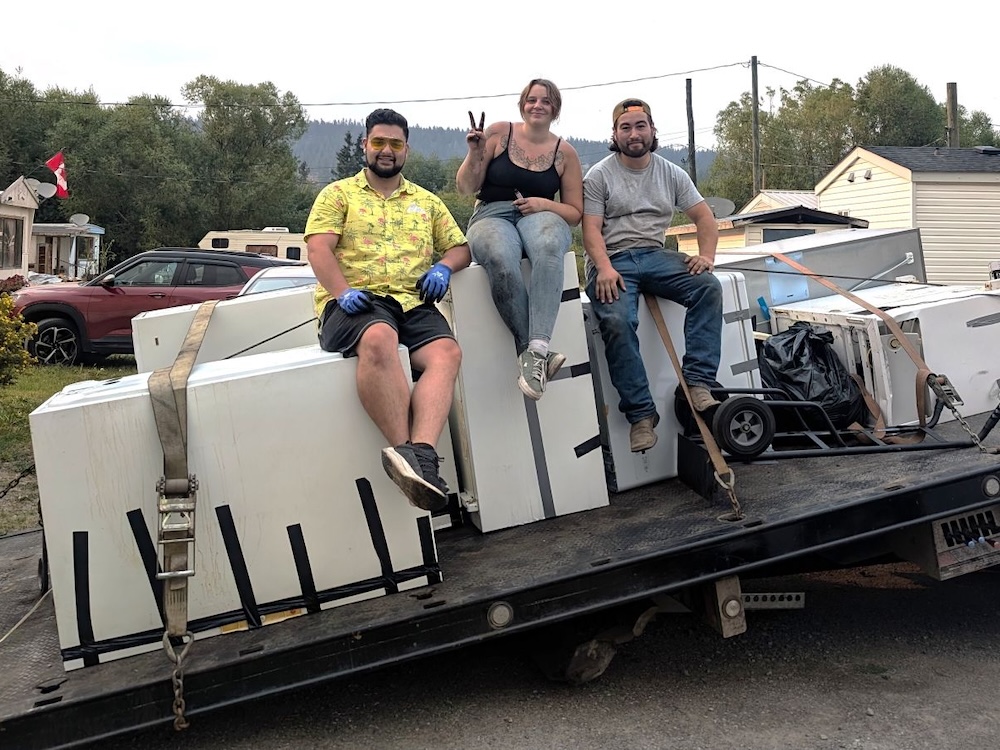
When Becky Spreng fled her home north of Clinton, she had two freezers full of meat. One had a full quarter of a cow; the other was stocked with pork and chicken. It has spent the last month rotting.
On Thursday, as she prepared to finally return home, Spreng didn’t want to consider the mess.
“My roasts were Saran wrapped and then paper wrapped, so all of that blood — eugghh,” she said.
Thousands of others around B.C. will have found themselves in the same position by the time summer ends. And as many have prepared to return home this year, they’ve been told that they’ll have to clean their freezers and fridges out themselves because the province has stopped funding the curbside pickup of nightmare appliances and their contents.
In both Boston Bar and Clinton, an appliance industry group swooped to the rescue at the last moment after residents expressed disgust and outrage. But the stinky-fridge problem highlights continued struggles for British Columbia’s provincial emergency management bureaucracy five years after 2021’s wildfires and floods prompted the promises of more support.
Is that fridge a biohazard?
The contents of freezers can sustain only a couple of days without power before they should be thrown out. Before this year, there was an established playbook for what happened with freezers following an evacuation.
Although residents were urged to consult their insurer for guidance on how to handle household damage linked to their evacuation, local governments also provided help, often hiring contractors to pick up sealed freezers and fridges from the curb. Clinton residents returning after fleeing 2017’s Elephant Hill fire were among those who were able to dispose of their freezers in such a manner.
Emergency responses are handled by local governments in British Columbia but financed by the provincial government, and Victoria underwrote the pickup operations.
Governments supported the disposal of fridges and freezers because of the hazard the contents could pose to residents during the disposal process, Jamie Vieira, the director of the emergency operations centre for the Thompson-Nicola Regional District, told The Tyee. The regional district, which spans a massive fire-prone area around Kamloops, has overseen the return of residents following long-term evacuations on numerous occasions over the last decade.
This year, however, local governments say the province told them that it would no longer cover the hefty fridge and freezer retrieval and cleanup costs.
“Our understanding is that at one time it was designated as a serious health risk [for residents] to clean spoiled food out of their fridge or freezer,” Vieira said.
Vieira and other emergency management officials said that over the winter, health officials deemed it safe for residents to clean and dispose of freezers and fridges after long power outages. According to Vieira and others, the changing health guidance led the province to declare it would no longer pay for the disposal of the freezers and their contents.
A spokesperson for the Interior Health Authority, however, says health guidance has not actually changed. The spokesperson wrote in an email that “advice around returning home after an evacuation has not changed in recent years, including recommendations around fridges.”
It’s possible the guidance was not changed but interpreted differently. Requests to interview Emergency Management and Climate Readiness Minister Kelly Greene were ignored last week. A ministry spokesperson sent an emailed response that said residents should contact their insurers, that the province reimburses costs to local governments for eligible expenses and that staff were “connecting directly with the Village of Clinton and Thompson-Nicola Regional District to better understand their needs and discuss what supports we may be able to offer.” The response did not directly explain why the province was no longer funding the collection and disposal of appliances such as fridges. The Tyee has sought more specifics.
Whatever the case, local governments say they don’t have the money to pay the disposal cost themselves, and as Clinton and Boston Bar residents returned to their homes, they were told they would be expected to don gloves and protective masks to do the dirty work themselves — and not get sick.
In both communities, residents protested vociferously. The freezer challenge is particularly acute in rural parts of British Columbia, where many people have multiple freezers stocked with meat sourced from hunting trips or infrequent visits to distant grocery stores.
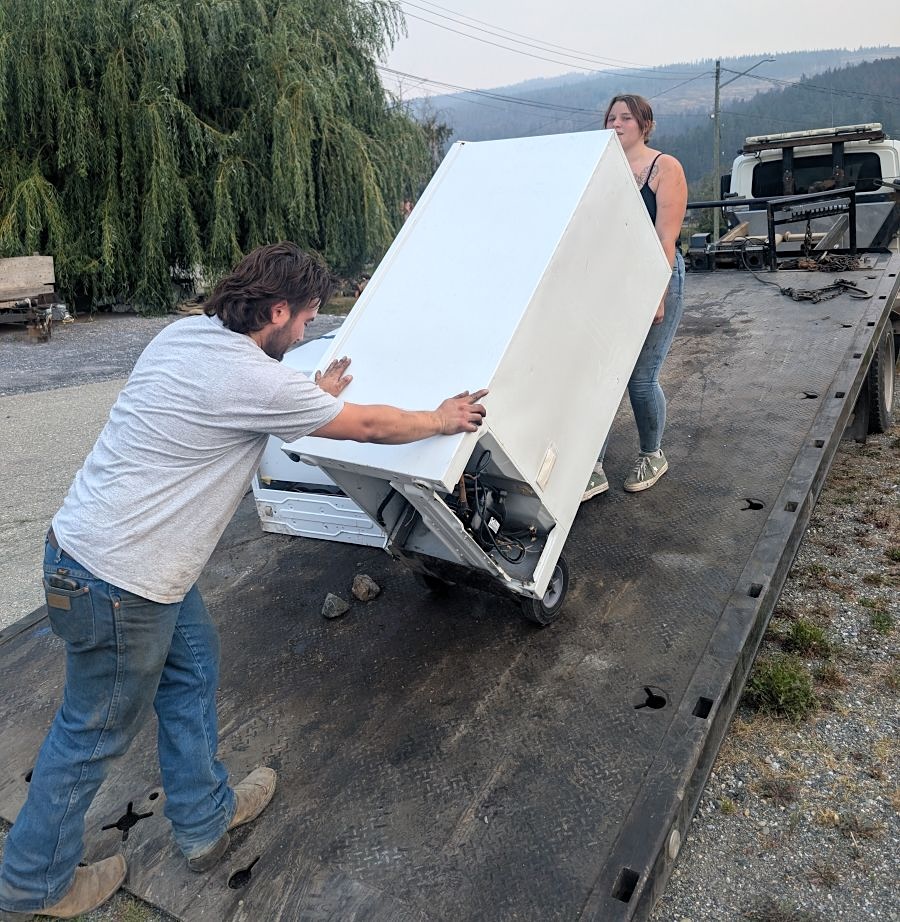
Nicholas Kosovic, who operates Clinton’s Stagecoach Café and also serves as a village councillor, said the appliances constitute biohazards.
“There are people in the community who do not have the capacity to manage the situation on their own, whether they cannot lift it or they're immunocompromised or any number of things that makes this just an added trauma for them to deal with,” Kosovic said.
Kosovic worries that the rotting meat will have seeped into the interior workings of fridges and freezers, and that residents will retain appliances that should be discarded.
“You're going to find lots of people who should have dumped their fridges out of public health interest but are now being advised by Interior Health to keep them if they look OK,” he said. “I run a café. There's absolutely no way I'm going to play loosey-goosey as they were recommending. If the fridge was sufficiently saturated, it's got to go.”
Kosovic believes the fridges have been deemed not a health hazard because the province doesn’t want to pay to dispose of them.
“A budgetary shortfall should never be used to downgrade the severity of a community risk,” he said.
Private solutions
The revulsion expressed by residents led the local governments to look harder for a solution.
After Boston Bar expressed unease, the Fraser Valley Regional District contacted the Major Appliance Recycling Roundtable — an industry group that helps finance the recycling of appliances in B.C. The organization volunteered to deal with Boston Bar’s fridges and freezers if they were brought to the local landfill and taped shut. The organization’s workers would deal with the nasty contaminants.
The fix was an imperfect solution. Residents, including seniors, still needed to find a way to get the appliances and their hefty contents out of their homes, into a vehicle and to the landfill. The freezers and fridges and all their contents are still at the landfill — which wouldn’t be a major worry except for the fact that the electric fence the dump uses to deter bears is not currently working.
On its website, the roundtable suggested it would be happy to work with other evacuated communities. But there has seemingly been no provincial body to share information between such communities.
On Aug. 6, the Fraser Valley Regional District teamed up with the industry roundtable. More than a week later, on Aug. 13, Spreng, Kosovic and other Clinton-area residents were told they would have to clean up their fridges when they returned home. As in Boston Bar, residents expressed unhappiness.
Kosovic and some other Clinton residents, including the owners of a local towing company destroyed in the fire, volunteered to do the work themselves. And on Saturday, just like in Boston Bar, the local governments also announced that the roundtable had volunteered to cover the costs of freezer pickup and that residents could take their sealed fridges and freezers to the local landfill.
Some First Nations have taken a more hands-on approach.
In the Fraser Canyon, Boston Bar First Nation has kept evacuation orders in place longer than the regional district and used the intervening time to dispose of appliances and their contents.
And on Friday, Spreng — a member of the High Bar First Nation — got a call from her cousin, who works with the band.
“She said, ‘Listen, I know you have a couple freezers and fridges in your house. We are, over the next three days, going to remove this stuff for you, so it’s something you don’t have to do.’”
Spreng’s power is still out, so she won’t be returning immediately. But when she does, the rotting meat will be gone.
“I was like, ‘Thank you. I love you.’” ![[Tyee]](/design-article.thetyee.ca/ui/img/yellowblob.png)
Read more: Health, Environment








Tyee Commenting Guidelines
Please note that email notifications for replies are not currently working due to a software issue which may be resolved in a future update.
Comments that violate guidelines risk being deleted, and violations may result in a temporary or permanent user ban. Maintain the spirit of good conversation to stay in the discussion and be patient with moderators. Comments are reviewed regularly but not in real time.
Do:
Do not: