


 SHARE:
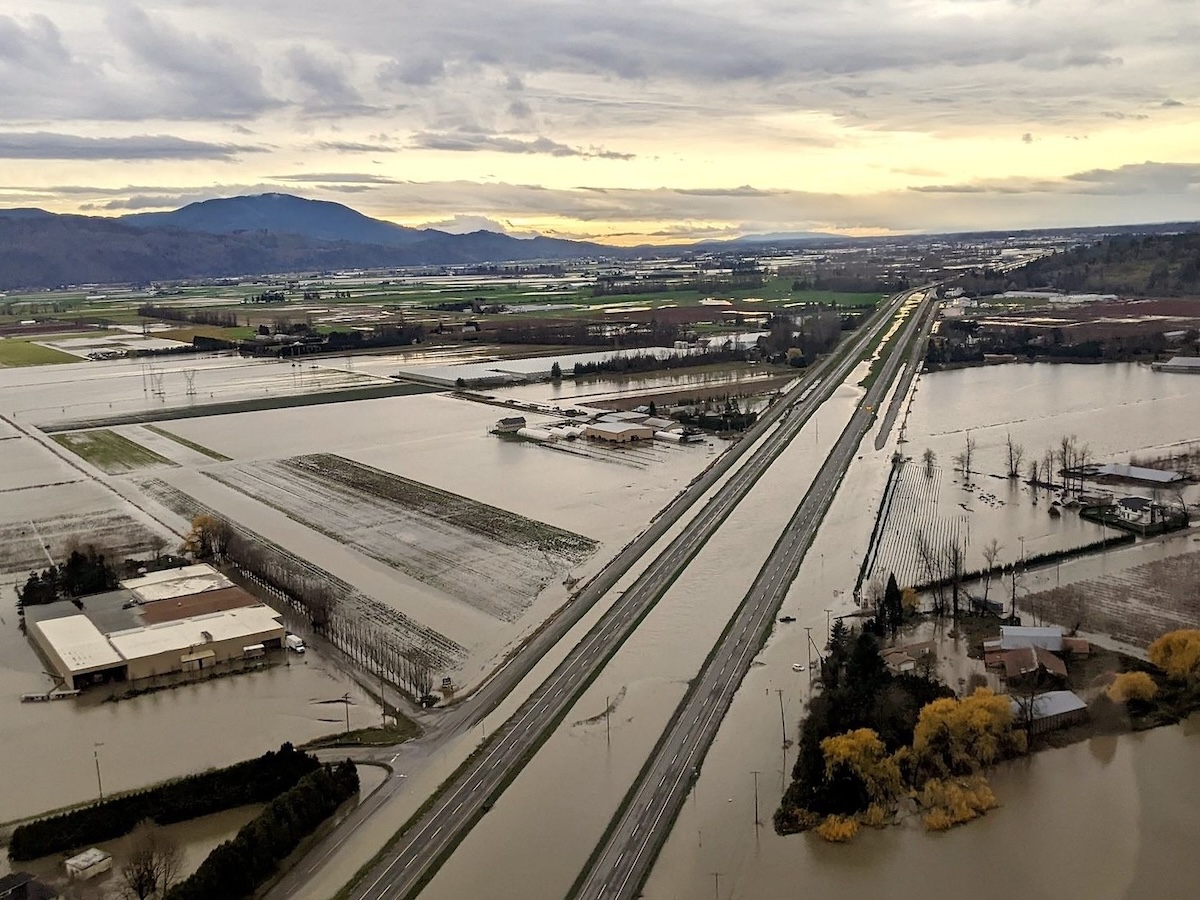
Four years after flooding devastated several British Columbia communities, key government promises made in the wake of the disaster remain unfulfilled.
The 2021 atmospheric river exposed British Columbia’s vulnerability to large climate-related disasters and led to a series of specific promises from the federal and provincial governments aimed at reducing flooding risk.
But as 2025 draws to an end, key commitments on flood prevention programs and infrastructure remain undelivered, local officials say.
A strategy waiting for action
Last July, the provincial government released its new “B.C. Flood Strategy,” a document intended to set the stage for a new approach to how communities and governments collaborate to reduce flood risks as the climate changes. The strategy emphasized the need to find ways to improve resiliency with an “all-of-society” approach that goes beyond localized tactics such as building larger dikes.
The strategy recommended better analysis and mapping of flood vulnerabilities, improved dialogue and co-ordination between governments and communities, and improved emergency responses. It also declared the need for investments for a range of key initiatives, including the restoration of wetlands to accommodate rising waters, the raising of dikes where needed and the relocation of residents from areas particularly susceptible to flooding.
Stó:lō Tribal Chief Tyrone McNeil, who served as an adviser on the strategy, told The Tyee the “sharing the pen” process was a “perfect example” of how governments could bring First Nations to the decision-making table from the outset in order to shape effective policy and plans for the future.
But since the document was released in 2024, McNeil has become frustrated by a lack of progress and funding for the strategy’s lofty goals. In February he wrote to Premier David Eby, warning that he and fellow members of the Lower Fraser Floodplains Coalition — a group of Lower Mainland flooding experts — had seen “little to no steps to move this important work forward.” He remains unimpressed by the progress.
“I haven’t seen any investments whatsoever,” McNeil told The Tyee earlier this month.
When asked in the spring about funding to support flood-plain planning in the Fraser Valley, the province issued a statement that said, in part, “Current fiscal constraints due to competing priorities make it challenging to respond to this request at this time.”
McNeil and others say flood mitigation funding should be seen as an investment — and a way to limit future costly expenditures. He noted that prominent federal politicians echoed that perspective following the 2021 flood, pointing to a speech given by federal Emergency Preparedness Minister Bill Blair at a February 2023 funding announcement following the disaster.
“Just simply rebuilding back to the state we were in previously is a recipe for future costs,” Blair said. “We know that every dollar we invest in prevention can reduce the cost of recovery by as much as $10.”
Today, McNeil and others are leaning on those comments to lobby for continued flood prevention funding in difficult economic times.
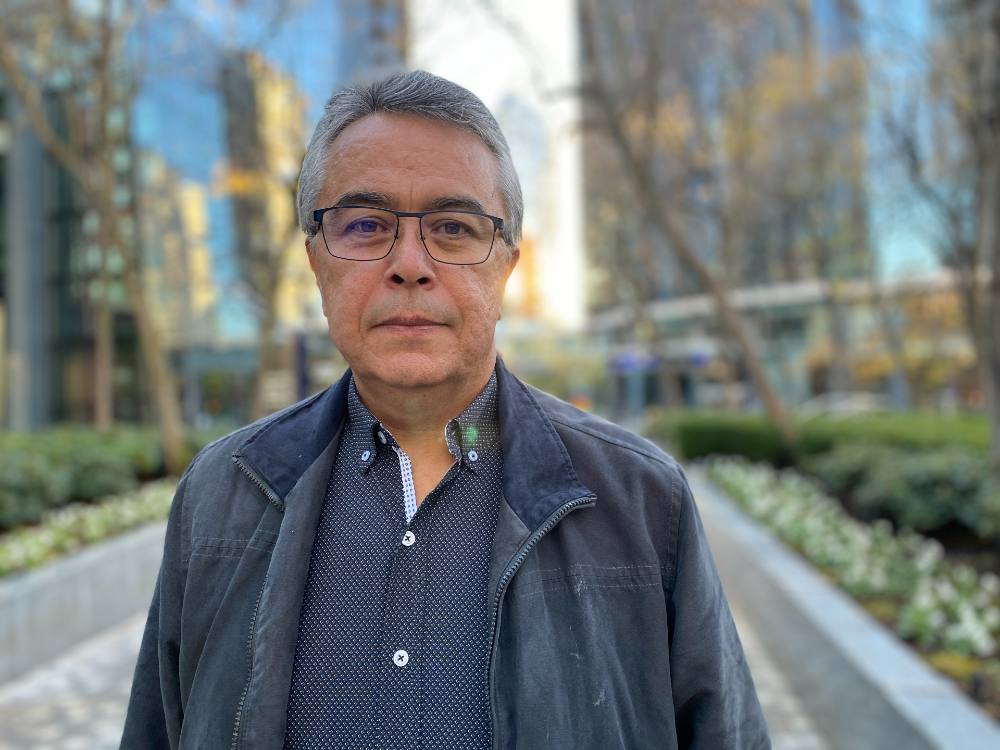
“If we spend money now, not only do we save a lot of money down the road, we safeguard more people and more infrastructure, and we do it in a way that promotes nature-based solutions,” McNeil said.
But the promised funding has been slow to materialize, and even when it does, local officials are finding that even basic design and planning work is facing major hurdles.
Mapping delays
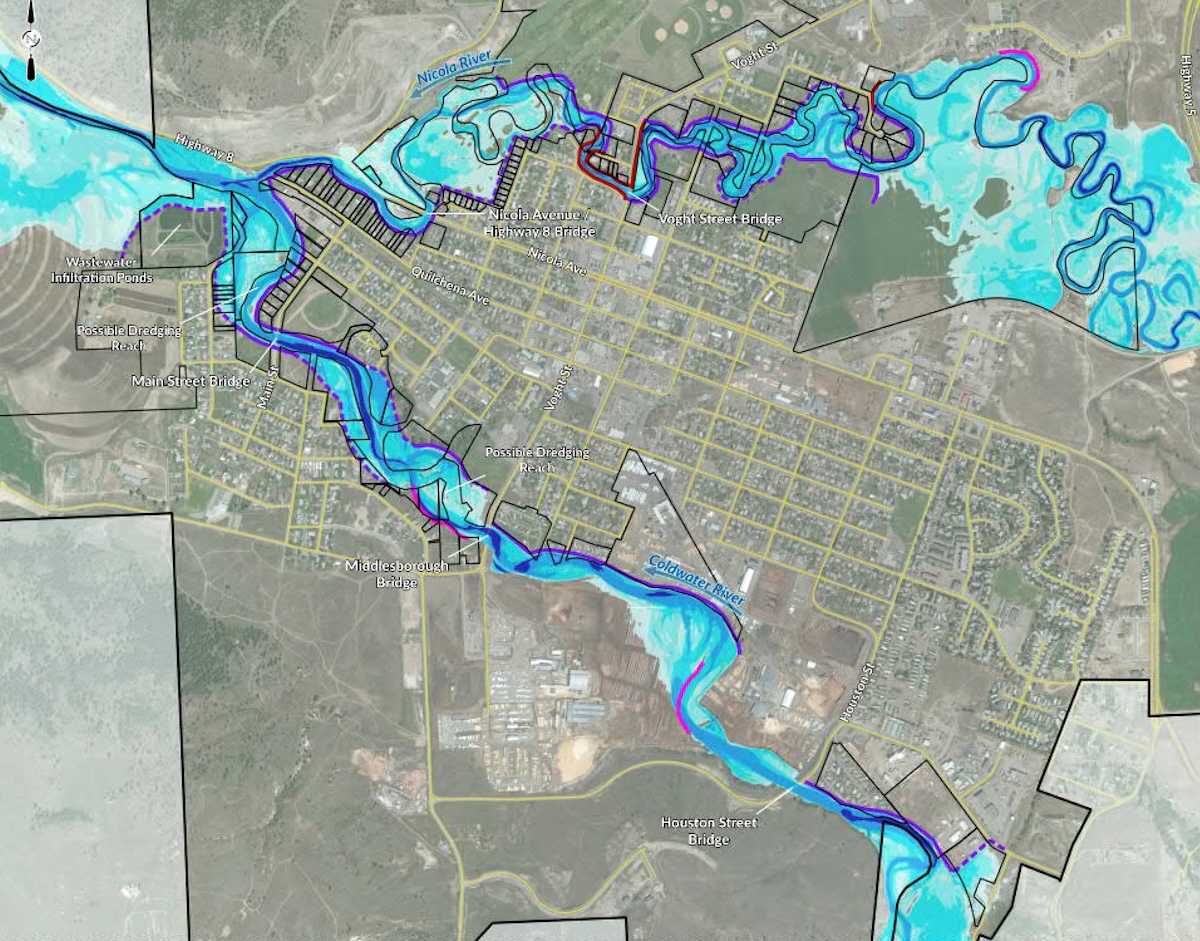
Near the mouth of the Coquihalla River, plans to upgrade a key dike that protects Hope’s hospital have been shelved for 18 months while the province works to update flood maps for the Lower Fraser and Coquihalla rivers.
The new maps will influence how communities such as Hope prepare for potential future floods.
The modelling will play a role in decisions involving not only flood defences but also where new buildings and infrastructure should be permitted.
Hope says it was told the maps would be completed by March 2024. But that delivery date was repeatedly extended. With no maps available at the start of November, Hope staff drafted a letter to the province imploring it to deliver on the project. On Nov. 7, three days before council was set to vote on sending the letter, the province delivered the updated modelling to Hope.
At a council meeting last week, staff declared — dryly — that it was a “total coincidence” that the maps arrived just as Hope prepared to go public with their dissent.
Hope Mayor Victor Smith spoke to The Tyee earlier in the day, before the maps had been delivered, and said the delays were holding up work needed to protect Fraser Canyon Hospital and numerous local businesses from a potential Coquihalla flood.
“If it flooded there, it would probably wipe out about half the businesses on Old Princeton Way,” Smith said.
Four years ago, landslides cut off Hope in all directions, leaving the hospital stranded and a critical lifeline severed for both locals and hundreds of stranded travellers.
But the raging Coquihalla also threatened the hospital, which is built next to the river, tearing away chunks of the riverbank and necessitating urgent repairs to shore up the site. Temporary work repaired much of the damage, but a long-term solution is still needed.
After the 2021 atmospheric river, the provincial and federal governments promised to do more to help communities prepare for a future in which floods are expected to be more frequent and more severe.
But Smith and others say enthusiasm for such projects has cooled in the years since.
“You think they’re going to be all over it, the way they talk,” Smith said. “And as it goes away, it kind of seems to fall off the table quietly.”
In an email, a provincial spokesperson wrote that the mapping project “was one of the largest and most complicated mapping projects completed to date in B.C. It required detailed engineering work and incorporated multiple rounds of community engagement with all of its participating communities.”
Infrastructure upgrades linger
In Abbotsford, Merritt and Princeton, the federal government has come in for sharp criticism for denying requests to fund projects that would attempt to mitigate a repeat of 2021’s disastrous flooding in the three communities.
In Abbotsford, where the low-lying Sumas Prairie was flooded when the Nooksack River overflowed its banks south of the border, the city has created a comprehensive plan to try to avoid a future billion-dollar disaster. The city’s plan would reconfigure dikes to funnel floodwaters through Sumas Prairie toward the Fraser. The plan depends on several other large projects, including the raising of Highway 1 and the construction of a new pump station that could be the largest of its kind in North America. Altogether, the comprehensive plan is expected to cost more than $1.6 billion.
The city applied for funding through the federal government’s Disaster Mitigation and Adaptation Fund but was told last year its application had been denied. The flood-stricken communities of Merritt and Princeton also had funding applications for long-term flood prevention programs denied.
Despite the rejection, Abbotsford is still pursuing the project. But just creating the initial designs for the pump station will cost millions that the municipality has not yet secured.
“Four years later, I’m still advocating for funding,” Abbotsford Mayor Ross Siemens told The Tyee. “If you sense some frustration in my voice, it’s because you feel like you’re a voice in the wilderness sometimes.”
Siemens is hoping that Ottawa’s new quest to build infrastructure projects that support the country’s economy will cause them to revisit the Sumas Prairie plan. When the low-lying prairie flooded in 2021, it closed the Trans-Canada Highway and the Canadian National rail line. The area is also criss-crossed by a major BC Hydro transmission line and several pipelines.
“We’ve got $65 billion in 2022 dollars going down that freeway” on an annual basis, Siemens told The Tyee. “That’s a lot of goods and services that are being moved along there.”
Provincial commitments
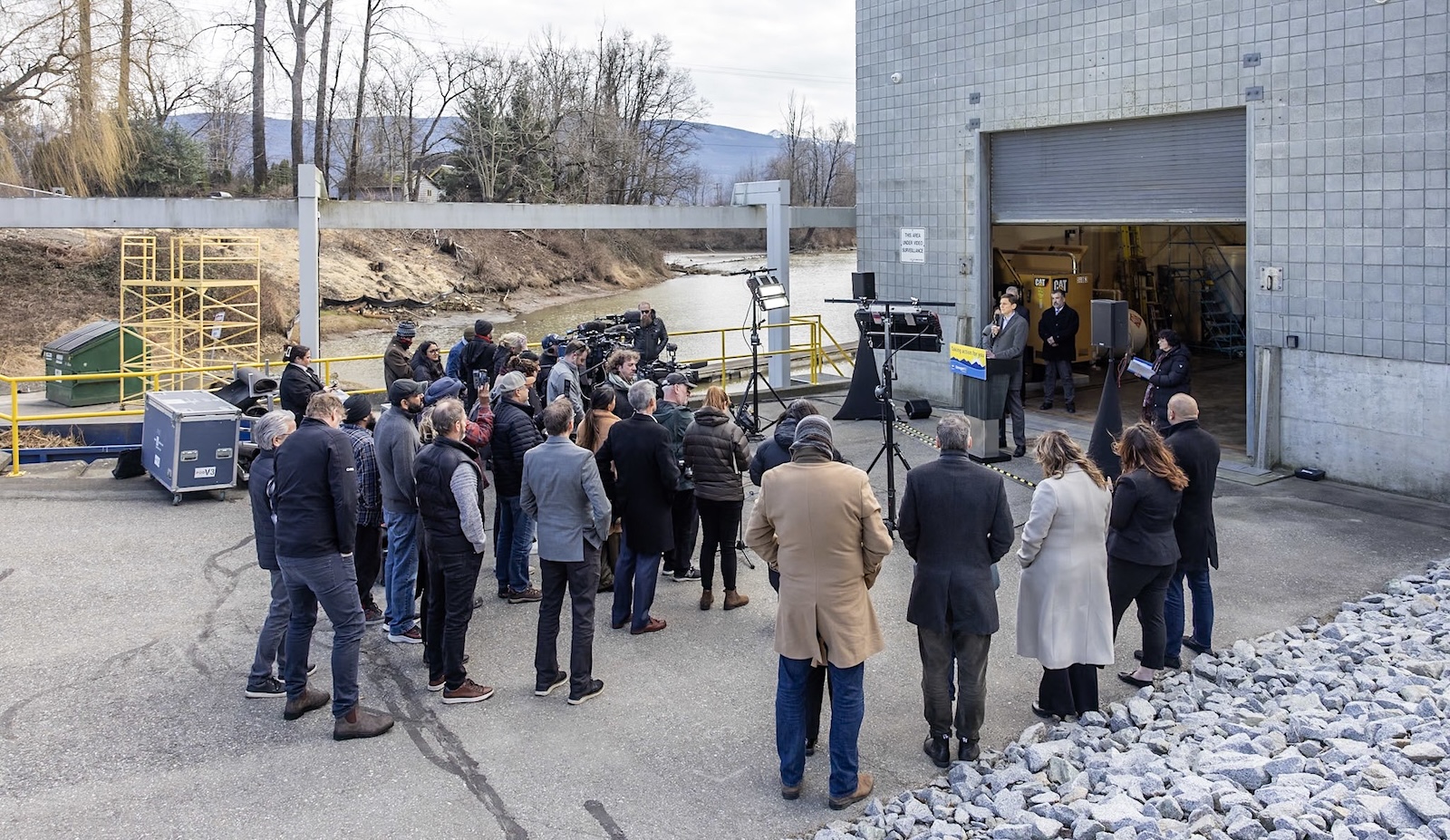
Last year, the province committed money to help boost dikes around Abbotsford’s existing Barrowtown Pump Station, which was nearly inundated in 2021. At the time, Abbotsford was still waiting to hear from Ottawa regarding its long-term flood improvement plans. Premier David Eby wrote a letter expressing support for the city’s federal applications.
The province also recently promised $60 million to Merritt to improve that city’s dikes.
Provincial officials still say they want Ottawa to ante up for flood protection.
“I really hope that the federal government starts to take this seriously, steps up with the support that is necessary and required for a project of national significance,” provincial Emergency Management and Climate Readiness Minister Kelly Greene told The Tyee.
In an email, officials with Greene’s ministry cited a long list of improvements made since 2021 to better prepare for future climate-related emergencies. Those include better monitoring systems and alert systems, improved communication with communities, and an upgraded emergency support services program.
But even as Greene asked for more resources from Ottawa, she was less direct when questioned about whether her own government would increase its spending on flood protection.
Asked if the province would increase funding for flood protection, Greene pointed to investments B.C. had previously made and said it was important to make communities safer. She made no concrete promises about the future.
“Just this year alone, we've spent $27 million helping communities with their resilience projects. We are also investing more than $38 million in LiDAR [light detection and ranging] data that's open data for communities so that they can have a good opportunity for decision-making on land-use planning and other land-based activities so that they can reduce their risks with the decisions that they're making in their local communities,” Greene said.
“It's very important that we continue this work, and I very much look forward to doing it in partnership with communities.”
Flood insurance, where art thou
Canadians across the country also continue to wait for one more key program repeatedly promised by Ottawa in the wake of the 2021 floods.
On multiple occasions, the federal government has declared its intention to create a new flood insurance program that would increase the availability of low-cost flood insurance for people who live in low-lying areas, while also promoting programs that would better protect those areas or enable residents to move to less risky places.
“The program’s implementation is the single most important step Canada can take to better protect homeowners from the financial risks of climate change today,” the Insurance Bureau of Canada declared in the spring of 2024, after the government committed to creating the program by the following year.
When the feds failed to provide funding in a budget update delivered in late 2024, the Insurance Bureau of Canada condemned the omission, declaring Ottawa had “broken” its commitment.
During the last election, the Liberals promised to launch the program in April 2026.
But there has been little information offered since, and no specifics were detailed in the federal government’s recently released budget. Public Safety Canada officials did not respond to The Tyee’s request for comment by deadline. In August, when asked by the Narwhal about the state of the program, the ministry would not confirm it would be created in 2026. ![[Tyee]](/design-article.thetyee.ca/ui/img/yellowblob.png)
Read more: Politics, Environment







Notice about commenting changes
The Tyee’s commenting system will be moving to a new platform on Nov. 12. If you’re already a Tyee commenter you must register with the new system on or after Nov. 12 with your preferred username.More information can be found here.