


 SHARE:
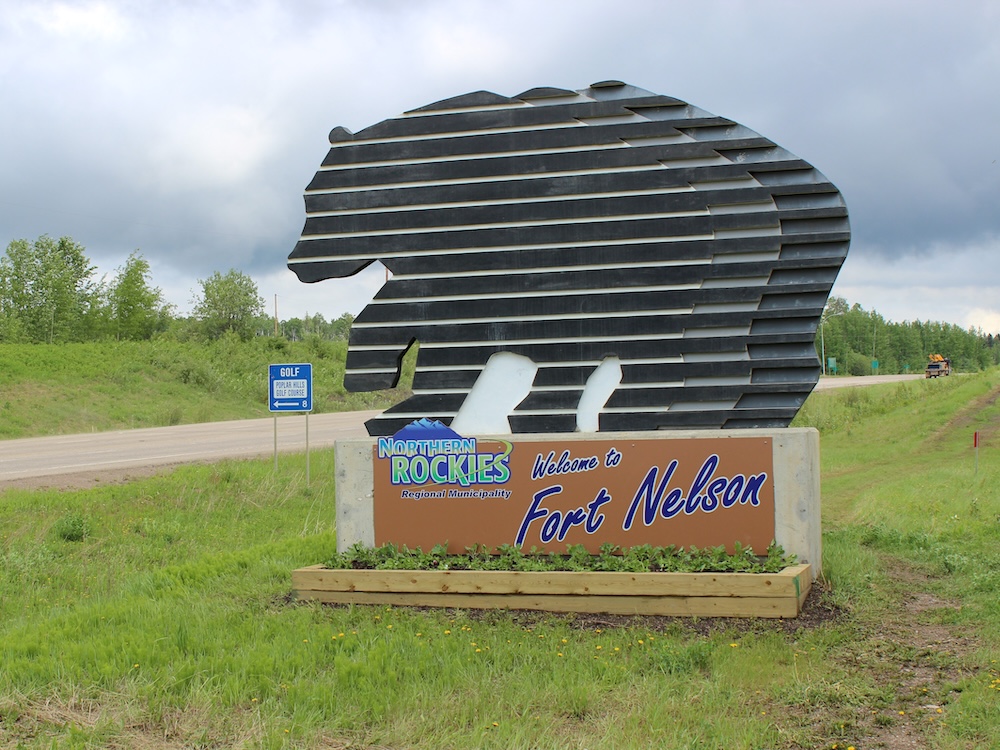
A northern B.C. community faces a massive revenue shortfall after an oil company went bust without paying nearly $9 million in outstanding property taxes, interest and penalties.
Erikson National Energy, a company that went insolvent last year and was formally placed into receivership in May, is responsible for nearly all of those unpaid taxes.
With no prospect of collecting what it is owed, the Northern Rockies Regional Municipality, or NRRM, has formally asked the province’s minister of housing and municipal affairs to authorize writing off $8.7 million and has warned further writeoff requests may be in the offing.
The unpaid taxes represent a substantial liability for B.C.’s only regional municipality and follow a prolonged economic slump in the region due to the collapse of the forest and methane gas industries.
“This certainly is one of the largest [writeoff] requests that we’ve made,” Toni Pike, NRRM’s director of finance, told council members during a meeting in mid-October. Pike warned that the requested writeoff may not be the last.
Erikson’s facilities were all on Crown land leases, which meant the NRRM had little if any means to retrieve the back taxes because Crown leases cannot be sold to recover funds, the provincial government told The Tyee. Other bankrupt companies with Crown leases also have not paid or may soon not pay their taxes, council was warned.
“It certainly affects our future,” Pike said of the loss in revenues. “We are writing off a lot of taxes.”
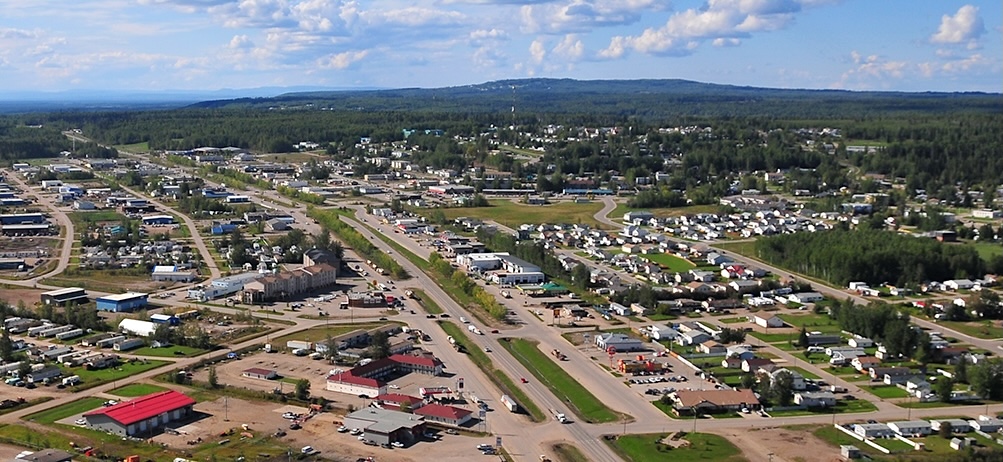
The NRRM’s current budget, approved in May, prepared for the risk posed by those unpaid taxes and built in a $2.5-million allowance to cover shortfalls if the municipality wasn’t able to collect taxes on leases like Erikson’s.
NRRM Mayor Rob Fraser is worried about what lies ahead, with industrial taxes a key source of revenue for the sprawling local government.
The $2.5-million allowance to cover shortfalls was driven by trends the NRRM was seeing in non-payment of taxes, according to an NRRM budget document. Budget figures show industry accounts for 85 per cent of all the regional municipality’s tax revenue.
“They’re paying 3.3 times the residential taxpayer. So that’s a huge amount we’re losing,” Fraser noted during the council meeting. “The whole situation is not sustainable in the long run and it potentially has the ability to affect our services.”
The only bright side for the NRRM is that many of Erikson’s facilities were bought during bankruptcy proceedings by Calgary-based Wildboy Energy. While the new company won’t be responsible for the back taxes, it will be assessed and have to pay property taxes on those facilities in the future.
“We do know that we’ve got about 300 properties now that [as a result of the Wildboy purchase] are in a position to be paying taxes in 2026,” Pike said. “That’s very positive. It’s one of the first times I’ve seen a positive result come out of a bankruptcy.”
Wildboy has said very little publicly about its business plans and did not respond to a Tyee interview request. But the BC Energy Regulator told The Tyee the company intends to use methane gas from several old Erikson wells in a remote off-grid area to fire generators, which will power data facilities composed of banks of computers housed in shipping containers. The computers would be used to store or mine data.
(Data mining refers to the processing of large data sets for a range of purposes including machine learning and artificial intelligence or the generation of cryptocurrency and processing of crypto transactions.)
The project would mark the first time that data mining is fired directly by methane gas in B.C.
A new type of municipality
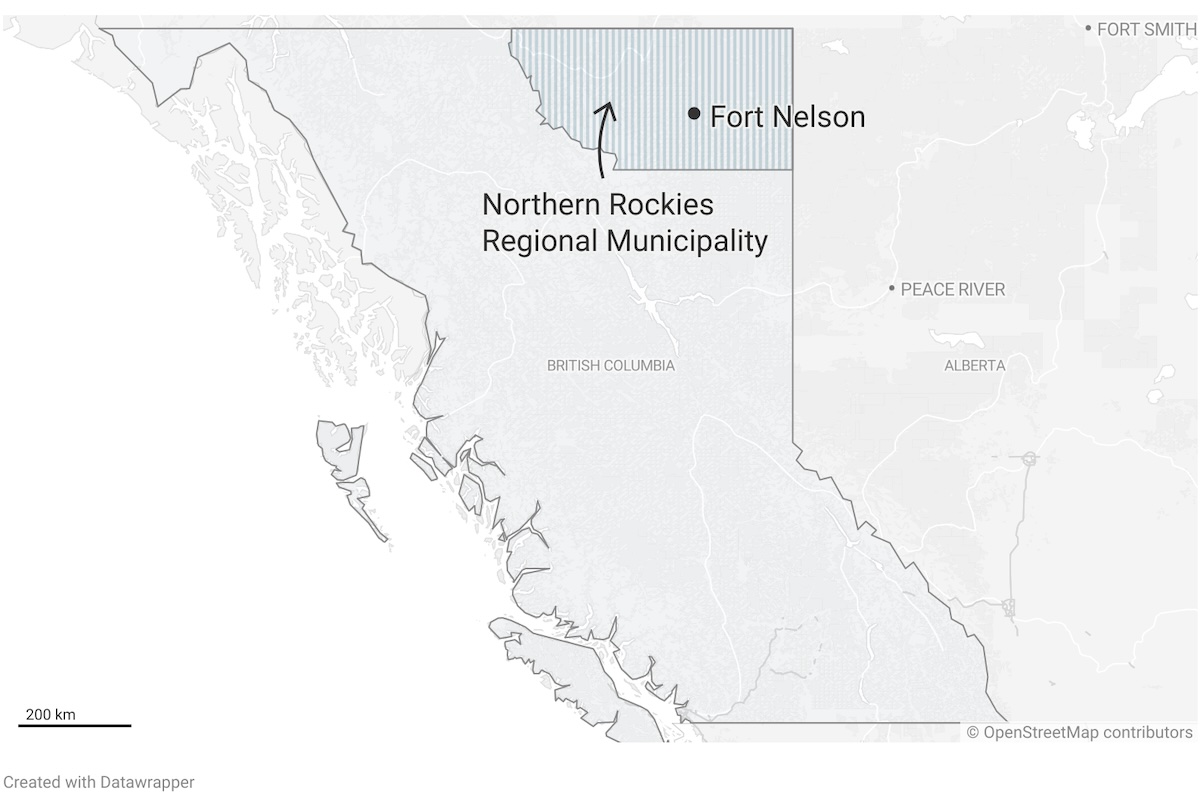
The NRRM is unique among municipal and regional authorities in B.C. The sprawling regional government is the result of the 2009 merger of the Town of Fort Nelson and the Northern Rockies Regional District.
The new single-tier government assumed responsibility for a vast area in the northeast corner of the province covering more than 85,148 square kilometres, roughly one-tenth of the provincial land base.
With the merger, the regional municipality assumed powers to issue and collect rural property taxes and sole authority for rural subdivisions, planning and bylaws.
A boom goes bust
At the time of the merger, there was good reason to believe the tax dollars collected would sharply increase because of all the new oil and gas leases being issued in the region. The oil and gas industry was then in the midst of a drilling and fracking boom. But the boom proved short-lived as gas prices tanked because of a supply glut. By 2014, many companies had ceased drilling and fracking in the remote, high-cost region and the number of people working locally in the sector plummeted. Between 2010 and 2023, average municipal revenues in B.C. nearly doubled, but the Northern Rockies’ tax revenues have barely budged, increasing by just four per cent.
One of the companies caught in the downturn was Ranch Energy, which owned hundreds of aging gas wells, a gas plant and a nearly overflowing, lined storage pond used to store toxic flowback water from fracking operations. Ranch entered receivership in 2018, and Erikson would later buy some of its assets.
The Ranch — and later Erikson — facilities were all located on Crown land that the companies leased from the province. They were also charged property taxes by the NRRM.
Over the past three years, Erikson failed to pay the property taxes it owed, and the purchase of some of the bankrupt company’s assets by Wildboy has made clear many of the taxes will never be collected. That has led the NRRM to request that the provincial government declare the taxes uncollectible — a step needed to write off the debts on the municipality’s books.
As of March of this year the NRRM was Erikson’s second-largest unsecured creditor, with the company owing the municipality more than $5.6 million in uncollected taxes. The NRRM is also asking the government to formally write off an accumulated $1.7 million in penalties and interest and another $1.3 million in taxes that the municipality was unable to collect and that would have been forwarded to fund schools, policing, the BC Assessment Authority and the Municipal Finance Authority. (Erikson’s largest secured creditor is Third Eye Capital Corp., which is owed more than $31.7 million.)
Powerless
As an unsecured creditor with no collateral to secure its debts, the NRRM is in a relatively rare spot for a municipality.
Typically, municipal governments can go after property owners that have not paid their property taxes by selling their properties at auction. But that is not an option for the NRRM.
That’s because the taxes Erikson didn’t pay were tied to facilities on Crown land leased from the provincial government, and such leases cannot be sold to recover taxes, the Ministry of Housing and Municipal Affairs told The Tyee.
During the NRRM’s October council meeting, Pike told the mayor and council that when the NRRM has previously encountered trouble collecting taxes from rural leaseholders with leases issued by the Ministry of Water, Land and Resource Stewardship, that ministry’s officials were quick to act.
The “extremely active” response of the Land Ministry’s officials was not replicated by the BC Energy Regulator, which has responsibility for regulating oil and gas company activities and issuing them leases, Pike said.
Mounting liabilities
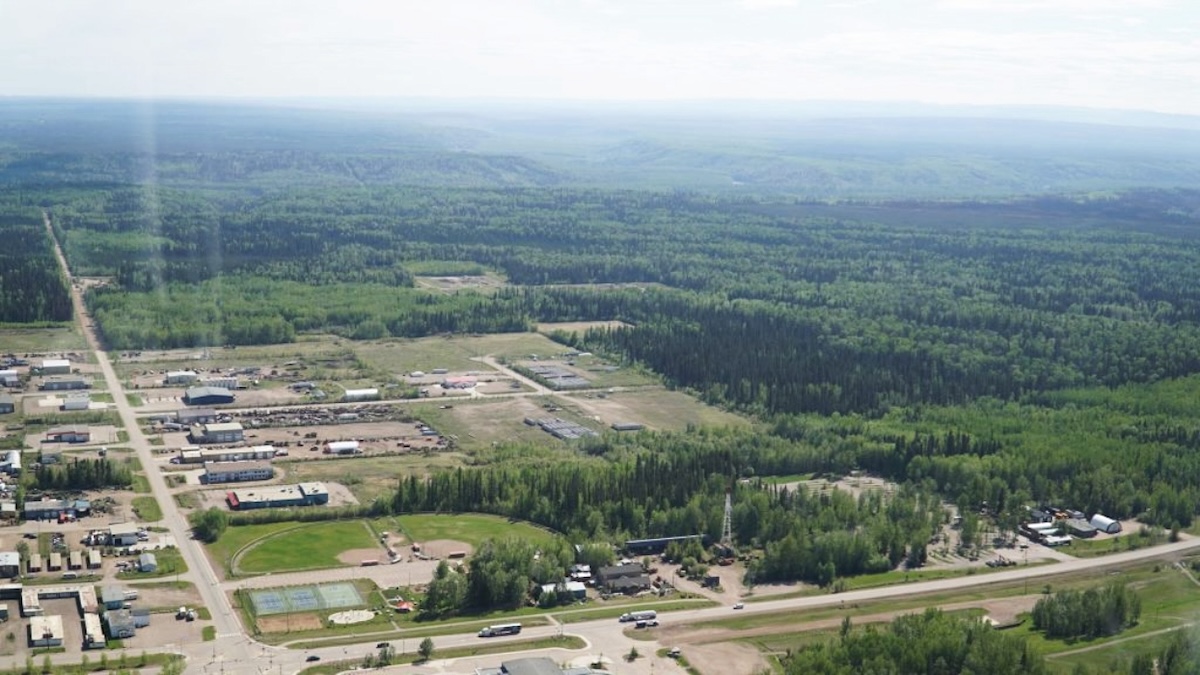
In addition to wreaking havoc on the NRRM’s balance sheet, Erikson’s mounting financial troubles and ultimate bankruptcy had significant implications for the BC Energy Regulator, or BCER.
The troubles started almost immediately after Erikson bought some of Ranch’s assets in 2018.
By 2020, the BCER said, Erikson was failing to meet many of its regulatory and financial obligations.
“This has included failure to complete decommissioning at a frac water storage facility, issues related to suspending oil and gas sites, deactivating pipelines, and failure to pay security, fees and levies,” the BCER reported in June of this year.
That failure resulted in a surge in the number of gas wells placed into “orphan” status, with the money to clean them up funded by levies on oil and gas companies.
The BCER said that 168 Erikson sites containing 180 gas wells remain unsold after the company went into receivership. Those wells will be restored through the oil and gas industry-funded Orphan Site Reclamation Fund.
Across British Columbia, the BCER said, there are now 987 oil and gas sites that are officially designated as orphaned. Sites may include more than one facility that must be remediated, with some of those sites being very expensive to clean up.
After Erikson acquired Ranch’s assets but before it went bankrupt, the BCER said it was encountering problems getting Erikson to complete required cleanup work on its new sites. Eventually the BCER started to do that work on its own by partially draining the company’s storage pond for toxic wastewater.
The BCER told The Tyee that it formally designated the pond as an orphan site earlier this year. To date, more than $8 million has been spent cleaning up the pond. The work is paid for by the Orphan Site Reclamation Fund, which is funded through levies on oil and gas companies. More work still remains to be done at the site.
The spiralling costs associated with sites not cleaned up by oil and gas companies prompted the BCER in October to raise levies on oil and gas companies to fund the burgeoning number of orphan sites. After initially levying $15 million earlier this year, the BCER announced it would levy a further $9 million in early November. The levy for next year will be $24 million.
In response to ballooning energy industry liabilities in Western Canada, the federal government announced in 2022 that it was committing $1.7 billion to assist in cleanup efforts. Ottawa also warned “the number of orphan wells will rise” and that oil and gas companies, and the provincial and federal governments, would all need to spend more money in future years to remediate the sites.
Wildboy steps in
Of the former Erikson assets now owned by Wildboy, the BCER has approved the transfer of 234 wells, a gas plant and other infrastructure. The BCER said it is now awaiting an “operational and restart activation plan” from the company.
The transfer has saved the wells from being placed into orphan status. Wildboy is now responsible for them, including making all future property tax payments.
“Wildboy intends to operate the assets to produce off-grid electricity to power data mining and storage processing,” the BCER told The Tyee. It provided no details on what specific data is to be mined or for what purpose. The BCER said it is “unaware of any other” methane gas-powered data mining in the province.
The project comes at a time when the provincial government has announced that it is clamping down on the use of hydroelectricity available for data centres and that it intends to “permanently ban new BC Hydro connections to the electricity grid for cryptocurrency mining.”
The government’s clampdown would not, however, affect Wildboy as its proposed site is not connected to the BC Hydro grid. Because Wildboy has not disclosed how much methane gas it intends to burn to fire the generators, the total greenhouse gases to be emitted at the project are unknown.
Officials with the province’s Ministry of Energy and Climate Solutions would not directly answer The Tyee’s questions about Wildboy’s plans and whether it was appropriate to burn fossil fuels and emit greenhouse gases to mine data.
In an emailed response, the ministry said:
“The province is monitoring these developments closely to better understand impacts.”
The ministry went on to note that “industrial facilities can currently be powered by natural gas; however, large industrial emitters are required to report their emissions under the Greenhouse Gas Industrial Reporting and Control Act.” ![[Tyee]](/design-article.thetyee.ca/ui/img/yellowblob.png)
Read more: Energy, Municipal Politics










Notice about commenting changes
The Tyee’s commenting system will be moving to a new platform on Nov. 12. If you’re already a Tyee commenter you must register with the new system on or after Nov. 12 with your preferred username.More information can be found here.