


 SHARE:
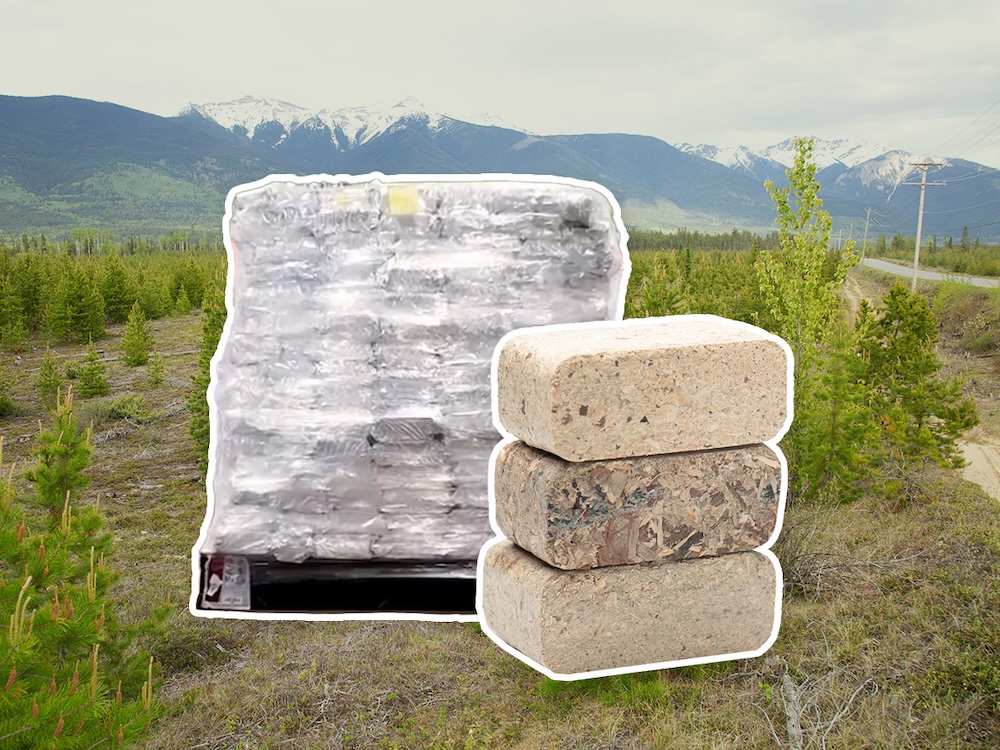
A northern B.C. village may become the home of a new carbon-storage facility built by a Bill Gates-backed American startup.
If completed, Canada’s first “carbon-casting” site could start operating in Valemount as early as next January, according to Graphyte, the company behind the plan. Although there is some local skepticism, there is also hope that the plan could add jobs to the local economy while preventing the burning of waste wood.
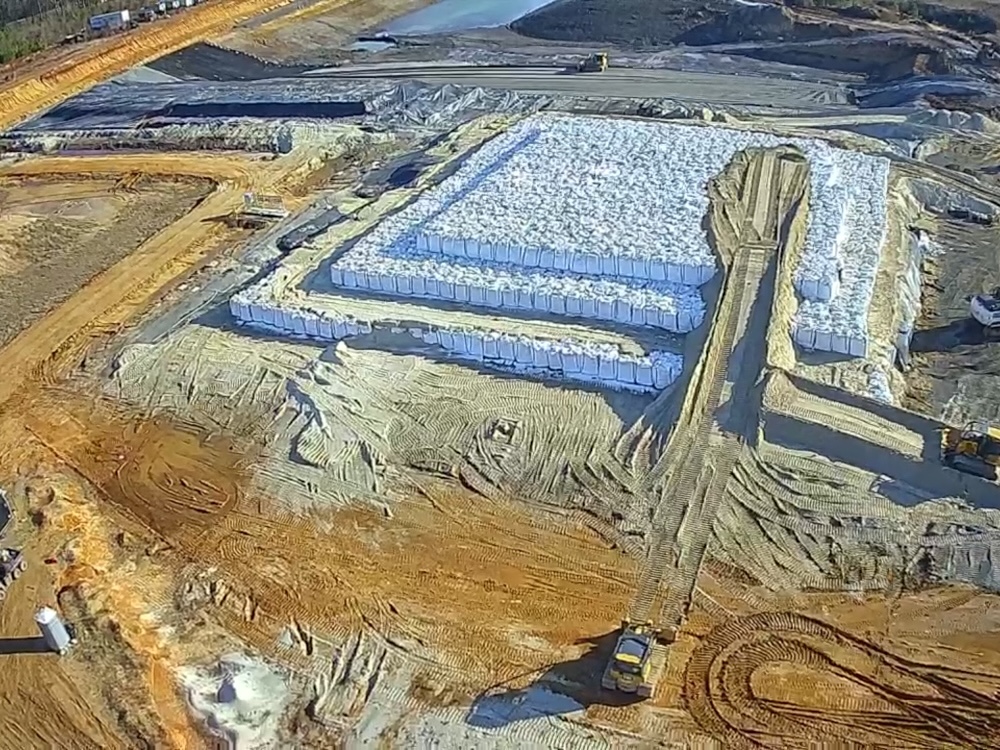
Established in 2023 and funded, in part, by billionaire Bill Gates’s Breakthrough Energy Ventures, Graphyte says it can capture carbon from the forestry and agriculture industries by collecting unusable organic matter, dehydrating it and compressing it into bricks that do not decompose. Those bricks are wrapped in plastic and buried underground, where Graphyte says they will remain intact for thousands of years.
The company has sold bricks stored at its first site, near its Pine Bluff, Arkansas, headquarters, as carbon credits to companies such as Microsoft and investment banker J.P. Morgan to offset their emissions.
The company is now negotiating with the Valemount Community Forest to secure a deal to build its proposed carbon-casting site in the local industrial park, four kilometres south of the town centre.
In an email to The Tyee, Graphyte director of project development Murilo Amadeu said Valemount is a good option for the facility because of its proximity to a steady supply of wood fibre. Valemount was also chosen “due to its strategic location along major highway and railway corridors, supply of land, and local forest industry,” according to a letter sent to local politicians in March.

Located about three hours southeast of Prince George, Valemount was home to a thriving forestry industry until a mountain pine beetle epidemic and the 2008 global financial crisis led to the closure of the local sawmill in 2009 and the elimination of around 200 jobs. Although the Valemount Community Forest began milling wood again in 2023 and the local industrial park is home to a separate specialty cedar mill, the operations employ only a few dozen people.
Graphyte says its initiative, which it is calling “Project Red Cedar,” will bring 20 jobs to the community and repurpose the industrial park.
Wood breaks down when it is exposed to water, air and microbes that thrive in warm conditions, Graphyte scientific adviser Daniel Sanchez told The Tyee. Drying the wood, compressing it and burying it aims to stop decomposition processes that release carbon into the air, said Sanchez, who is also a professor at the University of California, Berkley.
After creating “carbon bricks” and burying them in a sequestration site, Graphyte aims to sell carbon credits to companies, Sanchez said.
Graphyte says it sequestered more than 6,000 tonnes of carbon dioxide during its first year of operations in Arkansas. Last year, it began eyeing another site in Arizona.
Graphyte says the bricks, which resemble concrete blocks packed with wood particles, allow it to store carbon dioxide for about US$100 per imperial ton, lower than other schemes that aim to sequester carbon or CO2. The scale of Graphyte’s operations is still relatively small in the context of global emissions; Canada’s multibillion-dollar Pathways project, by comparison, aims to store 16 million tonnes of CO2 each year. Still, that project is expected to take another 20 years to come to fruition. Right now, Graphyte is one of relatively few companies actively sequestering carbon.
Once the bricks are buried, Graphyte says, the site will be monitored to ensure carbon dioxide and methane aren’t leaking from the buried biomass.
“When they’re done filling the site, it’ll go through a very similar reclamation process to what a landfill might do,” Sanchez said. “Redevelopment on top of the site can take place. Graphyte tries to work hard with community groups to identify a shared vision for what can be done with the site.”
Sanchez said the soil would not contain hazardous material. When asked what kind of plastic Graphyte will use and whether the material may leach microplastics into the surrounding soil, Sanchez said that technology is proprietary information, but that the plastic is not compostable and would likely remain intact for thousands of years. He said the plastic is just a small percentage of what Graphyte will be burying.
Surrey-based consulting firm Enkon is working with Graphyte to ensure it is compliant with B.C. environmental regulations. Enkon consultant and Valemount resident Joe Nusse told The Tyee that because the site will be going on land that’s already zoned for sawmill use, it already meets many compliance standards.
“The main regulatory submission is a very normal air pollution submission,” he said. “They have a wood dryer, and there will be steam coming out.”
Nusse said the facility will be similar to a lumber kiln previously located at the mill site that also had to meet air quality regulations. Graphyte’s facility may produce a high volume of steam or other air discharges, so the submission will help the province decide if the site will need mitigations to protect the air quality.
“We don’t anticipate that our annual discharge volumes would remotely trigger [the need for mitigation] because it would probably be less discharge than the kiln that used to be running out there,” Nusse said. “You won’t be seeing any black plumes of smoke ever coming out of there.”
Nusse, who has previously managed wood waste, said he has seen how difficult it is for local forestry operations to dispose of unusable wood, or “hog fuel,” in a cost-effective way.
“I have burned hundreds of thousands, if not millions, of tonnes of wood waste in my career,” he said. “Everyone agrees there has got to be a better use of this fibre than just gassing it off.”
While some forestry operations can send their hog fuel to a pulp mill to be used as raw material or burned for energy, the cost of shipping low-grade wood products quickly outweighs how much pulp mills are willing to pay for it. Nusse said that has historically posed an issue in Valemount. Shipping hog fuel to the pulp mill in Prince George costs too much money to make those operations profitable, so the wood is often burned instead or left to decompose. The option of disposing of wood fibre at the Graphyte facility will eliminate that environmental impact, he said.
In an email to The Tyee, Graphyte’s Amadeu said the project is expected to create 20 jobs and the company will prioritize hiring local workers.
Earlier this month, Graphyte sent a slide show to the Regional District of Fraser-Fort George outlining the project and requesting its support. (The board did not endorse the project because local governments cannot provide support to private businesses in B.C.)
Regional district director Dannielle Alan said she is cautiously optimistic about the project, echoing many of Nusse’s comments.
“It could be one of those things where it’s a penny stock company, and they drive interest and get some public attention and then sell the stock — that’s happened in our area before,” she said. “But whenever people come in and do something different to employ people, I give them the benefit of the doubt.”
(Graphyte is not currently listed on any stock exchange. So far, it has been funded by individuals and through venture capital investments.)
Alan hoped that Graphyte’s presence may encourage locals to develop other ways to make the forestry industry more efficient.
“I’m still skeptical — a lot of the time, smaller communities are targeted in these kinds of enterprises,” she said. “But even if it’s only two [jobs] for six months while they investigate opportunities, that’s still two people that have a job and have learned something.”
In the documents provided to the regional district, Graphyte says it has also garnered support from Simpcw First Nation and the Valemount Community Forest, neither of whom responded to The Tyee’s request for comment.
With files from Tyler Olsen. ![[Tyee]](/design-article.thetyee.ca/ui/img/yellowblob.png)
Read more: Labour + Industry, Environment







Tyee Commenting Guidelines
Please note that email notifications for replies are not currently working due to a software issue which may be resolved in a future update.
Comments that violate guidelines risk being deleted, and violations may result in a temporary or permanent user ban. Maintain the spirit of good conversation to stay in the discussion and be patient with moderators. Comments are reviewed regularly but not in real time.
Do:
Do not: