


 SHARE:
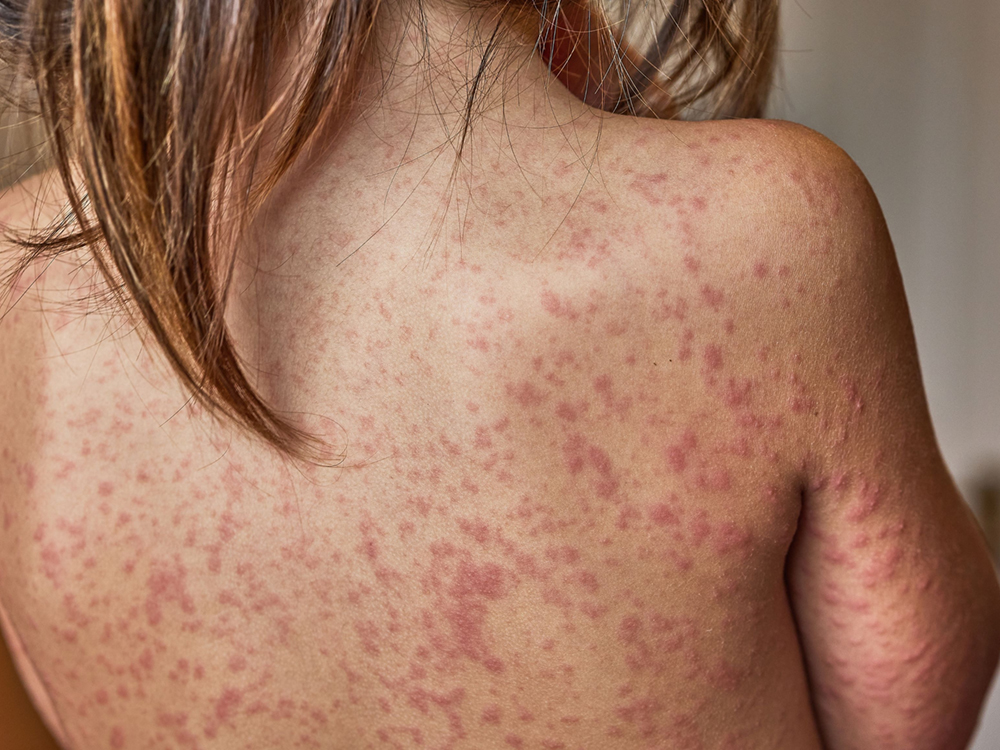
The largest outbreak of measles in B.C. might be cresting, but there are still pockets of people without immunity spread across the province, which could lead to future outbreaks, say public health officials.
Most of the province’s confirmed 102 cases are in the northeast, where the disease has been spreading for the last couple weeks, said Dr. Martin Lavoie, deputy provincial health officer, at a press conference earlier today.
“This is not a pandemic, but measles is very serious,” Lavoie said.
He added that while there’s 102 confirmed cases there’s likely more as some people are resting and recovering at home, and have not been directly counted by health officials.
Dr. Jong Kim, chief medical officer for Northern Health, said B.C. has “likely seen the height of the wave” of the outbreak in the northeast, but that further cases are still possible, especially if the virus finds another pocket of the population where people have not received the measles, mumps and rubella vaccine.
Many of those infected were under 18 years old who were never vaccinated for measles, Lavoie said. When kids aren’t immunized in a community, the pocket of at-risk people who can catch and spread the disease grows every year, he added.
Measles is a highly contagious airborne disease. If an infected person walks through a grocery store and doesn’t touch anything, a person who doesn’t have full immunity could walk through the store two hours later and catch the disease “easily” just by breathing the same air.
When someone who doesn’t have full immunity to the virus is exposed, they can develop symptoms 10 to 21 days after exposure, Lavoie said. People are contagious for four days before the tell-tale rash appears, and for four days after it appears, he added.
In B.C. it’s recommended to get two doses of the measles, mumps and rubella vaccine, which is offered to kids at 12 months and then when they enter school, which is generally between four to six years old.
The vaccine is safe, free and extremely effective.
Two doses of the vaccine give people nearly 100 per cent protection from ever getting sick with the disease even if exposed, Lavoie said.
Anyone who isn’t immune to the disease, either by receiving two doses of the vaccine or through previous infection, should monitor local public health notices to check if they’ve potentially been exposed and to monitor their symptoms, Lavoie said.
Anyone born before 1970 is assumed to have been exposed to measles as a kid and have immunity to the disease. Anyone born after 1970 is asked to check their immunization records to make sure they are fully vaccinated with two doses, Lavoie said.
Anyone who is unsure if they are immune should speak with their family doctor, or call 811 to speak with a nurse to determine their next steps, he added.
Getting an additional vaccine if you’re not able to confirm if you’re fully vaccinated is safe.
If you catch measles it’s important to stay home and isolate yourself until four days after the rash developed, Lavoie said. Symptoms of measles include a fever, red and sore eyes, and a rash that starts on the face and then spreads down the body and onto the arms. A person is considered contagious until four days after the rash appears.
If a person who is not immune is exposed to the measles, they have a 72-hour window where they might be able to get vaccinated to avoid getting sick, or a six-day window where high-risk people might be able to be given antibodies to “more than likely prevent disease,” Lavoie said.
Not all measles cases will be serious, but around one in 10 have complications that can impact the brain or cause pneumonia, Lavoie said. In Canada, around one in 10 measles cases require hospitalization, and around one in every 10,000 cases can be fatal.
Measles can also impact a person’s immune system and makes them more likely to get sick and die from other infections in the months and years following their measles infection.
If you need to seek medical attention while sick with the measles, call ahead so health-care professionals can take precautions to limit the spread of the disease, he said.
B.C.’s overall immunization rate against measles is just over 84 per cent, Lavoie said.
To prevent the disease from spreading, you want 95 per cent immunity, which means when someone is infected the virus isn’t able to find anyone else to spread to, he said. But B.C. likely won’t have outbreaks like we’re seeing in Alberta, which has the highest case count per capita in all of North America.
There’s misinformation, which is inaccurate, and disinformation, which is intentionally spreading lies, about measles out there, Lavoie said.
Some common myths are: the measles, mumps and rubella vaccine causes autism, which isn’t true; and that vitamin A or cod liver oil can prevent or treat measles, which also isn’t true, he said. Measles parties, where parents intentionally infect children, are also a “very bad idea,” he said.
If someone is malnourished, their immune system will overall be impacted and some nutrients might make them healthier and therefore help them fight off diseases in general, but they will not work against measles, Lavoie said.
The best way to protect yourself, your loved ones and your community is to get vaccinated, he said.
“British Columbians have always come together to support one another, and getting vaccinated against measles is the best way to be protected,” said Minister of Health Josie Osborne.
When asked about measles vaccine disinformation being spread by the U.S. Health Secretary Robert F. Kennedy Jr. and if it could impact Canadians, Osborne said it’s important to listen to health experts like the ones we have in B.C. and that it’s “not appropriate for politicians or non-experts to draw conclusions that are misguided or wrong.”
B.C. gets measles outbreaks occasionally, with the last big ones happening in 2010 and 2014. ![[Tyee]](/design-article.thetyee.ca/ui/img/yellowblob.png)
Read more: Health











Tyee Commenting Guidelines
Please note that email notifications for replies are not currently working due to a software issue which may be resolved in a future update.
Comments that violate guidelines risk being deleted, and violations may result in a temporary or permanent user ban. Maintain the spirit of good conversation to stay in the discussion and be patient with moderators. Comments are reviewed regularly but not in real time.
Do:
Do not: