SHARE:
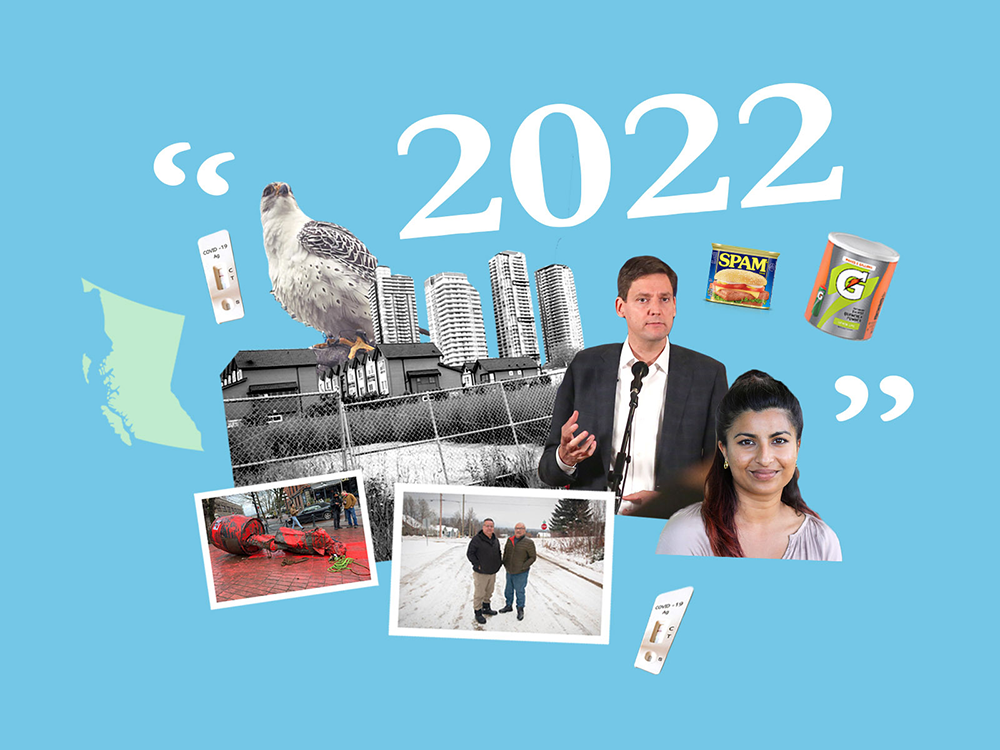
From the ongoing pandemic to toxic drug deaths, settler colonialism to climate change, there was no shortage of crises and challenges to report on in 2022.
As the year comes to an end, we’re doing what we did last year: throwing it to our sources, who had wise words to share on how they’re facing the times.
You will find mic-droppers, eyebrow-raisers, knee-slappers, heart-warmers and tearjerkers. You will find anecdotes about love and loss, but also helpful tips for when you find yourself driving cattle or in need of a campfire recipe.
We hope this collection gives you food for thought as you look back on 2022.
On fauna
“Birds make this world infinitely richer with their presence. Many may only notice them when they’re gone. And if we lose them, what’s the point? Then it all just becomes right angles and concrete.”
— Adam Dhalla, 17-year-old co-designer of the Find the Birds app.
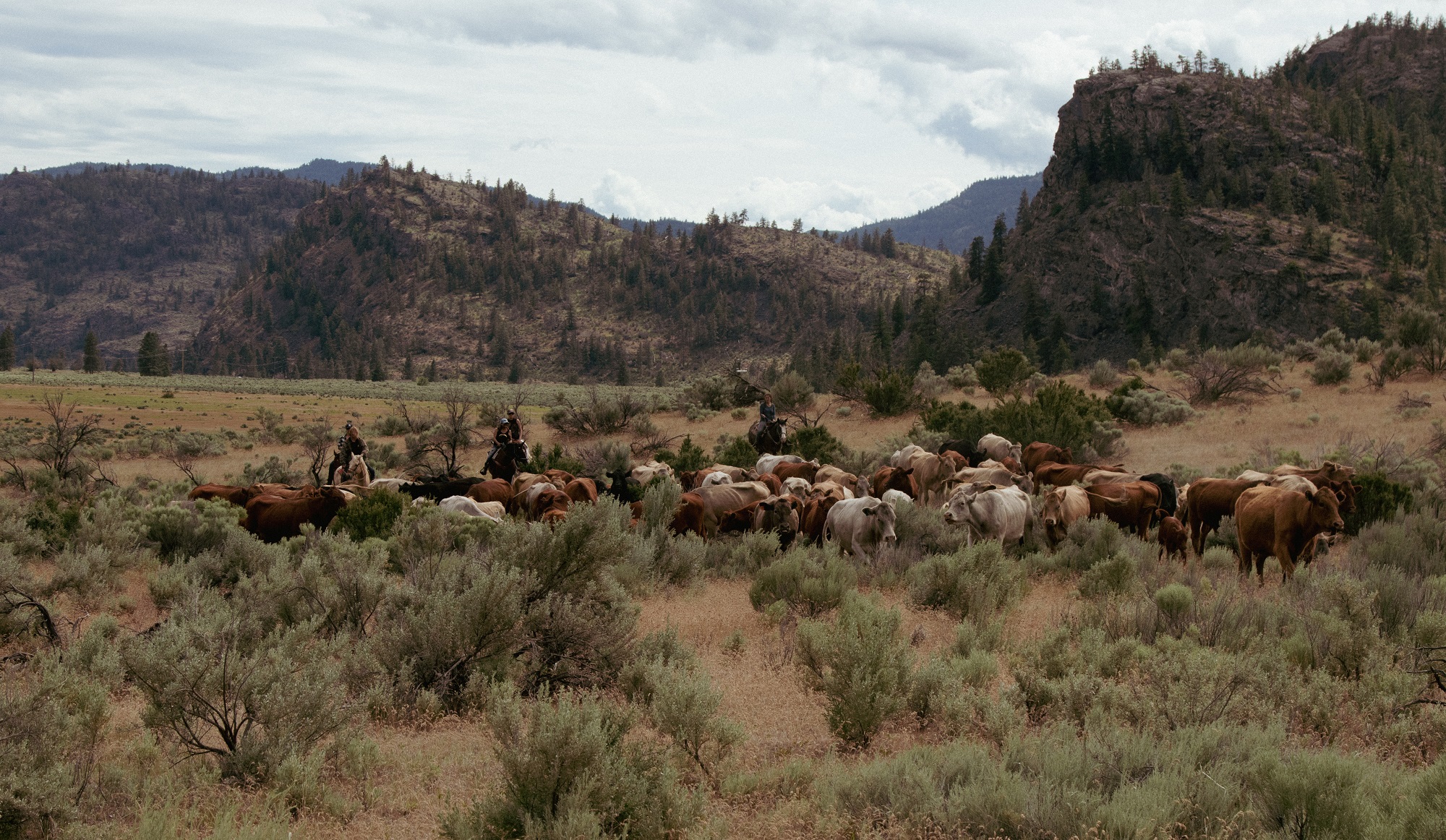
“Pushing cows is like playing pool. You’re the cue ball and you’ve gotta apply just the right amount of pressure at just the right angle if you wanna get it to go the right place.”
— Jessi Wyatt, who was galloping racehorses at five years old.
“It would be great if we could put me out of a job.”
— Paul Cottrell, marine mammal rescue co-ordinator for Fisheries and Oceans Canada, the only person on Canada’s West Coast trained in large marine mammal rescue.
“Places like landfills and transfer stations, there are so many food attractants that it’s a safety hazard. Machine operators can’t see what’s going on in front of them because there are so many seagulls — some of the sites we work at, you’ll see 10,000 or 15,000 gulls descending at once, it’s like a non-stop waterfall of birds. If you’re not afraid of birds, it’s pretty incredible.”
— Chuck DeCoste, a falconer with the Raptors.
On flora
“We’re taught we need to conserve and protect species as much as possible, without realizing it’s a colonial viewpoint to hit pause on the ecosystem.”
— Jennifer Grenz, assistant professor in UBC’s faculties of forestry and land and food.
“These trees the size of skyscrapers are just thriving, and it doesn’t matter if we see them or not. I mean, right now, as I speak to you, these trees are there. And that thought is in my brain when I go to sleep. It’s obsessive. Why else would you slug through blackberry bushes for 10 hours, covered in cuts and bleeding and drinking out of a little muddy stream with a LifeStraw? It’s just suffering. But I know there is a tree out there bigger than any that’s been found, a tree that will change the textbook. And maybe I won’t find it in my lifetime. But I know there’s something bigger, and that’s what drives me.”
— Colin Spratt, big tree hunter.
“I no longer wish to be part of an organization that is unable to see the forest for the timber.”
— Herb Hammond, retired forester, in his resignation letter after 40 years as a member of the Association of BC Forest Professionals.
On the ongoing pandemic
“For me, it’s always been reciprocity. It’s not ‘I’m helping you’ — we’re helping each other.”
— Vivian Ly, co-organizer of Masks4EastVan.
“We’re not able to provide the level of care that we would like to provide. We’re not able to connect with patients or make them feel secure or heard. And having to pull some plastic curtains around someone in the waiting room to toilet them is just degrading.”
— An ER nurse in January 2022.
“At a time like this, widely distributing high quality masks, making them available in every classroom, every library and every store. Just provide the tools and don’t try to fit the response into a narrative of ‘B.C.’s doing better than everywhere else.’ Just be straight up. Where are we and what are the tools that can reduce illness in our province?”
— Sonia Furstenau, BC Green Leader.
“I’m getting a reputation as the neighbourhood rapid test hookup. I literally do the handoffs in the back alley like a criminal.”
— Kerri Coombs on the search for COVID-19 rapid tests earlier this year.
On health and health care
“My profession allows me to experience human interconnectedness. I consider it an incredible privilege to be with people during existential moments of their lives: sexuality, conception or infertility, pregnancy, birth or miscarriage, menopause, cancer, and also abortion: moments of beginning and end. This is what led me to go into obstetrics and gynaecology. These meaningful transitions have become an almost daily work experience. I feel drawn to be with and help patients through these experiences.”
— An OB/GYN who performs surgical abortions.
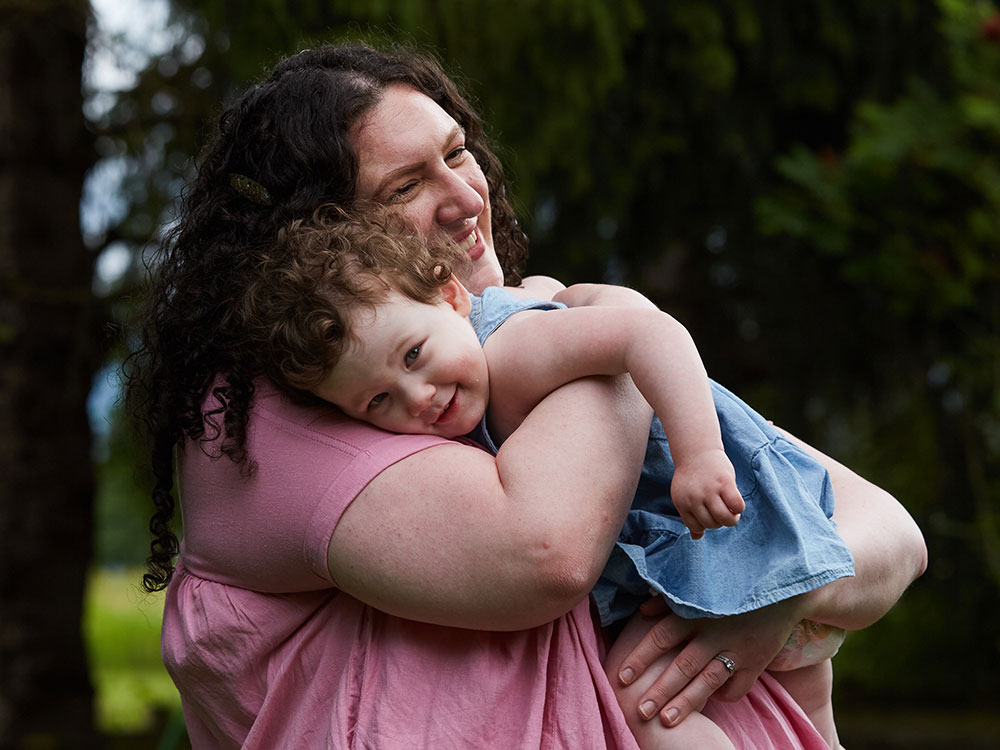
“It’s as if somehow my life and the life of my baby meant less than the hypothetical thin women they would have to treat as well.”
— Sara Lindberg, a mother who, while pregnant, alleges she was fat-shamed while receiving health care.
“When the communities most impacted by infectious diseases aren’t getting the care they need, we are willing to take measures into our own hands. It reflects the resiliency of the community.”
“This isn’t the first time my demographic has been left alone. And so previous generations who watched their friends die know what to do.”
— Michael Kwag and Antonio Leon on men from Washington state travelling to B.C. for monkeypox vaccines.
"MAID is just, 'Do I jump or do I burn?’”
— Madeline who has lived with myalgic encephalomyelitis, also known as chronic fatigue syndrome or ME/CFS, for more than 30 years after contracting mononucleosis twice in her younger years.
“No one who wants to live should have death paid for by the government when the government won’t pay for them to live.”
— Bunny Wilder, who is disabled and a single parent of a disabled child.
On the toxic drug crisis
“I find strength in seeing people live what they want to be living, when they’re doing the little things to keep themselves safer. But we’re exhausted, and we’re fucking tired of death. Our goal is just to make people survive the night and we take it day by day, because it’s hard to do anything else.”
— Alexis Hekker, Indigenous wellness co-ordinator and lead drug-checker, ANKORS East Kootenay.
“When I think about my brother lying dead in that fucking, shitty little motel, and I’m looking at his picture right now beside my desk, every day I wish he was still here. He tried. But in our system, he was a statistic.”
— Rob Tournour on his brother Vince.
On BC politics
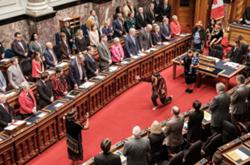
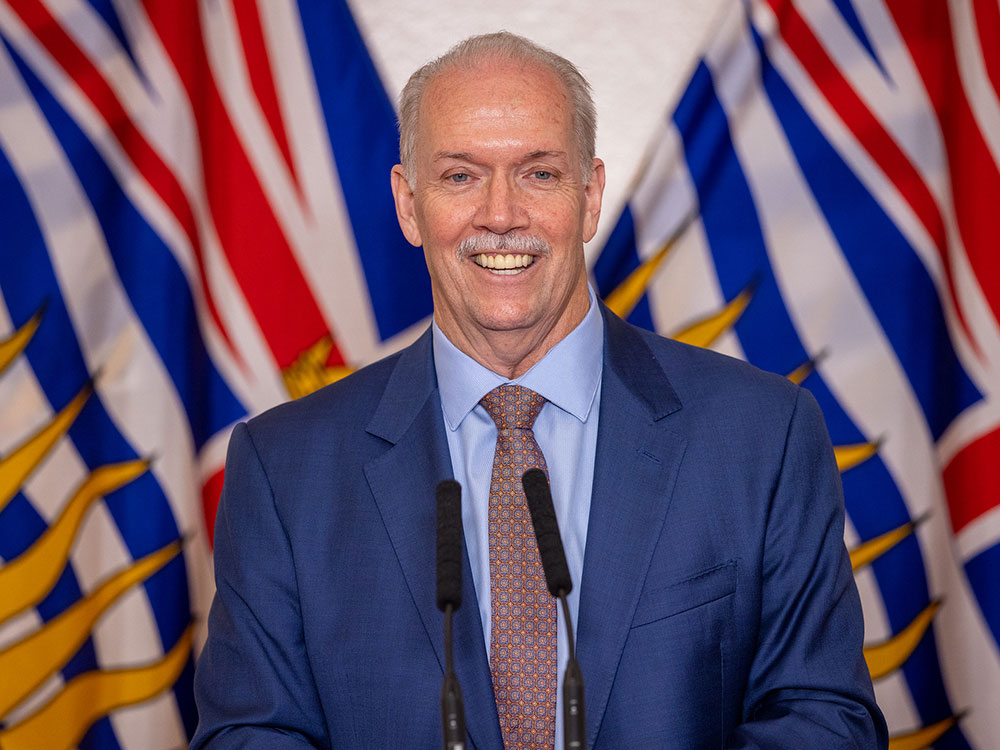
“I’m looking forward to just being me again, talking to people not as premier of British Columbia, but just John, a guy who stopped by to make friends. I’m looking forward to that.”
“The thousands of new members my campaign attracted have been treated with suspicion. The party has called thousands of them and subjected them to loyalty tests. The intent was clearly not just to ascertain the legitimacy of their memberships, but to make a case to disqualify many of them.”
— Anjali Appadurai on the recommendation to disqualify her from the BC NDP leadership race.
“One thing I’m conscious of is the themes are artificial. So much of the challenges we face in our province, for example, relate to housing. And so many of the solutions around climate change and challenges in our economy also relate to how those buildings are built, what they’re made out of and where they’re located.... It’s important to recognize as elected officials the connections between all these important challenges we face.”
— David Eby during the NDP leadership race on what he would do as premier.
On housing and never-ending crisis
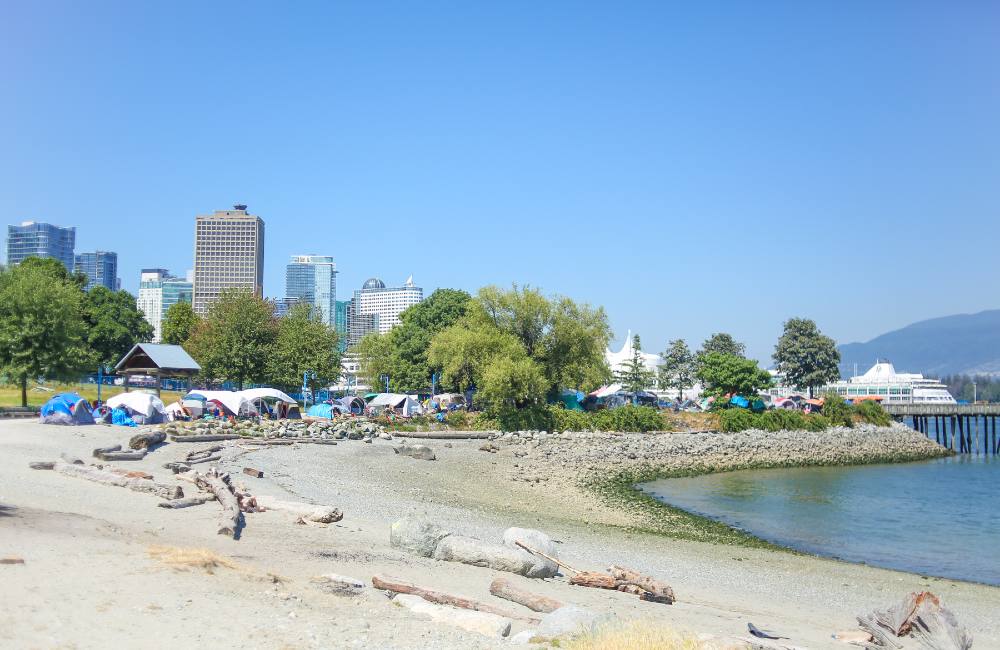
“BC Assessment reported that my home went from $1.7 million to $2.2 million while I slept last year.”
— Paul Kershaw, UBC policy professor and founder of Generation Squeeze.
“I do get a bit frustrated when there seems to be a sense among some people that it’s progressive to oppose the development of badly needed housing, that it’s a sell-out to deep-pocketed developers. I think we can do it in a careful and responsible way.”
— David Eby, during his time as B.C.’s housing minister.
“High rises are where you take elevators that go to floors and people stop interacting with one another.”
— Colleen Hardwick, Vancouver mayoral candidate.
“It’s hard to feel optimistic. Not just housing, but the future. A part of me has kind of accepted that this is how Vancouver housing is. My parents were interested in buying a place when I was 11 or 12. I’d follow along when my dad was looking at listings. Every weekend we’d drive to Port Moody and Coquitlam to see houses, and every year my dad was like, the bubble’s going to pop. It’s 10 years later, and a part of me has just kind of accepted it. As someone who’s lived in Vancouver for so long and hasn’t really seen much change, it’s hard to be hopeful.”
— Rose Wu, 23.
On work and how it’s changing
“Unfortunately in the old style of actor training, performers were and are still taught to say ‘yes,’ ‘yes,’ ‘yes.’ What we’re trying to change in the arts industry is to make it a ‘No, however,’ so that we’re not forcing people to say ‘yes’ in a blanket way, and by virtue of that ignore their boundaries.”
— Amanda Cutting, an intimacy co-ordinator for movies and theatre.
“The major factor is the pay.... It’s just not a sustainable profession as far as I can gather with what’s affecting me right now.... With fuel, natural gas, rent, interest rates, everything going up, we don’t get a raise and we’ve been told we’re not getting a raise this year as well.... The pay is basically $3 an hour, for full-time 24-7 work.”
— Darren Guy on his decision to quit Community Living BC’s home-share program that provides housing to adults with disabilities.
“When I started at the paper, it was a few pages and we didn’t know if we’d get paid. And it ended the same way.”
— Martin Dunphy, a longtime senior editor at the Georgia Straight who started at the paper selling the paper in Gastown for beer money in 1983 and was recently fired along with other staff.
“To be working class now is to be part of a culture where capitalism builds its foundation upon you. It requires you to remain there in order to support the upper echelons. What’s missing from a lot of the conversation is the almost-impossibility of escaping that for our generation — and for gen-Zers. Because [the upper classes] need us there. I think that there’s a certain romanticism that gets filtered into popular culture about being working class. I think that romanticism is part of the story that the upper middle class tells itself about us.”
— Lori Fox, writer.
On rights and reconciliation
“To not educate your students, to bring them to a former residential school, it’s something that I don’t think any of us will ever understand. I don’t think some of us will ever forgive.”
— Renee Laberge, former Little Flower Academy student on the school’s connection to residential schools.
“Do we want to be a colonial government? Or do we want to govern differently?”
— Cole Sayers, a member of the Hupačasath First Nation.
“I buckle down and do the work I can do. I report. I write. And I push and push and push for Indigenous voices to be heard outside of our own circles. Because reconciliation will only ever be achieved when ignorance gives way to truth on a global scale.”
— Brandi Morin, journalist.
“I grew up as an Indigenous woman watching women and girls disappear, and watching nothing done about it. And I grew up in this city where the names of colonizers are on buildings, on streets. They are hailed and lifted up.”
— T’uy’t’tanat-Cease Wyss, artist and Skwxwú7mesh cultural leader.
“To me, reconciliation’s all bullshit.”
— Simogyet Neekt, also known as George Muldoe, a Gitxsan Hereditary Chief who is in line to take the name Delgamuukw this spring.
On youth and education
“FortisBC is portraying natural gas in a very positive light, basically telling kids — very impressionable people — through their teachers that they trust, that natural gas is good and it’s helpful. I think we should keep corporations out of our classrooms, specifically corporations that have been complicit in the destruction of our environment and the exacerbation of climate change.”
— Katarina Krivokapić, Grade 12 student.
“Schools seem to be frozen in time, and they’re still incredibly dangerous spaces for many LGBTQ youth, especially those who are trans, Two-Spirit or racialized.”
— Kristopher Wells, Canada Research Chair for the Public Understanding of Sexual and Gender Minority Youth.
“My adoptive family gave me all kinds of stuff. They bought me expensive gifts and paid for things, and that’s all well and good. But I never felt loved, and my most reactive trait as a parent is my obsession with telling my kids that I love them, and practicing love as I now understand it, embracing their humanity completely, for always, and offering them a safe space to be someone new, every day, without any fear over whether their father loves who they are this time. I do, I do, I do.”
— Harrison Mooney, author of 'Invisible Boy.'
“There are parents who will march with me down the street talking about equal rights, or whatever it may be, but also be the parents that will fight tooth and nail to ensure their kids are in a mini school or private school. Ask yourself: who’s around the table when your kid is in these accelerated and high-achieving programs? Who’s in the room and why aren’t the other [kids] in the room?”
— Anthonia Ogundele, Vancouver parent, on some parents’ selective fight for equity in schools.
“The kids that should be getting the most focus, that are hardest to provide services to, often get the least.”
— Grant Charles, associate professor of social work at UBC, on palliative care and other services in B.C. for kids with disabilities.
On police in Vancouver schools
“Two-thirds of our Indigenous families live in urban settings. These are students with blood memory of this history, who are in this district. Police have played a vital role in perpetuating cultural genocide and the genocide of Indigenous people. If you want true reconciliation, you need to deconstruct this whole system. We must decolonize.”
— Marjorie Dumont, vice-president of the Vancouver Elementary and Adult Educators’ Society.
“You already made a decision. How rude.”
— Shahira Sakiyama, a parent on the Vancouver district releasing a motion to bring back police in schools before getting public feedback.
On food
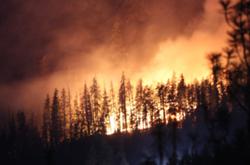
“Spam with Gatorade powder sprinkled on top, cooked over a campfire, caramelizes it.”
— Enrico Fionda, smokejumper, on his favourite recipes while out fighting forest fires.
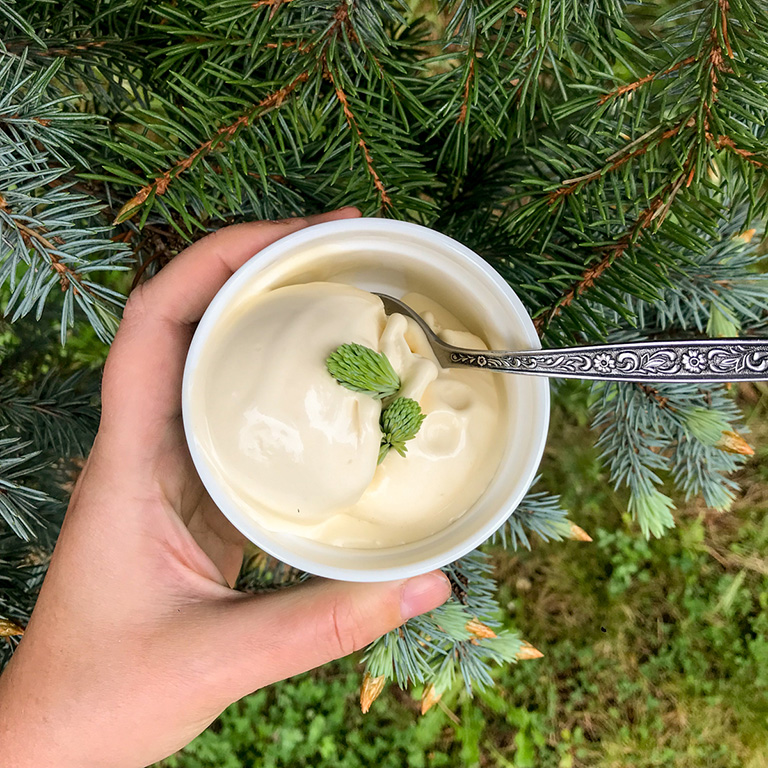
“Anyone can find blackberries or raspberries or mango. Spruce tips are a special thing we can do.”
— Kirsten Wood, owner of Blue Spruce Ice Cream in Courtenay, B.C.
“We used to serve all fish. Fish, fish, fish! In the ’80s seafood costs were very reasonable, anyone could afford it. Today it’s more expensive than meat, which is expensive too.”
— Hidekazu Tojo, chef at Tojo’s Restaurant and inventor of the California roll.
“It’s easier and cheaper to just throw food away instead of find someone who could use it.”
— Carla Pellegrini, executive director of Food Stash Foundation, on why there is so much food waste.
On life in the Downtown Eastside
“She sparkled. She deserved everything that was good in life.”
— Bernie Williams on her niece Angel Gates, an advocate for Downtown Eastside residents, who died suddenly in August.
“They always treated us with such dignity. Coming from that community, of doing survival sex work for so many years and walking around in lingerie for eight years, I wasn’t welcomed in a lot of places.”
— Sekani Dakelth, on connections between the Downtown Eastside and Chinatown community members.
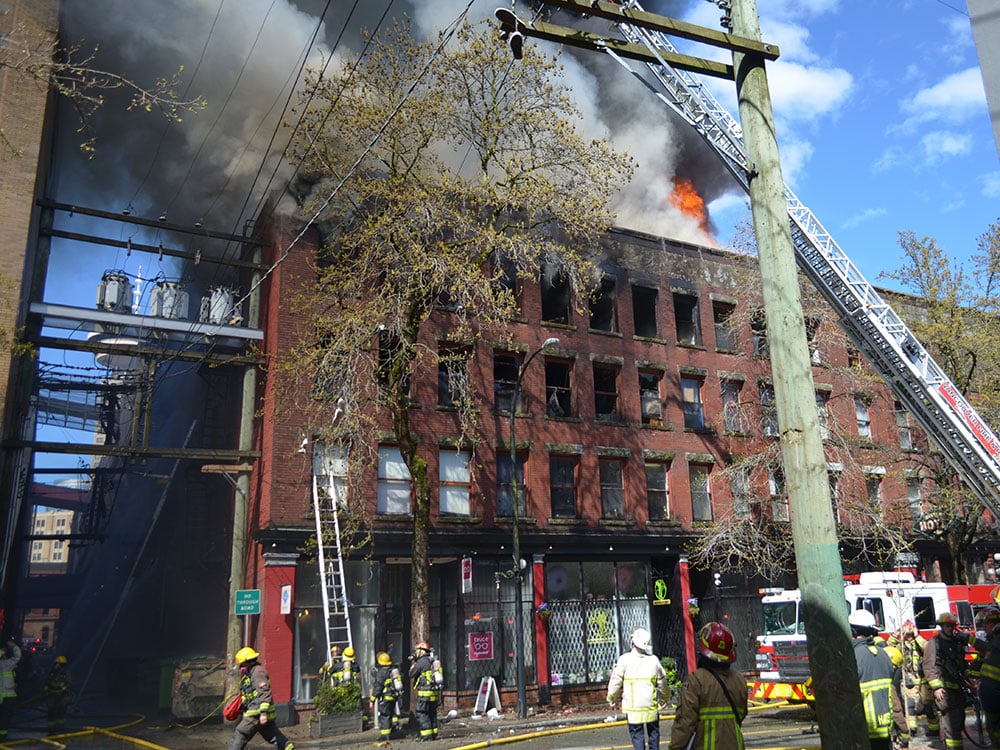
“I knew that woman, I knew Mary, I saw her that morning — her routine was going to Nesters. With her nice light blue sweater, her hair tied in the back with her nice skirt on.... And I can’t get that image of my head.”
— Neda Pessione, the owner of a business in the ground floor of the Winters Hotel. A fire destroyed much of the building on April 11 and Mary Ann Garlow was one of two tenants who died in the fire.
“They say you have to walk a mile in someone else’s shoes to know how they truly feel — so why not be compassionate, patient and understanding to everyone? If people tried changing how they look at people and not judge them by their appearance, their mental health complexities, their past, then maybe we could make this world and city a better place to live.”
— Julie Chapman, Downtown Eastside resident and student journalist.
On isolation in Vancouver
“You go back into the history of Vancouver and learn how neighborhoods are segregated by class, by wealth, by access, even by your migrant status — it really became unsurprising for me that we have this kind of isolation.”
— Luna Aixin, urban planner.
On witnessing the Japanese internment as a kid in Richmond
“I was only five years old when they took my playmate away. She lived across the street, Fumiko. Her father Fumio Kojiro was the principal of the Japanese school and his wife was a teacher. And they took him right out of the school. His wife came over to our place to get my mom and dad to help… I didn’t know any white kids. My mother invited a whole bunch of white kids and I refused to play with them. I walked out of my own birthday party. I had a First Nations friend that lived up the street and he played with me, the two of us alone, while the white kids had birthday cake.”
— Harold Steves, 85, recently retired Richmond councillor and lifelong Richmond resident.
On the exodus of Hongkongers
“Most of them, if they could choose, they wouldn’t leave. If we chose to stay, we’d be sent to jail... facing a sentence for something that’s made up. It shouldn’t be like this. For young people, they should be going to university, making friends, building up their careers — not leaving their own home and starting from zero.”
— Alexandra, 27, who arrived in Vancouver last year.
On convoy protesters
“They quite honestly see themselves as heroes. Being in places where it is very left wing or places where they think they will cause the most disturbance is because they want to ‘wake’ the most people to their position. They presume we’re all just sheeple for following mandates.”
— Carmen Celestini, SFU postdoctoral fellow studying disinformation.
On deciding who to vote for
“There will be individuals who are interested in politics for themselves. And there are people who are interested in office because there’s something concrete they want to achieve, and there is a difference. And you can usually tell by listening to them when they speak.”
— Cherie Payne, former Vancouver School Board trustee, in the lead up to the 2022 municipal elections.
On religion and spirituality today
“I think it’s a shame in a way that religion kind of has taken a backseat. My observation is that spirituality has been with us since the beginning of humanity. It doesn’t have anything to do with buildings. It doesn’t have anything to do with what clothing you wear. It doesn’t have anything to do with altars, or icons, although all of those things can help you to feel like you’re in a sacred space. In ancient times, what was sometimes used to create this space was a fire — everybody would gather around the fire, and contemplate the amazing existence of fire. That was enough to be in awe and look up at the stars and see that and realize that there was something bigger, some bigger thing.”
— Reverend Karin Wilson, an interim minister with the Centers for Spiritual Living.
And the final word goes to…
“So many people are living in survival mode or they don’t think of the larger picture. For example, climate change, the impacts are in evidence every day, look at the heat dome in B.C. last year and the floods at the same time. But then people have jobs. Within the system it’s a zero-sum game, so if we cut back on, say, the use of fossil fuels, somebody’s going to lose a job. And nothing in the system protects them or gives them support. At the same time, that same system inevitably creates crises, which at some point wakes people up. That’s the first thing. The second thing is that most people, despite all the trauma and stress that’s around, not only are good, they want to be good. They want to be decent. They want to be kind.”
— Gabor Maté, physician and author who recently co-wrote 'The Myth of Normal' with his son
Special thanks to: andrea bennett, Christopher Cheung, Michelle Cyca, Francesca Fionda, Amanda Follett Hosgood, Kaitlyn Fung, Michelle Gamage, Kate Helmore, Katie Hyslop, Andrew MacLeod, Jen St. Denis, Zak Vescera, Jackie Wong, Dorothy Woodend, Moira Wyton, Zoë Yunker.
Happy holidays, readers. Our comment threads will be closed from Friday, Dec. 23 until Tuesday, Jan. 3 to give our moderators a well-deserved break. See you in 2023! ![[Tyee]](/design-article.thetyee.ca/ui/img/yellowblob.png)
Read more: Media