

 SHARE:
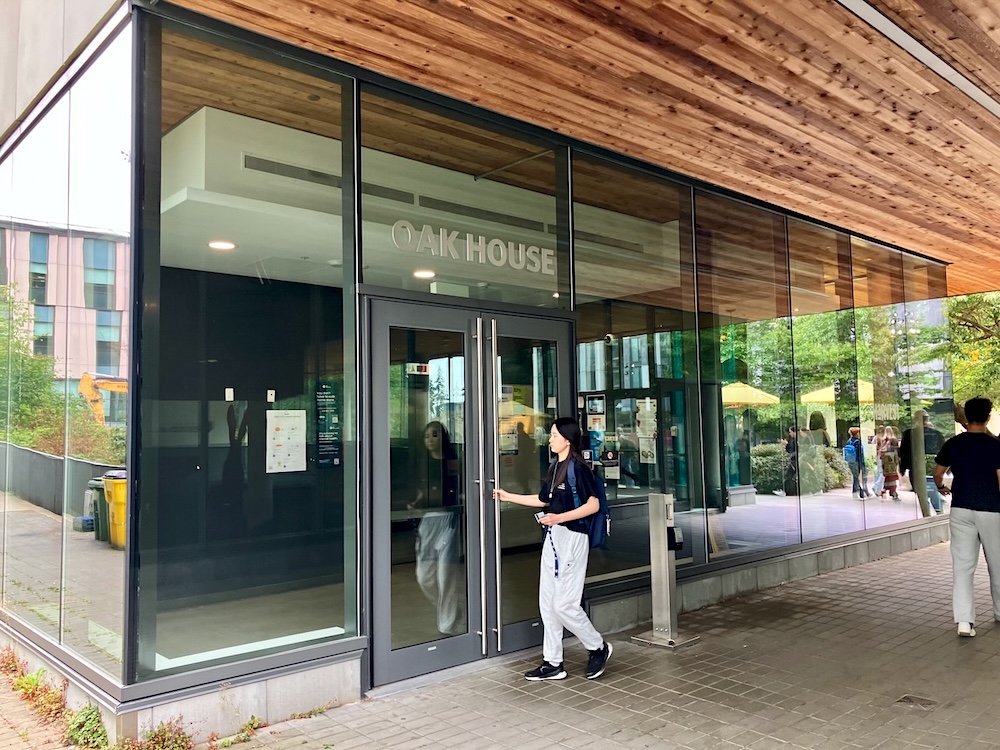
Some students are having an easier time finding a place to rent, thanks to a drop in the number of international students allowed to come to Canada. But others are still facing high costs and waiting lists that can stretch into the thousands for coveted on-campus housing.
When Elaina Lee was accepted as an undergraduate student in the faculty of science at the University of British Columbia, she was ready to travel from South Korea to Vancouver. But even though she applied for housing on campus as soon as she received her acceptance letter, Lee was already “late” to secure a room for the following year.
“I didn't know I had to apply for residence before I got my offer. And I have to say I acknowledge that I had to apply — I just never really expected it to be so competitive,” Lee said. “I found out I had about 3,000 people ahead of me. Later the number decreased to 2,800 or so, but it's still a lot. I don't expect to get a unit until next year. It was a very frustrating experience.”
In the 2025-26 academic year, 73,906 undergraduate and graduate students were accepted into the UBC Okanagan and Vancouver campuses in total. Shannon Dunn, associate vice-president of student housing and community services at UBC, told The Tyee that “UBC provides housing for 16,000 students attending the Vancouver (13,883 beds) and Kelowna campuses (2,120 beds),” meaning the university has housing capacity for about 22 per cent of students.
After she realized that getting a room at UBC for the fall 2026 session was impossible, Lee looked for accommodation close to campus. As an international student who did not know the city well, she felt safer living on campus.
“I did get a room on campus, but it's not owned by UBC themselves. The one I found charges me $1,200 monthly. It's a bit more expensive than the residence, but it's still worth it in my opinion,” Lee said.
The university housing website shows that housing payments can vary per year. For instance, “the typical cost for a room and meal plan for a first-year undergraduate student is roughly $14,000–$18,100. However, winter session fees can range from $8,100 to just over $15,600 depending on the room type and residence area.”
The renting options displayed by the university range from single rooms (small or share) to one-bedroom apartments, studios and two-bedroom apartments.
Lee said she would have liked to have had more information from UBC’s housing department to understand how competitive on-campus housing is, especially since international students who have not secured a place to live before arriving in Canada may find the experience very complex.
“I really hoped that they would tell me before I applied that you have to apply really fast because you'll get a thousand, thousand wait-lists,” Lee said.
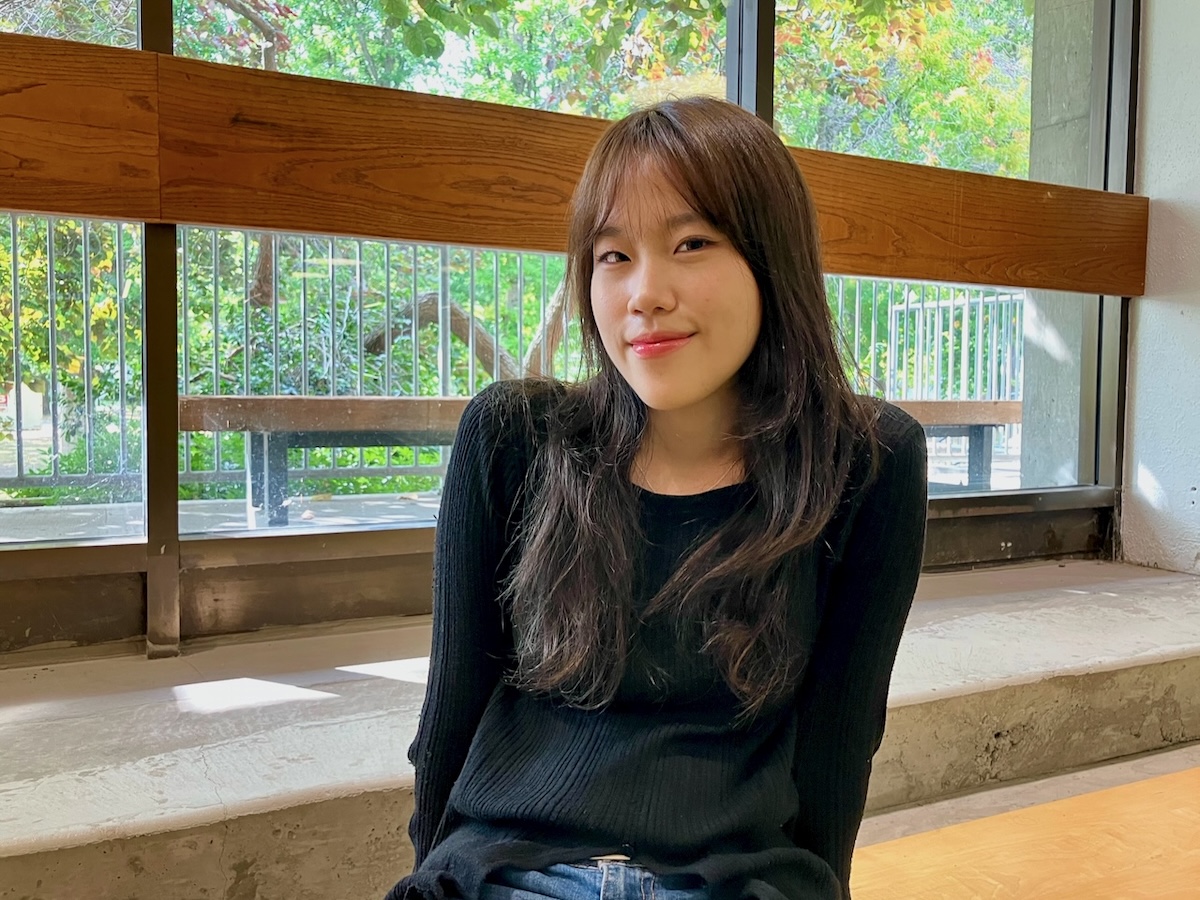
Marco Bravo is an international student from Mexico who studied software quality assurance engineering at the Canadian College of Technology and Business. He decided to look at options other than those offered by his school.
“When I arrived in Canada, I think there were a lot of people here, so it was difficult to find something that I would like to live in by myself, but it was so expensive,” he said. “So I decided to look for a [room in a] shared house. That was more affordable at that time.”
“I was kind of stressed to find a place because I was living in an Airbnb,” he said.
When Bravo moved into the shared house in New Westminster — about a 40-minute commute from his school — he started living in a makeshift room in the basement at a cost of $750 a month, he said. Later, he moved to another makeshift room that had been carved out of the living room with a metal sheet. Finally, he was able to move into an actual bedroom for $850 a month.
“When I moved in, there were probably six or seven people in the house. But then other people came and they brought couples, so it multiplied,” said Bravo.
Michael Jodah is co-executive director at Housing Our University Students Equitably, or HOUSE Canada, a national non-profit that develops and operates affordable non-market student housing co-ops and advocates for student housing policy.
“A long commute eats into study time and sleep; rental precarity and the constant risk of eviction or a bad landlord create ongoing financial and mental health stress; and high rent-to-income ratios mean many students are working extra hours just to keep housing, at the direct expense of coursework. Housing instability is consistently one of the top disruptors students raise with us before academics themselves come up,” said Jodah.
The Canada Mortgage and Housing Corp.’s latest rental market survey shows that one-bedroom apartments on the University Endowment Lands (the UBC campus) average $2,469 per month, climbing to $3,281 for two-bedroom units. That compares with an average of $1,807 per month for a one-bedroom in Vancouver or $2,364 for a two-bedroom.
On Facebook Marketplace or Facebook groups like “UBC, Housing, Room Rentals, Sublet Roommate, University of British Columbia,” rents for a single room go from $1,100 per month in areas like Kitsilano. For rooms located on the UBC campus, rents can reach up to $1,750 a month.
Tom Davidoff, associate professor and director of the Centre for Urban Economics and Real Estate at UBC, said: “Housing is deemed unaffordable at more than 30 per cent of income. It’s hard to spend less than $1,000 per month even with roommates in good locations for not great space. Many of course spend much more than that. So if you earn less than $36,000 per year, you are hurting for sure as a student, unless you have rich parents.”
For international students, work hours are limited to 24 hours per week for off-campus jobs and up to 40 hours for on-campus jobs. Students working part-time jobs at the minimum wage rate of $18.25 would have an average of $450 per week to pay expenses without their parents’ help.
Jodah said that based on HOUSE’s city-by-city rental data, “students are competing for places in markets built for higher earners, in cities where they often have the least income and the least legal tenant protections.”
To slow the growth of Canadian immigration, the federal government decided in January 2024 to reduce the number of international student permits from one million to 725,000 in September 2025. In 2026, 408,000 student permits are available for new arrivals and in-Canada extensions, based on information from Immigration, Refugees and Citizenship Canada.
Bravo said the reduced numbers are making it easier to find more affordable rental housing in Vancouver.
Davidoff said the government’s new policy was a success in some respects but comes with drawbacks.
“The government was phenomenally successful in deleting demand through reductions in allowable immigration,” Davidoff said. “The cost is that fewer people are able to come make a life in Canada, which I think is a real shame.”
Jodah thinks the government’s decision was helpful to slow growth in rent rates, but cutting the number of international students didn’t solve the underlying student housing crunch.
“It does nothing to build the non-market, permanent supply that would actually house students long-term — while also reducing the tuition revenue some institutions had been putting toward housing investment,” Jodah told The Tyee.
“The pressure on the most affordable housing options for students remains the same, while higher-end student housing options (such as private purpose-built student housing and university residences) have had demand drop.”
In 2024, in partnership between UBC and the provincial government, a $560-million student housing project was announced in the Lower Mall Precinct at UBC, with 1,508 student beds, 37 child-care spaces and a 400-seat dining hall. Based on information from the province,1,333 were new beds and 175 were bed replacements.
The provincial government provided $300 million and UBC provided the remaining $260 million.
Jodah said the BC NDP stands out in Canada for “recognizing that directly funding student housing is essential to solving our broader housing crisis.”
He said there’s still work to be done by different levels of government, including dedicated funding for non-profit student housing, the legalization of roommate tenancies in many municipalities, and increased support from “some post-secondary institutions who remain skeptical of non-profit housing solutions.” ![[Tyee]](/design-article.thetyee.ca/ui/img/yellowblob.png)











Tyee Commenting Guidelines
Please note that email notifications for replies are not currently working due to a software issue which may be resolved in a future update.
Comments that violate guidelines risk being deleted, and violations may result in a temporary or permanent user ban. Maintain the spirit of good conversation to stay in the discussion and be patient with moderators. Comments are reviewed regularly but not in real time.
Do:
Do not: