

 SHARE:
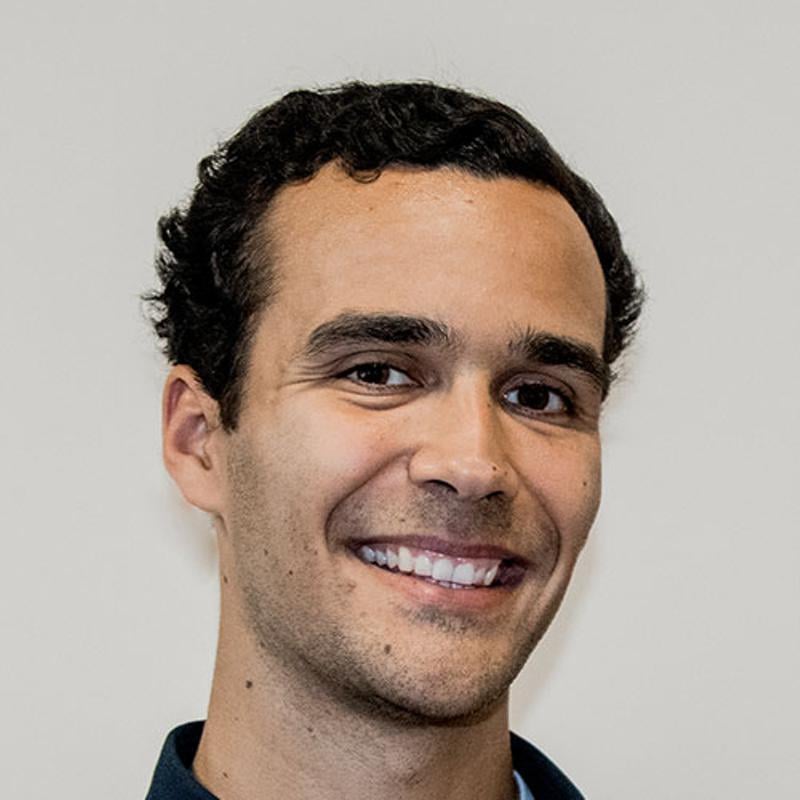
Joshua Gottfriedsen was sitting on the shore of the Fraser River when his dad pulled a fish out of a net.
Pointing to various parts of the sockeye salmon, his father, Bucky John, said it’s important to use every part of the fish. Some pieces are better in soup, others for dog food, and you always give the guts back to the river for animals to eat.
Nothing, he said, is ever wasted.
So Gottfriedsen was caught off guard when he learned how his nation’s landfill was harming the planet.
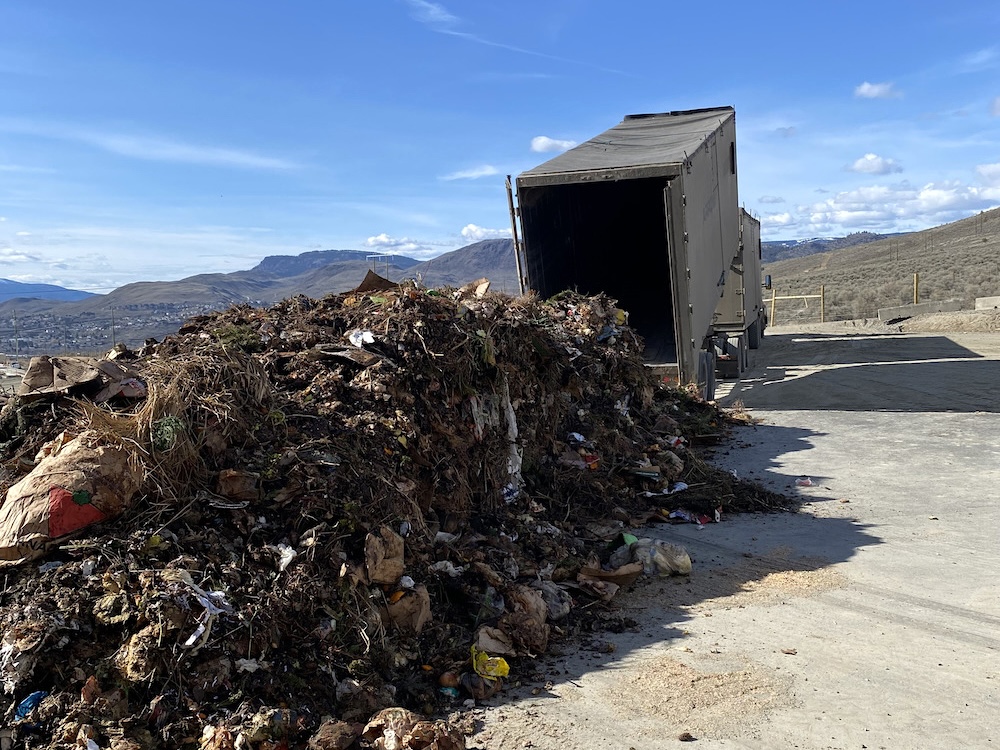
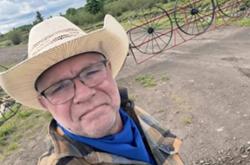
Now 41, the Tk̓emlúps te Secwépemc member says the landfill was dusty and gross and didn’t have a liner that prevented waste from seeping into the environment. Trash was stacked with multiple layers of dirt, leaving the ground unsteady and dangerous.
“There were air bubbles that released after some time, not only a bad smell but also making the ground drop two to three feet,” said Gottfriedsen, who currently serves as CEO of Scwén̓wen, the business arm of Tk̓emlúps te Secwépemc. “It was not sustainable.”
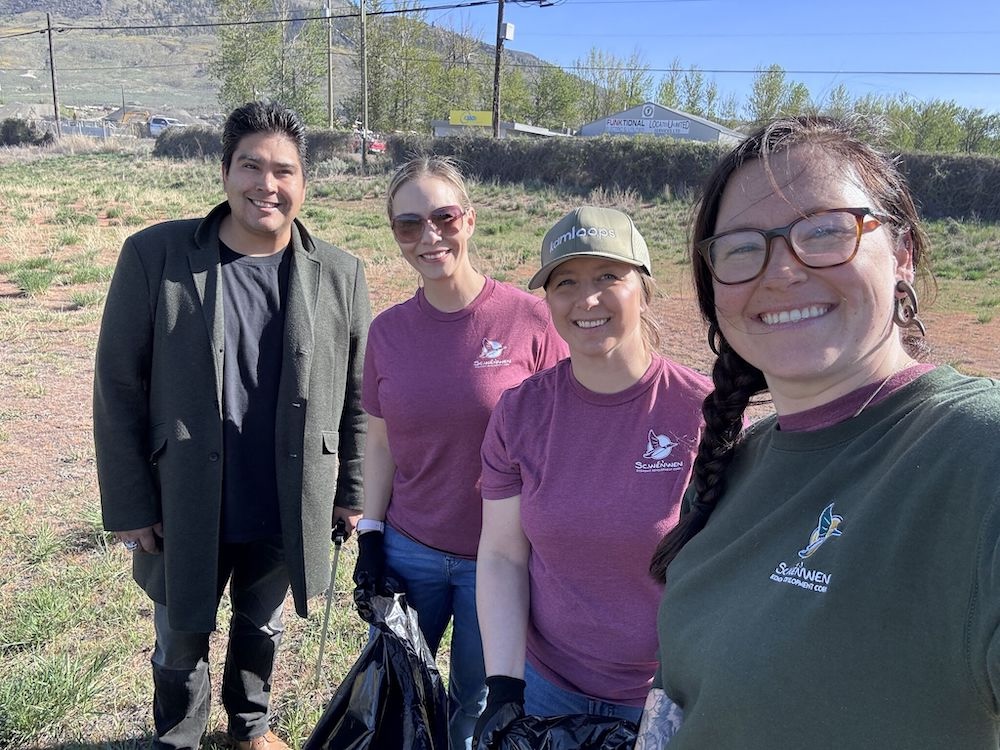
The nation commissioned a study to close the landfill for good in the early 2010s. But it was never acted on. Turns out, that was a win for the planet.
While Gottfriedsen sat on the band’s council, they were approached by a company, Grassland Organics, that was eager to bring composting to Kamloops. The city, home to 100,000 people, didn’t collect compost at the time, baffling Rob Maciak, CEO of Grassland.
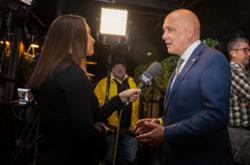
“We just couldn’t figure out, for a big city like Kamloops, why don’t they have curbside collection?” Maciak said.
Maciak later learned that the city didn’t have a facility permitted to take food waste, leading him to ask Tk̓emlúps te Secwépemc if their centrally located reserve could host such a site.
Gottfriedsen had a different idea. Following his father’s principles, he asked Maciak whether they could remediate their old landfill and build a facility that handled multiple waste streams, including composting.
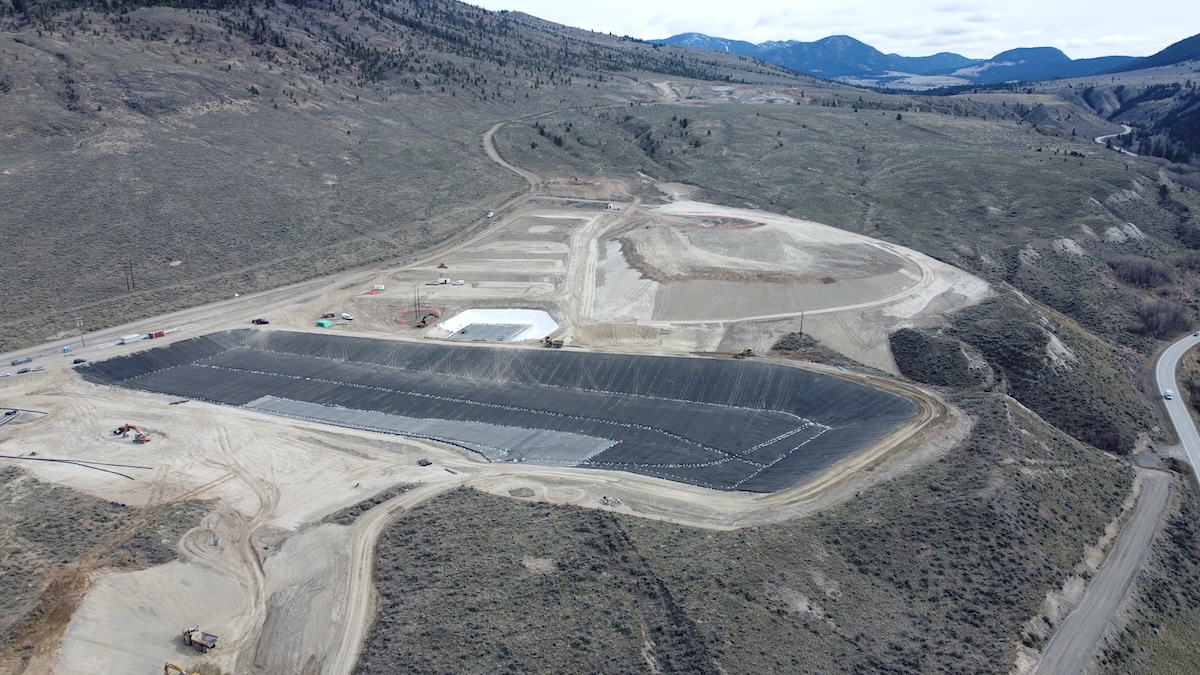
The Stswékstem Engineered Waste Management Facility was born in early 2024.
The facility has since diverted 8,000 tonnes of food waste from the landfill per year and has 52 different environmental mitigation measures. It’s double-lined and has ponds that collect leachate and storm water. There’s also an electric fence that deters wildlife from entering the site.
“We formed Stswékstem and designed a facility that is state of the art and does more recycling than wasting,” Gottfriedsen said.
One bin, two bin, green bin, blue bin
Tk̓emlúps te Secwépemc owns 51 per cent of Stswékstem, with Grassland owning the remaining 49 per cent and handling the logistics of the business.
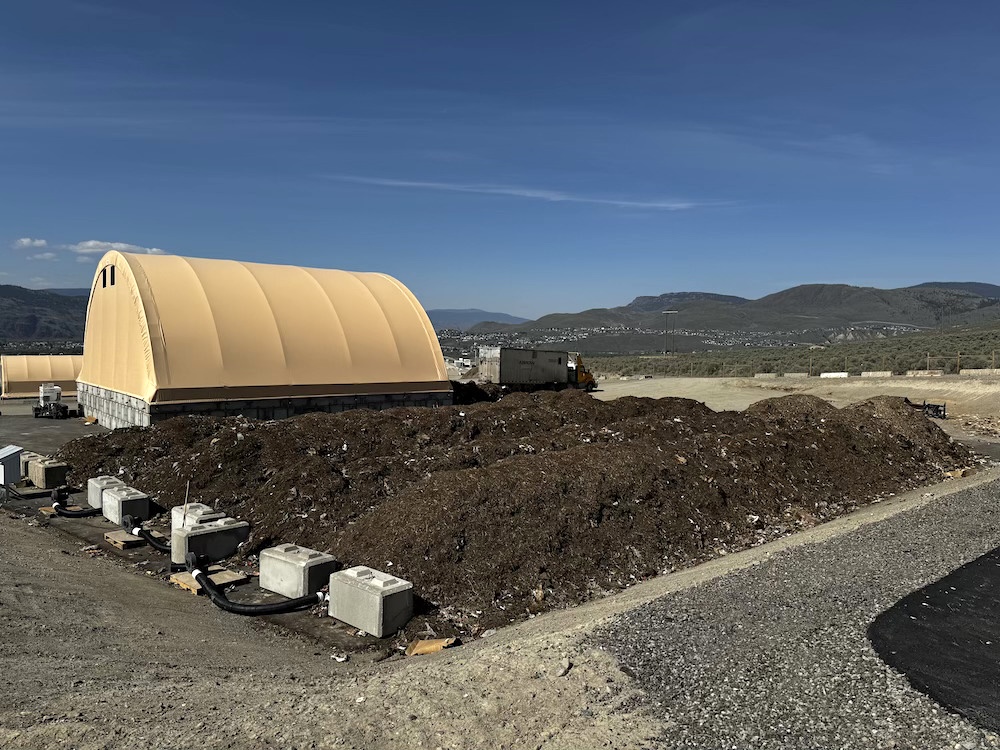
Food and yard waste is received from a geographic area spanning Kamloops to Salmon Arm, turned into compost and sold in “truckloads” directly to landscaping companies and aggregate suppliers, Maciak said. Last year, the facility took in about 10,000 tonnes of curbside organic material.
Composting reduces reliance on fertilizers and cuts down on greenhouse gas emissions. If waste is sent to the landfill instead, it produces methane, which is among the most harmful greenhouse gases on the planet. According to the United States Environmental Protection Agency, food waste makes up over half of methane emissions from landfills.
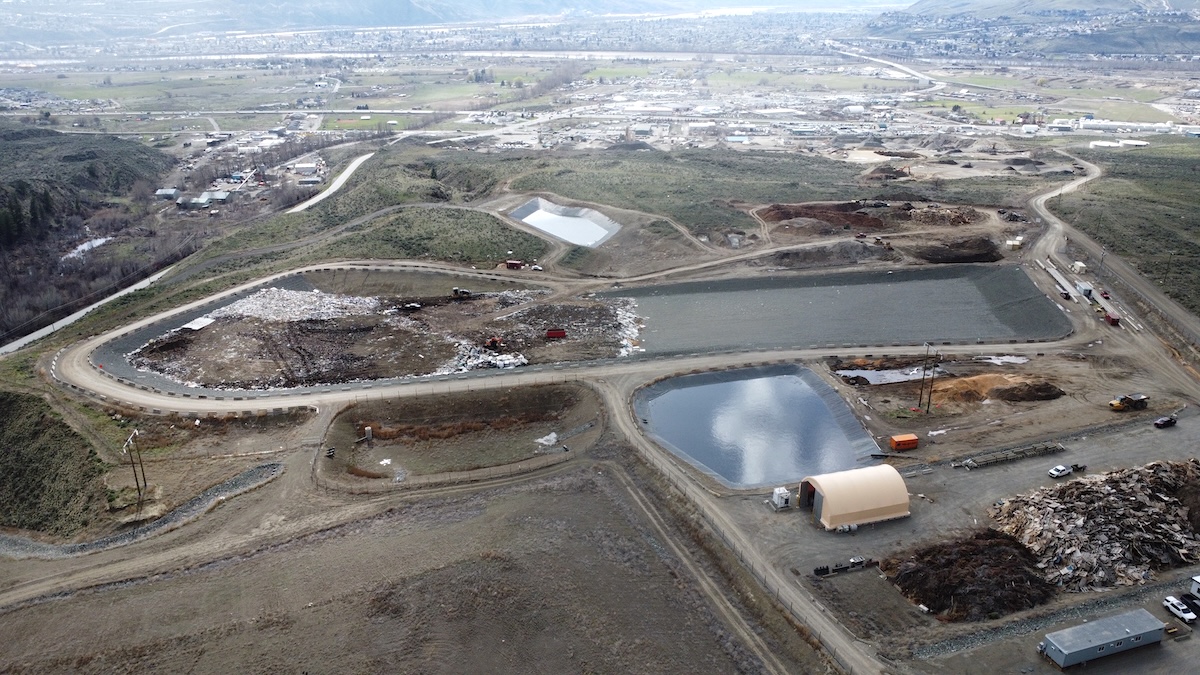
Maciak knows that landfills aren’t going to be fully replaced any time soon. He says the next best option is facilities like Stswékstem that encourage separation. Along with food and yard waste, the facility accepts all kinds of recyclable materials, including tires, appliances and construction waste, for a fee.
“All of that is separated and recycled or reused in some fashion,” Maciak said. Steel is sold to scrapyards and wood waste is shredded and turned into the pellets used in pellet stoves.
Separating waste makes it easier to identify and reuse recyclable materials, meaning they’re far less likely to end up in the landfill. When recyclables are mixed with hazardous waste, the whole batch must be dumped.
“You can’t put a bunch of plastic through a paper-recycling facility; you can’t put metal into a paper facility,” said Belinda Li, a solid waste management consultant at Mei Mee Consulting. Separation also makes it easier for recycling facilities to process and reuse materials.
Separation is key, considering the high rate of solid waste produced in both Canada and the United States.
The amount of solid waste made in Canada increased by 19 per cent between 2002 and 2022, according to the federal government. Over the same time, the rate of waste diverted from the landfill increased by 49 per cent.
The United States is one of the top waste-producing countries in the world. It generated about 268 million tons of municipal solid waste in 2017. About half that waste ended up in landfills, while 35 per cent was either recycled or composted.
Maciak suggests that people look to South Korea, which has the highest recycling rate among Organization for Economic Co-operation and Development member countries.
After South Korea experienced a rapid increase in household waste production, the government mandated that municipal waste be sorted and recycled, and that food waste be diverted from landfills.
“Everything is separated and very little goes to landfill,” Maciak said.
That said, the country’s claims have been called into question, as Korea refers to the burning of plastic and other waste for energy as “recycling.” This practice leads to higher greenhouse gas emissions than other waste management options. South Korea has said it’s going to stop calling plastic incineration recycling, which will affect its recycling rates.
Maciak declined to comment on Stswékstem’s revenue. But he told The Tyee that Stswékstem has invested money to expand the facility every year since launching. Those expansions include purchasing larger machines to handle more volume without expanding the footprint of the facility. Stswékstem receives “quite a bit” of material from household and commercial waste haulers, he said.
Gottfriedsen said the facility is lucrative and “doing quite well.”
‘The best way to do business’
The birth of Stswékstem has had a trickle-down effect on Kamloops.
The diversion of residential waste rose to 50 per cent from 18 per cent between 2021 and 2025 in the city, mainly due to the collection of organics. Landfill waste has also decreased, which will extend the lifespan of the city’s two municipal landfills, Glen Farrow, a civic operations business manager, said at a June council meeting.
Prolonging the lives of landfills is better than building new ones, said Li, the waste management expert at Mei Mee. New sites take up space that can be used for other purposes and result in increased trucking emissions and the risk of contamination to a new environment.
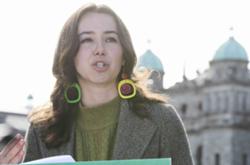
Li credits the Indigenous-led partnership and says there’s a demand for similar plants. “We need more solutions to be able to keep things from being thrown away,” she said.
The City of Kamloops told The Tyee it is “actively gathering more information” on the long-term impact of Stswékstem.
Sarah Candido, the city’s Indigenous and external relations manager, wrote that the City of Kamloops “deeply values” its shared work with Tk̓emlúps te Secwépemc.
Although Tk̓emlúps te Secwépemc was fortunate they had the land — and didn’t close their old landfill site — Gottfriedsen believes the Stswékstem model can be replicated in other Indigenous communities. Similar work is already happening with the Confederated Tribes of the Umatilla Indian Reservation, which used $172,000 in federal funding to launch a first-of-its-kind food waste reduction project in 2024. The project helped the community understand how much food it throws away.
Closer to home, the shíshálh Nation is leasing some of its land to the non-profit Salish Soils. The company uses local compost as the basis for a seven-acre farm that produces food on the Sunshine Coast.
“They’re creating another business avenue for themselves,” Gottfriedsen said of the shíshálh Nation, adding that other Indigenous Peoples can leverage their knowledge and practices to support their communities financially.
Maciak agrees that the concept is replicable and suggests that people engage with Indigenous communities early. Although every nation has different interests and values, Grassland’s experience with Tk̓emlúps te Secwépemc has been nothing but positive. “I think this is just the best way to do business,” he said.
At Tk̓emlúps te Secwépemc, Gottfriedsen wants people to know that the site is more than just numbers. It’s an example of his community doing something to benefit the next generation.
A couple of years ago, when the nation unveiled the facility, Gottfriedsen told a few dozen people that his nation doesn’t own the land, “they belong to the land.” He now says they “hold the land in trust” for their children, following the seventh generation principle, which ensures decisions made today promote a healthier planet seven generations into the future.
Perhaps that’s what his father was trying to teach him on the river many years ago. It may have taken years for the nation to clean up the landfill, but it’s now something that Gottfriedsen thinks his father would be proud of.
“It’s not a dump,” he said. “It’s a facility.”
This article runs in a section of The Tyee called ‘What Works: The Business of a Healthy Bioregion,’ where you’ll find profiles of people creating the low-carbon, regenerative economy we need from Alaska to central California. Find out more about this project and its funders, Magic Canoe and the Salmon Nation Trust. ![[Tyee]](/design-article.thetyee.ca/ui/img/yellowblob.png)
Read more: Indigenous, Environment






Tyee Commenting Guidelines
Please note that email notifications for replies are not currently working due to a software issue which may be resolved in a future update.
Comments that violate guidelines risk being deleted, and violations may result in a temporary or permanent user ban. Maintain the spirit of good conversation to stay in the discussion and be patient with moderators. Comments are reviewed regularly but not in real time.
Do:
Do not: