


 SHARE:
I used to joke with a friend of mine that whenever a given subject would come up, we would answer in unison, “Oh yes, I saw a documentary about that.”
We had both spent years in the non-fiction trenches programming documentaries for film festivals. The immersion has proven helpful to me in understanding everything from the resurgence of the Nazis to the demolition of diversity, equity and inclusion programs in the U.S.
It might feel as though we’re living through unprecedented times, but even the barest glance at history will disabuse one of this notion. I am reminded every time I watch a non-fiction film that deals with the past, even the very recent past, that none of this is new.
To be perfectly blunt, though, it’s not very fun living through history. Mostly, it’s exhausting, confusing and often downright demoralizing.
But documentaries are useful places to look for information, greater context and even a sort of grim comfort.
Whenever current events do a loop-de-loop and land face first in a giant smoking heap of insanity, I think about filmmakers like Chris Marker and Adam Curtis who offer a grander perspective — not only of real-life events, but also of human nature itself.
A series of recent documentary films are doing the heavy lifting of providing analysis that relates directly to the current moment. Here are four films that have recently topped my list.
In ‘Soundtrack for a Coup D’Etat,’ a dizzying ride to independence
Johan Grimonprez’s collage film assembles a dizzying wealth of archival footage to retell the story of the assassination of Congolese prime minister Patrice Lumumba on Jan. 17, 1961.
The events that led up to this political hit might beggar belief, but not description.
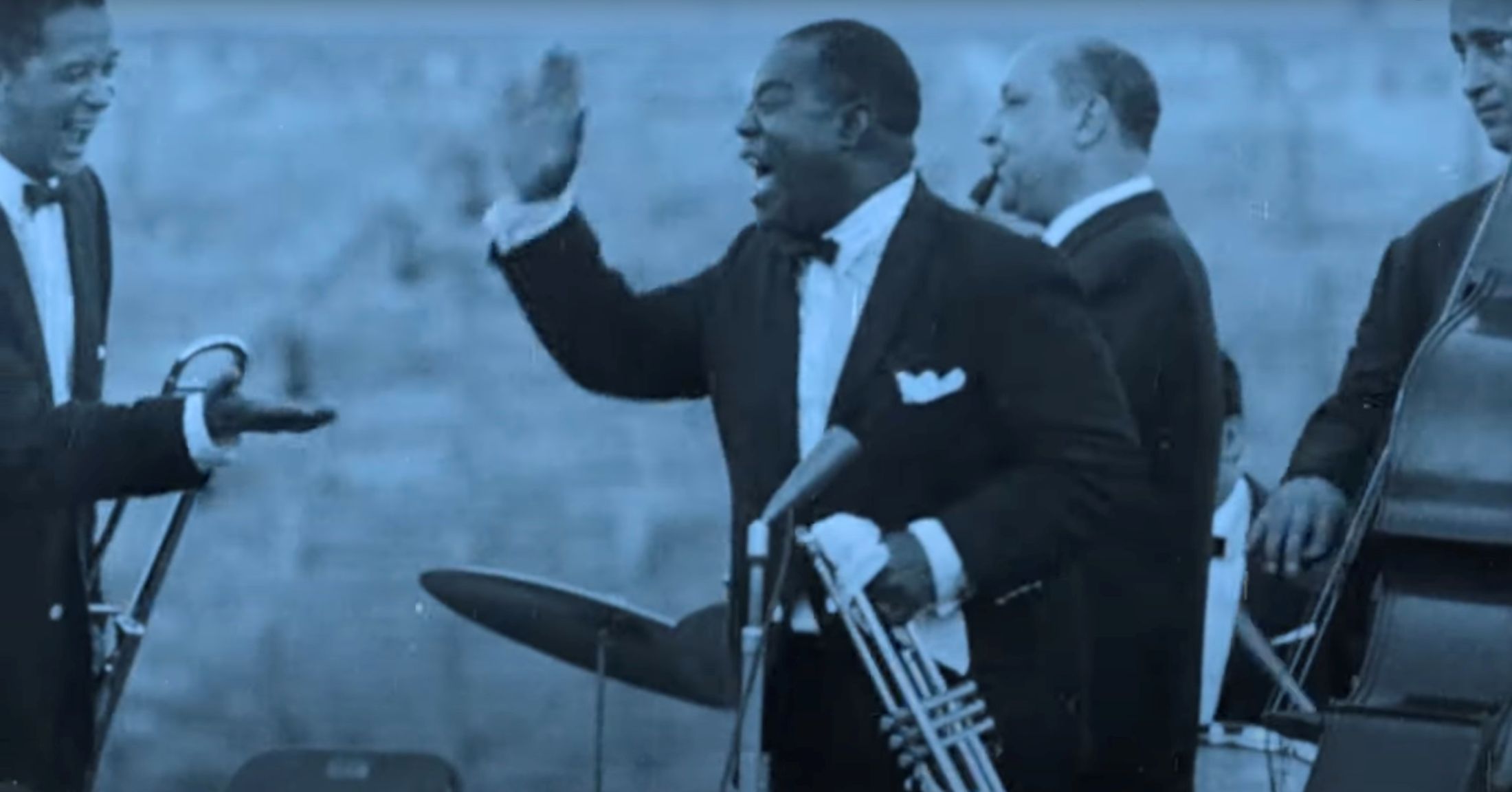
The film supplies ample visual evidence through media coverage, interviews, speeches and journal entries, as well as an entire soundtrack composed of the legends of American jazz. It’s a veritable constellation of jazz superstars: Nina Simone, Louis Armstrong, Dizzy Gillespie, Miles Davis, Max Roach, Thelonius Monk, Duke Ellington and John Coltrane. The list goes on.
But exactly what did the jazz greats have to do with the dirty deeds that resulted in the end of Congolese independence, only seven months after it was achieved? Strap in. It’s a wild ride.
Set against the great curve of history, decolonization in Africa, the civil rights movement in the U.S. and jazz itself, Coup is a gallop through one of the most tumultuous periods in history, kicking off in 1960 when the Democratic Republic of the Congo sought independence from the Belgian royal family.
The history of the Congo is one of the darkest chapters in the history of the African continent, a rapacious colonialist devouring that exploited both people and resources. It involves the mutilation of children and some of the worst atrocities committed by humans against other humans, all in the service of the rubber industry presided over by a brutal despot named King Leopold II.
In efforts to retain control over the former Belgian colony, King Baudouin of Belgium approached U.S. president Eisenhower for help. In answer, the state department sent Louis Armstrong to the Congo as a kind of jazz ambassador to win the hearts and minds of the Congolese people.
At the time, Armstrong was unaware that the trip was a CIA-sponsored ploy. Dizzy Gillespie was similarly activated in the service of furthering American interests abroad.
In the leadup to the Congolese-Belgian showdown, the film takes pains to provide additional context, including the struggles of newly independent African nations.
As 16 different countries in the African continent, along with Asian counterparts, united to form a powerful voting block in the UN, a major shift in geopolitical power became evident.
Rich and powerful nations were rattled further by the actions of Soviet leader Nikita Khrushchev, who violently denounced neo-colonialists and maintained that the U.S., with its policy of racial segregation, did not hold the moral high ground.
All this information is imparted in a deluge of images and archival footage so densely edited that it’s a challenge to get your bearings. But amongst the parade of world-shifting events and famous faces (from Fidel Castro to Malcolm X), one of the most fascinating is a woman that I knew little about.
Andrée Blouin was Patrice Lumumba’s speechwriter and a formidable political activist and organizer. Blouin’s story is worthy of its own documentary treatment, but she played a critical role in the events surrounding the rise and fall of Congolese independence.
By way of introduction to Blouin’s story, the film offers one of the most harrowing moments in the entire drama. After being deported by the Belgian government from the Congo mere days before the country declared its independence, Blouin hid a critical document in her hair and made her way to Rome, where she shared the reality of the situation with the world.
Blouin’s statement, signed by the country’s national leaders, revealed the Belgian sabotage of the Democratic Republic of the Congo’s efforts to free itself from its former colonizers.
For her courage, she was forced to flee to France as an exile, when Joseph Mobutu seized power. Her family members remained as hostages to ensure her silence. It didn’t end there. Blouin’s elderly mother was beaten almost to death by soldiers in front of her granddaughter (Blouin’s daughter) Eve.
Lumumba’s death by firing squad took place following the coup, with the support of Belgium, as well as complicity of other Western nations like the U.K. and the U.S.
UN Secretary General Dag Hammarskjöld had also been working behind the scenes to bring about Lumumba’s ultimate destruction.
Assembled with references to the design of Blue Note Jazz album covers with their snazzy fonts and cool graphics, Soundtrack for a Coup d’Etat has style to burn, but this dedication to aesthetics serves a critical function in the film. Underneath cultural shifts, political shifts were taking place as well. Sometimes they ran in tandem, and other times divergent paths emerged.
Jazz, like history itself, has a way of looping back around, revisiting predominant themes, spending time exploring the curlicues of events that at first seem unrelated, even discordant, but slowly reveal the greater structure at work.
Here it is, as well, keep your eyes on the prize, Katanga, the Southern region of the Congo, home to the Shinkolobwe mine. Uranium, the raw stuff of atomic bombs, like those used to obliterate Hiroshima and Nagasaki, was one of the key elements that western powers were eager to control.
Here is where more recent events join the chorus, lending a strange counterpoint or echo to the situation besetting Ukraine and Canada and both country’s rare earth minerals.
The dirty tricks that were used to undermine the leadership of the Congo and bring about a violent coup should give contemporary folks some pause.
It’s about money, corporate interests and power — always has been.
In ‘The Riot Report,’ a haunting exploration of the path not taken
A PBS documentary produced by Jelani Cobb, The Riot Report offers an exhaustive take on the Kerner Commission, a group of elected officials and legal experts who were charged with investigating racial unrest in the 1960s, including the catastrophic urban rioting that defined the decade.
The commission was aimed at finding solutions to racial injustice and urban poverty. But former U.S. president Lyndon B. Johnson’s administration squashed them flat.
What emerges, more than the historical precedents of current events, is the path not taken. Many of the issues revealed by the Kerner Commission’s encompassing investigations remain to this day.
Two historical films make sense of today’s far-right
That racism, corruption and violence have long been woven into the fabric of American society isn’t news exactly, but in light of the re-emergence of fascism around the globe, it was downright eerie to watch Nazi Town, USA.
Peter Yost and Edna Alburquerque’s documentary is a deep dive into the Bund, a pro-Nazi movement that gained ground in the U.S. prior to the Second World War. Founded in 1936, it was one of the largest fascist organizations in the U.S., offering summer camps and even a planned community entitled “German Gardens” for adherents to the ideology, with street names that honored Hitler and Goering.
The apotheosis of the film takes place on Feb. 2, 1939, when the Bund staged a rally at Madison Square Garden. More than 22,000 fascists and their supporters filled the arena, while outside protesters took to the streets.
For another documentary examination of this event, seek out Marshall Curry’s film A Night at the Garden.
As these films make clear, there is nothing new under the sun. I’m not sure if that makes me feel better or worse.
But it’s a reminder that, as Winston Churchill once said, “If you’re going through hell, keep going.” ![[Tyee]](/design-article.thetyee.ca/ui/img/yellowblob.png)











Tyee Commenting Guidelines
Comments that violate guidelines risk being deleted, and violations may result in a temporary or permanent user ban. Maintain the spirit of good conversation to stay in the discussion and be patient with moderators. Comments are reviewed regularly but not in real time.
Do:
Do not: