

 SHARE:


“To the young people of our beautiful province, I am telling you to stay. This is your home.”
Premier-designate Lorne Doerkson’s election-night invitation was welcome. Now comes the awkward part: finding people somewhere to live.
The Conservatives are right to connect prosperity with investment, productive businesses and opportunities for the next generation. But the nurses, electricians, entrepreneurs and construction workers needed to deliver that vision require somewhere to live.
Which brings me to some unsolicited advice for our new Conservative government. As you consider changes to the NDP’s housing reforms, make sure you’re removing red tape, not putting it back.
The NDP introduced no shortage of housing reforms. Some deserve to stay, some need fixing, and some deserve the trash can. Good intentions don’t guarantee good policy.
But a policy shouldn’t need witness protection because the previous government introduced it. The incoming government has an advantage: much of the difficult work of changing the planning rules has already been done.
It can now concentrate on making those rules work better, getting projects financed and turning permitted capacity into completed homes.
Take Bill 44, the 2023 legislation that has become a lightning rod for opposition to provincial housing reform.
The Conservatives explicitly promised to repeal it in 2024. Their 2026 platform stops short of that commitment and instead promises faster approvals and zoning bylaws that match official community plans.
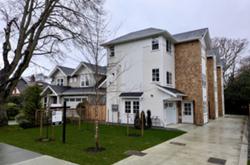
That is a useful starting point, because parts of Bill 44 advance precisely those objectives. Most of the controversy concerns small-scale, multi-unit housing. The provincial rules generally allow three to six homes to be permitted on qualifying residential lots, depending on location and lot size. And no matter what neighbours or local councils want.
There are legitimate arguments about infrastructure, building form and whether these projects deliver affordable housing or are financially viable. Legal permission to build a fourplex does not magically produce construction financing or an affordable sale price. Those are reasons to improve the rules.
They are a poor excuse to abandon everything else in the legislation.
Bill 44 also requires municipalities to plan and zone for 20 years of housing needs. That gives communities a responsibility to accommodate their future, instead of leaving the plan as “We’ll cross that bridge when the kids move to Alberta.”
Municipalities still have a substantial role to play in deciding how their communities grow. Residents still participate in preparing those plans. But planning needs to produce something more useful than a beautifully illustrated explanation of why nothing can happen.
Which brings us to perhaps the most defensible part of Bill 44: removing public hearings for qualifying residential rezonings that comply with an official community plan.
Consider the old arrangement. A municipality spends years consulting residents, commissioning studies and debating where housing should go. Council adopts a plan. Someone then proposes housing consistent with that plan, and the municipality holds another public hearing to reconsider whether it belongs there.
Imagine spending years deciding a street should have coffee shops, then requiring every café owner to attend committees, panels and a public hearing to establish whether that street should have coffee shops.
At some point, you just have to let someone make a latte.
Public participation matters, but even more important is the outcome of that participation. If an adopted plan cannot provide reasonable certainty about what can be built, we should stop calling it a plan and start calling it a conversation starter.
These delays have consequences beyond a builder’s patience. Financing costs accumulate, housing arrives later, businesses struggle to recruit, and families make decisions about where they can afford to stay.
And while existing residents can turn up to oppose a project, the nurse who might move into it cannot introduce herself to the neighbourhood. She is still somewhere else, deciding whether the job offer is worth the rent.
The results of the broader housing effort deserve a fair assessment. Nearly 41,500 homes were completed across B.C.’s seven major metropolitan areas in 2025, up 16.6 per cent from the previous year. BC Builds uses low-cost financing, grants and land partnerships to help build rental homes for middle-income households. By June 2026, the province reported that the program had broken ground on 4,000 homes.
Those numbers do not prove every NDP policy worked. Completed homes reflect decisions made years earlier, and interest rates, federal programs and market conditions all matter. Nor do they establish that the newest zoning reforms have fulfilled their promise.
Those results give the incoming government something to build on, and a responsibility to examine carefully what is working. People need homes, regardless of who gets the credit.
The new government has plenty of useful work ahead to further reduce red tape: make approvals predictable, examine charges that undermine project viability, co-ordinate infrastructure with growth, and fix rules that add costs without delivering corresponding benefits. Protect projects already moving through approvals and funding programs so a change in government does not strand years of work.
Require municipalities to plan for growth, zone for it and follow through. New homes mean new neighbours. That should be the purpose of a community plan, not a problem for it to solve.
The NDP’s reforms changed the relationship between the province and municipalities. That was a generational shift, and parts of it were generations overdue. Housing shortages do not respect municipal boundaries, even when municipal politics pretend they do.
The Conservatives have an opportunity to improve this framework and get more homes built. Reintroducing the old obstacles would simply give red tape a fresh coat of blue.
The premier has invited young people to stay.
Now his government needs to make sure the invitation comes with an address. 
Read more: BC Politics, Housing











Tyee Commenting Guidelines
Please note that email notifications for replies are not currently working due to a software issue which may be resolved in a future update.
Comments that violate guidelines risk being deleted, and violations may result in a temporary or permanent user ban. Maintain the spirit of good conversation to stay in the discussion and be patient with moderators. Comments are reviewed regularly but not in real time.
Do:
Do not: