


 SHARE:

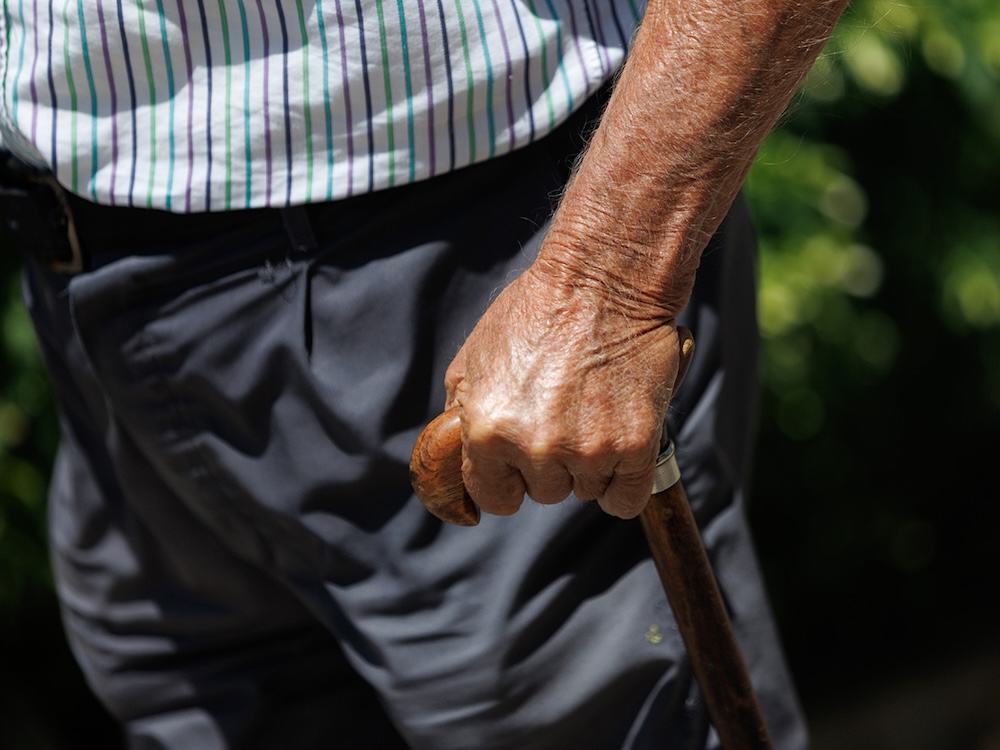
British Columbia needs to catch up on both low-barrier and specialty care for chronic pain, according to Maria Hudspith, CEO of Pain BC and former co-chair of the Canadian Pain Task Force.
In 2021 the Canadian Pain Task Force published an action plan with six overarching goals and 150 recommendations to overhaul how the country treated pain.
In 2019 Health Canada estimated chronic pain costs the country between $38.2 billion and $40.3 billion in health-care costs and lost productivity in the workforce.
It’s the greatest cause of disability in Canada and the primary reason people leave the workforce. It also dwarfs the economic impacts of cancer and heart disease, Hudspith said.
The number of Canadians living with chronic pain will most likely increase as the population ages.
Five years after the action plan was published, there has been a lot of progress on 120 of the 150 recommendations, Hudspith said. Nine provinces have introduced pain strategies, invested in new pain services, expanded access to pain care and improved the education of health-care professionals when it comes to pain.
In B.C. the Provincial Health Services Authority created Pain Care BC and has improved the whole “triangle” of pain care, Hudspith said.
Hudspith segments the triangle into four parts — kind of like older iterations of the food pyramid. At the bottom, most people will be supported by free, low-barrier community and online supports, such as peer support, group and coaching programs. Those who need further care take a step up the triangle of support to meet with primary care providers. If people need further support, they are elevated to interdisciplinary or multidisciplinary pain clinics. At the very top of the triangle are specialty pain clinics run by a health authority, which help care for the patients with the most complex and challenging care needs.
Low-barrier supports can focus on pain neuroscience education, supported self-management and other strategies The Tyee recently spoke with pain researcher Cynthia Thomson about.
Specialty pain clinics would focus on specialized treatments such as spinal cord stimulators, which help override pain signals using a small electric current.
B.C. was the first province to introduce supported self-management, pain neuroscience education, peer support and low-barrier community programs, Hudspith said.
But now the province is lagging in investments for low-barrier community and online supports, and specialist care, she added.
Patients can live with pain for 20 years before they are diagnosed with chronic pain and wait months or years to access specialists, she said.
“We’re far behind provinces like Quebec and Ontario, where they have really invested in that top part of the triangle,” Hudspith said. “We’re very, very far behind in that regard.”
That’s a huge problem, because one in five Canadians will live with chronic pain in their lifetime that is so severe it disrupts their daily life, she said.
This includes kids suffering from juvenile arthritis, chronic migraines or injuries from sports, and adults and seniors suffering after car crashes, cancer and arthritis.
Chronic pain is defined as pain that persists after tissue has healed, or pain that lasts more than three months.
Pain is biopsychosocial, meaning the experience of pain is influenced by a variety of factors, including stress, sleep and “sandwiches” — in other words, how hungry a person is.
“It is really not just a physical thing,” Hudspith said. It’s real and is a chronic condition, she added.
And it’s often treated dismissively. People suffering from chronic pain are told they’re lazy, just trying to get off work on disability, or drug seeking, Hudspith said.
“People are disbelieved, invalidated, blamed and even criminalized,” she said. “If you’re living with arthritis or if you have cancer, you’re not also living with invalidation, disbelief, blame and essentially being told you’re crazy or have a character flaw. But people living with chronic pain are dealing with that burden on top of the experience of pain.”
A 20-year toxic relationship with pain
Keith Meldrum is all too familiar with that experience.
Forty years ago as a teenager, he drank alcohol and drove off the road, down an embankment. He was wearing only the waist strap seatbelt, which ended up around his stomach and tore him up internally as the car rolled.
He had emergency surgery and spent a week and a half in the intensive care unit. His body healed, but the pain persisted.
For 20 years after the accident, Meldrum had a “really unhealthy relationship” with his chronic pain.
“I was very, very adamant as a young adult that I was not going to let pain define me,” Meldrum told The Tyee. “I kept fighting it and pushing it back. All I did was create this sort of feedback loop of stress and anger that perpetuated the pain.”
When Meldrum sought medical help, he said doctors would tell him his pain wasn’t real or that there was nothing wrong with him. There was a real reluctance from doctors in the ’80s and ’90s to think of pain outside of tissue damage, he added.
Meldrum said he ended up in a pretty dark place and would wish he hadn’t lived through the accident.
And then, 15 years after his accident, he met Dr. David Hunt, who worked at the St. Paul’s Hospital Complex Pain Centre.
That interaction was “the first time somebody truly validated my pain as something real,” Meldrum said. “It didn’t change my relationship [with pain] overnight, but that was the spark that lit the fire for me to be able to find a different path.”
Meldrum ended up receiving a spinal cord stimulator. The stimulator reduced his pain by 25 to 30 per cent, which created “space” for him to realize he was exhausted with being angry, he said.
He began thinking about what he could do, rather than thinking about what he couldn’t do.
“Since then, my quality of life has certainly improved. I’ve regained a lot more function because I stopped fighting against it,” he said.
How people think about chronic pain changes the way it feels, according to an Australian educational website. Another way to think of that: the brain can be retrained to make pain signals gentler.
The sooner people can start learning about the complex phenomenon of pain and access resources and education on what they can do to help themselves, the better, Meldrum said.
This is part of supported self-management, which can be enough for people to manage their pain. For others, it can work in concert with community supports and health-care supports such as physiotherapy or medication.
Canada’s complex relationship with pain
Canada’s relationship with pain has changed dramatically over the past few decades.
In the early 2000s, opioid prescription was widespread across North America. In a 2018 lawsuit, B.C., on behalf of Canada, accused pharmaceutical companies of downplaying risks and potential addictive qualities of opioids when marketing them to doctors. In 2023 Purdue Pharma, which sold OxyContin, settled for $150 million. The province is still pursuing the class action with “dozens” of other companies.
Canada was, and remains, one of the top opioid prescribers in the world, Hudspith said. There are a number of reasons for that, she added, including a “pill popping” culture where people believe medication will fix them; the influence of Big Pharma; and a health-care system where seeing a doctor for a couple of minutes is free but physiotherapy and psychology aren’t.
In 2015 and 2016 there was a “pendulum swing,” when doctors pulled back on prescribing opioids and highlighted how a multimodal approach was needed to treat chronic pain, Hudspith said.
But a multimodal approach hadn’t been built out yet, so pulling back on prescribing opioids was a bit like taking away the only tool in the tool box to treat pain, she said.
In 2019 the country launched the Canadian Pain Task Force, and in 2021 it released its action plan with its 150 recommendations.
And while the country has made huge strides, people living with chronic pain still face stigma and long wait times for supports and services, she said.
The provincial and federal governments are investing heavily in megaprojects, she added, while not doing enough to recognize the high rates of chronic pain suffered by people in the trades.
Anyone who thinks they may have chronic pain can visit Pain BC’s website for information and resources, or text and call Pain BC at 1-833-261-7246. The services are free and do not require coverage under the provincial Medical Services Plan.
People don’t have to prove their pain to access resources, Hudspith added. “It’s a big tent,” and everyone is welcome. 
Read more: Health










Tyee Commenting Guidelines
Please note that email notifications for replies are not currently working due to a software issue which may be resolved in a future update.
Comments that violate guidelines risk being deleted, and violations may result in a temporary or permanent user ban. Maintain the spirit of good conversation to stay in the discussion and be patient with moderators. Comments are reviewed regularly but not in real time.
Do:
Do not: