



 SHARE:
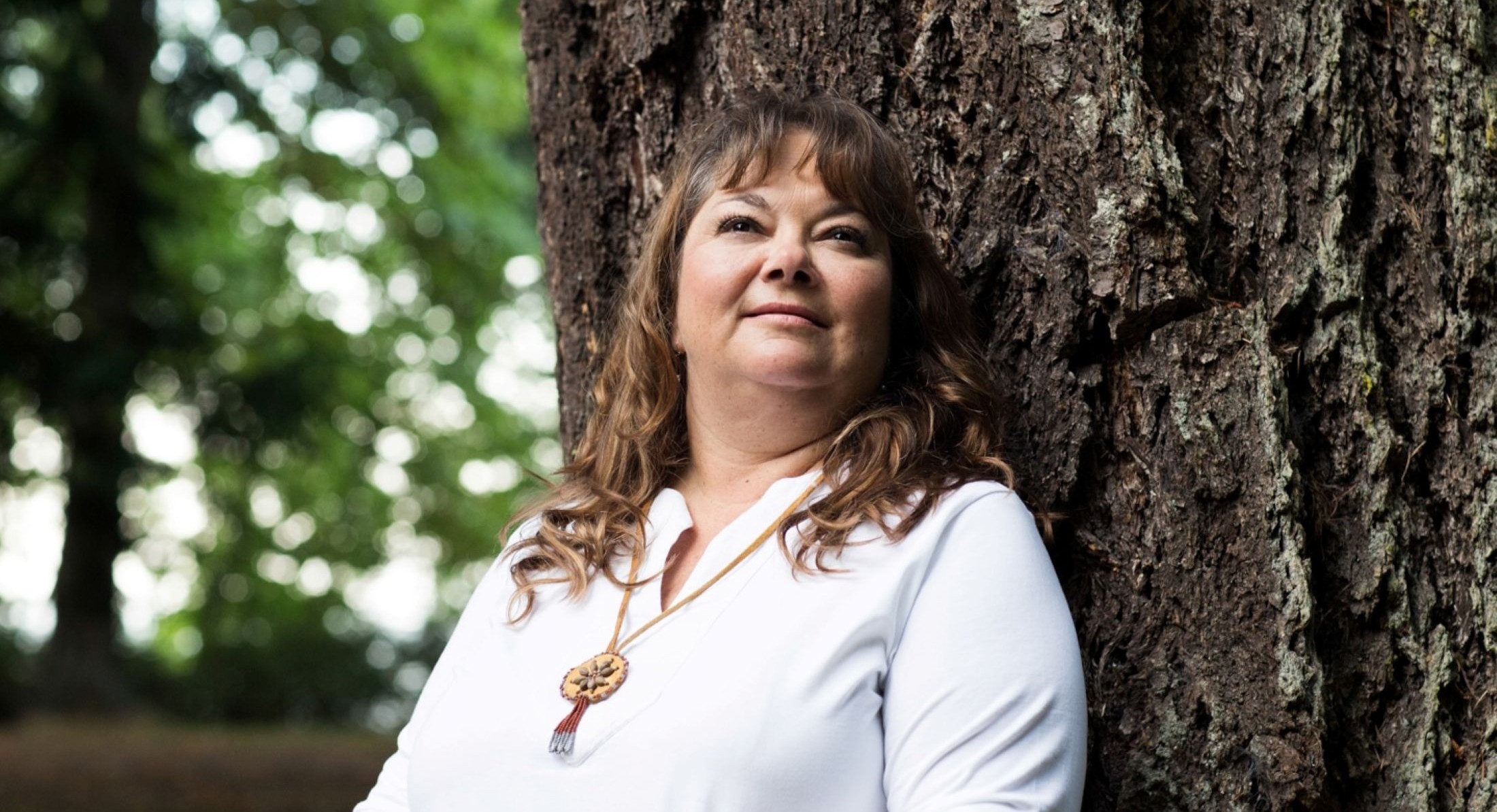
A conversation with Victoria-based author Monique Gray Smith, even one held via the shaky digital portal that is a Zoom call, can feel like a warm embrace from a dear friend.
“Something I was born to do is to share stories… that remind us, one, that love is medicine. And two, that as human beings we are resilient,” said Gray Smith. In just over 13 years, she has written 14 books for children, young adults and adults. Her work has been translated into multiple First Nations and European languages.
“And for children to also know that, to feel that love. But to know that when times are hard, we have to role model for them how to navigate through difficult times.”
Her palpable warmth is a testament to a skill that Gray Smith, who is of Cree and Scottish descent, sees in her storyteller contemporaries like David A. Robinson, Leona Prince and Peggy Janicki: the ability to tell terrible truths about what we now call Canada, without, as Gray Smith puts it, “slamming shut” the hearts of readers.
For Gray Smith, what that looks like depends on her intended audience.
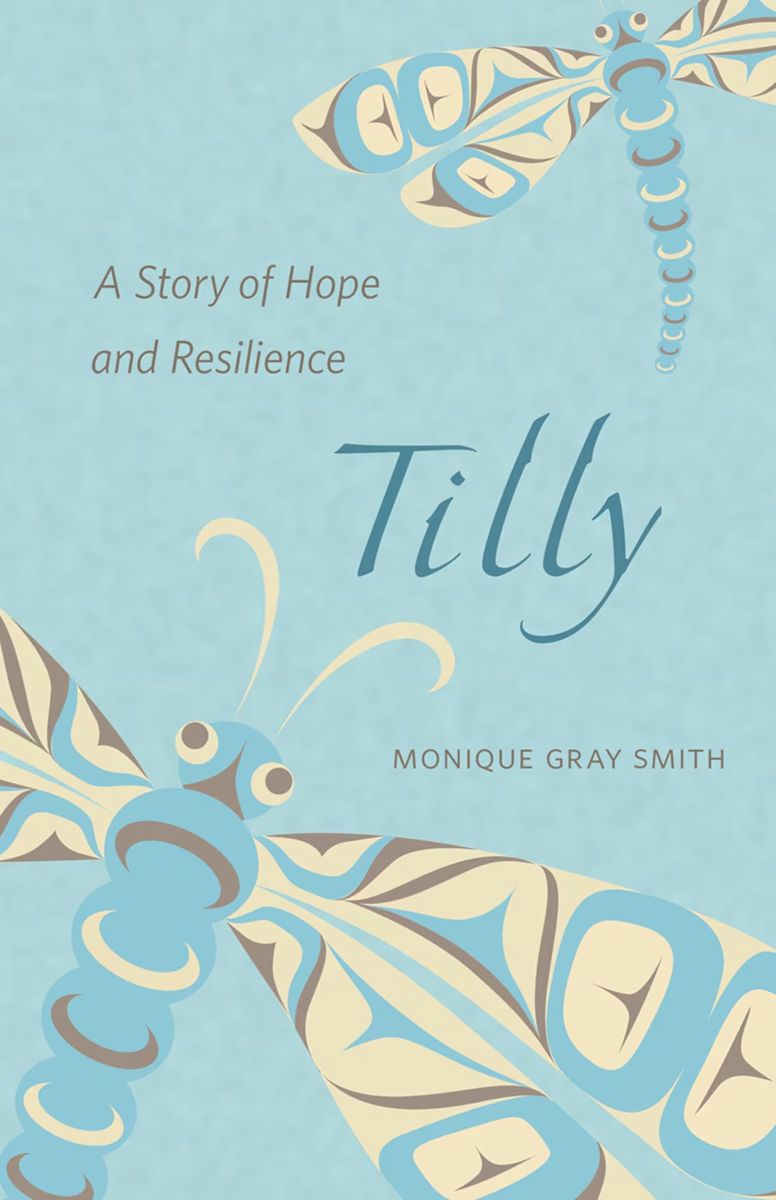
In her first book Tilly: A Story of Hope and Resilience, published in 2014, Gray Smith thought she was writing for an audience of older, non-Indigenous women.
Largely based on Gray Smith’s own experience growing up as a colonized First Nations girl in Western Canada, Tilly: A Story of Hope and Resilience follows the titular character as she tries to understand herself and her family in the aftermath of the severance from their culture, language and community.
But after winning the 2014 Burt Award for First Nations, Métis and Inuit Literature, 10,000 copies of Tilly were distributed to young people across Canada. The sequel, Tilly and the Crazy Eights, published in 2018, was also marketed to young adult readers.
“I have a novel coming next September with House of Anansi [Press] and it’s being marketed as my first novel for adults,” said Gray Smith of The Things We Never Learned, her first book with characters of Scottish ancestry.
“My style of writing is storytelling. I don’t write English literature. And so I think if somebody is used to English literature, then they would read my books like Tilly and Tilly and the Crazy Eights, perhaps, as for young adults.”
More than half of the stories Gray Smith has published to date are aimed at children and young adults, however, including the young adult version of Robin Wall Kimmer’s bestselling Braiding Sweetgrass.
Like Tilly, Gray Smith takes inspiration for her children’s books from observations of her own life, both serious and silly.
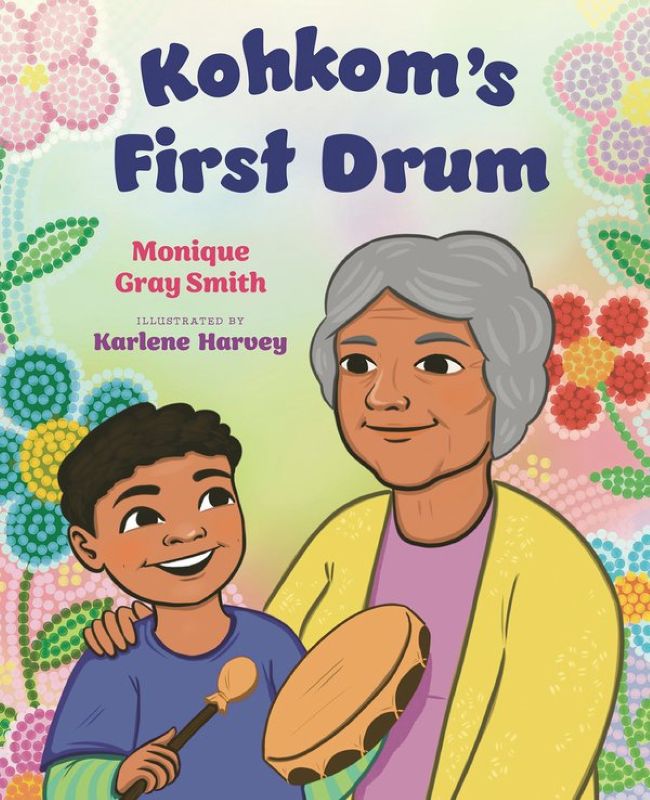
For example, the picture book Kokhom’s First Drum was inspired by Gray Smith’s own mother’s experience of receiving her first drum.
It was gifted to her at Tk̓emlúps te Secwépemc more than 80 years after she was adopted by a non-Indigenous family, part of a wave of such adoptions of Indigenous children known as the ’60s Scoop.
Even though Gray Smith’s mother had reconnected to her Nation years before, receiving her first drum was a monumental occasion.
“She called me that night and she was so full of life. She was like, ‘My drum feels like a message that I belong,’” Gray Smith said. “That’s what Kokhom’s First Drum is about: a kokhom explaining to her grandchild about the ’60s Scoop, through the love of a drum.”
Before becoming a professional storyteller, Gray Smith was a psychiatric nurse. She learned the important skill of always paying attention on the job, and continues to rely on it for book ideas. Like when she and her wife went for a drive over the summer.
“On Old West Saanich Road there were three signs: the first one said ‘Horse Manure’; 10 feet later the next one said ‘Horse Poop’; and then the third one said ‘Butt Nuggets’,” Gray Smith said, laughing.
She knew right away “butt nuggets” would make it into a future book, perhaps Take A Step, the tentatively titled middle-grade book she’s currently writing for Orca Book Publishers with Mike Bowden, the district principal of Indigenous education in the Kamloops-Thompson school district.
“When you’re writing for a group of… potentially reluctant readers who may identify as males, that kind of humour engages them,” she said.
Sharing the truth
When The Tyee first interviewed Gray Smith in 2013, our conversation focused on the coming release of Tilly: A Story of Hope and Resilience.
At the time, Gray Smith hoped her novel would be taught in high schools as an introduction to a terrible Canadian legacy that continues to this day: the genocide of Indigenous nations, cultures, languages and communities through colonization.
Today, that dream has come true.
“It’s used quite a bit, in Grade 10 especially,” said Gray Smith, adding Tilly is also read in First Nations 11 and 12 courses.
Sometimes Gray Smith, who makes the majority of her income as a public speaker, is even invited to speak to students.
“And every so often, I get an invitation from a Grade 5 or 6 teacher, who obviously knows their learners very well, to have that book as a class read,” she said.
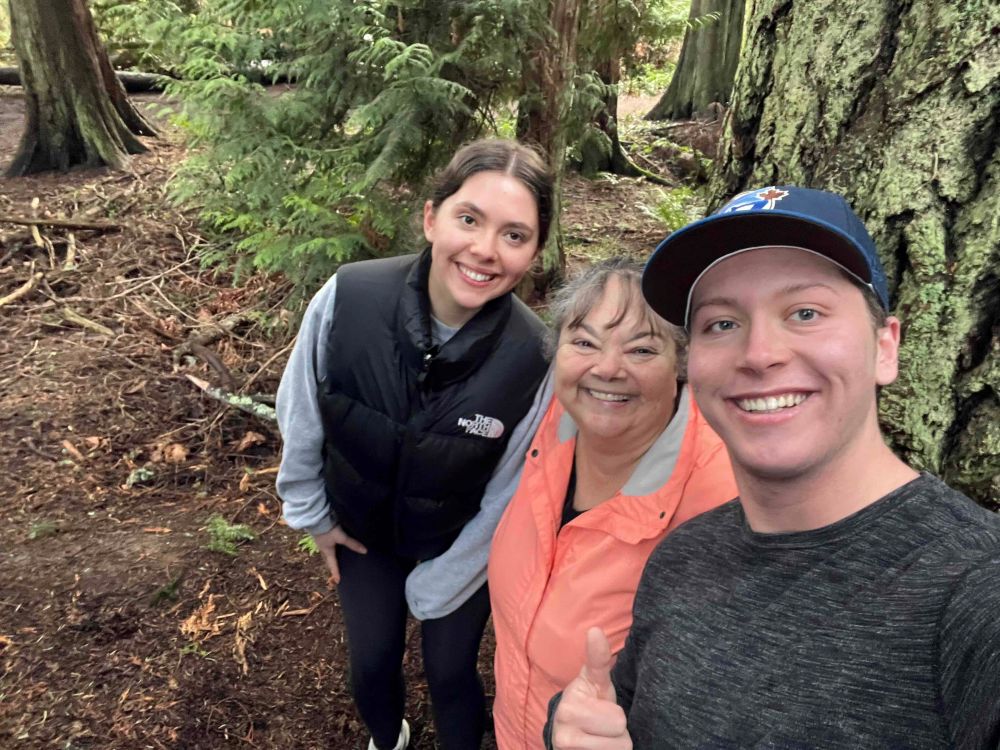
But when writing Tilly, Gray Smith, who has two adult children with her wife Rhonda, made the conscious choice to have the character Tilly be heterosexual.
“What I wanted for Tilly was for people to come to that book and begin to understand the truth of our history,” she said.
“I didn’t want people to be turned off and not read about the history. And at 13 years, I think now, I can write that book and not be worried about the sexuality of the characters or how they identify in their gender.”
She’s written books like that twice over now: the fictional Circle of Love features same-sex couples, and in the short story collection Sharing the Light: Stories and Reflections, Gray Smith tells the story of meeting her wife, their fertility journey and the birth of their kids.
Readers are ready for that level of gender and sexuality inclusivity from Gray Smith, too. Sharing the Light made the national bestseller list shortly after it was published earlier this year.
Emphasizing our common humanity
Gray Smith’s career as a published storyteller has coincided with a Canadian era where the horrific impacts of colonization finally received attention on a national scale.
From the reports of the Truth and Reconciliation Commission of Canada, to the National Inquiry into Missing and Murdered Indigenous Women and Girls, to the rediscovery of thousands of potential burial sites at former residential schools, it was near impossible for Canadians to avoid reckoning with the country’s unvarnished history.
But difficult truths are often closely followed by an angry backlash. With residential school and genocide deniers not only peddling books, but even being elected to government offices, the misinformation and hate has only gotten louder in recent years.
It only strengthens Gray Smith’s resolve to share stories that emphasize our common humanity.
“It’s why I keep writing about ‘love is medicine,’” she said. “Through all of my books, it’s there.”
Gray Smith demonstrates love in other ways, too. When asked how she has managed to be so prolific as a published author, she named the women who have helped her along the way.
“You know when you go berry picking and usually there’s somebody up front, like an auntie, and they’re holding the branches back so you can walk through easily and not get the branch back in your face?” she asked.
“I have been so blessed with so many aunties over the years to hold the branches back for me. Like when I think about Eden Robinson, Lee Maracle and Jeannette Armstrong. Especially Shelagh Rogers, she interviewed me — Tilly hadn’t even won the Burt Award, and she just made space.”
Gray Smith estimates she reads or listens to eight to 12 books every month. Mostly fiction, memoirs and autobiographies. It helps with her own writing process, but Gray Smith is also just a fan of a good yarn.
She found several moments in our interview to drop the names of books and authors she’s enjoyed recently. Including Allen Levi’s Theo of Golden, and Wild People Quiet by Métis author Tara Gereaux, the latter of which Gray Smith predicts will “win all kinds of awards this year.”
This is how Gray Smith leads with love, both on and off the page: by holding back the branches for people who might need it, wherever she can. ![[Tyee]](/design-article.thetyee.ca/ui/img/yellowblob.png)
Read more: Indigenous, Books, Gender + Sexuality









Tyee Commenting Guidelines
Please note that email notifications for replies are not currently working due to a software issue which may be resolved in a future update.
Comments that violate guidelines risk being deleted, and violations may result in a temporary or permanent user ban. Maintain the spirit of good conversation to stay in the discussion and be patient with moderators. Comments are reviewed regularly but not in real time.
Do:
Do not: